
Humane Training Method Calculator
Your Training Situation
Professional Insights
When you see a dog walking calmly on a leash, sitting on command, or responding to a whistle from across a field, it’s easy to assume the trainer used something harsh to get that result. The internet is full of videos showing dogs jerking their necks at the sound of a beep or zap. That’s the shock collar. But here’s the real question: do professional dog trainers actually use them?
The Short Answer
No, the vast majority of certified, science-based professional dog trainers do not use shock collars. Not because they’re afraid of them, but because they’ve seen what works-and what doesn’t. Organizations like the Association of Professional Dog Trainers (APDT), the International Association of Animal Behavior Consultants (IAABC), and the American Veterinary Society of Animal Behavior (AVSAB) all publicly oppose the use of shock collars as a first-line training tool. In fact, many countries in Europe, Canada, and Australia have banned them entirely.
So if shock collars aren’t used by professionals, how do they train dogs to sit, stay, or come when called? The answer is simple: they use methods grounded in how dogs actually learn. That means rewards, timing, consistency, and understanding behavior-not pain.
How Shock Collars Actually Work
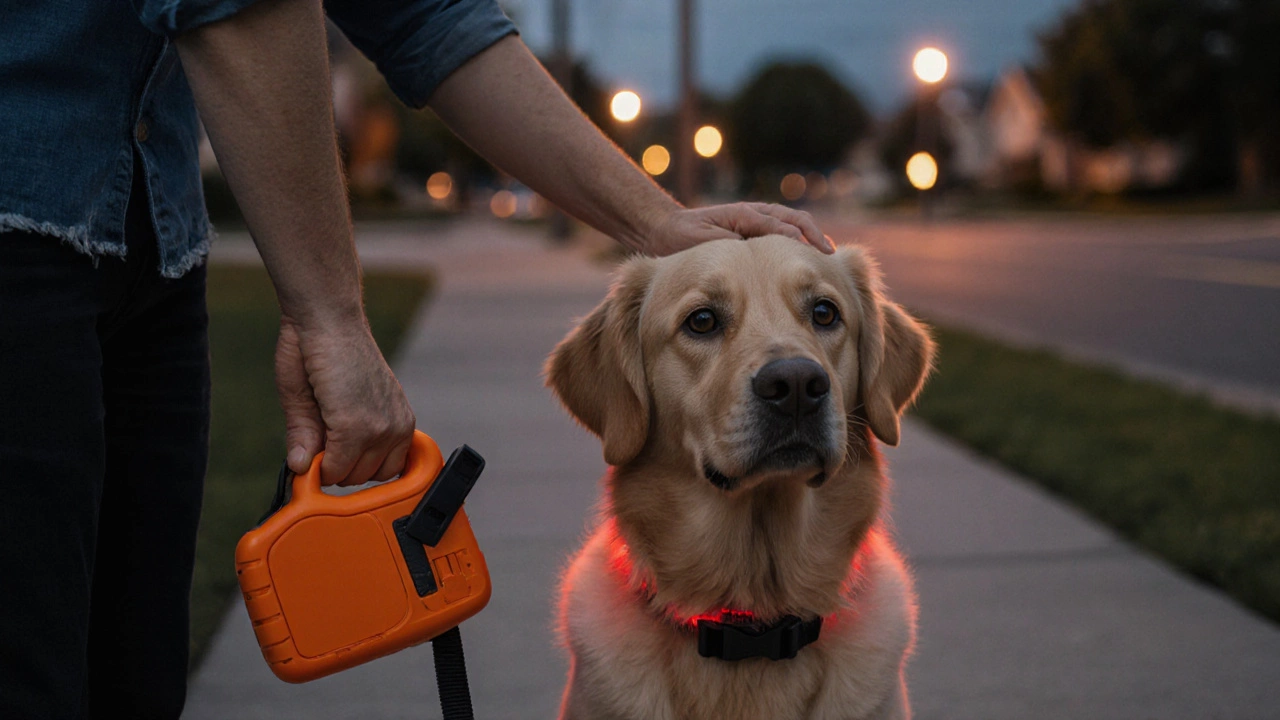
Shock collars, also called e-collars or electronic collars, deliver a static electric pulse to the dog’s neck. The intensity can be adjusted, from a mild tingle to a painful jolt. Some models include vibration or tone settings, but the shock function is what makes them controversial.
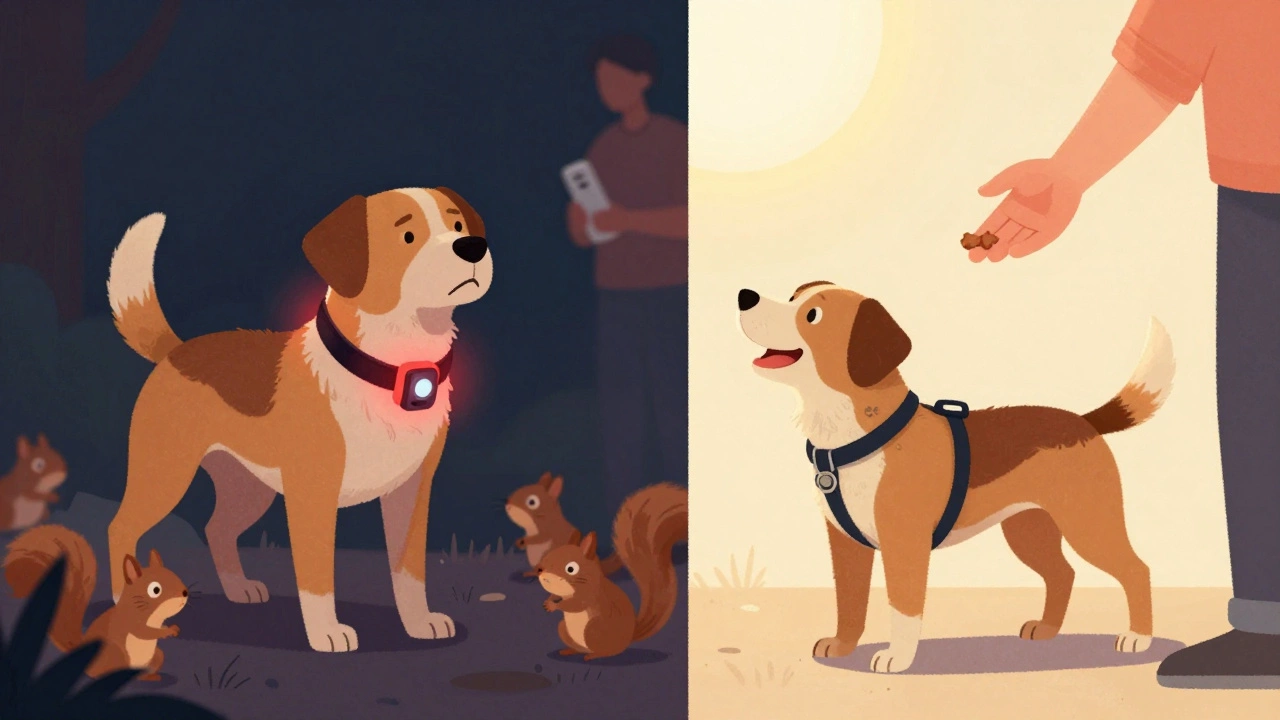
They’re often marketed as a way to correct unwanted behavior from a distance-like chasing squirrels or ignoring recall commands. But here’s the problem: dogs don’t understand cause and effect the way humans do. If a dog gets shocked while chasing a squirrel, it doesn’t think, “I shouldn’t chase squirrels.” It thinks, “That hurt. I’m scared.” And fear doesn’t build trust. It builds avoidance.
A 2020 study published in Scientific Reports followed 150 dogs trained with shock collars versus those trained with positive reinforcement. The dogs using shock collars showed higher stress levels-measured by increased cortisol, panting, and avoidance behaviors-even after training ended. The positive reinforcement group showed no signs of stress and learned just as fast.
What Professional Trainers Use Instead
Professional trainers rely on tools that don’t cause fear or pain. Here’s what you’ll actually see in a certified trainer’s toolkit:
- Clickers - a small device that makes a sharp, consistent sound to mark the exact moment a dog does something right. It’s like saying “yes!” at the perfect second.
- Treats - high-value food rewards that motivate the dog to repeat the behavior. Not just kibble. Think chicken, cheese, or freeze-dried liver.
- Leashes and harnesses - front-clip harnesses reduce pulling better than choke chains or prong collars. No pain needed.
- Long lines - 10- to 30-foot nylon leashes used in open areas to safely practice recall without a shock collar.
- Body language and timing - the most powerful tool of all. Trainers learn to read a dog’s posture, tail, ears, and eyes to anticipate behavior before it happens.
One trainer in Bristol, who’s been working with rescue dogs for over 12 years, told me: “I’ve had dogs that were terrified of people, dogs that lunged at other dogs, dogs that ran off every time the door opened. None of them needed a shock collar. They needed patience, consistency, and someone who understood their fear.”
Why Shock Collars Still Exist in the Market
If they’re so harmful and ineffective, why are they still sold everywhere? The answer is marketing.
Companies sell shock collars by promising quick results. “Train your dog in 7 days!” “Stop barking instantly!” These are lies. Real behavior change takes time. It takes understanding. It takes building a relationship.
Some trainers who use shock collars are self-taught or trained by outdated programs that still teach “dominance theory.” That’s the old idea that dogs need to be “alpha’d” into submission. Science has debunked that for over a decade. Dogs don’t want to be the boss of you-they want to know you’ll keep them safe.
And here’s the uncomfortable truth: shock collars work in the short term. A dog might stop running off after one zap. But that’s because they’re scared, not because they’ve learned. And fear-based training often leads to aggression, anxiety, or shutdown. One dog owner I spoke to said her Labrador, trained with a shock collar, started growling at strangers-even people who had never hurt him. The dog wasn’t being “bad.” He was terrified.
What About Remote Training Collars Without Shock?
Some brands now sell “vibration-only” or “tone-only” collars, marketed as “humane alternatives.” These can be useful in specific cases-for example, training a deaf dog using vibration as a cue. But even then, they’re not used as punishment. They’re used as a signal, paired with rewards.
Here’s the difference: if a vibration tells your dog, “Hey, turn around, I’ve got a treat,” that’s communication. If it tells your dog, “Stop barking or I’ll zap you,” that’s coercion. The intention matters more than the device.
What Do Veterinarians Say?
The American Veterinary Society of Animal Behavior (AVSAB) has been clear since 2007: “Positive reinforcement training is the most effective and least harmful method for modifying behavior.” They warn that aversive methods like shock collars can damage the human-animal bond and increase aggression.
Even the British Veterinary Association (BVA) has called for a ban on shock collars in the UK. In 2024, the UK government announced plans to introduce a full ban, with enforcement expected by 2026. That means trainers who rely on them will soon be breaking the law.

What Should You Do If You’re Considering a Shock Collar?
If you’re struggling with your dog’s behavior, here’s what to do instead:
- Rule out medical issues. Sudden aggression, excessive barking, or house soiling can be signs of pain, thyroid problems, or anxiety. Visit your vet first.
- Find a certified trainer. Look for CPDT-KA (Certified Professional Dog Trainer - Knowledge Assessed) or IAABC members. Ask what methods they use. If they mention “correction,” “alpha roll,” or “shock,” walk away.
- Start with positive reinforcement. Reward the behavior you want. Even if it takes longer, it builds confidence, not fear.
- Use management tools. Baby gates, leashes, and crates aren’t punishment-they’re safety nets while you teach.
There’s no shortcut to a well-behaved dog. But there is a better way. One that doesn’t hurt. One that strengthens your bond. One that your dog will remember not as a scary experience, but as a safe, fun partnership.
Why This Matters Beyond the Collar
Choosing how we train our dogs says something about us. It says whether we see them as machines to be programmed or as sentient beings to be understood. Shock collars reduce behavior to a simple stimulus-response. But dogs are more than that. They read our moods. They sense our stress. They mirror our patience-or our frustration.
When you train with kindness, you’re not just teaching your dog to sit. You’re teaching them they can trust you. And that’s the foundation of every great relationship-dog or human.
Are shock collars illegal in the UK?
As of 2025, shock collars are not yet fully banned in the UK, but the government has passed legislation to prohibit their sale, distribution, and use. Enforcement is set to begin in early 2026. Wales and Scotland have already banned them. England is following suit. Trainers caught using them after the ban will face fines.
Do police or military dogs use shock collars?
Most professional police and military dog units in the UK, US, and EU have moved away from shock collars. They use remote tone or vibration cues paired with high-value rewards. These dogs need to be calm under pressure, not fearful. Using pain-based tools increases the risk of misfires and aggression in high-stress environments.
Can shock collars cause long-term damage?
Yes. Studies show dogs trained with shock collars are more likely to develop anxiety, phobias, and aggression. The stress from repeated shocks can alter brain chemistry, making dogs more reactive to everyday stimuli. Some dogs become so fearful they stop trying to learn altogether-a condition known as learned helplessness.
What’s the best alternative to a shock collar for a strong puller?
A front-clip harness like the EasyWalk or Freedom No Pull is the most effective solution. It redirects the dog’s movement gently when they pull. Combine it with reward-based training: every time your dog walks with slack on the leash, give a treat. Within a few weeks, most dogs learn that walking calmly gets them rewards-not resistance.
Is it true that shock collars work better for stubborn dogs?
No. Stubbornness is often a sign of confusion, fear, or lack of motivation. A dog who ignores commands isn’t being defiant-they’re either not sure what’s expected, or they don’t see a reason to comply. Shock doesn’t clarify anything. Positive reinforcement does. A stubborn dog trained with treats and patience often becomes the most loyal and reliable companion.
Final Thought
The next time you see a dog wearing a shock collar, don’t assume the owner is cruel. They probably just believe it’s the only way. But the truth is out there. And the better way? It’s already working-for thousands of dogs, trainers, and families who chose kindness over control.