
2026 Pet Flight Cost Estimator
Flight Details
Cost Breakdown
Enter your flight details to see an estimated cost breakdown.
Includes base fees, potential cargo rates, and common hidden costs.
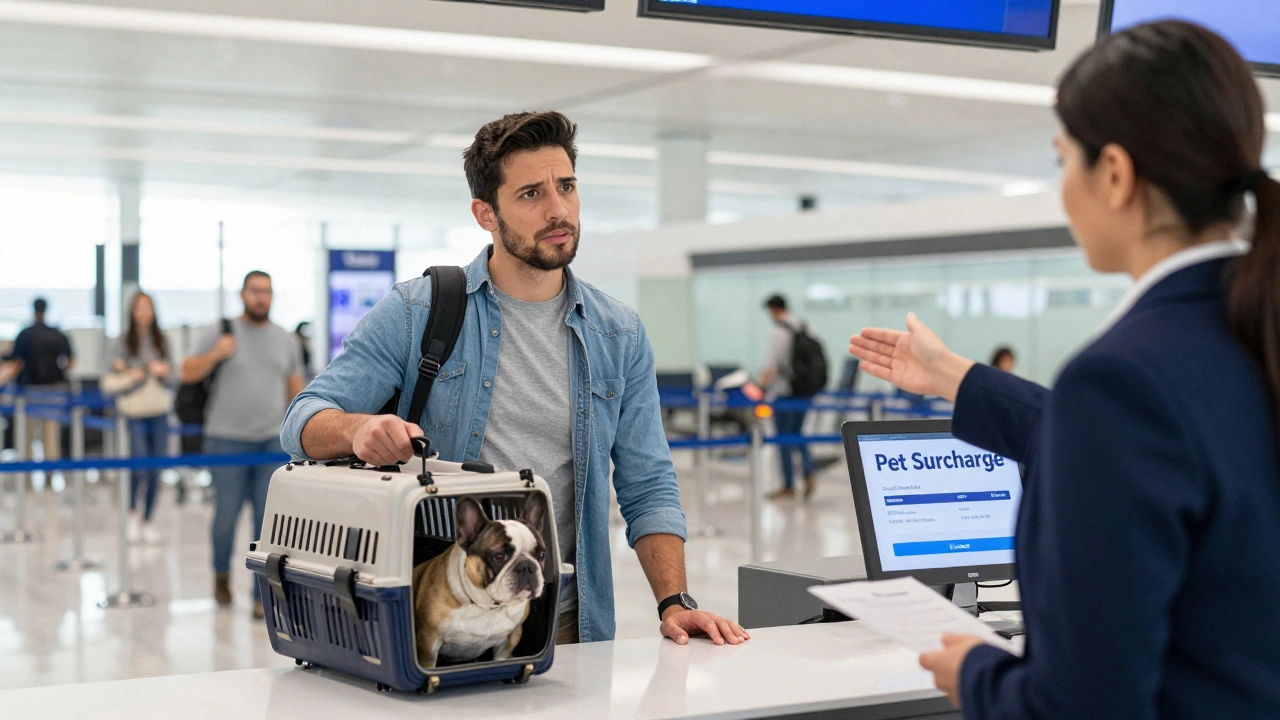
Booking a flight for your furry friend can feel like solving a puzzle while paying extra. You check the ticket price, add the baggage fee, and then-boom-the airline hits you with a "pet surcharge" that seems pulled from thin air. The truth is, there is no single fixed price for flying with a pet. Costs swing wildly depending on whether your dog or cat rides in the cabin with you or travels as cargo in the hold.
In 2026, the average cost to fly with a small pet in the cabin ranges between $100 and $250 each way. For larger animals traveling as checked baggage or cargo, prices jump significantly, often landing between $300 and $700 domestically, and potentially over $1,000 for international routes. Understanding exactly where this money goes helps you budget accurately and avoid surprise fees at the airport counter.
The Cabin Fee: What Small Pets Pay
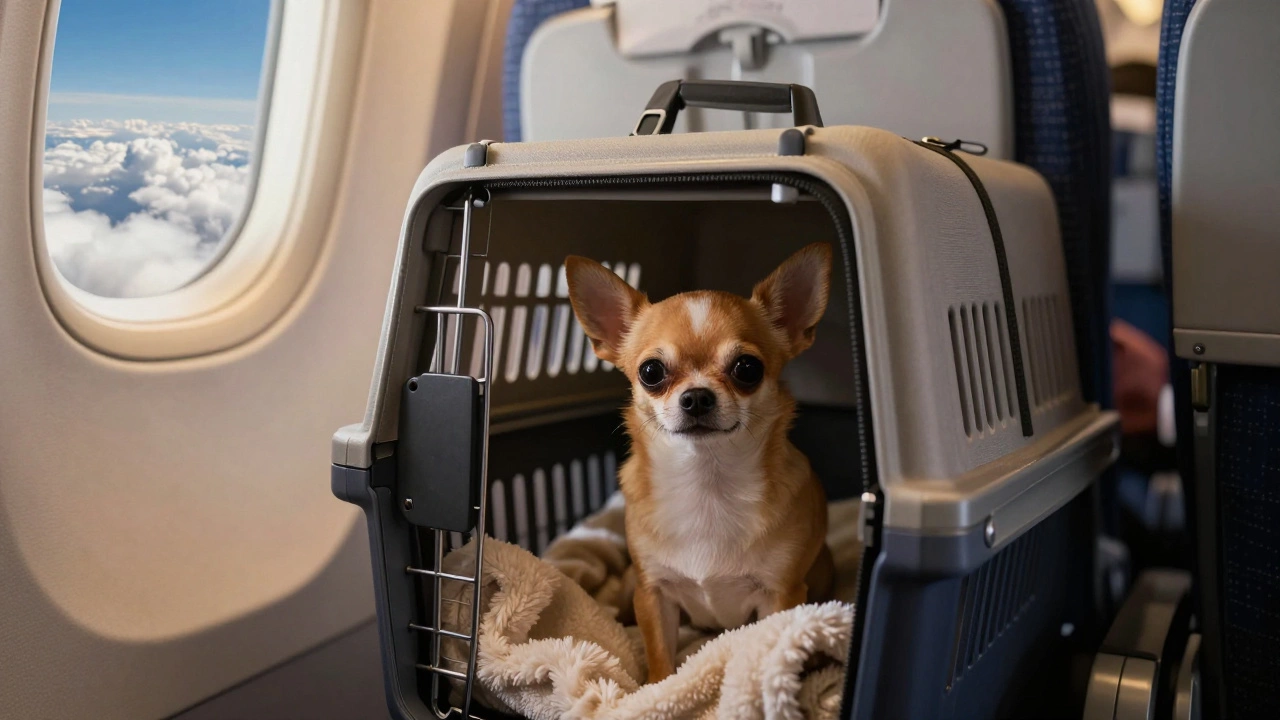
If your pet fits comfortably under the seat in front of you, you are looking at the "cabin fee." This is the most common scenario for cats and smaller dog breeds like Chihuahuas, Pomeranians, or French Bulldogs. Airlines view this service as a convenience rather than a standard amenity, which explains the premium pricing.
Most major carriers charge a flat rate per direction. This means if you are booking a round-trip flight, you pay the fee twice. Here is how the landscape looks across different types of airlines:
- Major Legacy Carriers: These airlines typically charge between $125 and $150 one-way. They offer more predictable policies but fewer seats available for pets due to strict safety limits.
- Budget Airlines: Some low-cost carriers charge slightly less, around $98 to $125, but they may restrict pet travel to specific flights or require earlier booking windows.
- Premium Services: A few airlines offer "luxury" pet tickets where the animal gets its own seat or enhanced amenities. These can cost upwards of $300 one-way.
The key constraint here is size. Your pet and their combined weight usually must not exceed 15 to 20 pounds (including the carrier). If your pet is cute but heavy, you might be forced into the more expensive cargo category, even if you prefer them close by.
Cargo and Checked Baggage Fees: The Big Ticket Items
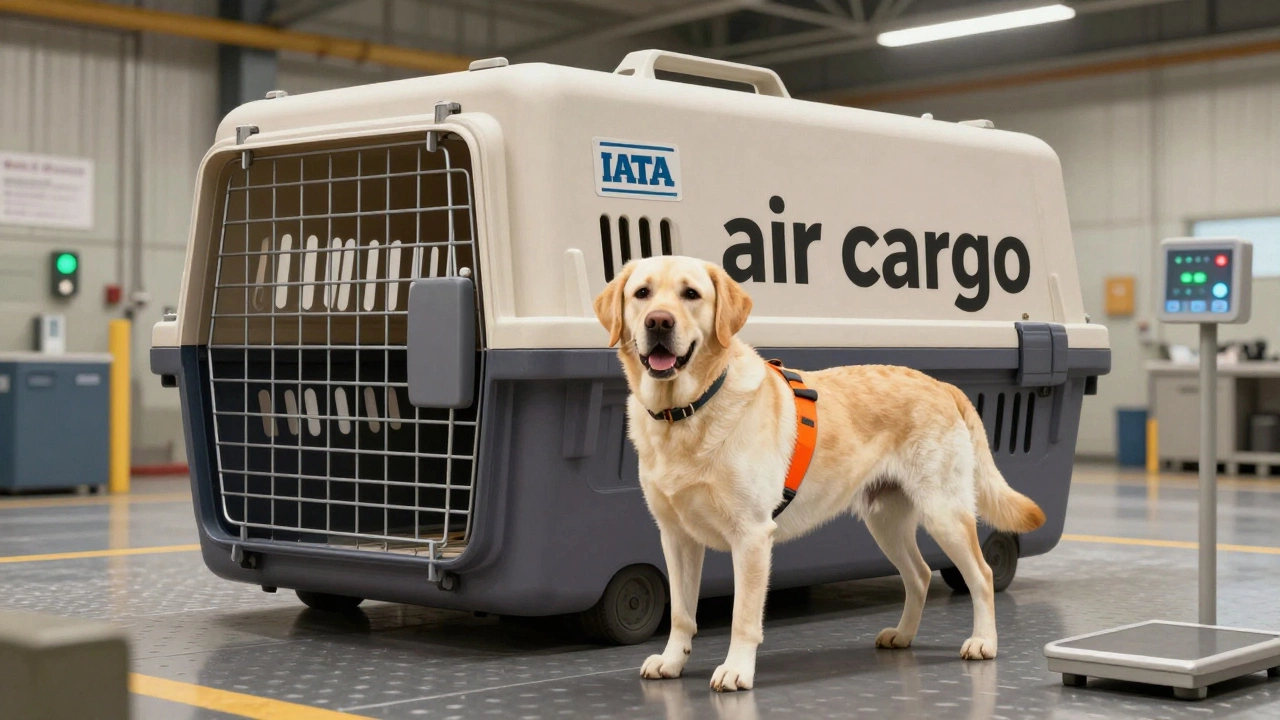
When your pet is too large for the cabin, they travel as "checked baggage" or "air cargo." This distinction matters because the pricing models differ. Checked baggage is handled through the regular baggage system, while air cargo uses specialized freight facilities.
For domestic flights within countries like the US or UK, checked pet fees generally start at $125-$150 one-way but scale based on distance and weight. However, true air cargo services operate differently. Companies like PetsAir or dedicated freight forwarders calculate costs using dimensional weight and fuel surcharges. In 2026, expect to pay roughly $300 to $500 for a medium-sized dog (e.g., a Labrador) traveling coast-to-coast.
International cargo shipments are another beast entirely. These involve complex logistics, including veterinary health certificates, microchipping verification, and quarantine compliance. A large breed dog flying from the US to Europe can easily cost $1,000 to $1,500 just for transport, excluding the visa and vaccination paperwork.
| Travel Method | Typical Pet Size | Domestic Cost Range | International Cost Range |
|---|---|---|---|
| In-Cabin | Under 20 lbs | $100 - $250 | $150 - $300 |
| Checked Baggage | 20 - 50 lbs | $150 - $400 | $400 - $800 |
| Air Cargo | Over 50 lbs | $300 - $700 | $800 - $1,500+ | d>
Hidden Costs That Catch Owners Off Guard
The airline fee is rarely the only expense. Several hidden costs can inflate your total budget significantly if you aren't prepared.
Veterinary Health Certificates: Most airlines require a health certificate issued by an accredited veterinarian within 10 days of travel. This visit typically costs $50 to $150. For international travel, you may need additional tests, such as rabies antibody titers, which can run $200 or more.
Approved Carriers: You cannot use just any bag. The carrier must be IATA-compliant, hard-sided for cargo, and soft-sided for cabin travel (with rigid bottoms). A high-quality, airline-approved carrier costs between $50 and $150. Using a non-compliant carrier risks being turned away at the gate, forcing you to buy a new one at inflated airport prices.
Stopover and Layover Fees: If your flight has a long layover, some airports require you to retrieve your pet from baggage claim and re-check them. While not always a direct monetary fee, it requires time and sometimes additional handling charges if you miss the connection window.
Factors That Influence Pricing
Why does one person pay $100 while another pays $250 for the same route? Several variables dictate the final price.
- Seasonality: Summer months (June-August) see higher demand for pet travel. Airlines may impose stricter limits or raise fees during peak vacation periods. Winter holidays also spike prices.
- Route Popularity: High-traffic routes like New York to London or Los Angeles to Tokyo have more competition among pet transport services, which can sometimes lower prices. Niche routes may lack options, driving costs up.
- Direct vs. Connecting Flights: Direct flights are safer and often cheaper for pets because they avoid multiple handling points. Connecting flights increase the risk of delays and may incur additional transfer fees.
- Airline Policy Changes: Airlines frequently update their pet policies. In 2025 and 2026, several carriers increased cabin fees due to rising operational costs. Always check the current policy on the airline's official website, not third-party aggregators.
How to Reduce Pet Travel Costs
You don't have to accept the highest possible fee. Strategic planning can shave hundreds of dollars off your trip.
Book Early: Airlines limit the number of pets allowed in the cabin per flight (usually 4-6). Booking early ensures you secure a spot before these slots fill up. Some airlines offer discounted rates for early bookings.
Choose Flexible Dates: Flying mid-week (Tuesday-Thursday) is often cheaper than weekends. Avoid major holidays when possible.
Use Pet-Friendly Credit Cards: Certain travel credit cards offer perks like waived first-baggage fees or travel insurance that covers pet-related emergencies. Check if your card provides reimbursement for unexpected vet visits during travel.
Consider Ground Transport: For distances under 500 miles, driving or using a pet relocation service via ground transport can be significantly cheaper and less stressful for your animal.
Special Considerations for Specific Breeds
Not all pets are treated equally by airlines. Brachycephalic breeds (short-nosed dogs and cats like Pugs, Bulldogs, Persian Cats, and Himalayans) face restrictions due to breathing difficulties at altitude. Many airlines ban these breeds from cargo travel entirely, limiting you to cabin-only options. This restriction reduces your flexibility and may force you to choose more expensive direct flights.
Large breeds like Great Danes or Mastiffs almost always require cargo travel. Ensure your carrier meets IATA dimensions for these massive animals. Oversized crates incur additional fees based on volume.
Is it cheaper to fly with a dog or a cat?
Generally, it is the same price for both dogs and cats if they travel in the cabin, as fees are based on size and weight, not species. However, cats are more likely to qualify for cabin travel due to their smaller size, avoiding the higher cargo fees associated with larger dogs.
Do airlines charge for emotional support animals?
As of 2026, most major airlines no longer recognize emotional support animals (ESAs) as service animals. ESAs are now treated as standard pets and subject to full pet fees and cabin restrictions. Only trained service dogs (for disabilities) fly free in the cabin without fees.
What happens if my pet doesn't fit in the under-seat carrier?
If your pet exceeds the airline's size or weight limits for cabin travel, they must travel as checked baggage or cargo. This will incur significantly higher fees ($150-$700+) and requires an IATA-compliant hard-sided crate. Gate agents strictly enforce these limits for safety reasons.
Are there refunds if I cancel my pet's flight?
Refund policies vary by airline. Most cabin pet fees are non-refundable if the pet does not travel. Cargo fees may be partially refundable if canceled well in advance. Always purchase travel insurance that specifically covers pet transportation to mitigate financial loss from cancellations.
How much does international pet travel cost?
International pet travel costs range from $400 to $1,500+ depending on distance, pet size, and destination regulations. Additional costs include import permits, rabies titers, microchipping, and potential quarantine fees. Countries like Australia and Japan have strict quarantine laws that can add thousands in holding costs.