Matching the Material to Your Dog's Lifestyle
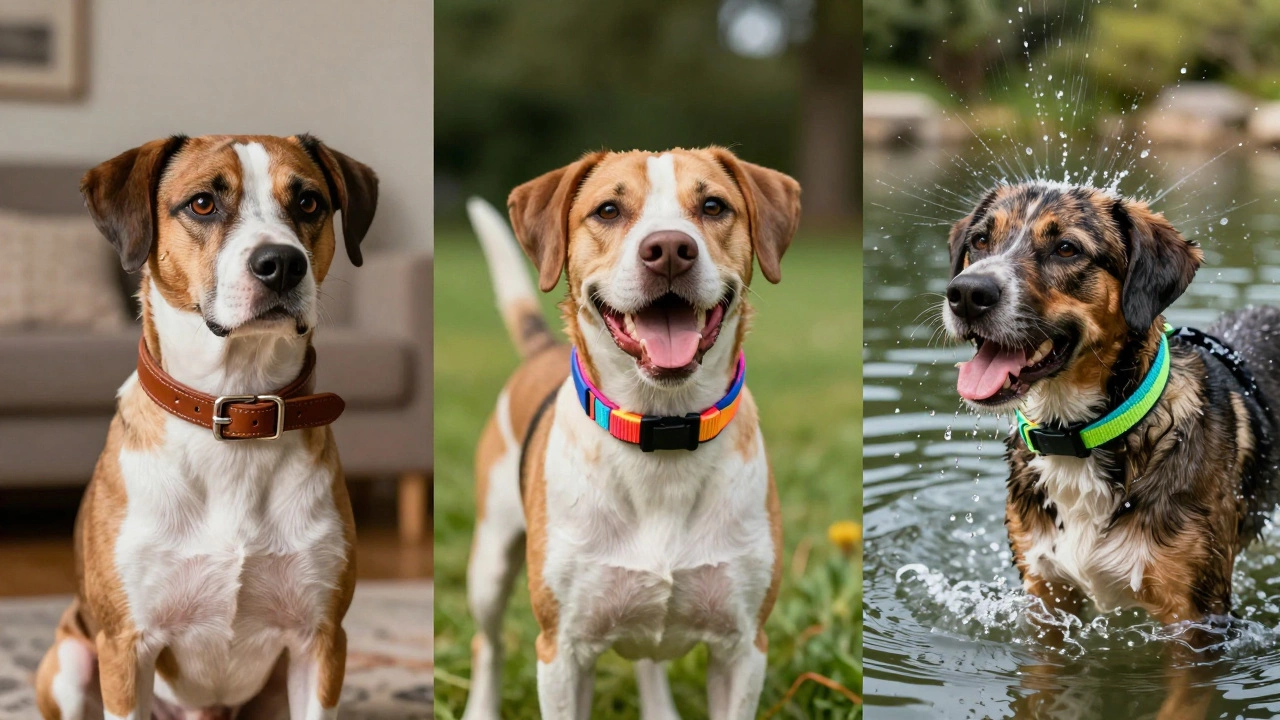
Not all fabrics are created equal. If you live in a rainy climate like Bristol, a cheap fabric collar will soak up water like a sponge, get heavy, and start to smell. You need to match the material to where your dog actually spends their time.
For most owners,
Nylon is
a synthetic polymer known for its high strength-to-weight ratio and resistance to abrasion.
It is the gold standard for everyday use because it's cheap, comes in every color imaginable, and can be thrown in the wash. However, nylon can fray over time if your dog likes to chew.
If you want something more sophisticated,
Leather is a timeless choice. High-quality leather is incredibly durable and often lasts years longer than synthetic options. It's great for dogs with sensitive skin because it doesn't have the rough edges some nylon weaves possess. The downside? It doesn't handle water well and can crack if not conditioned.
For the "mud-magnet" dogs, look into
Biothane. This is a polyester webbing with a TPU or PVC coating. It's essentially waterproof and stink-proof. You can wipe it clean with a damp cloth in seconds, making it the best choice for hunting dogs or pups who love swimming in ponds.
Dog Collar Material Comparison
| Material |
Durability |
Water Resistance |
Best For |
| Nylon |
High |
Medium |
General daily use |
| Leather |
Very High |
Low |
Sensitive skin / Style |
| Biothane |
High |
Maximum |
Active/Wet environments |
Understanding Different Collar Styles
The shape and mechanism of the collar matter just as much as the fabric. A standard flat collar is what most people picture-a simple loop with a buckle. These are perfect for holding ID tags, but they are not meant for controlling a dog that pulls. If you use a flat collar for heavy pulling, you risk damaging your dog's trachea.
If your dog is a "escape artist," you need a
Martingale Collar. Unlike a standard collar, a Martingale has a limited-slip design. It tightens slightly when the dog pulls, but not enough to choke them. This is essential for breeds like Greyhounds or Whippets, whose heads are narrower than their necks, allowing them to simply back out of a normal collar.
Then there are the specialized options. Reflective collars are a must if you walk your dog at night or in low visibility. Some incorporate
LED lights, which are great for urban environments where cars are a constant risk. Just remember that these usually require batteries and aren't as durable for rough play.
Getting the Fit Exactly Right
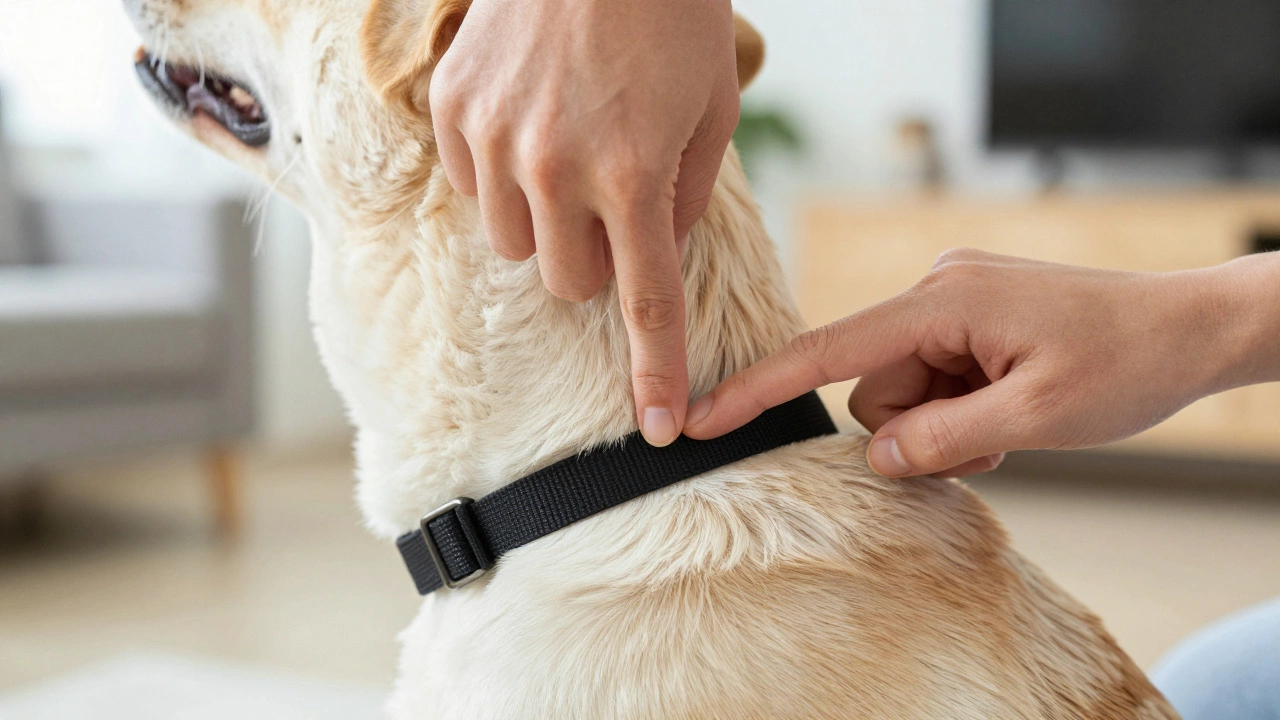
A collar that is too loose is a safety hazard; a collar that is too tight is a health hazard. How do you find the sweet spot? Use the "two-finger rule." Once the collar is buckled, you should be able to fit two fingers comfortably between the collar and your dog's neck. If you can pull three or four fingers through, it's too loose and they could slip out. If you can barely fit one, it's too tight and might cause irritation or restrict breathing.
Pay attention to the placement. The collar should sit high on the neck, just behind the ears, rather than sliding down toward the shoulders. This prevents the collar from getting caught on things and gives you better control during a walk. If you notice your dog scratching at the collar frequently, check for "chafing"-red skin or missing fur-which usually means the material is too abrasive or the fit is off.
Safety Features and Hardware
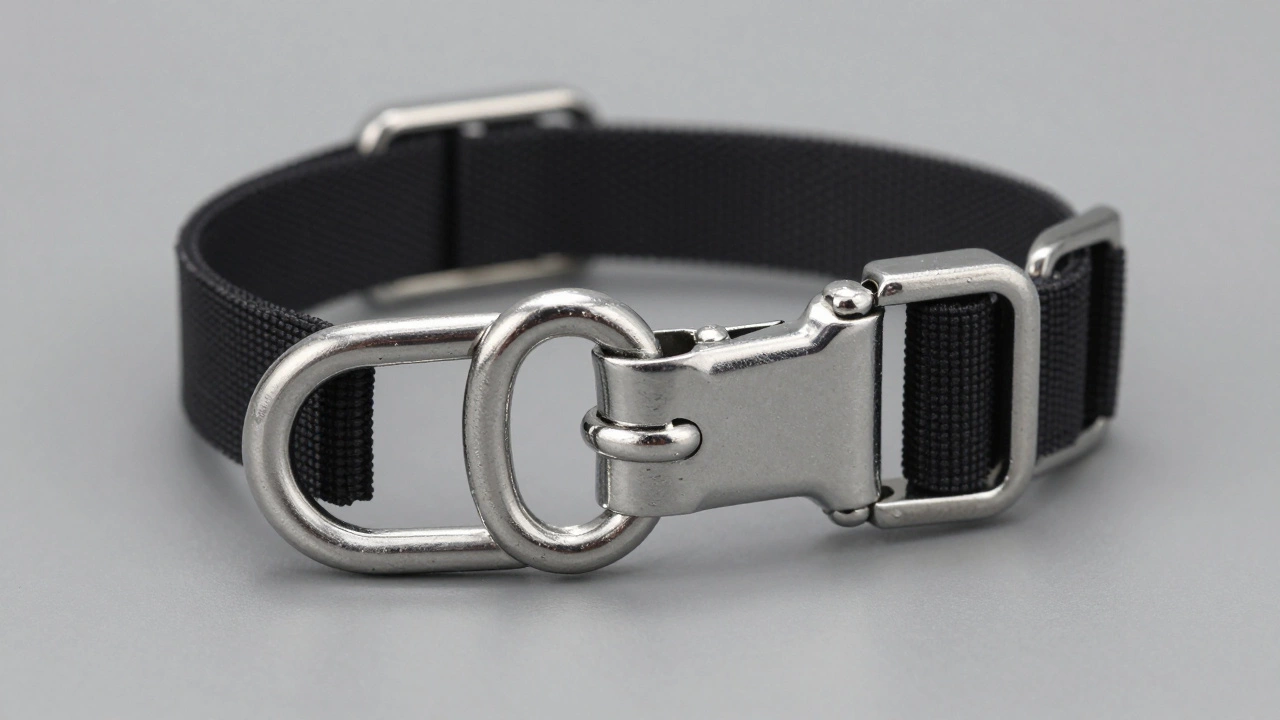
The weakest point of any collar is the hardware. Look for
Stainless Steel or brass hardware. Plastic buckles are fine for lightweight indoor collars, but for a dog that spends time outdoors, you want metal. A plastic buckle can snap under the pressure of a sudden lunge, leading to a lost dog.
The D-ring is another critical component. This is the metal loop where you attach the leash. Ensure it is welded shut rather than just bent. A split D-ring can open under tension, which is a nightmare scenario during a walk. Also, consider how the ID tag attaches. If the tag jingles constantly, it can annoy some dogs; look for "slide-on" tags that fit directly onto the collar strap.
Common Mistakes to Avoid
One of the biggest mistakes owners make is using a collar as a primary walking tool for a heavy puller. Collars put pressure on the throat. For dogs that pull, a
Harness is a much safer alternative as it distributes the force across the chest and shoulders. Use the collar for identification and the harness for the actual walking.
Another error is neglecting the "growth spurt." Puppies grow incredibly fast. A collar that fits perfectly in June might be a tourniquet by August. Check the fit every two weeks for puppies. If you see a ring of fur wearing away or the collar looking tight, it's time to size up. Don't rely on the "size" labels (Small, Medium, Large) because they vary wildly between brands; always use a measuring tape.
Decision Guide: Which One Should You Buy?
Still not sure? Ask yourself these three questions:
- Does my dog swim or go in the mud? If yes, go with Biothane.
- Can my dog slip their head out of a loop? If yes, you need a Martingale.
- Do I walk my dog in the dark? If yes, ensure it has integrated reflective strips or LED lights.
If none of those are specific problems, a high-quality nylon flat collar is your best bet for a reliable, affordable, and colorful option. Just remember to double-check those buckles before every walk. A quick tug to ensure the lock is engaged can be the difference between a peaceful stroll and a panicked search for a runaway pup.
Can a dog wear a collar 24/7?
Yes, most dogs can wear a collar all the time as long as it fits properly. However, if you notice skin irritation or if the collar is very heavy, you might want to take it off when they are resting at home. Always ensure it's not so tight that it restricts their movement or breathing during sleep.
What is the difference between a flat collar and a choke chain?
A flat collar is a simple band for identification and light guidance. A choke chain is a training tool that tightens significantly when pulled, which can cause pain or injury to the trachea. Most modern trainers recommend using a flat collar for IDs and a front-clip harness or a head halter for training and control.
How do I stop my dog from chewing their collar?
Chewing is often a sign of boredom or anxiety. Provide plenty of chew toys and mental stimulation. If they chew the collar while you are away, it might be too loose, allowing them to reach it. Try a more snug (but safe) fit or switch to a more durable material like Biothane, which is less satisfying to chew than soft nylon.
How often should I replace my dog's collar?
Inspect your collar weekly. Replace it immediately if you see frayed edges, cracked leather, or if the buckle doesn't click securely. Generally, a nylon collar lasts 1-2 years depending on use, while a well-maintained leather collar can last a decade.
Is a Martingale collar safe for all breeds?
Yes, Martingales are generally safe because they are designed to prevent slipping without applying the extreme pressure of a choke chain. They are especially recommended for Sighthounds, but any dog prone to escaping their collar can benefit from one.