
Puppy Training Age Calculator
Most new puppy owners think their dog will magically learn what "no" means by the second week. That’s not how it works. Puppies aren’t born knowing right from wrong-they’re born curious, energetic, and driven by instinct. So when your 10-week-old pup leaps onto the couch and you shout "No!"-and they just wag harder-you’re not failing. You’re just early.
When Do Puppies Start to Understand "No"?
Most puppies begin to connect the word "no" with stopping a behavior between 12 and 16 weeks of age. That’s when their brains start to make clearer cause-and-effect connections. Before that, they’re learning the world through scent, sound, and movement-not language.
At 8 weeks, your puppy hears "no" as just another noise-like a door slamming or a car horn. They don’t link it to their action yet. By 12 weeks, they start noticing patterns: "When I jump on the counter, my human says 'no' and picks me up." That’s when the word begins to mean something.
But here’s the catch: understanding the word isn’t the same as obeying it. A 16-week-old pup might pause when you say "no," but if the couch is still right there, they’ll probably try again five minutes later. Training isn’t about memorizing a word-it’s about building habits.
Why "No" Alone Doesn’t Work
Saying "no" over and over is like yelling "stop!" at a toddler who’s running toward the street. It might stop them once-but it doesn’t teach them what to do instead. Puppies need direction, not just correction.
Studies from the University of Pennsylvania’s School of Veterinary Medicine show that dogs respond better to clear, consistent alternatives than to punishment-based commands. In one experiment, puppies trained with "sit" instead of "no" when they jumped on furniture learned the desired behavior 40% faster than those only corrected with "no."
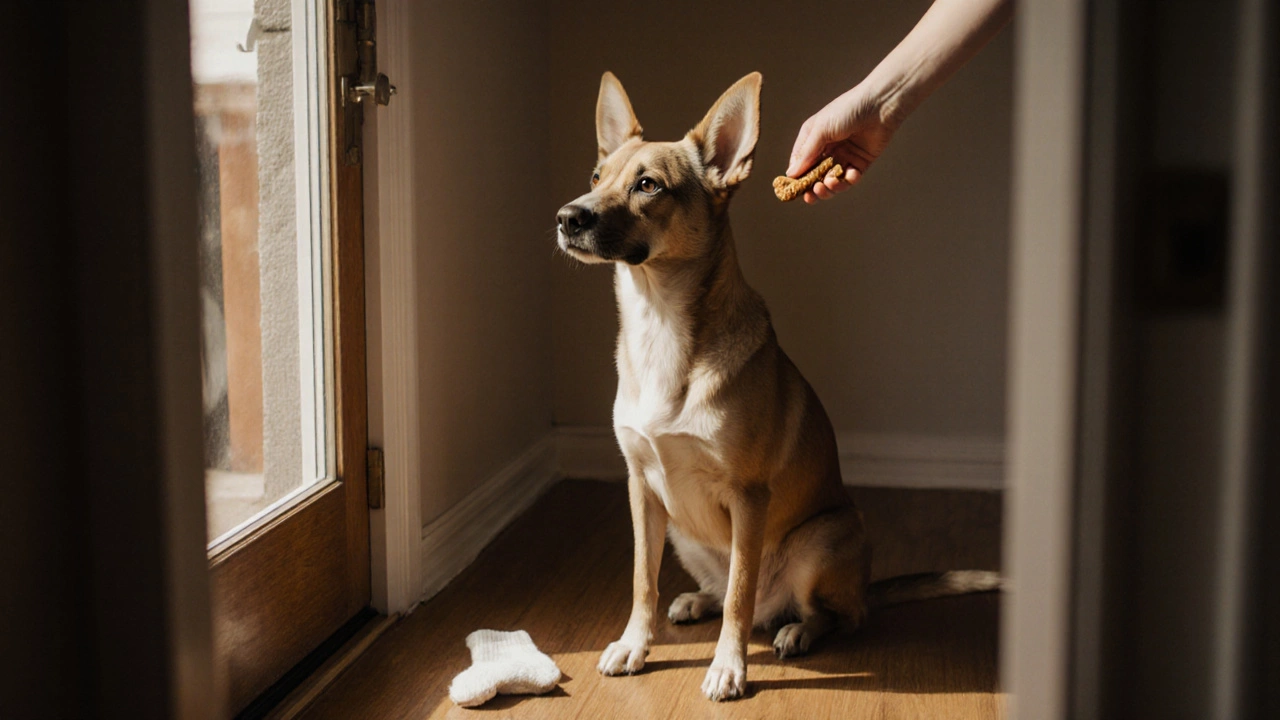
Here’s what actually works: when your puppy does something you don’t like, interrupt the behavior with a firm but calm "Hey!" or "Ah-ah," then immediately redirect them to something they *can* do. Give them a chew toy. Ask them to sit. Lead them outside. Reward the good choice. That’s how the brain learns.
What Happens If You Only Say "No"?
Too much "no" without guidance leads to confusion-and sometimes fear. Puppies who hear "no" constantly but never get told what to do instead often shut down. They stop trying. They avoid eye contact. They become anxious around you.
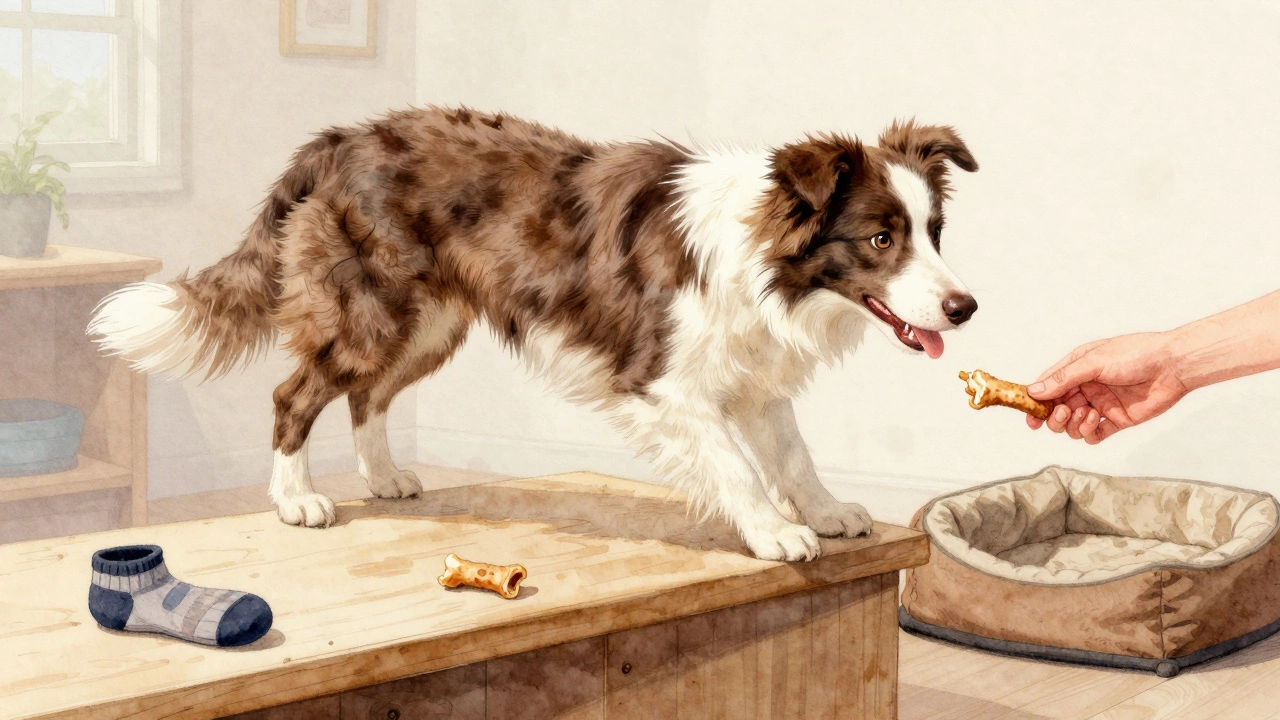
One owner in Bristol told me her 5-month-old border collie started trembling every time she raised her voice. She’d been saying "no" every time the pup chewed a sock, jumped on the bed, or barked at the postman. She never showed him what to do instead. By the time she called a trainer, the dog was terrified of corrections.
That’s avoidable. You don’t need to yell. You don’t need to punish. You just need to be clear.
How to Teach "No" the Right Way
Teaching "no" isn’t about volume-it’s about timing and consistency. Here’s how to do it:
- Wait until your puppy is 12 weeks old. Before that, focus on redirection and supervision.
- Use "no" only for dangerous or urgent behaviors. Chewing electrical cords, lunging at other dogs, or stealing food from the counter-those are "no" moments. Not jumping on the sofa.
- Say it once, calmly. No shouting. No repetition. Just "No." Then pause.
- Redirect immediately. Offer a toy. Lead them to their bed. Ask for a sit. Give them a job.
- Reward the alternative. When they listen and switch to the right thing, praise them. "Good job!" or "Yes!" works better than "no" here.
Do this every single time. In 2-3 weeks, your puppy will start to associate "no" with stopping-and the reward with doing the right thing.
What About Other Commands?
"No" isn’t the only word your puppy needs. In fact, it’s the least important one.
Focus first on these:
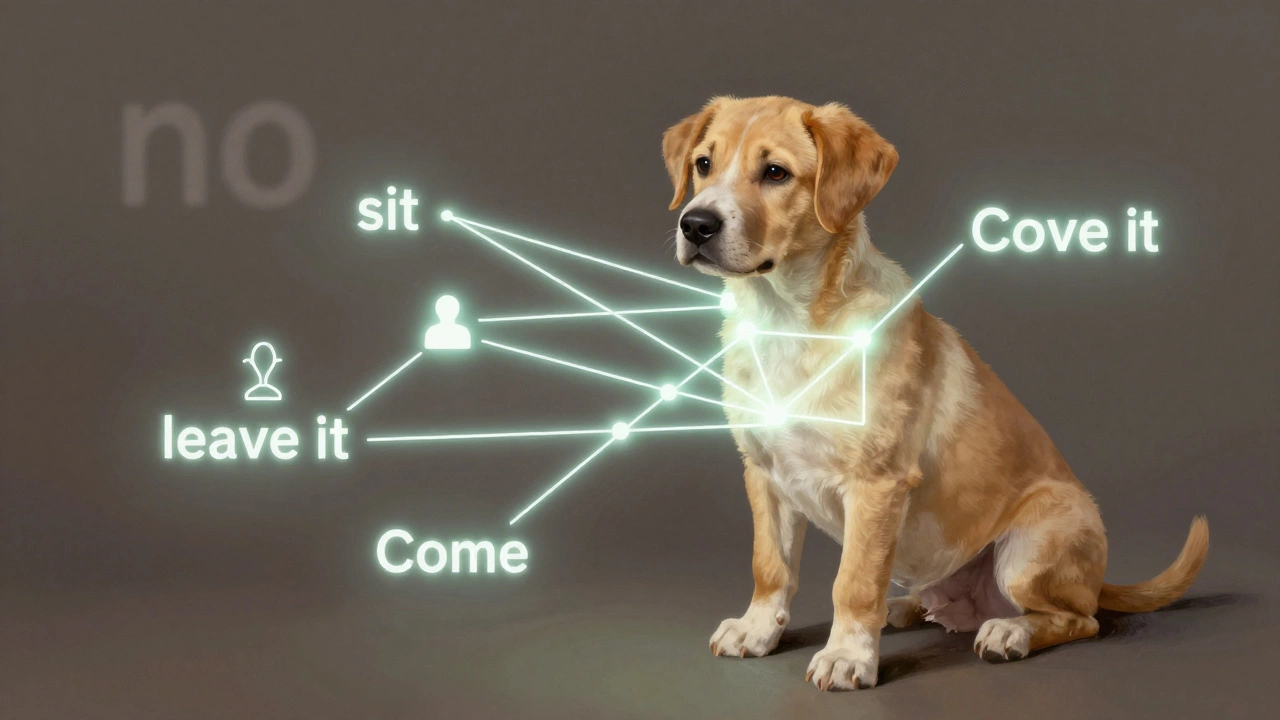
- "Sit" - Stops jumping, prevents door dashing, builds focus
- "Leave it" - Stops chewing, stealing, and eating garbage
- "Come" - Keeps them safe outdoors
- "Wait" - Teaches patience at doors, stairs, and food bowls
These commands give your puppy clear instructions. "No" just tells them to stop. It doesn’t say what to do next. That’s why "leave it" and "sit" are more powerful than "no" in real-life situations.
What If My Puppy Ignores "No"?
If your 6-month-old pup still ignores "no," it’s not because they’re stubborn. It’s because they haven’t learned what it means yet-or they’ve learned that ignoring you works.
Here’s what to check:
- Are you saying "no" too often? If you say it for every little thing, your puppy tunes it out.
- Do you follow up? Saying "no" and then doing nothing? That teaches them they can ignore you.
- Are you rewarding the right behavior? If you only correct, you’re missing the chance to build good habits.
Try this: for three days, don’t say "no" at all. Instead, catch your puppy doing something good-and reward it. Then, when they do something you don’t like, redirect and reward the alternative. You’ll be amazed at how fast they start listening.
Training Is a Conversation, Not a Command
Think of training like teaching a toddler to tie their shoes. You don’t yell "No!" every time they fumble. You show them. You help them. You cheer when they get it right.
Puppies learn the same way. They don’t need a boss. They need a teacher.
By 6 months, most puppies can reliably respond to "no" when it’s used correctly. But the real win? By then, they’re also responding to "sit," "leave it," and "come"-and they’re doing it because they want to, not because they’re scared.
That’s the goal. Not silence. Not obedience through fear. But connection. Trust. A puppy who looks to you for guidance-not because you shout, but because you show them the way.
Common Mistakes Owners Make
Here are the three biggest errors people make when teaching "no":
- Starting too early. Don’t expect a 10-week-old to understand language like a 2-year-old. Their brain isn’t ready.
- Using "no" for everything. If you say "no" for jumping, barking, licking, and sniffing, your puppy stops hearing it.
- Not rewarding the alternative. Correction without direction is just noise.
Fix these, and your puppy will start listening-not because they’re forced to, but because they want to.
Final Thought: It’s Not About the Word
The word "no" isn’t magic. It’s just a tool. What matters is what you do before and after it.
By 16 weeks, your puppy can start learning to pause when you say "no." But by 6 months, they’ll be learning to choose the right thing-even when you’re not looking.
That’s not training. That’s teamwork.
Can a 2-month-old puppy understand "no"?
A 2-month-old puppy can hear the word "no," but they can’t understand its meaning yet. Their brain is still developing the ability to connect words with actions. At this age, focus on redirection and supervision instead of corrections.
Is it too late to teach "no" if my dog is already 1 year old?
No, it’s never too late. Older dogs can learn new commands, but they may need more patience and consistency. If your dog has been ignoring "no," it’s likely because they’ve never been clearly taught what to do instead. Start by replacing "no" with "leave it" or "sit," and reward the right behavior.
Should I use a firm tone or a soft tone when saying "no"?
Use a calm, firm tone-not a shout. A raised voice can scare your puppy or make them more excited. A steady, clear "No" says, "I’m in charge," without creating fear. Pair it with immediate redirection, and your puppy will learn faster.
How long does it take for a puppy to reliably respond to "no"?
With consistent training, most puppies begin responding reliably between 14 and 18 weeks. But full reliability-meaning they stop even when distracted-usually takes 3 to 6 months. The key is consistency, not speed.
Can I use "no" and "leave it" together?
Yes, but use them for different things. "No" is for urgent stops-like biting your hand or running into the street. "Leave it" is for things your puppy wants to pick up or eat. Teach "leave it" first-it’s more useful in daily life.