Dog Supplement Dosage Calculator
Step 1: Enter Your Dog's Information
Step 2: Select Supplement Type
Important Safety Note: Always consult your veterinarian before starting supplements, especially if your dog is on medication. Do not use human supplements - they can be toxic to dogs.
Tip: Track results for 4-8 weeks. If no improvement, discontinue and consult your vet.
Choosing the right supplement for your dog isn’t like picking out a treat at the pet store. It’s not about what looks cute or what’s on sale. It’s about what your dog actually needs - and what won’t do more harm than good. Too many owners jump on the latest trend because it’s marketed as "all-natural" or "veterinarian recommended," only to realize later it’s not helping - or worse, causing problems.
Start with your dog’s real needs
Before you even look at a bottle, ask yourself: What’s the problem? Is your dog slowing down on walks? Do they lick their paws raw? Are their joints stiff in the morning? Or are they just a healthy pup who eats well and runs like a maniac? Supplements aren’t magic pills. They’re meant to fill gaps - not replace good food or vet care.
For example, if your 8-year-old Labrador has trouble getting up after naps, joint support supplements with glucosamine and chondroitin are backed by real studies. A 2021 trial published in the Journal of Veterinary Internal Medicine showed dogs with osteoarthritis improved mobility after 60 days of daily glucosamine supplementation. But if your 2-year-old Beagle has shiny fur and boundless energy? You probably don’t need anything beyond a balanced diet.
Know what’s actually in the bottle
Not all supplements are created equal. Some brands put in enough active ingredients to make a difference. Others? They’re mostly filler - think ground-up rice hulls or cheap starches - with just a sprinkle of the real stuff.
Look for these key ingredients and their typical effective doses:
- Glucosamine and chondroitin: For joint health. Look for at least 500mg glucosamine and 400mg chondroitin per 25 lbs of body weight daily.
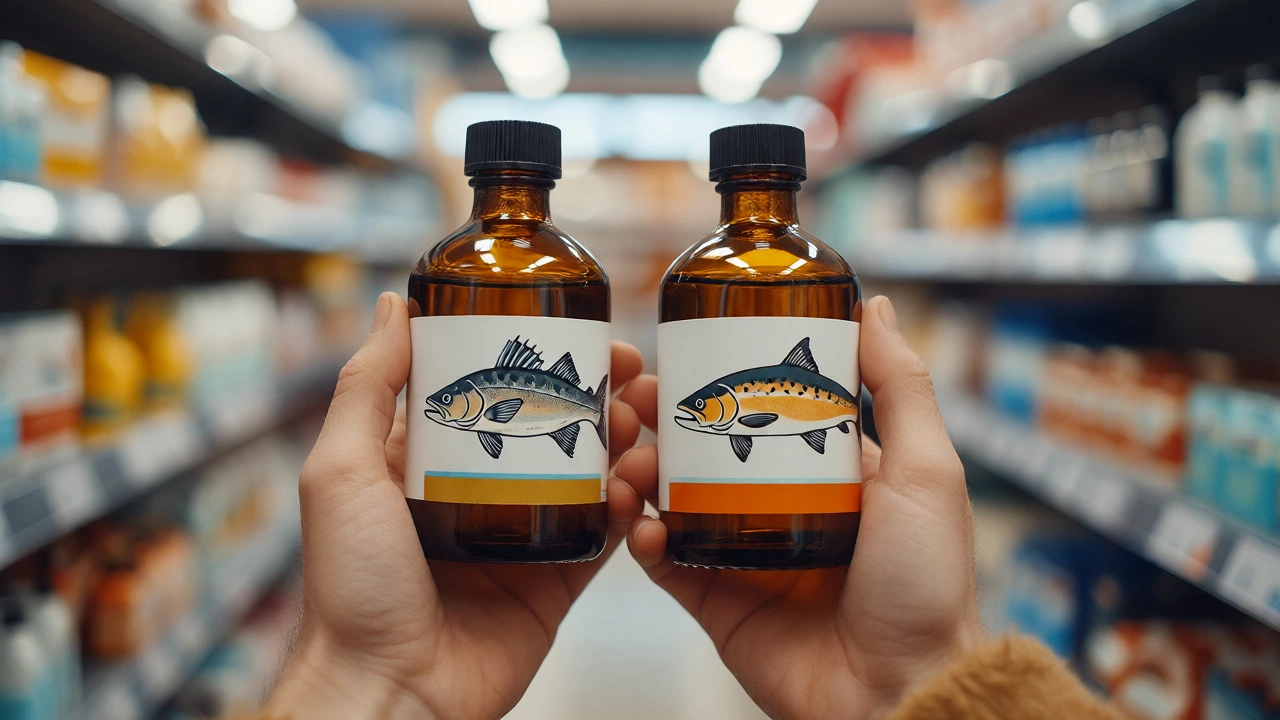
- Omega-3 fatty acids (EPA/DHA): For skin, coat, and inflammation. Aim for 100-150mg EPA+DHA per 10 lbs of body weight. Fish oil is the best source.
- Probiotics: For gut health. Choose strains like Enterococcus faecium or Lactobacillus acidophilus with at least 1 billion CFUs per serving.
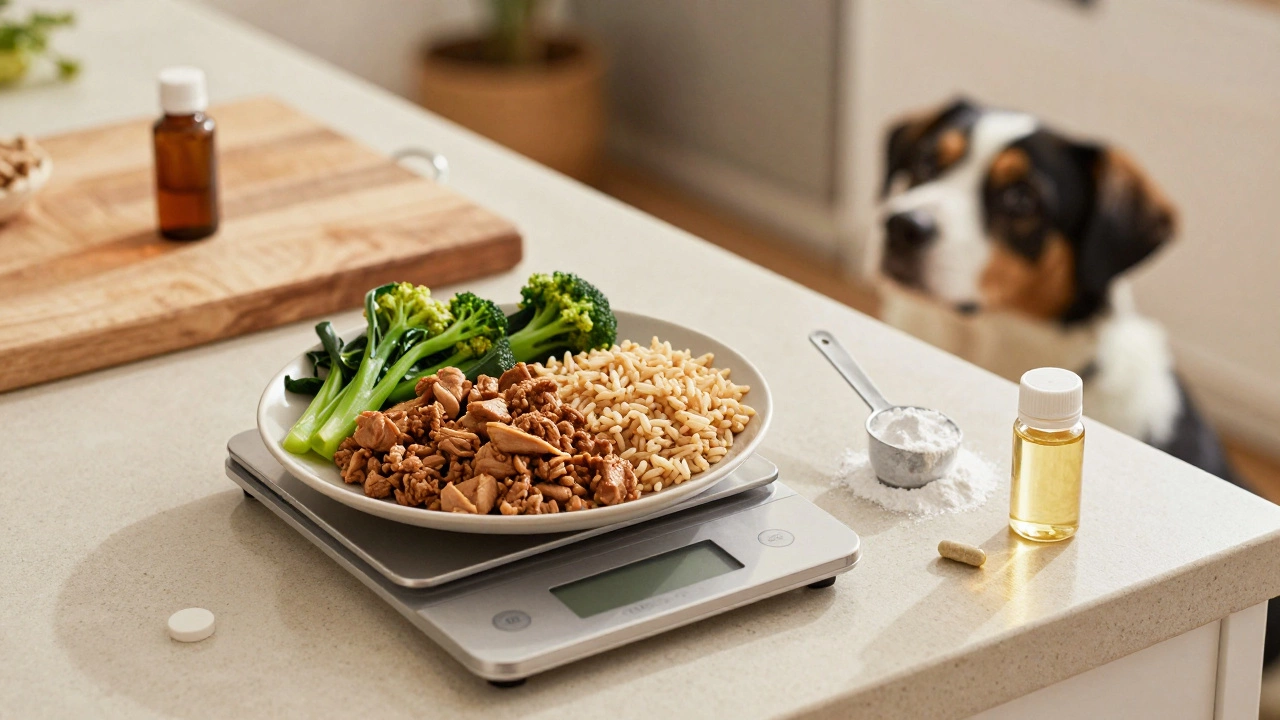
- Calcium and phosphorus: Only needed if your dog eats homemade food. Commercial dog foods already balance these. Too much calcium can cause bone problems in growing puppies.
- Vitamin E and selenium: Antioxidants that help with immune support. But too much selenium is toxic. Stick to doses under 200mcg per day for a medium dog.
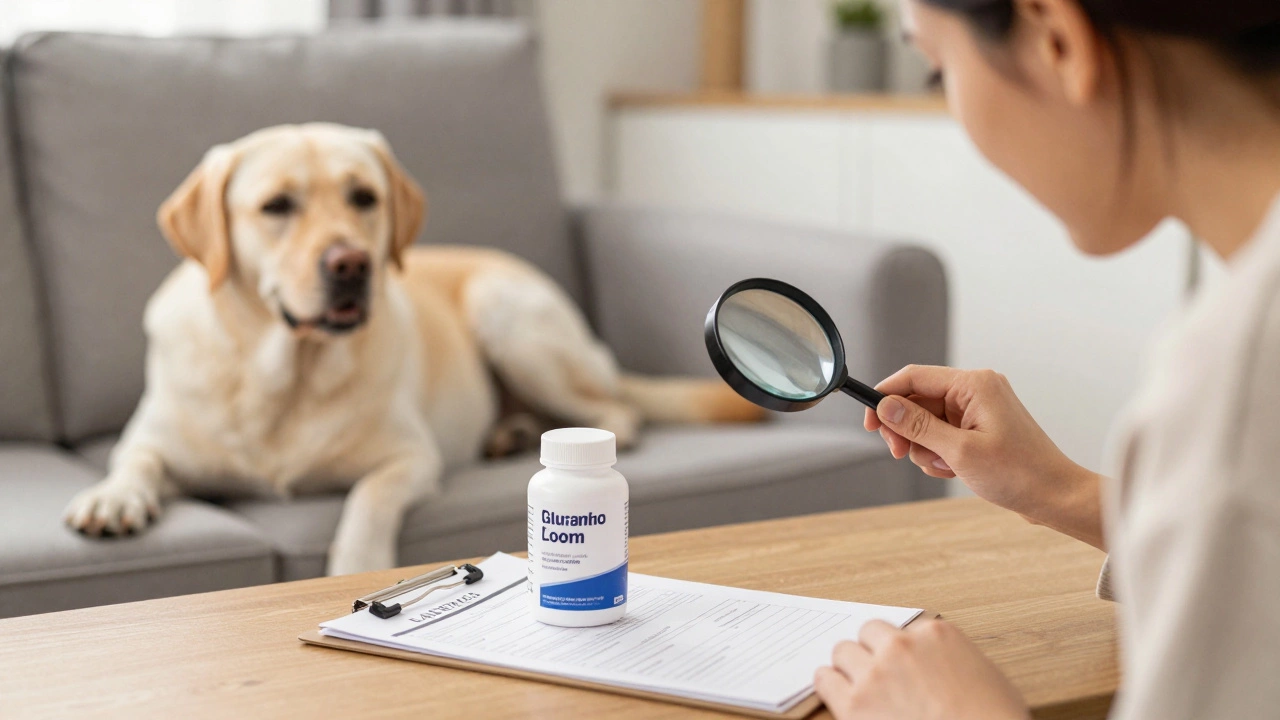
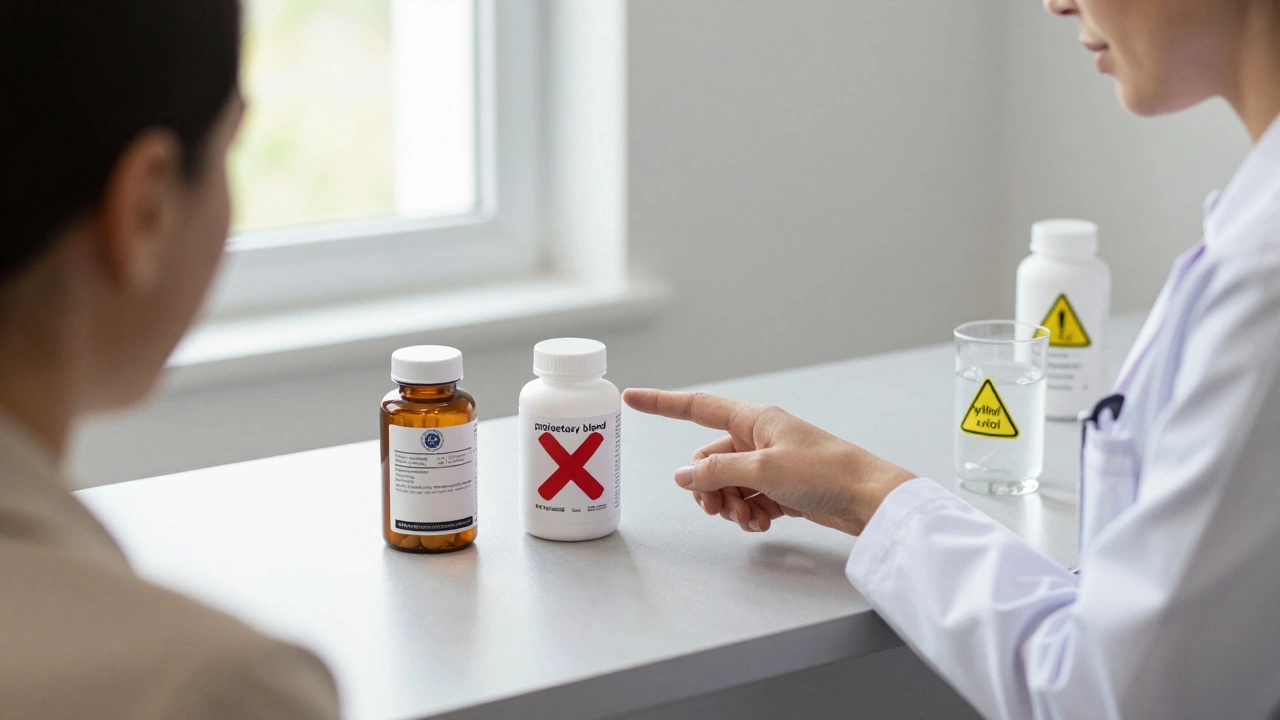
Check the label. If it says "proprietary blend" without listing exact amounts? Walk away. That’s a red flag. You can’t judge what works if you don’t know how much you’re giving.
Form matters more than you think
Some supplements come as pills. Others are chews, powders, or liquids. Which one you pick depends on your dog - not the brand’s marketing.
- Chews: Easy for most dogs. Great for picky eaters. But they often have added sugars or artificial flavors. Look for ones sweetened with real chicken or peanut butter, not xylitol (deadly to dogs).
- Powders: Best for mixing into food. You can control the dose precisely. Ideal if your dog is on medication and you need to avoid certain fillers.
- Liquids: Fast absorption. Useful for senior dogs with trouble chewing. But they can spoil faster and often need refrigeration.
- Pills: Least palatable. Only worth it if your vet specifically recommends a prescription-grade supplement not available in other forms.
One owner I spoke with switched from chews to powder after her 14-year-old Shih Tzu started refusing treats. The powder mixed into her broth and she took it without a fuss. Simple fix - but only because she paid attention to how her dog actually responded.

Quality over brand names
Big-name brands aren’t always better. Some are just better at advertising. What you want is third-party testing. Look for seals like:
- National Animal Supplement Council (NASC): Their quality seal means the product was tested for purity and label accuracy.
- USP Verified: Less common in pet supplements, but a strong sign of reliability.
- Independent lab reports: Reputable companies post these on their website. Look for tests on heavy metals, microbes, and ingredient potency.
For example, a $15 bottle of joint supplement might claim 1000mg glucosamine. But if the lab report shows only 320mg? You’re wasting money. A $30 bottle with a NASC seal and published test results? That’s worth it.
Watch out for dangerous combinations
Some supplements clash with medications or other supplements. For example:
- Omega-3s can thin the blood. If your dog is on aspirin or blood pressure meds, talk to your vet first.
- Calcium supplements with vitamin D can cause toxicity if your dog already eats a complete diet.
- Probiotics and antibiotics should be given at least 2 hours apart - otherwise, the antibiotics kill the good bacteria before they can work.
Also avoid supplements with xylitol, artificial sweeteners, excessive vitamin D, or high levels of zinc. These are common in human supplements and sometimes sneak into pet products.
Give it time - and track results
Supplements don’t work overnight. Joint support? Give it 6-8 weeks. Skin and coat? 4-6 weeks. Probiotics? You might see changes in 10-14 days.
Keep a simple log:
- Start date
- Product name and dose
- What you’re hoping to improve (e.g., stiffness, shedding, digestion)
- Weekly notes: "Walks longer? Fur shinier? Stool firmer?"
One owner noticed her dog’s scratching dropped from 10 times an hour to 2 after 5 weeks of omega-3s. She didn’t think it was working until she saw the numbers. Without tracking, she might’ve quit too soon.
When to skip supplements entirely
Not every dog needs them. If your dog:
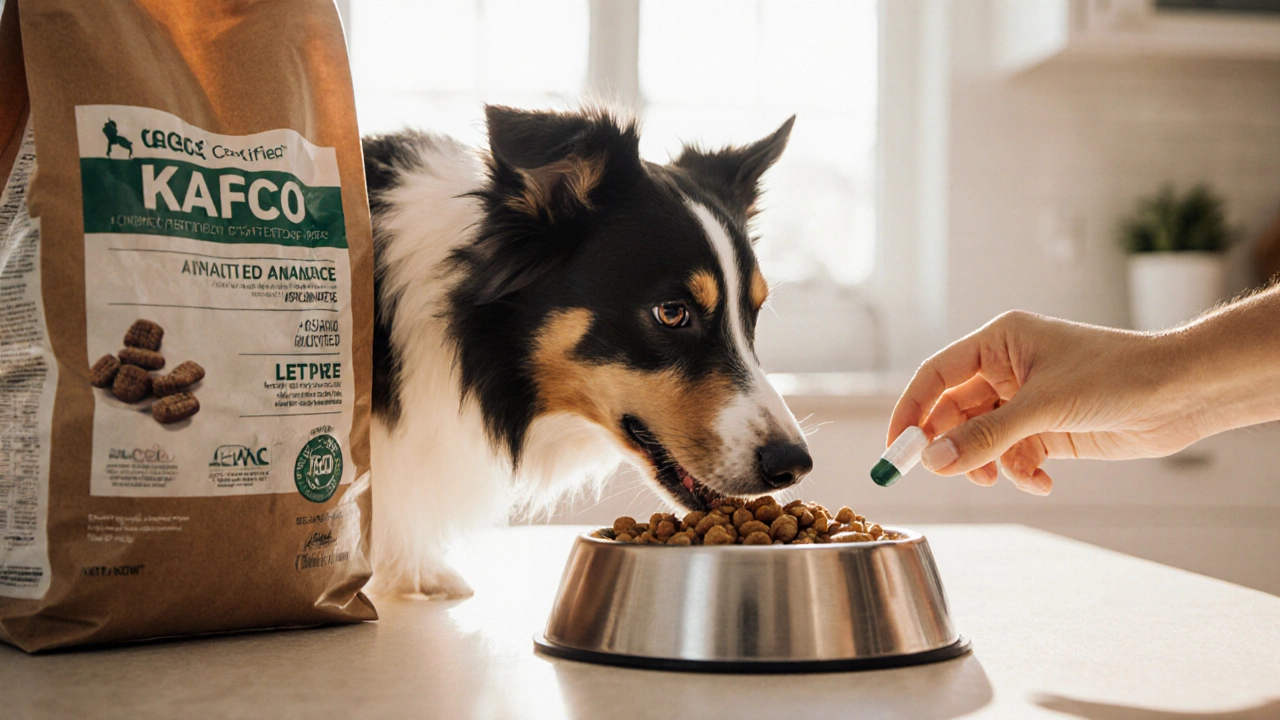
- Eats a high-quality commercial diet labeled "complete and balanced" (AAFCO statement on the bag)
- Has no signs of illness or age-related decline
- Is not on medication
- Has no food allergies or sensitivities
Then you’re probably just spending money on a placebo - for your dog and for you.
Supplements are tools, not insurance policies. They help when there’s a real gap. Don’t use them because you feel guilty. Use them because your dog needs them - and you’ve done the homework to prove it.
What to do next
Start by talking to your vet. Not the front desk person. Not a Facebook group. Your vet. Bring the supplement you’re thinking about. Ask: "Is this appropriate for my dog’s age, breed, and health status?"
Then pick one supplement. Not three. Not a whole cabinet. One. Give it time. Track changes. If it helps? Great. If not? Try another - or stop. No shame in that.
Most importantly - stop comparing your dog to someone else’s. That neighbor’s 12-year-old Golden Retriever might be running circles around your pup. But that doesn’t mean your dog needs the same stuff. Genetics, diet, activity level, and past injuries all matter. Your dog’s needs are unique. So should your choices.
Can I give my dog human supplements?
No. Human supplements often contain ingredients that are toxic to dogs - like xylitol, vitamin D in high doses, or iron. Even if the label says "natural," the dosage is designed for a 150-pound human, not a 20-pound dog. What’s safe for you can be deadly for them. Always use supplements made specifically for pets.
Are homemade dog supplements better than store-bought ones?
Not necessarily. While some owners make their own fish oil or turmeric mixes, it’s hard to get the dosage right. Too little won’t help. Too much can cause diarrhea, bleeding, or liver stress. Store-bought supplements from reputable brands are formulated with precise, tested doses. If you want to make your own, work with a veterinary nutritionist first.
Do puppies need supplements?
Most healthy puppies don’t. High-quality puppy food already has all the nutrients they need for growth. Adding extra calcium or vitamins can actually harm their developing bones. Only consider supplements if your vet identifies a specific deficiency - like low vitamin D in a puppy fed only homemade food.
How long should I give a supplement before deciding if it works?
It depends on the type. Joint supplements usually take 6-8 weeks. Skin and coat improvements show in 4-6 weeks. Probiotics can work in as little as 10 days. Don’t switch products too soon. Give each one a full trial period - and track changes with notes or photos.
Can supplements replace a good diet?
No. Supplements are meant to support - not replace - a balanced diet. If your dog is eating low-quality kibble and you’re hoping a joint pill will fix their energy or digestion, you’re putting the cart before the horse. Fix the diet first. Then add supplements only if needed.