Collar Safety Checker for Crates
Safety Assessment
Answer a few quick questions to determine if your dog's collar is safe during crate time.
Safety Results
Ever watched your dog settle into their crate, tail thumping, eyes closing-and wondered if that collar around their neck is doing more harm than good? It’s a simple question, but the answer isn’t as obvious as you might think. Millions of dog owners leave collars on during crate time without a second thought. But here’s the truth: that everyday collar could be a hidden danger.
Why Collars in Crates Are a Problem
Collars aren’t designed for unsupervised confinement. They’re made for walks, leash control, and ID tags. When your dog is curled up in a crate, they’re not walking. They’re sleeping, shifting positions, maybe even chewing at their fur. And that’s when the collar becomes a hazard.
Imagine your dog twists suddenly while lying down. The collar gets caught on the crate bars, the door latch, or even their own paws. If they panic, they can strangle themselves. This isn’t rare. The RSPCA in the UK logged over 800 cases in 2024 of dogs injured by collars during unsupervised rest-most of them happened in crates or kennels.
Even a well-fitted collar can snag. A quick jerk, a roll, a paw swipe-any of these can tighten it around the neck. And if your dog is a chewer? They might gnaw on the collar until the buckle breaks, swallowing plastic or metal parts. That’s an emergency vet trip waiting to happen.
What About ID Tags?
"But what if they get lost?" is the most common counterargument. You’re thinking ahead-and that’s smart. But leaving a collar on in the crate isn’t the solution. If your dog escapes the house while you’re out, they’re more likely to be found wearing a collar than without one. But if they’re safely crated, they’re not going anywhere.
There’s a better way: microchipping. In the UK, it’s legally required for all dogs over eight weeks old. A microchip is permanent, doesn’t snag, and won’t come off. When your dog is scanned at a shelter or vet, their details pop up instantly. No collar needed. And if you still want visible ID, use a breakaway collar with tags that you only put on when leaving the house.
When Is It Okay to Leave a Collar On?
There are exceptions. If your dog has a medical condition that requires immediate identification-like epilepsy, diabetes, or severe allergies-some vets may recommend a soft, breakaway collar with a medical tag. Even then, it should be checked daily for wear and fit.
Some working dogs, like search-and-rescue or therapy dogs, might wear a lightweight harness-style collar during crate time for quick access. But these are specialized tools, not standard collars. They’re designed to release under pressure and have no dangling tags.
For the average pet dog? The answer is no. Unless your vet specifically says otherwise, remove the collar before crating.
What Should Your Dog Wear in the Crate?
Nothing. That’s it. Just a clean, comfortable crate with a soft bed, maybe a chew-safe toy, and a little blanket if they like it. Dogs don’t need clothing or accessories to feel safe. In fact, too many items can make them anxious.
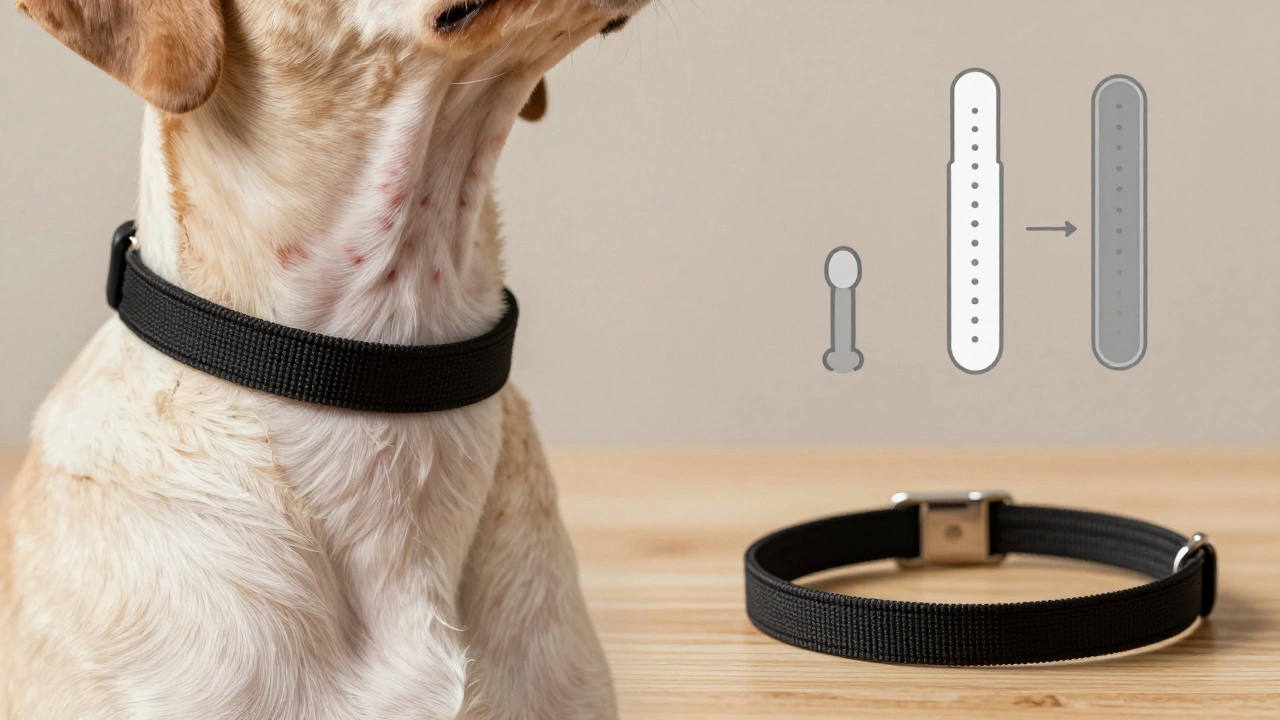
Many dogs prefer to lie on cool surfaces or curl up in a tight ball. A collar can restrict that natural behavior. It can rub their neck raw over time. You’ve probably noticed the hair loss or red marks just under their jawline? That’s often from a collar that’s too tight-or left on too long.
Think of the crate as their den. In the wild, dogs don’t wear collars in their dens. They rest, they sleep, they feel secure. Your job is to replicate that safety, not add unnecessary gear.
How to Make the Switch
If you’ve always left the collar on, switching takes a little adjustment. Start by removing it during short crate sessions-like when you’re home and just popping into the kitchen. Reward your dog with a treat when they settle without it. Gradually extend the time until they’re used to sleeping without it.
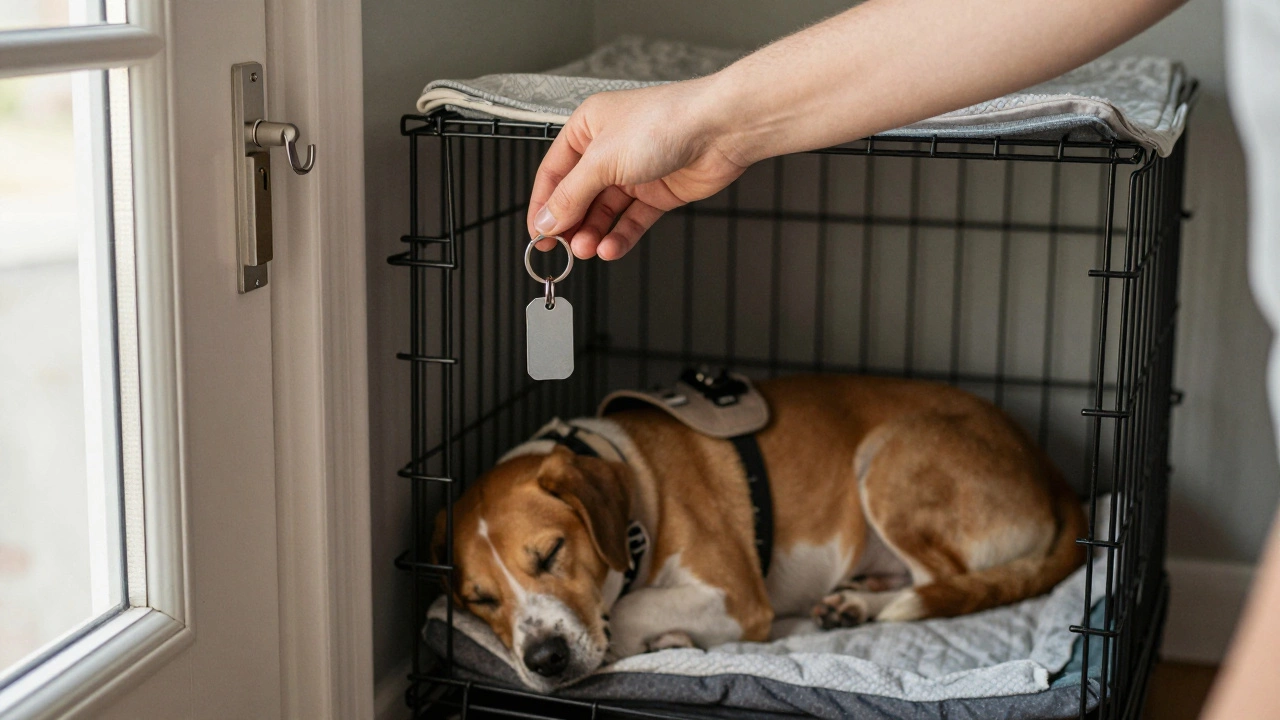
Keep the collar and tags nearby. Put them on right before you leave the house, and take them off as soon as you get back. Make it a routine. Dogs love routines. Soon, they’ll associate the collar with going out-and the absence of it with rest.
Also, check your dog’s neck weekly. Look for signs of irritation: redness, hair loss, scabs, or a foul smell. If you see any of these, it’s not just about the crate-it’s about collar fit, material, or how long it’s been on. Switch to a soft, padded collar if you must use one outside the crate.
Alternatives to Traditional Collars
Not all collars are created equal. If you’re worried about your dog’s ID being lost, consider:
- Breakaway collars: These snap open under pressure. Great for indoor use, but still not ideal for crates.
- Soft fabric collars: Less likely to cause chafing, but still pose a snag risk.
- Harnesses: Better for walking, but too bulky and restrictive for sleeping.
- Microchip + engraved tag on leash: Keep the tag on your keyring or leash. When you’re out, it’s there. When you’re home, it’s off.
The best option? Microchip + no collar in the crate. It’s simple, safe, and meets UK legal standards.
What Do Vets and Trainers Say?
Most UK-based veterinarians and certified dog trainers agree: collars should be removed during unsupervised rest. The British Veterinary Association (BVA) updated their guidelines in 2025 to explicitly recommend removing collars during crate time unless medically necessary.
Trainers who work with anxious dogs say the same thing. A collar can increase stress. It’s a constant physical reminder of being controlled-something dogs don’t need when they’re trying to relax. Removing it helps them feel more at ease.
One trainer in Bristol, who works with rescue dogs, told me: "I’ve seen dogs go from shaking in their crates to sleeping soundly within days of removing their collars. It’s not magic. It’s just freedom."
Final Answer: No, Don’t Leave Collars On in Crates
There’s no benefit to keeping a collar on your dog in the crate. Only risks. Strangulation. Choking. Skin damage. Swallowed parts. Even if your dog seems fine now, accidents happen in seconds.
Microchipping covers your bases for identification. Removing the collar keeps your dog safe while they rest. It’s a small change with a big payoff.
Start tonight. Take off the collar before you put your dog in their crate. Watch them settle in deeper. Feel the quiet. That’s peace of mind you can’t buy.
Can a dog suffocate in a crate with a collar on?
Yes. If a collar gets caught on the crate bars, door, or bedding, and the dog panics or twists suddenly, it can tighten around the neck and restrict breathing. This has led to serious injuries and even deaths in dogs left unattended with collars on. Breakaway collars reduce but don’t eliminate this risk.
Should I remove my dog’s collar at night even if they’re not crated?
It’s a good idea. Dogs sleep in many positions-tucked, stretched, rolled over. A collar can rub their skin raw, especially if it’s stiff or has a metal tag. Removing it at night gives their neck a chance to breathe and reduces the chance of irritation or injury. Only keep it on if your vet advises it for medical reasons.
Is a harness safer than a collar in the crate?
No. Harnesses are bulkier and have more straps and buckles, which can snag more easily than a simple collar. They’re designed for walking, not sleeping. In a crate, a harness can restrict movement and cause more discomfort than a collar. Neither should be worn during unsupervised rest.
What’s the best way to identify my dog if they get out?
Microchipping is the gold standard in the UK. It’s permanent, legal, and works even if your dog loses their collar. For extra visibility, attach a tag to your keyring or leash. When you’re out walking, your dog has ID. When they’re home, they’re safe without it.
How do I know if my dog’s collar is too tight?
You should be able to fit two fingers comfortably under the collar. If you can’t, it’s too tight. If you can fit more than two, it’s too loose. Check every week-dogs gain or lose weight, and their neck size changes. A collar that fit last month might be dangerous now.