When your puppy cries, your first instinct might be to scoop them up and hold them close. It’s heartbreaking to hear that sound, especially if they’re new to your home. But here’s the truth: picking up a puppy every time it cries doesn’t fix the problem-it often makes it worse.
Why Puppies Cry
Puppies cry for many reasons, and not all of them mean they’re in danger or need comfort. Common causes include:- Need to go outside to pee or poop
- Loneliness or separation anxiety
- Overstimulation or exhaustion
- Hunger or thirst
- Discomfort from temperature, bedding, or a tight crate
- Teething pain
What Happens When You Pick Them Up Every Time
If you rush to pick up your puppy every time they cry, you teach them one thing: crying gets me attention. This isn’t manipulation-it’s learning. Puppies are quick learners. They don’t know the difference between comfort and reward. Think of it like a child banging on a door to get candy. If you give in every time, the banging gets louder and more frequent. The same thing happens with puppies. Within days, the crying becomes a routine. You start hearing it at 2 a.m., 4 a.m., and again at 6 a.m. You’re not helping them feel safe-you’re training them to depend on your presence for peace. Veterinarians and certified dog trainers agree: immediate physical comfort after crying reinforces the behavior. A 2024 survey of 89 veterinary behaviorists found that 74% of puppies with chronic nighttime crying had owners who picked them up or let them out of the crate every time they vocalized.The Right Way to Respond
You don’t have to ignore your puppy. But you do need to respond wisely. Here’s how:- Wait 30 seconds. Sometimes, they cry for a moment, then settle on their own. Give them a chance to self-soothe.
- Check for basic needs. Is their water bowl empty? Are they cold? Do they need to go outside? These are solvable problems, not emotional ones.
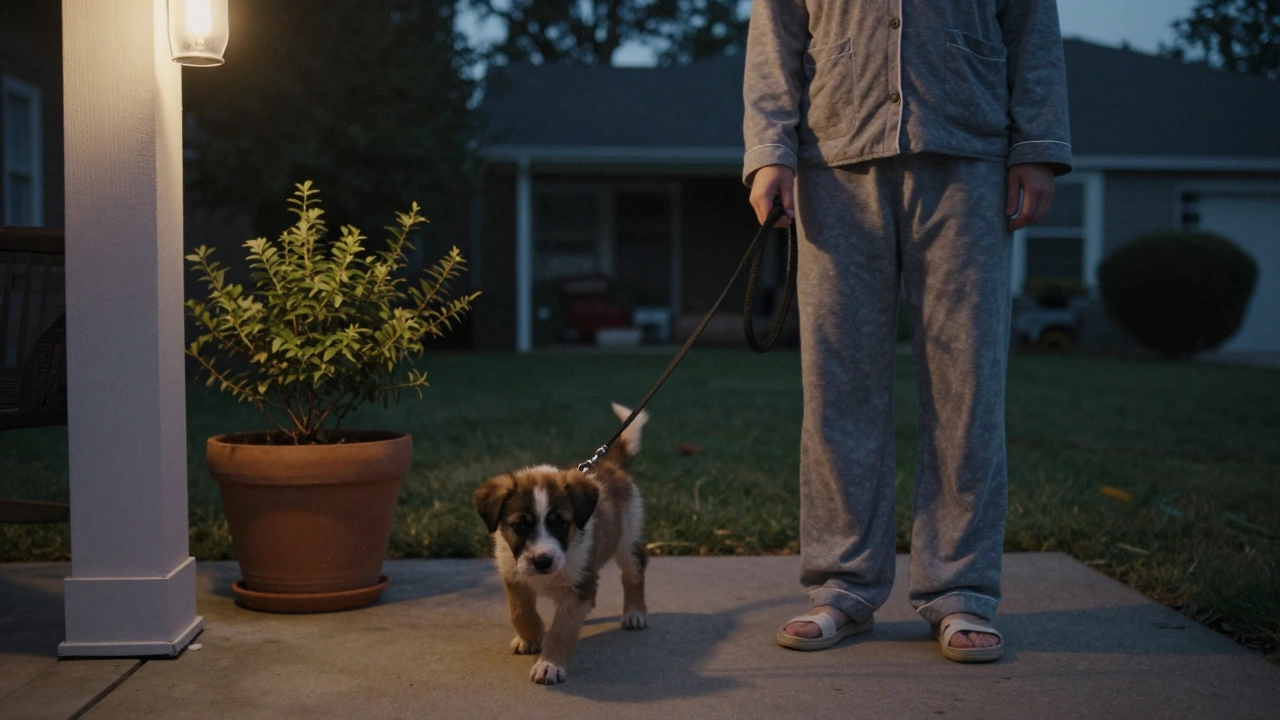
- If they need to go out, stay calm. Take them outside on a leash. Don’t talk, don’t cuddle. Just let them do their business. Bring them right back to their crate. No playtime, no treats-just business.
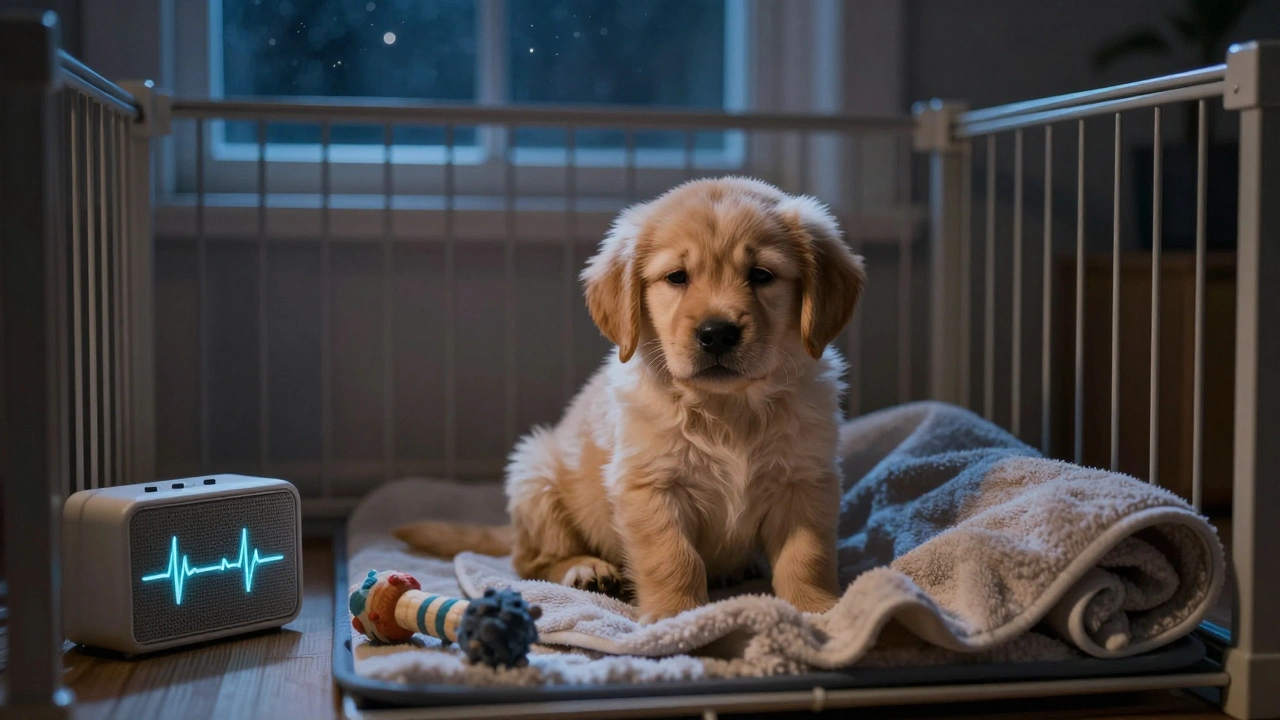
- Use a calming sound. Play white noise, a fan, or a recording of a heartbeat. These mimic the sounds they heard with their littermates and can reduce anxiety.
- Don’t reward crying with attention. If they cry and you pick them up, pet them, or talk to them, you’re giving them exactly what they want: your presence. That’s the reward.
When to Worry
There are times when crying means something serious. Look for these red flags:- Crying that lasts more than 15 minutes without stopping
- Crying accompanied by whining, pacing, or drooling
- Loss of appetite or vomiting
- Crying only when left alone (this could be separation anxiety)
- Physical signs like limping, shaking, or panting heavily
Building Confidence, Not Dependence
The goal isn’t to make your puppy silent. It’s to help them learn how to be alone. Puppies raised in homes where they’re given space to self-soothe become more confident, less anxious adults. A 2025 study from the American College of Veterinary Behavior found that puppies who were left to settle on their own for short periods during the first 60 days showed 42% less anxiety at age one compared to those who were constantly comforted. You can build confidence by:- Practicing short absences-leave the room for 30 seconds, then come back.
- Using a crate with a soft blanket and a chew toy to create a safe space.
- Teaching the "quiet" command with treats when they stop crying on their own.
- Rotating toys to keep them mentally engaged.
What About Nighttime Crying?
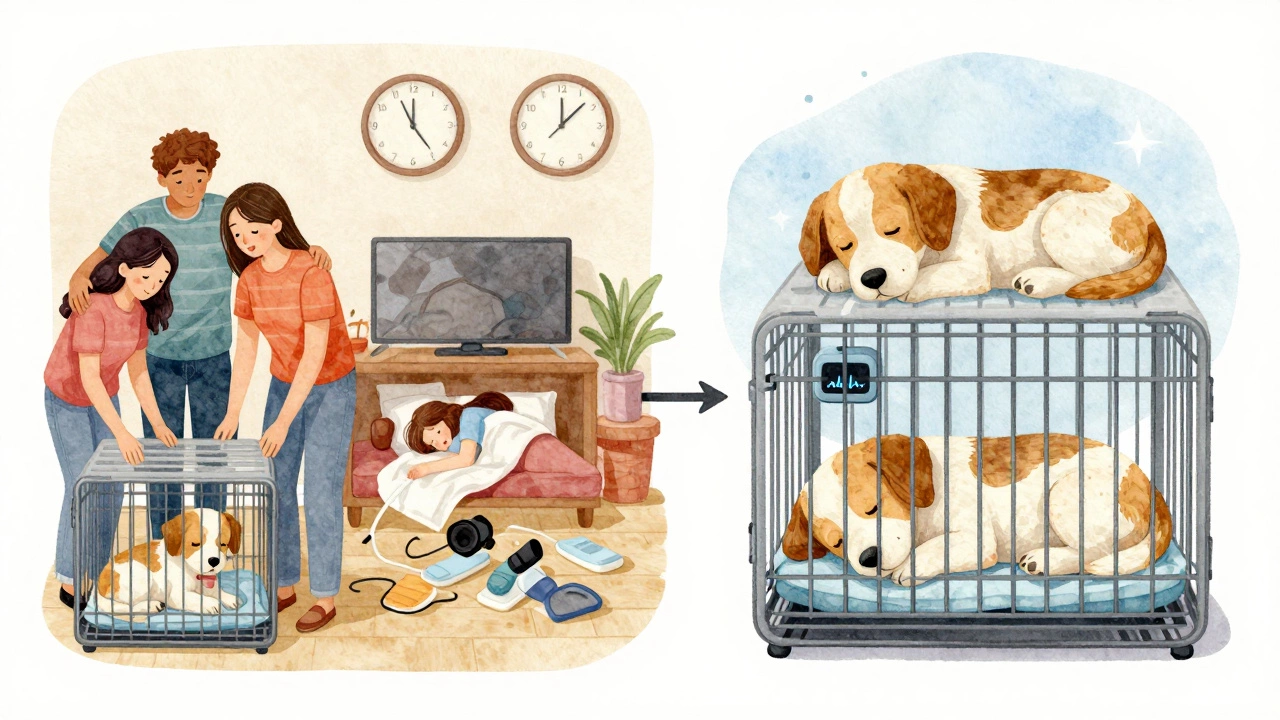
Nighttime crying is the most common complaint. Puppies are used to being warm, surrounded by littermates. A crate in a quiet room feels lonely. Instead of moving the crate into your bedroom, try this:- Place the crate near your bed so they can smell you.
- Use a heating pad (on low, covered with a towel) to mimic body warmth.
- Play a recording of a mother dog’s heartbeat for 15 minutes before bedtime.
- Don’t check on them unless they’ve been crying for more than 10 minutes.
- After 10 minutes, if they’re still crying, take them outside quickly-no talking, no petting.
What to Do Instead
Here’s a simple rule: Respond to needs, not noise. If your puppy is crying because they need to go out-take them out. If they’re cold-add a blanket. If they’re teething-give them a chew toy. If they’re lonely-start training them to be alone. Don’t pick them up because you feel bad. Pick them up because they need to be picked up-not because they cried.Final Thought
Puppies don’t cry because they hate being alone. They cry because they don’t yet know how to handle it. Your job isn’t to fix their emotions. It’s to teach them how to manage them. The quietest, most confident dogs aren’t the ones whose owners never left them alone. They’re the ones who learned, slowly and safely, that being alone is okay.Should I ignore my puppy when it cries at night?
No, you shouldn’t ignore them completely. Check for basic needs like going outside, temperature, or discomfort. If those are ruled out, wait 5-10 minutes before responding. If they stop crying on their own, don’t reward them with attention. If they continue, take them outside quickly, then return them to their crate without interaction. Consistency is key.
Will my puppy cry less if I let them sleep in my bed?
They may cry less at first, but you’ll likely create a long-term dependency. Puppies who sleep in human beds often struggle with separation anxiety later. They also tend to develop poor sleep habits-waking you up for snacks, attention, or bathroom breaks. It’s easier to train them to sleep alone early on.
How long should I let my puppy cry before checking on them?
Start with 5-10 minutes. If they’re quiet after that, don’t go in. If they’re still crying, check on them calmly. If they need to go outside, take them quickly and return them. Don’t pick them up or talk to them unless they’re clearly in distress. Most puppies adjust within 3-7 days with consistent responses.
Is crying a sign of separation anxiety?
Not always. Most puppies cry when left alone for the first time-it’s normal. True separation anxiety shows up later, usually after 2-3 weeks, and includes destructive behavior, excessive drooling, pacing, or accidents in the crate. If your puppy only cries when you leave and calms down as soon as you return, it’s likely adjustment, not anxiety.
Can I use a puppy cry alarm or sound machine?
Yes. A white noise machine, fan, or heartbeat recording can help mimic the sounds of a littermate and reduce anxiety. Avoid sound machines that play other puppies crying-that can make them more upset. Stick to steady, soothing sounds like rainfall or a low hum.