
Homemade Dog Food: What Works, What Doesn't, and What Vets Really Think
When you make homemade dog food, a diet prepared at home using fresh ingredients instead of commercial kibble or canned food. Also known as home-cooked dog diet, it’s become popular among owners who want more control over what their dog eats. But here’s the thing—just because you’re using chicken, rice, and carrots doesn’t mean it’s balanced. Many well-meaning pet parents accidentally create meals that lack essential nutrients, leading to long-term health problems. A 2021 study from the University of Illinois found that 95% of homemade dog food recipes shared online were nutritionally incomplete, even ones from well-known blogs.
This is where dog nutrition, the science of providing the right mix of proteins, fats, vitamins, and minerals to support a dog’s health comes in. Dogs need more than just meat and veggies. They require calcium for bones, taurine for heart health, and specific fatty acids for skin and coat. Even if you’re feeding lean beef and sweet potatoes every day, your dog could still be missing key micronutrients. That’s why many vets recommend adding dog supplements, vitamins or minerals added to food to fill nutritional gaps—but only after a proper assessment. Giving your dog a fish oil capsule because you read it helps with arthritis? Fine. But dumping random human multivitamins into their bowl? That’s risky. Some supplements, like xylitol or excessive vitamin D, can be deadly in small doses.
And then there’s the dog diet, the overall pattern of food and feeding habits over time. It’s not just what you feed—it’s how often, how much, and how it’s prepared. Boiling meat removes nutrients. Raw diets carry bacteria risks. Overcooking vegetables makes them harder to digest. Your dog’s age, breed, activity level, and health conditions all change what they need. A senior Labrador with joint pain needs different fuel than a growing Border Collie puppy. That’s why one-size-fits-all recipes fail.
What you’ll find in these posts isn’t a list of recipes. It’s the truth behind the hype. You’ll see how fish oil and olive oil affect your dog’s skin, why most dogs don’t need supplements if they’re eating quality commercial food, and what wet food options actually deliver real nutrition. You’ll learn why protein shakes aren’t safe, how to spot if your dog’s diet is causing problems, and what simple swaps can make a real difference without turning your kitchen into a lab.
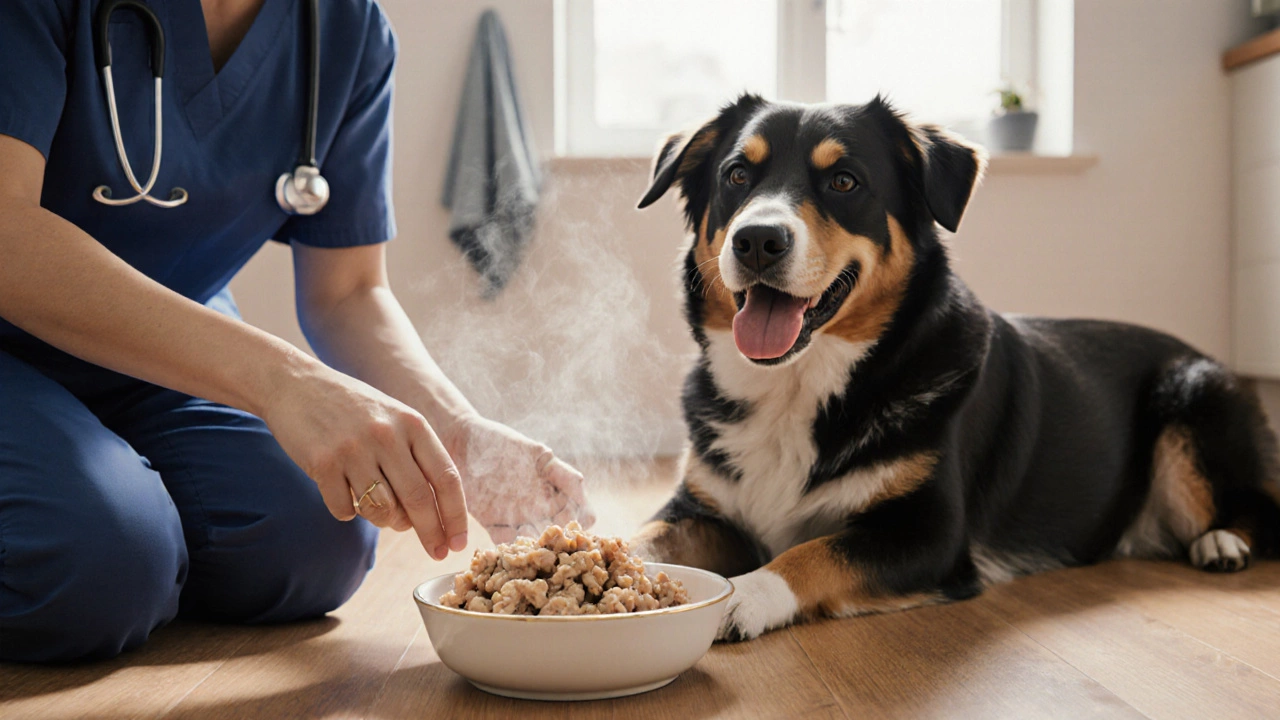
Is Ground Chicken Good for Dogs? A Vet-Backed Guide
Ground chicken can be a healthy, affordable protein source for dogs when cooked plain and fed in the right amounts. Learn what to avoid, how much to give, and when it’s not safe.
Popular posts