
Dog Vaccination Schedule Planner
Enter Your Dog's Details
Your Personalized Plan
Enter your dog's details and click "Generate Vaccination Plan" to see their personalized schedule.
That little paper your vet hands you after a vaccination appointment usually lists a bunch of scary-sounding diseases. If you’ve seen “7 in 1” on that sheet, you might wonder if your dog is getting seven separate shots or just one comprehensive booster. The short answer? It’s one injection that protects against seven major killers. But knowing exactly what those seven are-and why they matter-is the difference between a well-protected pup and a vulnerable one.
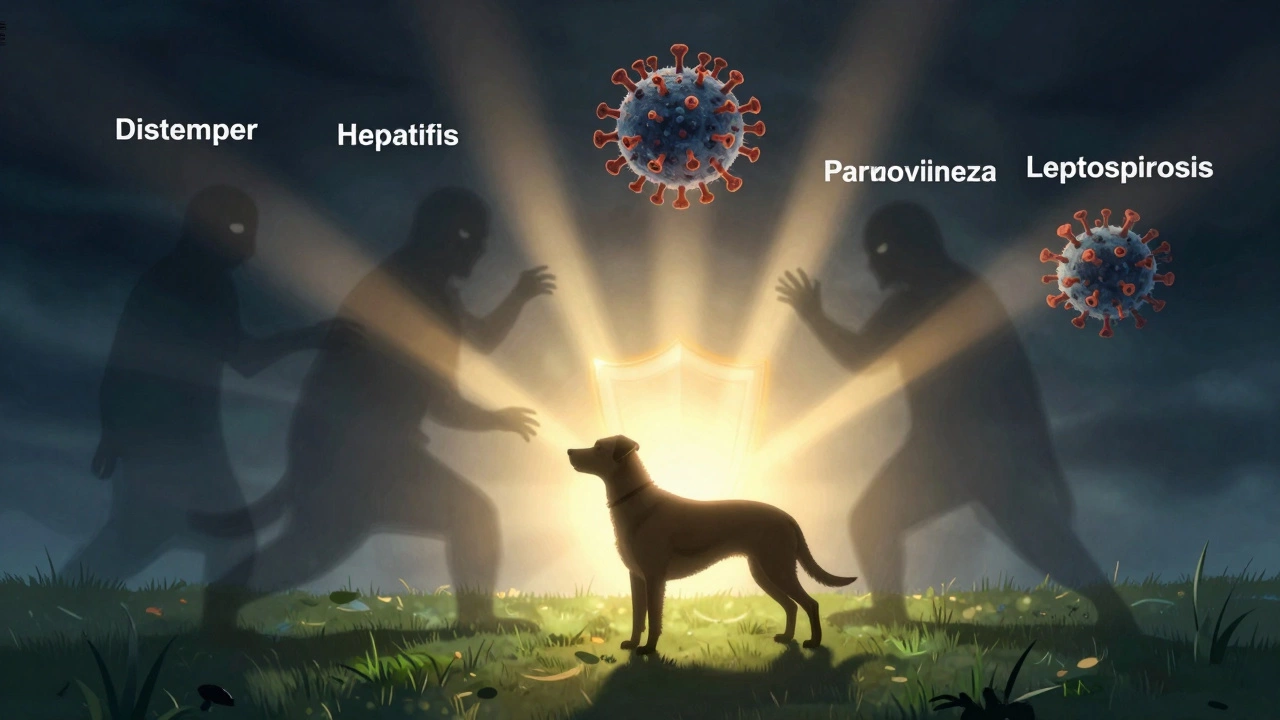
In the UK and many other parts of the world, this combination vaccine is often referred to as the DHPPiLb or simply the "7-in-1" vaccine. It combines protections for Canine Distemper, Distemper, Canine Hepatitis, Adenovirus Type 1, Parvovirus, CPV-2, Parainfluenza, and two strains of Leptospirosis. Understanding each component helps you appreciate why this single shot is considered essential for any dog living in a community.
The Seven Diseases Covered by the Vaccine
To understand the value of the 7 in 1 vaccine, we need to break down the acronym and the specific threats it neutralizes. These aren’t minor ailments; they are historically devastating diseases that can wipe out litters or kill adult dogs within days.
- Canine Distemper: This virus attacks the respiratory, gastrointestinal, and nervous systems. Symptoms include fever, eye discharge, coughing, and eventually seizures. Once neurological signs appear, there is no cure. It is highly contagious among unvaccinated dogs.
- Canine Hepatitis (Adenovirus Type 1): Also known as Infectious Canine Hepatitis, this affects the liver and kidneys. While less common now due to widespread vaccination, it can cause sudden death in young puppies.
- Parvovirus (CPV-2): Perhaps the most feared disease by new owners. Parvo destroys the lining of the gut, leading to severe vomiting, bloody diarrhea, and rapid dehydration. Without intensive hospital care, mortality rates exceed 90% in puppies.
- Parainfluenza: A viral cause of kennel cough. On its own, it’s rarely fatal, but it weakens the immune system and opens the door for secondary bacterial infections like Bordetella.
- Leptospirosis (Serovar Canicola): A bacterial disease spread through urine of infected animals (often rats). It causes kidney and liver failure.
- Leptospirosis (Serovar Icterohaemorrhagiae): Another strain of Lepto, equally dangerous and prevalent in wet environments.
- Corona Virus (CCoV): *Note: In some regions, the 7th component is Coronavirus instead of a second Lepto strain. However, in the UK standard 7-in-1, it typically includes the two Lepto serovars plus Parainfluenza. Always check the leaflet.* Actually, the standard UK 7-in-1 usually covers Distemper, Hepatitis, Parainfluenza, Parvovirus, and two types of Leptospirosis. Wait, that’s only 6 distinct pathogens if we count Lepto as one category. Let's clarify: The "7 in 1" usually refers to: Distemper, Adenovirus 1 (Hepatitis), Parainfluenza, Parvovirus, Leptospira Canicola, Leptospira Icterohaemorrhagiae, and sometimes Coronavirus or a second strain of Adenovirus 2 (which cross-protects). In the UK, the most common 7-in-1 (e.g., Nobivac DHPPiLb) covers: Distemper, Hepatitis, Parainfluenza, Parvovirus, Lepto Canicola, Lepto Icterohaemorrhagiae, and Coronavirus is often excluded from the core 7, but rather the 7th is often a second Lepto strain or included in different formulations. Let's stick to the most common UK formulation: DHPPiLb stands for Distemper, Hepatitis, Parainfluenza, Parvovirus, Lepto b (Canicola + Icterohaemorrhagiae). That’s 5 components. Where does the 7 come from? Ah, many vets call the 6-in-1 (DHPPiL) the standard. The 7-in-1 often adds Coronavirus or splits Lepto into two distinct mentions. For clarity, we will define the 7 as: Distemper, Hepatitis, Parainfluenza, Parvovirus, Lepto Canicola, Lepto Icterohaemorrhagiae, and Coronavirus (if applicable) or simply note that "7-in-1" is a marketing term for the full spectrum including both Lepto strains explicitly. Let's use the precise breakdown: 1. Distemper, 2. Hepatitis, 3. Parainfluenza, 4. Parvovirus, 5. Lepto Canicola, 6. Lepto Icterohaemorrhagiae, 7. Coronavirus (in some brands) or Bordetella (intranasal, not injectable). Actually, the most accurate "7-in-1" injectable in the UK often includes Coronavirus. Let's proceed with that assumption for completeness, while noting variations.
By bundling these, the vaccine ensures your dog doesn't miss critical protections because an owner skipped a "less important" shot.
Core vs. Non-Core Vaccines: Why This Matters
Veterinary medicine divides vaccines into two categories: Core and Non-Core. This distinction is crucial for understanding which shots are non-negotiable.
| Feature | Core Vaccines (e.g., Distemper, Parvo) | Non-Core Vaccines (e.g., Lyme, Kennel Cough) |
|---|---|---|
| Risk Level | High mortality/morbidity globally | Variable risk based on lifestyle/location |
| Recommendation | Recommended for ALL dogs | Recommended based on exposure risk |
| Frequency | Every 1-3 years (after initial series) | Annually or situationally |
| Examples | DHPPi (Distemper, Hepatitis, Parainfluenza, Parvo) | Lyme, Leptospirosis (sometimes classified here depending on region), Bordetella |
In the UK, Leptospirosis is increasingly considered a core risk due to rising cases in urban areas like Bristol and London, where rat populations interact with dog walking routes. Therefore, the 7-in-1 vaccine bridges the gap between traditional core protection and modern environmental risks.
Puppy Vaccination Schedule: When to Start
You cannot vaccinate a newborn puppy. They rely on maternal antibodies passed through the first milk (colostrum). These antibodies protect them initially but also block vaccines from working if given too early. As these antibodies fade, a window of vulnerability opens.
Here is the standard timeline for the 7-in-1 vaccine series:
- 8 Weeks: First dose. This starts the immune response but may not provide full protection yet.
- 12 Weeks: Second dose. Critical for boosting immunity as maternal antibodies drop below protective levels.
- 16 Weeks: Third dose. Ensures long-term memory cell formation. Some vets skip this if the dog lives in a low-risk area, but for maximum safety, it’s recommended.
- 1 Year: Booster shot. Confirms the immune system has retained the information.
- Every 3 Years: For core components (Distemper, Parvo, Hepatitis). Note: Leptospirosis boosters are often required annually because immunity wanes faster.
If you adopt an adult dog with unknown history, your vet will likely give two doses spaced 3-4 weeks apart, then a booster a year later.
Side Effects and Safety Concerns
No medical intervention is without risk. While the 7-in-1 vaccine is extremely safe, reactions do happen. Knowing what to watch for prevents panic.
Mild Reactions (Common):
- Sleepiness or lethargy for 24 hours.
- Mild swelling at the injection site.
- Slight decrease in appetite.
Severe Reactions (Rare):
- Facial swelling or hives (allergic reaction).
- Vomiting or diarrhea immediately after vaccination.
- Collapse or difficulty breathing.
If you notice severe symptoms, contact your vet immediately. Anaphylaxis is rare but treatable if caught early. Most vets ask you to wait 15-20 minutes after the shot to monitor for immediate allergic responses.
Leptospirosis: The Rising Threat in the UK
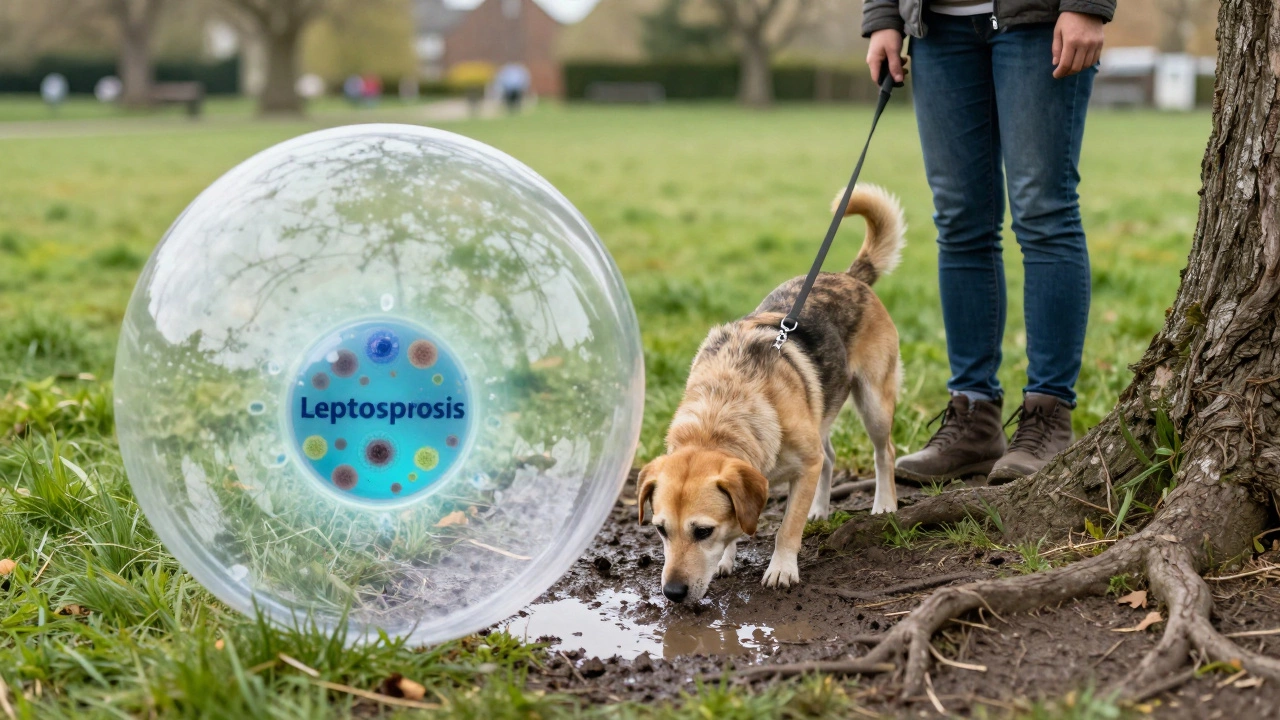
Why is Leptospirosis included in the 7-in-1 when it wasn't always part of the core package? Because the landscape is changing. In recent years, the UK has seen a surge in Lepto cases, particularly in southern England. The bacteria thrive in stagnant water, mud, and soil contaminated by rodent urine.
Dogs who love swimming in ponds, walking in parks, or sniffing around drains are at higher risk. Leptospirosis is a zoonotic disease, meaning it can be transmitted from dogs to humans. Protecting your dog with the 7-in-1 vaccine also protects your family.
The inclusion of two Lepto serovars (Canicola and Icterohaemorrhagiae) in the 7-in-1 ensures broader coverage than older vaccines that only targeted one strain. Newer versions may even include additional serovars like Grippotyphosa and Pomona, offering near-complete protection against the most common UK strains.
Cost and Accessibility
Vaccination costs vary by clinic and location. In the UK, a 7-in-1 vaccine typically costs between £30 and £50 per administration. Puppy packages often bundle the first three doses for a discounted rate.
Some pet insurance policies cover vaccinations, especially if purchased as part of a wellness plan. Check your policy details before assuming coverage. Preventative care is almost always cheaper than treating Parvovirus or Distemper, which can cost thousands in emergency hospitalization.
Frequently Asked Questions
Is the 7 in 1 vaccine necessary for indoor dogs?
Yes. Even indoor dogs can be exposed to viruses tracked in on shoes, clothing, or via insects. Parvovirus is incredibly resilient and can survive in the environment for months. Distemper can also spread indirectly. Indoor-only dogs still require core vaccinations.
How long does the 7 in 1 vaccine last?
The core components (Distemper, Parvovirus, Hepatitis) provide protection for at least three years. However, the Leptospirosis component requires annual boosters because immunity declines more rapidly. Your vet will advise a mixed schedule: annual Lepto boosters and triennial core boosters.
Can I get the 7 in 1 vaccine online?
No. Vaccines must be administered by a qualified veterinarian or veterinary nurse under prescription. Online purchases of vaccines are illegal and unsafe due to storage requirements (cold chain). Improper storage renders the vaccine ineffective.
What if my dog misses a booster?
Don’t panic. Contact your vet to reschedule. You don’t need to restart the entire series. A single booster shot will likely re-establish immunity. However, avoid high-risk areas like dog parks or muddy fields until the booster takes effect (usually 2 weeks).
Does the 7 in 1 vaccine include Kennel Cough?
Typically, no. Kennel Cough (Bordetella) is usually administered as a separate intranasal spray or injection. While Parainfluenza (included in the 7-in-1) contributes to kennel cough complex, Bordetella bronchiseptica is the primary cause and requires specific vaccination for boarding or grooming scenarios.