
Pet-Friendly Airline Checker
Check Pet Policy
Enter your airline name to see if pets are allowed on board and what requirements apply.
Policy Information
Enter an airline name to see pet policy details.
Planning to fly with your pet? You’re not alone. But not every airline lets you bring your dog, cat, or rabbit onboard - and some don’t allow them at all. If you’ve ever been shocked to find out your favorite airline won’t take your furry friend, you’re not alone. In 2026, pet travel rules are tighter than ever, and the list of airlines that outright ban pets is growing. This isn’t about inconvenience - it’s about safety, regulations, and airline policies that have changed since the pandemic.
Why Some Airlines Don’t Allow Pets
It’s not that airlines hate pets. It’s that the risks have become harder to manage. In 2024, the U.S. Department of Transportation reported over 1,000 pet incidents on U.S. flights - including injuries, escapes, and deaths. Many airlines responded by cutting pet travel entirely. Others made it so expensive and complicated that most pet owners give up.
Low-cost carriers, in particular, have moved away from pet travel. Why? Because they don’t have the staff, training, or infrastructure to handle live animals safely. Cargo holds aren’t climate-controlled enough for long flights. In-cabin pets can trigger allergies, cause panic, or bite. Airlines that used to let pets fly in the cabin now require proof of training, health certificates, and even behavioral assessments - and even then, they often say no.
Airlines That Do Not Allow Pets in 2026
Here are the major airlines that currently do not allow any pets - not even service animals - on their flights:
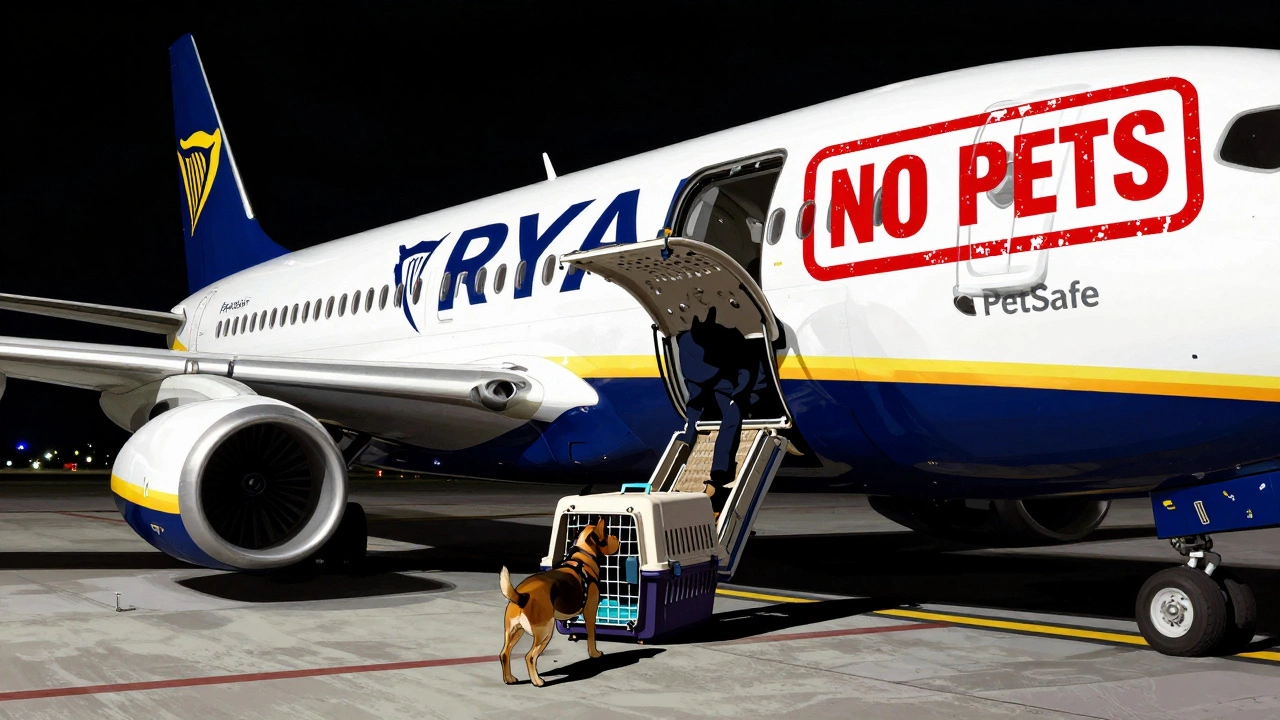
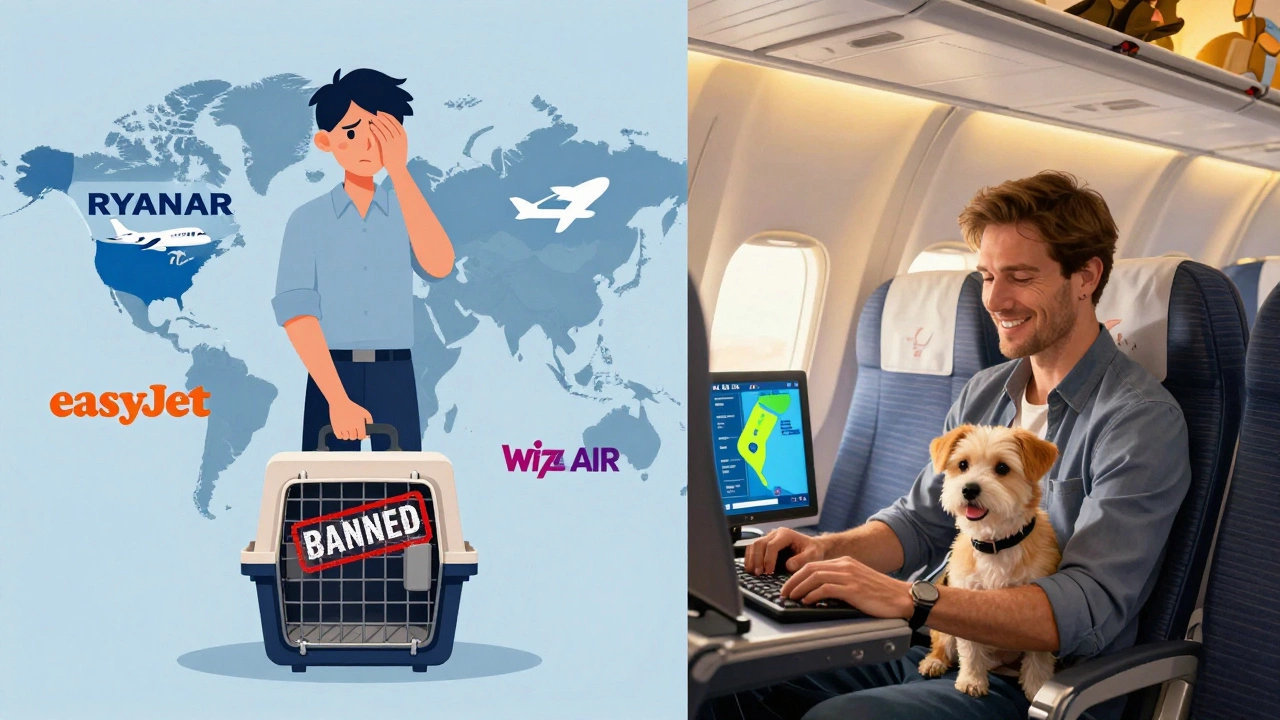
- Ryanair: No pets of any kind, not even guide dogs. They’ve banned all animals since 2021, citing cabin space and hygiene concerns.
- EasyJet: Only certified service animals are allowed. Emotional support animals and pets are not permitted. This policy has been in place since 2022.
- Wizz Air: No pets allowed in the cabin or cargo. Even small pets in carriers are refused. Their website states: “We do not transport live animals.”
- Jetstar (Australia & Asia): No pets in the cabin. Only trained service animals are accepted, and even then, only on select routes. Regular pets are turned away at check-in.
- AirAsia: No pets allowed on any flights, including service animals, unless they are certified guide dogs for the visually impaired. Even then, advance approval is required and rarely granted.
- Philippine Airlines: No pets in the cabin or cargo hold. They suspended all pet transport in 2023 due to regulatory changes and safety audits.
These airlines don’t just restrict pets - they’ve removed the option entirely. If you try to check in with a pet carrier, you’ll be turned away. No exceptions. No refunds. No second chances.
What About Service Animals?
Service animals - dogs trained to assist people with disabilities - are protected under international laws like the Air Carrier Access Act (ACAA) in the U.S. and similar rules in the EU. But here’s the catch: airlines are allowed to require documentation. In 2025, Ryanair and EasyJet started requiring a completed service animal form from a licensed professional, dated within the last year. Many pet owners thought their emotional support dog counted - it doesn’t. Emotional support animals are no longer recognized as service animals by any major airline in the U.S., EU, or UK.
So if you’re flying with a service dog, you still need to call the airline at least 48 hours ahead, bring proof of training, and sometimes even a vet letter. Don’t assume you’re covered. Always confirm.
What If Your Airline Doesn’t Allow Pets?
So your airline says no. What now?
- Switch airlines: Look for ones that still allow pets. Alaska Airlines, Delta, United, Lufthansa, and KLM still offer pet travel - in-cabin or cargo - with clear rules.
- Use a pet transport service: Companies like PetAirway, PetRelocation, or PetJet specialize in moving animals safely by air. They handle paperwork, customs, and climate-controlled cargo. Costs start around $500, but it’s safer than trying to sneak your pet through.
- Drive instead: If you’re within 500 miles, driving is often cheaper, less stressful, and more reliable. Many hotels now allow pets, and rest stops are pet-friendly.
- Boarding or pet sitters: For short trips, leaving your pet behind with a trusted sitter might be the best option. No stress. No risk. No surprises.
Don’t try to hide your pet. Airlines use sniffer dogs at airports. They check carriers. They scan for movement under seats. If you’re caught, you’ll be fined, your pet may be quarantined, and you could be banned from flying with animals again.
What Airlines Still Allow Pets?
Even though some airlines have quit pet travel, others still offer it - and they’re getting better at it. Here are the ones that still welcome pets in 2026:
- Alaska Airlines: Allows pets in-cabin for $125 each way. They’ve improved carrier size limits and temperature controls.
- Delta Air Lines: Pets in cabin ($125) and cargo ($200+). They’ve added climate-controlled holding areas and real-time tracking.
- United Airlines: PetSafe program. In-cabin and cargo options. They now require a health certificate from a vet within 10 days of travel.
- Lufthansa: Pets in cabin (up to 8kg) and cargo. They allow pets on most European and transatlantic routes.
- KLM: Pets in cabin and cargo. They offer a “Pet Lounge” at Amsterdam Airport where pets wait in comfort before boarding.
- Air Canada: Allows pets in-cabin and cargo. They require a vet health certificate and advance booking.
These airlines have invested in pet safety. They train staff. They monitor cargo holds. They even let you track your pet’s flight status online. That’s the kind of service you want - not just any airline that says yes.
How to Avoid Getting Turned Away
If you’re planning to fly with your pet, here’s what you need to do - in order:
- Check the airline’s pet policy - not just on their homepage. Look for the “Travel with Pets” page. Policies change often.
- Call the airline - don’t rely on chatbots or websites. Ask: “Do you allow pets in the cabin or cargo on my exact route?”
- Book early - pet spots are limited. On United, only 2 pets per flight are allowed in the cabin. Book at least 3 weeks ahead.
- Get the right carrier - it must fit under the seat. Hard-sided carriers are required on most airlines. Soft carriers are often rejected.
- Get a vet health certificate - required by almost every airline. It must be issued within 10 days of travel.
- Arrive early - check-in for pets takes 30-60 minutes extra. Don’t rush.
One mistake - like showing up with the wrong carrier or no health papers - and your trip is canceled. Your pet doesn’t fly. You lose your ticket. And you’re out of pocket.
Final Tip: Know the Rules Before You Book
Don’t wait until the day of your flight to find out your airline doesn’t allow pets. Check the policy the moment you book. If you’re flying internationally, check the destination country’s rules too. Some places - like Japan, Australia, and New Zealand - require months of quarantine even if the airline allows it.
There’s no one-size-fits-all rule. But there is one truth: if you’re flying with a pet in 2026, you’re doing it on the airline’s terms. Not yours. Plan ahead. Know the rules. And if your airline says no - respect it. Your pet’s safety depends on it.