Dog Air Travel Cost Calculator
Estimate the total cost of flying a 50 lb dog based on your specific travel needs. Remember: airlines typically require cargo for dogs over 20 lbs, and costs vary significantly based on destination and requirements.
Can you really take a 50 lb dog on a plane? The short answer is yes - but not the way you might think. If you’re planning to fly with a dog that weighs 50 pounds, you’re stepping into a world of strict rules, hidden fees, and paperwork that most first-time pet travelers never see coming. This isn’t about bringing your pup into the cabin with you like a tiny Chihuahua in a carrier. At 50 pounds, your dog falls squarely into the cargo hold category on nearly every airline - and that changes everything.
Why 50 Pounds Is a Big Deal
Most airlines draw the line for in-cabin pets at 20 pounds - including the carrier. That means if your dog weighs 50 pounds, even the smallest approved carrier will push you over the limit. Airlines like Delta, United, American, and British Airways all use this 20-pound rule. So if your dog is 50 pounds, you’re not getting them into the cabin. Not even if they’re a service animal - unless they’re a certified psychiatric service dog with official documentation, and even then, some airlines require advance notice and medical forms.That leaves one option: cargo. And cargo isn’t just a room in the belly of the plane. It’s a climate-controlled, pressurized hold with its own set of rules, risks, and requirements. The moment your dog goes into cargo, you’re no longer just a passenger. You’re a logistics manager.
What Airlines Actually Require for 50 lb Dogs
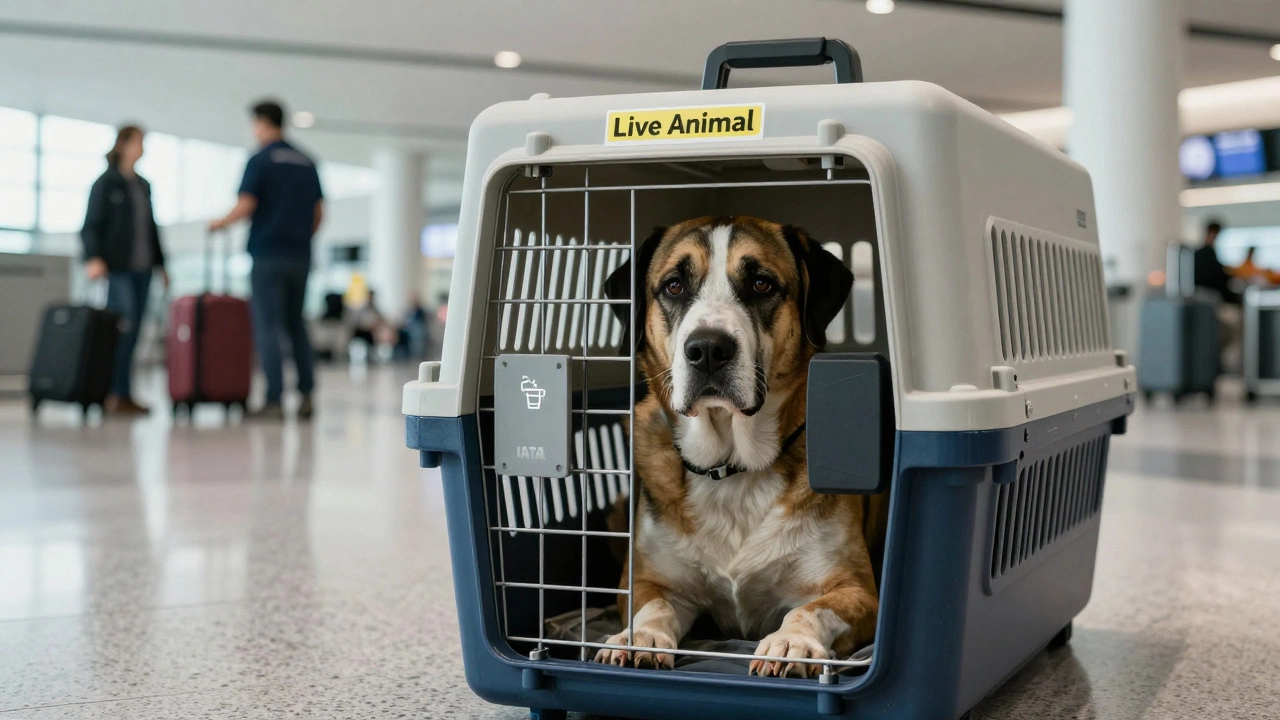
Every airline has slightly different rules, but here’s what you’ll need to get your 50 lb dog on a flight:- Approved travel crate: It must be IATA-compliant - meaning it’s large enough for your dog to stand, turn, and lie down comfortably. The crate must be made of hard plastic, have a metal door, and include a water dish you can fill from the outside. Soft-sided carriers? Not allowed.
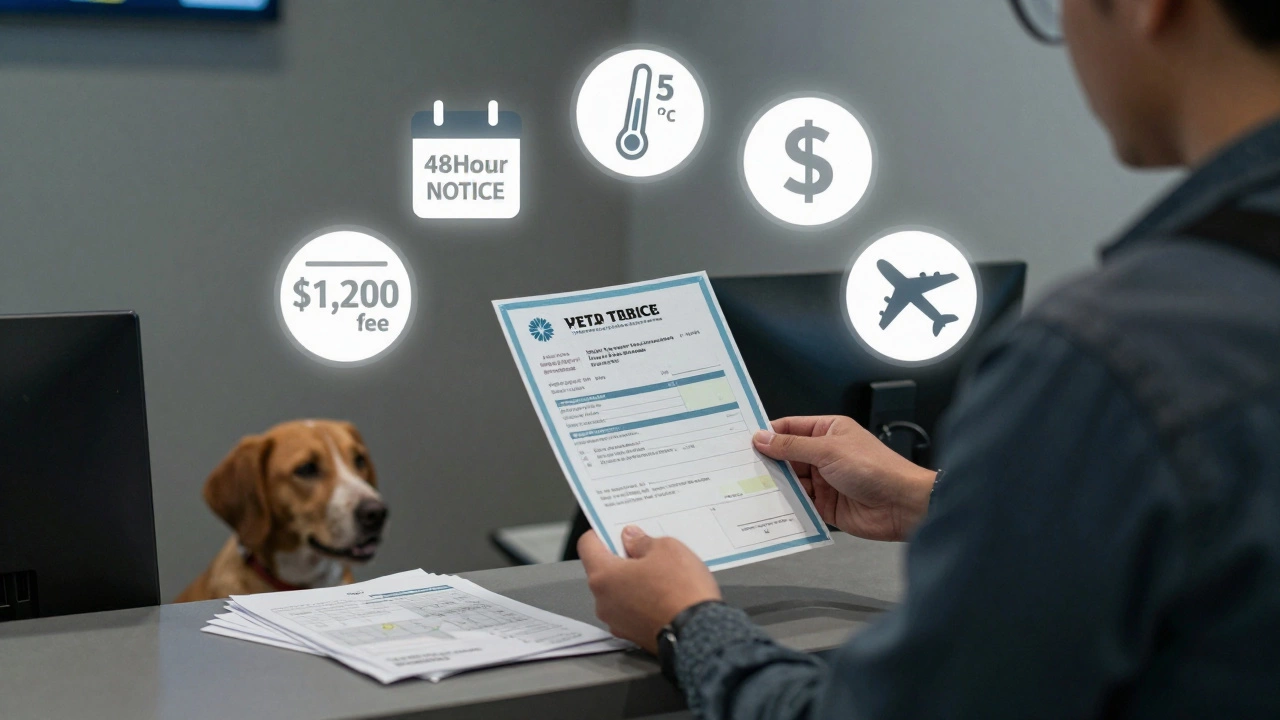
- Health certificate: Issued by a licensed vet within 10 days of your flight. This isn’t just a formality - it’s a legal document. The vet must confirm your dog is healthy enough to fly and hasn’t been exposed to contagious diseases.
- Vaccination records: Rabies vaccination must be up to date. Some countries require additional shots or blood titer tests, especially if you’re flying internationally.
- Flight restrictions: Many airlines ban pet cargo during extreme weather. If it’s hotter than 85°F or colder than 20°F at any point on your route, your flight may be denied. That means no summer trips to Florida or winter flights to Canada without checking the forecast.
- Advance booking: You can’t just show up at the airport with your dog. You must reserve a spot in cargo at least 48-72 hours ahead. Some airlines only allow 2-4 pets per flight.
British Airways, for example, requires you to book cargo through their Pet Travel Service desk - not online. You’ll need to submit your dog’s details, crate measurements, and vet documents at least five days before departure. Lufthansa and KLM require even more: a pre-flight inspection at their designated pet facility.
Costs You Can’t Ignore
Flying a 50 lb dog isn’t cheap. Domestic U.S. flights can run $500-$1,200 one-way. International flights? $1,500-$3,000 is common. That’s not including the crate ($150-$300), vet visits ($100-$250), or any required quarantine fees.Here’s a quick breakdown of what you’ll pay:
| Item | Cost Range |
|---|---|
| Airline cargo fee (domestic) | $500-$1,200 |
| Airline cargo fee (international) | $1,500-$3,000 |
| IATA-compliant crate | $150-$300 |
| Vet health certificate | $100-$250 |
| Quarantine (if required) | $200-$1,000/month |
| Pre-flight pet transport to airport | $50-$150 |
And don’t forget: some airlines charge extra for overweight crates. If your dog’s crate weighs more than 100 lbs total (dog + crate), you’ll pay a surcharge. That’s why many owners buy lightweight crates or remove extra bedding to stay under the limit.
Is Cargo Safe for a 50 lb Dog?
It’s the question everyone asks - and the one no one wants to hear the truth about. Yes, cargo is safe - if you do everything right. But accidents happen. In 2023, U.S. airlines reported 44 pet deaths during cargo travel. Most were linked to extreme temperatures, improper crate size, or pre-existing health conditions.Here’s what makes cargo risky:
- Temperature extremes: Planes sit on tarmacs for hours. If it’s 95°F outside, the hold can hit 110°F - even with climate control.
- Delays: Your dog might wait 6+ hours in a warehouse while your flight is grounded.
- Handling: Cargo is loaded and unloaded by humans. A crate can be dropped, stacked, or mishandled.
That’s why you need to:
- Choose direct flights only - no layovers
- Book early morning or late evening flights to avoid heat
- Avoid flying during summer or holidays - peak times mean more delays
- Never sedate your dog - airlines ban it, and it can be deadly
- Label the crate with your name, phone, and "Live Animal" stickers
Some owners use GPS trackers inside the crate. Others attach a photo of their dog and a note: "This is my baby. Please be gentle." It sounds emotional - but it works. Ground crew see hundreds of crates. A personal message sticks.
Alternatives to Flying
If the cost, stress, or risk feels too high, consider other options:- Professional pet transport services: Companies like PetRelocation or PetAirways handle everything - crate, docs, customs, and door-to-door delivery. They use private planes or climate-controlled trucks. Costs start at $2,000 but include insurance and 24/7 tracking.
- Driving: If you’re moving under 1,000 miles, driving is often cheaper and safer. Bring water, a portable bowl, and a comfort item like a blanket with your scent.
- Boarding or pet sitters: If it’s a short trip, leave your dog with a trusted sitter. Many offer video updates and daily walks.
One owner from Bristol flew her 52 lb Labrador to Spain last year. She spent $2,800, booked a direct flight at 6 a.m., and hired a vet to meet her at the destination. Her dog arrived calm, hydrated, and unharmed. But she says: "I cried the whole way to the airport. I didn’t know if I’d made the right choice. I still don’t.”

What to Do Before You Book
Before you pay a dime, follow this checklist:- Measure your dog: height (from floor to top of head), length (nose to tail), and weight. Write it down.
- Buy the right crate: Use the IATA size calculator on their website. Don’t guess.
- Call your airline’s pet department - not customer service. Ask for their current pet policy PDF.
- Visit your vet at least 14 days before your flight. Get the health certificate signed.
- Book your flight first. Then book your dog’s cargo space.
- Do a trial run: Let your dog spend 30 minutes in the crate with a treat. If they panic, get help from a trainer.
And one last thing: never book a flight during a holiday weekend. More delays. More stress. More risk.
Final Thoughts
You can take your 50 lb dog on a plane. But it’s not a decision you make on impulse. It’s a project. A logistical, emotional, and financial one. If you’re willing to do the work - the paperwork, the planning, the preparation - your dog can make the trip safely. But if you’re hoping for a quick, cheap, or easy solution, you’re setting yourself up for heartbreak.There’s no perfect way to fly with a large dog. But there is a right way. And it starts with knowing the rules - not hoping they don’t apply to you.
Can I bring my 50 lb dog in the cabin?
No. Almost all airlines limit in-cabin pets to 20 pounds total - including the carrier. A 50 lb dog will need to travel in the cargo hold. Even service animals must meet strict criteria and may still be required to fly cargo if they exceed size limits.
What’s the cheapest way to fly a 50 lb dog?
The cheapest option is usually a direct domestic flight with a budget airline like Frontier or Allegiant, but even then, expect to pay at least $500-$700. International flights are never cheap. Driving or using a professional pet transport service may cost more upfront but can reduce stress and risk.
Do I need to sedate my dog for the flight?
Never sedate your dog for air travel. Airlines ban sedatives because they interfere with breathing and temperature regulation - especially in cargo. Instead, use a familiar blanket, a calming pheromone spray, and a crate your dog is used to. A vet can recommend natural calming aids like L-theanine if your dog is anxious.
Can I fly internationally with my 50 lb dog?
Yes, but it’s far more complex. Countries like the UK, Japan, and Australia require quarantine periods (up to 6 months), blood tests, and special permits. The EU requires a pet passport and microchip. Always check the destination country’s official animal import rules - not just the airline’s policy.
How do I prepare my dog for cargo travel?
Start 2-3 weeks before the flight. Let your dog sleep in the crate with treats. Avoid feeding them 4-6 hours before the flight. Use a water bottle attached to the crate. Label everything clearly. Take a recent photo of your dog for identification. If your dog has anxiety, talk to your vet about behavior training or calming supplements.
What happens if my dog’s flight is delayed?
Most major airlines have pet care teams at hubs who check on animals every 2-4 hours. They provide water, check crate temperature, and move pets to climate-controlled areas if needed. But if your flight is delayed by more than 6 hours, you may need to contact the airline’s pet desk directly. Always keep their emergency number handy.
Are there breeds that can’t fly in cargo?
Yes. Brachycephalic breeds - like Bulldogs, Pugs, and Shih Tzus - are banned from cargo on most airlines because their short noses make them prone to breathing problems under stress. Even if your dog is 50 lbs but a mix of one of these breeds, you may be denied. Always check the airline’s breed restrictions before booking.
Can I track my dog during the flight?
No. Airlines don’t offer real-time GPS tracking for cargo pets. But some third-party companies sell GPS trackers you can attach to the crate (as long as they’re not inside the crate). You can also ask the airline for updates at check-in and arrival. Reputable pet transport services offer live tracking as part of their package.
What if my dog gets sick after the flight?
Take your dog to a vet immediately. Keep all flight documents, health certificates, and receipts. Some airlines offer limited liability coverage (usually up to $5,000), but only if you followed all their rules. If you skipped a vet visit or used an illegal crate, you won’t be covered. Always get a post-flight check-up, even if your dog seems fine.
Is there a weight limit for dogs on planes?
There’s no official upper weight limit - but practical limits exist. Airlines won’t accept crates over 150 lbs total (dog + crate). Most 50 lb dogs fit within this, but very large breeds like Great Danes or Mastiffs may need special arrangements or be refused. Always confirm with the airline directly.