Puppy Peanut Butter Safety Checker
Check Peanut Butter Safety
Important Safety Info
For puppies, even safe peanut butter should be given in tiny amounts (pea-sized portion max). Never give more than 1/4 teaspoon per day. Always check the label for xylitol and other additives. If in doubt, choose a dog-specific peanut butter.
Many new puppy owners reach for a jar of peanut butter when they want to give their pup a tasty treat or stuff a toy. It’s sticky, sweet, and smells like a human snack - perfect for哄 (哄 means to soothe or distract in Chinese, but here it’s contextually used as a placeholder for calming a puppy). But is peanut butter actually safe for puppies? The short answer: yes, but only if you pick the right kind and give it in tiny amounts. Too much, or the wrong type, and you could be putting your puppy’s health at risk.
Why Do People Give Puppies Peanut Butter?
Peanut butter is popular with dog owners because it works like magic for training and enrichment. It sticks to lick mats, fits inside puzzle toys, and keeps puppies busy for minutes at a time. If you’ve ever tried to calm a nervous pup during a thunderstorm or while you’re out of the house, you’ve probably used peanut butter as a distraction. It’s easy, cheap, and most dogs go crazy for it.But puppies aren’t just small dogs. Their digestive systems are still developing. Their pancreas is tiny. Their metabolism is faster. And their tolerance for sugar, salt, and fat is way lower than an adult dog’s. That’s why what’s fine for your 3-year-old Labrador might be dangerous for your 10-week-old puppy.
The Hidden Danger: Xylitol
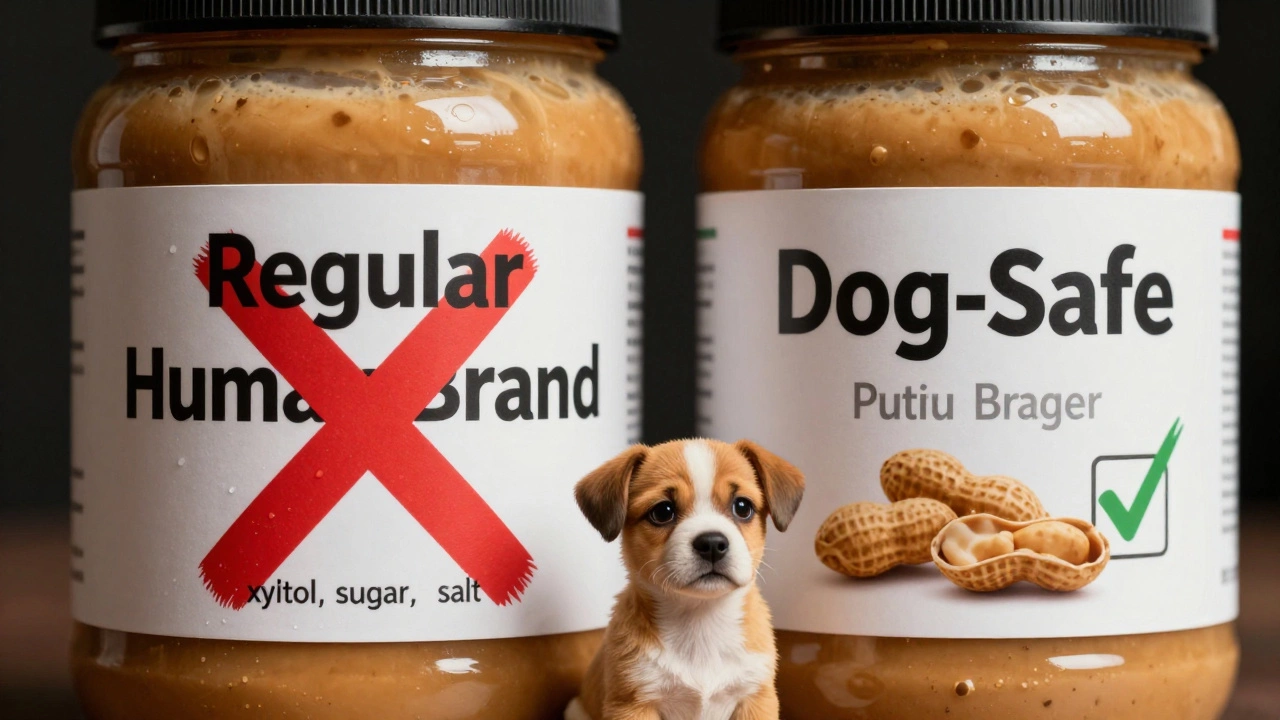
The biggest risk isn’t the peanut butter itself - it’s what’s in the peanut butter. Many brands, especially those labeled as “sugar-free” or “low-calorie,” contain xylitol. This artificial sweetener is harmless to humans but deadly to dogs. Even a small amount - as little as 0.1 gram per kilogram of body weight - can trigger a rapid drop in blood sugar, seizures, liver failure, or death.In 2023, the ASPCA reported over 800 cases of xylitol poisoning in dogs, with nearly 40% involving puppies under 6 months old. Most of these cases came from peanut butter that looked normal but had xylitol listed as the second ingredient. Always check the label. If you see “xylitol,” “sugar alcohol,” or “artificial sweetener,” put it back on the shelf.
What About Regular Peanut Butter?
If the peanut butter has just two ingredients - peanuts and salt - it’s generally safe. But even then, there are limits. Most commercial peanut butters are loaded with added sugar and salt. A single tablespoon can contain over 3 grams of sugar and 150 milligrams of sodium. For a 5-pound puppy, that’s more than half their daily sodium limit.Here’s what to look for in a puppy-safe peanut butter:
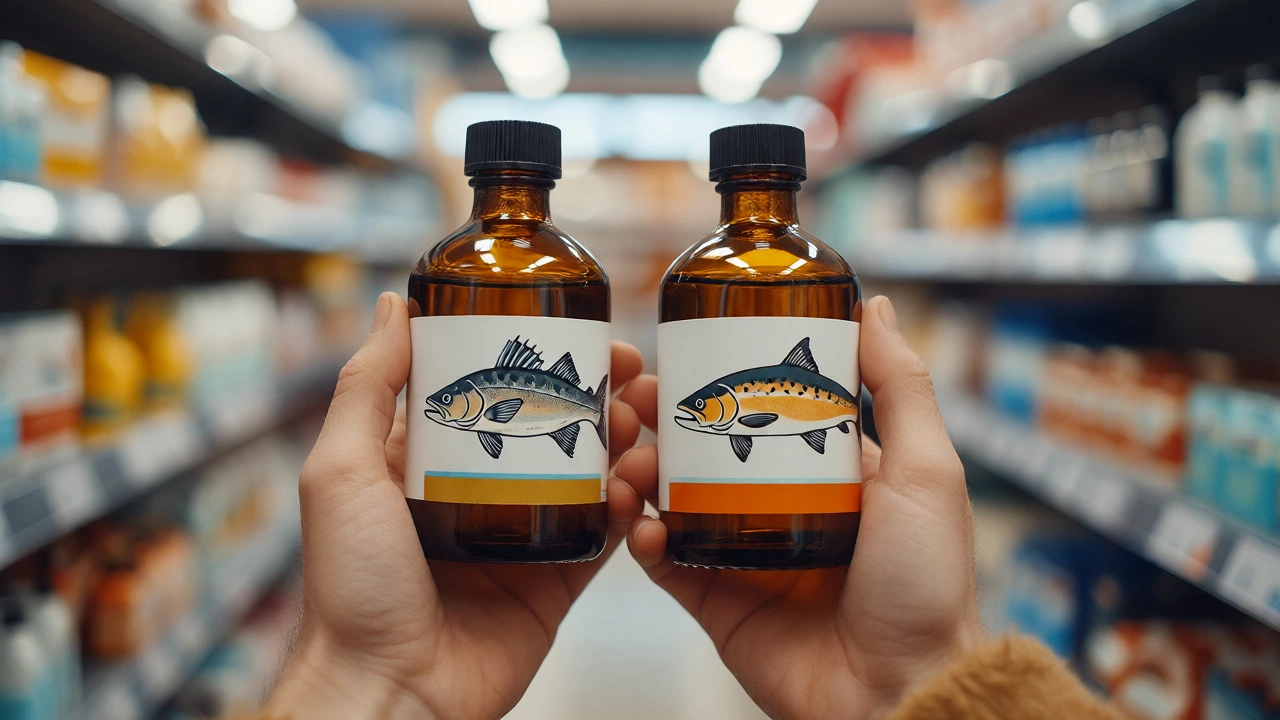
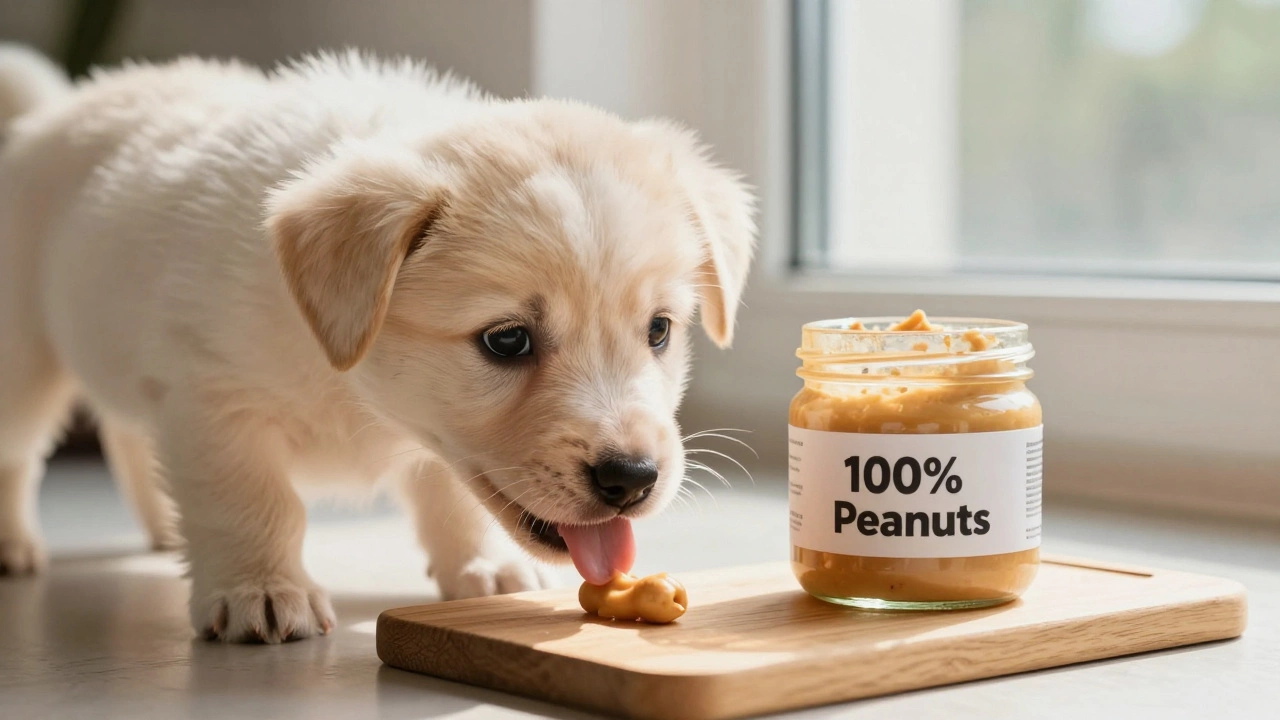
- 100% peanuts (no added sugar, salt, or oils)
- No xylitol (check twice)
- No hydrogenated fats or preservatives
- Organic or natural brands are usually safest
Brands like Smucker’s Natural (the one with just peanuts and salt) or Green Coast Pet (made specifically for dogs) are good choices. Avoid anything labeled “creamy,” “crunchy,” or “reduced fat” - those often hide extra ingredients.
How Much Can a Puppy Have?
Puppies don’t need treats to be happy. In fact, treats should make up less than 10% of their daily calories. For a small puppy (under 10 lbs), a pea-sized dab - about 1/4 teaspoon - once a day is plenty. That’s not even enough to coat the inside of a Kong toy.Too much peanut butter can cause:
- Diarrhea or vomiting (from too much fat)
- Pancreatitis (inflammation of the pancreas - very serious)
- Weight gain (even a few extra calories a day adds up fast)
- Choking (if they gulp it too fast)
Some puppies are allergic to peanuts, too. Signs include itching, red skin, ear infections, or swelling around the face. If your puppy reacts badly after trying peanut butter, stop immediately and call your vet.
Alternatives to Peanut Butter
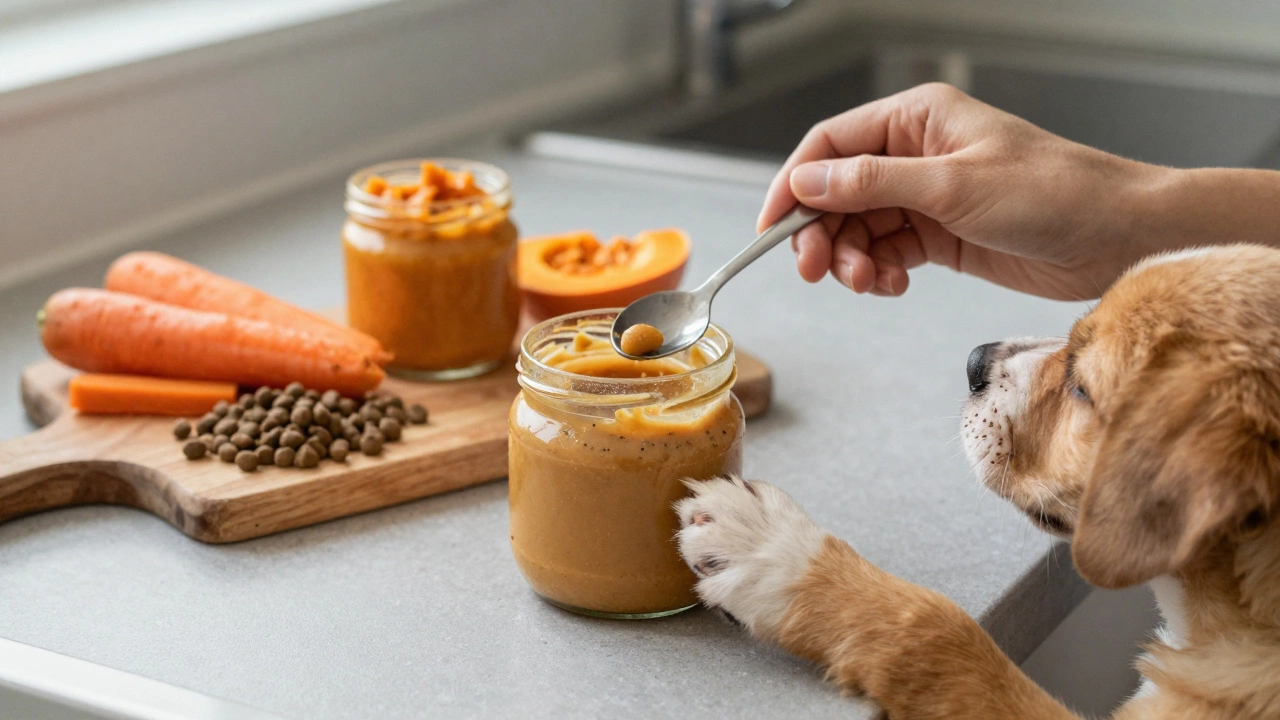
You don’t need peanut butter to keep your puppy entertained. There are safer, healthier options:- Plain, unsalted pumpkin puree - great for digestion and low in sugar
- Plain Greek yogurt (check for xylitol!) - good for gut health
- Carrot sticks - crunchy, low-calorie, and safe to chew
- Commercial dog-safe paste like Green Coast or KONG’s Puppy Snacks
- Freeze-dried liver - tiny pieces, high in protein, perfect for training
These alternatives are lower in fat, free from hidden toxins, and easier on a puppy’s sensitive stomach. And they’re just as effective for stuffing toys.
When to Avoid Peanut Butter Completely
Some puppies should never have peanut butter:- Puppies with known food allergies
- Puppies with pancreatitis or digestive issues
- Puppies on prescription diets
- Puppies under 8 weeks old - their digestive system isn’t ready
- Puppies with diabetes - even natural peanut butter has sugar
If your puppy is on medication, has a medical condition, or you’re unsure, always check with your vet first. What’s safe for one pup isn’t safe for all.
Final Tips for Safe Treat Time
- Always supervise your puppy when they’re eating peanut butter. They can choke if they gulp it too fast. - Use a spoon or a small syringe to give tiny amounts - never let them lick straight from the jar. - Store peanut butter out of reach. Puppies are clever, and they’ll figure out how to open jars. - Don’t use peanut butter as a daily reward. Reserve it for training, vet visits, or special enrichment days. - Rotate treats. Too much of one thing can lead to picky eating or nutrient imbalances.There’s no need to panic if your puppy had a little smear of peanut butter. Most puppies will be fine. But if they ate a whole spoonful, especially from an unknown brand, call your vet right away. Better safe than sorry.
Can puppies have peanut butter every day?
No. Peanut butter should be an occasional treat, not a daily snack. Even the safest kind has fat and salt that can build up in a puppy’s system. Stick to once or twice a week, and only in tiny amounts - about the size of a pea for small breeds.
Is crunchy peanut butter better than creamy for puppies?
Neither is better. Both can contain the same harmful additives. The texture doesn’t matter - what matters is the ingredient list. Crunchy peanut butter might have small bits of peanut shell, which could irritate a puppy’s throat. Stick to smooth, 100% peanut-only varieties.
Can I use peanut butter to hide medicine for my puppy?
Yes, but only if it’s the right kind. A tiny amount - less than 1/4 teaspoon - can help mask bitter pills. Always check with your vet first. Some medications interact with fat, and peanut butter can slow absorption. Also, never use it for antibiotics or thyroid meds without professional advice.
What should I do if my puppy ate peanut butter with xylitol?
Call your vet or an emergency animal clinic immediately. Do not wait for symptoms. Xylitol poisoning can kill a puppy within 30 minutes. Bring the jar with you if possible. Time is critical - the sooner treatment starts, the better the chance of survival.
Are there peanut butter brands made just for dogs?
Yes. Brands like Green Coast Pet, Pup-Peroni, and Wild One make peanut butter specifically for dogs. These are free from xylitol, salt, sugar, and preservatives. They’re more expensive than human brands, but they’re worth it for puppy safety.