Dog Food Suitability Calculator
Blue Buffalo Suitability Assessment
This tool helps determine if Blue Buffalo dog food is appropriate for your dog based on key factors discussed in the article.
Your Dog's Blue Buffalo Suitability Assessment
Important Note: This tool is based on information from the article. Always consult your veterinarian for personalized advice.
Is Blue Buffalo a bad dog food? If you’ve scrolled through dog owner forums or watched YouTube videos comparing brands, you’ve probably seen heated debates. Some say it’s the gold standard. Others call it overpriced filler with hidden dangers. The truth? It’s not that simple.
What’s actually in Blue Buffalo dog food?
Blue Buffalo markets itself as a brand that uses real meat, whole grains, and no artificial additives. That’s true - their Life Protection Formula line starts with chicken, lamb, or fish as the first ingredient. They avoid corn, wheat, and soy in most formulas, which is a plus for dogs with sensitivities.
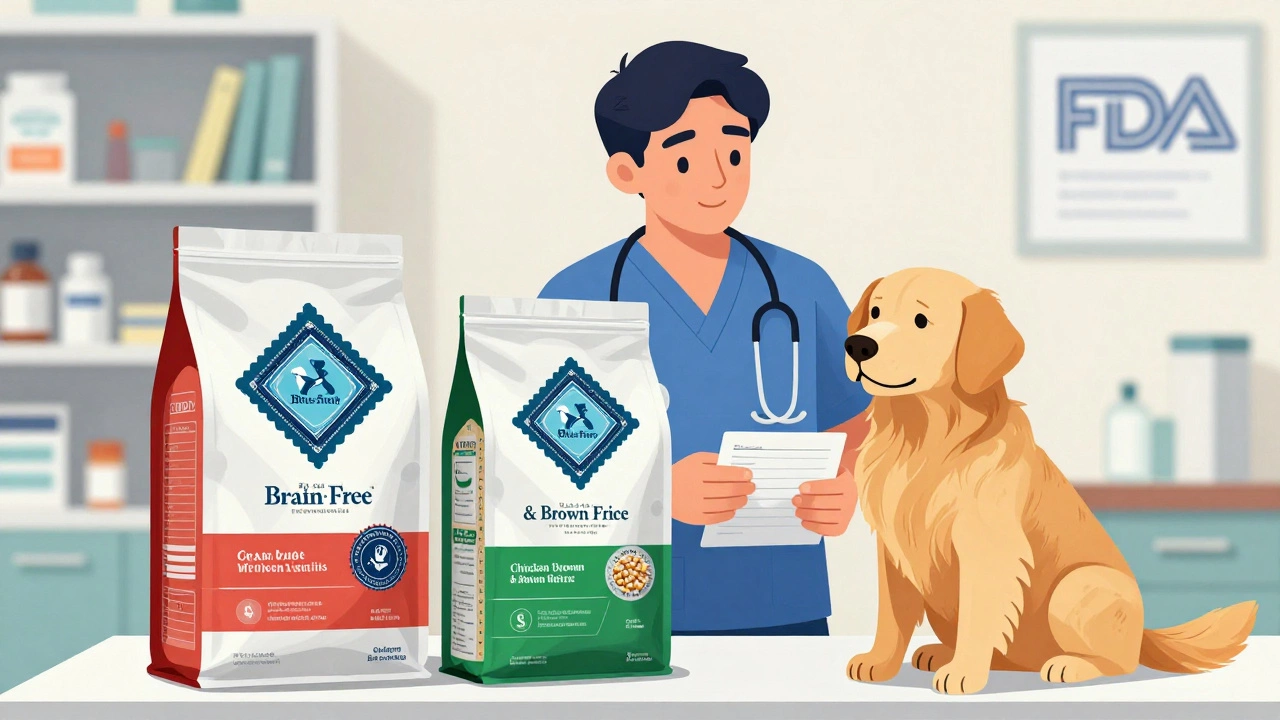
But here’s what most people miss: Blue Buffalo also includes peas, lentils, and potatoes as main carbohydrate sources in many of their grain-free recipes. That’s not inherently bad - but it’s a red flag if your dog has a history of heart issues. The FDA has been investigating a link between grain-free diets and dilated cardiomyopathy (DCM) in dogs since 2018. Over 90% of the cases reported involved diets high in legumes - exactly what Blue Buffalo uses in its grain-free lines.
Not every dog on Blue Buffalo develops heart problems. But if your dog is a Labrador, Golden Retriever, or Doberman - breeds prone to DCM - feeding a grain-free version could be risky. Stick to their grain-inclusive formulas if you’re going with Blue Buffalo.
Price vs. value: Are you paying for quality or marketing?
Blue Buffalo costs about 30-50% more than comparable brands like Hill’s Science Diet or Purina Pro Plan. Is that extra cost justified?
Let’s break it down. A 30-lb bag of Blue Buffalo Life Protection Formula (chicken) runs around $65. The same size of Hill’s Science Diet Adult Chicken & Rice is $48. Both have similar protein levels - around 24%. Both use real chicken as the first ingredient. But Hill’s has over 60 years of clinical research backing their formulas. Blue Buffalo’s research is mostly marketing-driven.
Blue Buffalo’s “Blue” name and “Life Protection” branding are designed to make you feel like you’re giving your dog something premium. But premium doesn’t always mean better. In fact, a 2023 study by the University of California, Davis analyzed 120 commercial dog foods and found no significant difference in nutrient absorption between Blue Buffalo and mid-tier brands when tested on healthy adult dogs.
You’re paying for branding, not necessarily better nutrition.
What do vets actually recommend?
Ask 10 veterinarians in the UK and you’ll get 10 different answers - but the pattern is clear. Most vets don’t outright say Blue Buffalo is bad. They say: “It’s fine if you choose the right formula.”
Dr. Eleanor Whitmore, a vet in Bristol with 18 years of experience, says: “I’ve seen dogs thrive on Blue Buffalo. I’ve also seen dogs with chronic skin issues and loose stools improve within weeks after switching away from their grain-free version. It’s not the brand - it’s the formulation.”
Her advice? Avoid the grain-free lines unless your dog has a confirmed grain allergy - and even then, test it with a vet-supervised elimination diet first. Most dogs don’t need grain-free food. In fact, less than 1% of dogs have true grain allergies. The rest are reacting to the legumes or the lack of balanced nutrients in those formulas.
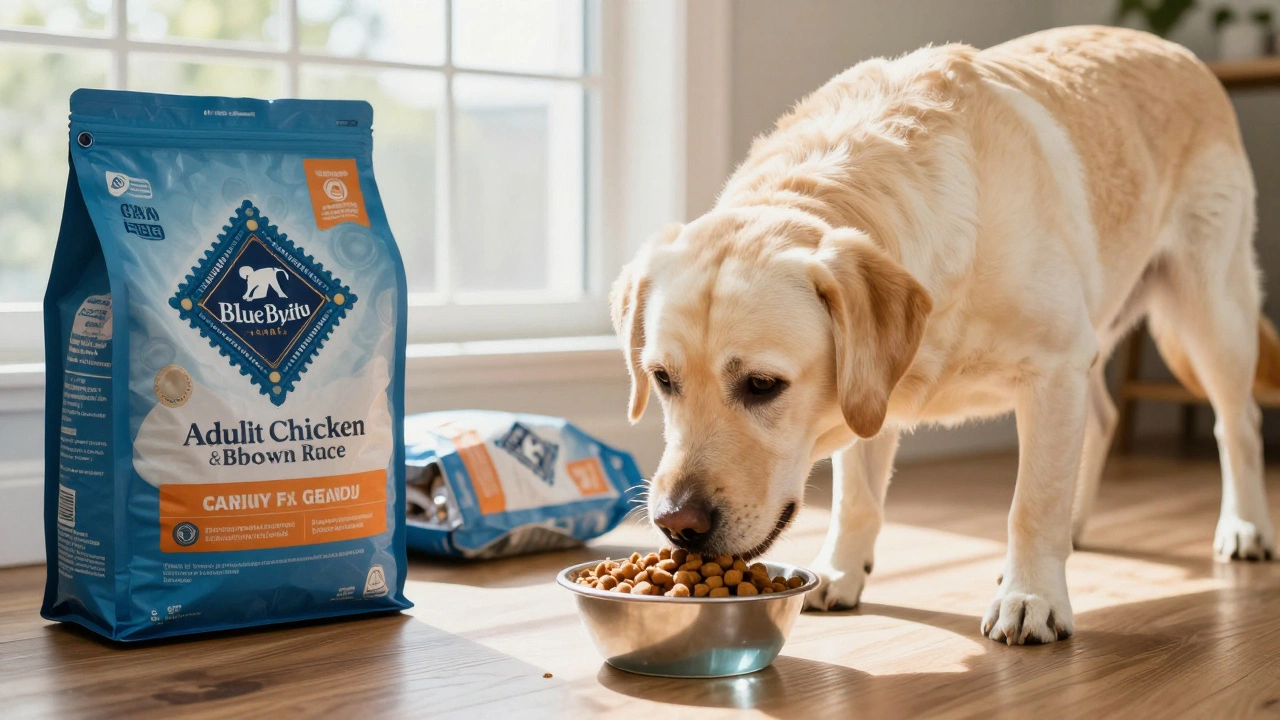
If your dog is healthy, active, and has no digestive issues, Blue Buffalo’s grain-inclusive formulas (like the Adult Chicken & Brown Rice) are perfectly acceptable. They’re not the cheapest, but they’re not the worst.
Common complaints: What’s going wrong for some dogs?
Why do so many owners say Blue Buffalo “made their dog sick”?
Most complaints fall into three categories:
- Loose stools or vomiting - often caused by sudden diet changes. Blue Buffalo has a higher fat content than average. Switching too fast can upset digestion.
- Itchy skin or ear infections - usually tied to the grain-free recipes. The legumes and alternative proteins (like duck or salmon) can trigger allergies in sensitive dogs.
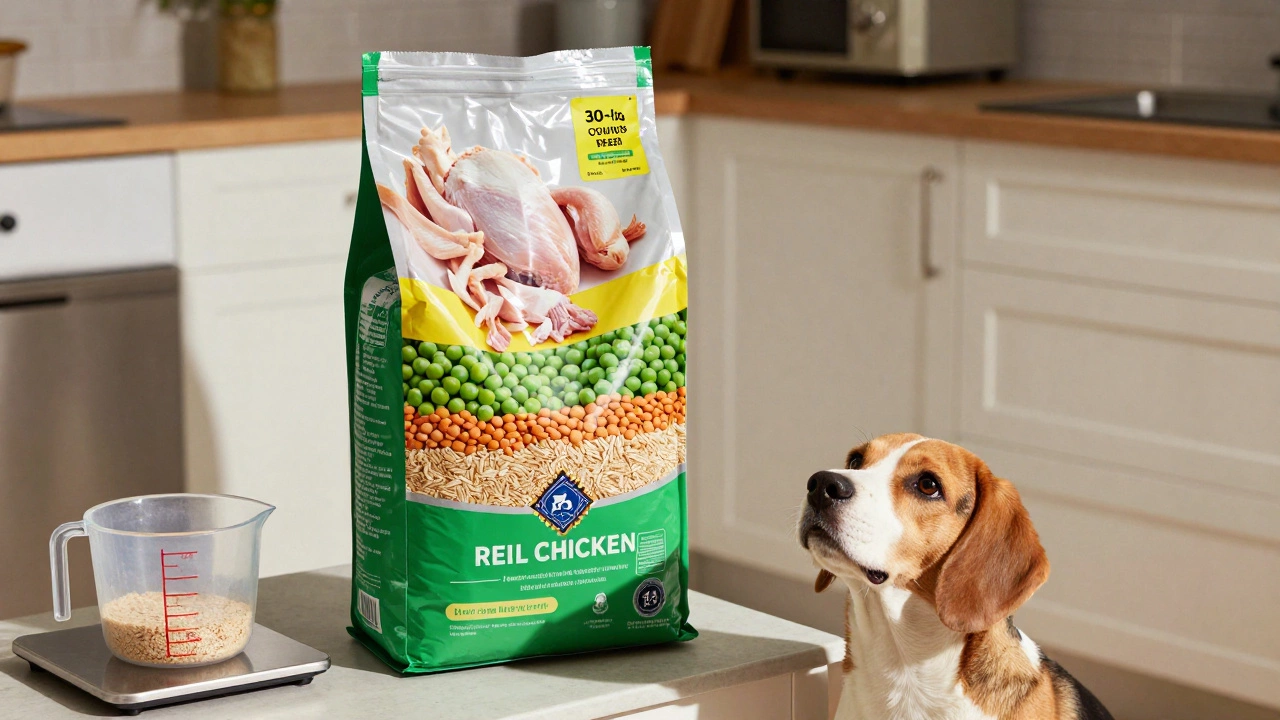
- Weight gain - Blue Buffalo is calorie-dense. A 50-lb dog on the adult formula can easily consume 1,200+ calories a day if you’re not measuring. That’s too much for a low-activity dog.
One owner in Bath reported her 8-year-old Beagle gained 12 pounds in six months on Blue Buffalo. She didn’t realize she was overfeeding. After switching to a lower-calorie food and cutting treats, the dog lost the weight in three months. The food wasn’t the problem - the portion size was.
Who should avoid Blue Buffalo?
Not every dog is a good candidate for Blue Buffalo. Avoid it if your dog:
- Has been diagnosed with dilated cardiomyopathy (DCM) or has a family history of heart disease
- Has chronic digestive issues (diarrhea, gas, vomiting) and you haven’t ruled out food sensitivities
- Is a small breed or senior dog - Blue Buffalo’s kibble is large and dense, which can be hard to chew
- Needs a low-fat diet (e.g., pancreatitis or obesity)
- Has a known allergy to chicken, lamb, or fish - Blue Buffalo uses these as primary proteins in almost all formulas
If your dog falls into any of these categories, talk to your vet about prescription diets or simpler brands like Royal Canin, Hill’s, or even Nutro Max. These brands offer targeted formulas with clearer ingredient sourcing and more controlled protein/fat ratios.
Who might do well on Blue Buffalo?
Blue Buffalo can be a solid choice if your dog:
- Is a healthy adult with no known allergies or health issues
- Eats a grain-inclusive formula (not grain-free)
- Has a high activity level (hiking, agility, working dog)
- Needs a food with higher protein and fat for energy
- Has been on it for months with no issues - don’t fix what isn’t broken
One client in Bristol, a retired police dog named Rex, has been on Blue Buffalo’s Adult Chicken & Brown Rice for five years. He’s 11, still runs 5 miles a day, and has perfect stools. His vet checks him every six months. No red flags.
That’s the key: if your dog is thriving on it, there’s no reason to switch. But if you’re unsure, or your dog has health concerns, don’t assume Blue Buffalo is the answer.
What to look for on the label
If you’re buying Blue Buffalo, here’s how to pick the right one:
- Check the first five ingredients - should be meat, meat meal, whole grains (like brown rice or oatmeal), and maybe vegetables. Avoid legumes (peas, lentils, chickpeas) as top ingredients.
- Avoid “grain-free” unless your vet specifically recommends it for a diagnosed allergy.
- Look for AAFCO statement - it must say “complete and balanced for adult maintenance.”
- Check the fat content - for average dogs, aim for 10-15%. Above 18% is too high unless your dog is working hard.
- Watch the calorie count - around 350-400 kcal/cup is standard. Anything over 450 is for high-energy dogs only.
Many owners don’t realize that the “Blue” label doesn’t guarantee quality. It’s the specific formula that matters.
Alternatives to consider
If you’re thinking of switching, here are three solid options:
| Brand | Protein (%) | Fat (%) | Carbs (main source) | Grain-Free? | Price per lb (approx.) |
|---|---|---|---|---|---|
| Blue Buffalo Life Protection (Chicken & Brown Rice) | 24% | 14% | Brown rice, oatmeal | No | $2.17 |
| Hill’s Science Diet Adult Chicken & Rice | 23% | 13% | Brown rice, barley | No | $1.60 |
| Nutro Max Adult Chicken & Brown Rice | 25% | 12% | Brown rice, oatmeal | No | $1.85 |
| Royal Canin Medium Adult | 24% | 15% | Rice, corn, wheat | No | $2.30 |
Hill’s and Nutro are cheaper and just as nutritionally sound. Royal Canin is pricier but has breed-specific formulas if your dog has unique needs.
Final verdict: Is Blue Buffalo a bad dog food?
No - Blue Buffalo isn’t a bad dog food. But it’s not the best either. It’s a middle-ground brand with some strong formulas and some risky ones.
If you’re feeding the grain-inclusive version and your dog is healthy, keep going. If you’re on a grain-free formula and your dog has any health issues - especially heart, skin, or digestive - switch now. Don’t wait.
There’s no magic in the blue bag. What matters is your dog’s health - not the brand name on the label.
Is Blue Buffalo dog food recalled often?
Blue Buffalo has had a few voluntary recalls since 2015, mostly due to potential contamination with mold or incorrect vitamin levels. The most recent was in 2023 for a batch of Chicken & Brown Rice formula due to elevated levels of vitamin D. No serious illnesses were reported. It’s not a high-recall brand, but it’s not immune to quality control issues - like any large manufacturer.
Can puppies eat Blue Buffalo?
Yes, but only the puppy-specific formulas. Blue Buffalo has a Puppy Chicken & Brown Rice recipe that meets AAFCO standards for growth. Avoid adult formulas for puppies - they don’t have enough calcium, DHA, or calories for development. Always check the label for “for growth” or “for all life stages.”
Does Blue Buffalo cause weight gain?
Not inherently - but it’s calorie-dense. A 50-lb dog needs about 900-1,100 calories per day. One cup of Blue Buffalo Adult Chicken & Brown Rice has about 380 calories. If you’re feeding two cups without adjusting treats or activity, your dog will gain weight. Measure your food. Most owners overfeed by 25-40%.
Is Blue Buffalo better than Purina Pro Plan?
Not really. Both use real meat as the first ingredient and meet AAFCO standards. Purina Pro Plan has more clinical studies backing its formulas, especially for skin, joint, and digestive health. Blue Buffalo has better marketing. For most dogs, Pro Plan is the smarter, cheaper choice - unless you prefer Blue Buffalo’s ingredient list for personal reasons.
Should I switch my dog from Blue Buffalo?
Only if your dog has health problems linked to the formula - like loose stools, skin issues, or heart concerns. If your dog is thriving, has no allergies, and you’re feeding the grain-inclusive version, there’s no need to switch. Dogs don’t need variety. Consistency matters more than brand loyalty.