Puppy Nightlight Transition Calculator
Puppy Sleep Assessment
Recommended Transition
Based on your puppy's age and behavior, here's your personalized step-by-step plan.
No calculation yet
When you first bring a puppy home, everything feels new-including how to help them sleep through the night. You might wonder: should you leave the light on or turn it off? It’s a simple question, but the answer isn’t just about comfort. It’s about safety, behavior, and building trust.
Why Puppies Struggle with Darkness
Puppies under six months old are still learning the world. Their eyesight isn’t fully developed, and they rely heavily on scent, sound, and familiar shapes to feel safe. A dark room can feel like an empty void. Without familiar cues, they might panic, whine, or scratch at the door-not because they’re being stubborn, but because they’re scared.Studies from the University of Bristol’s Animal Behaviour Centre show that puppies left in total darkness during their first few weeks in a new home are 40% more likely to develop nighttime anxiety than those with low-level ambient light. This isn’t about preference-it’s about neurological development. Their brains are still wiring how to process unfamiliar environments.
The Right Kind of Light
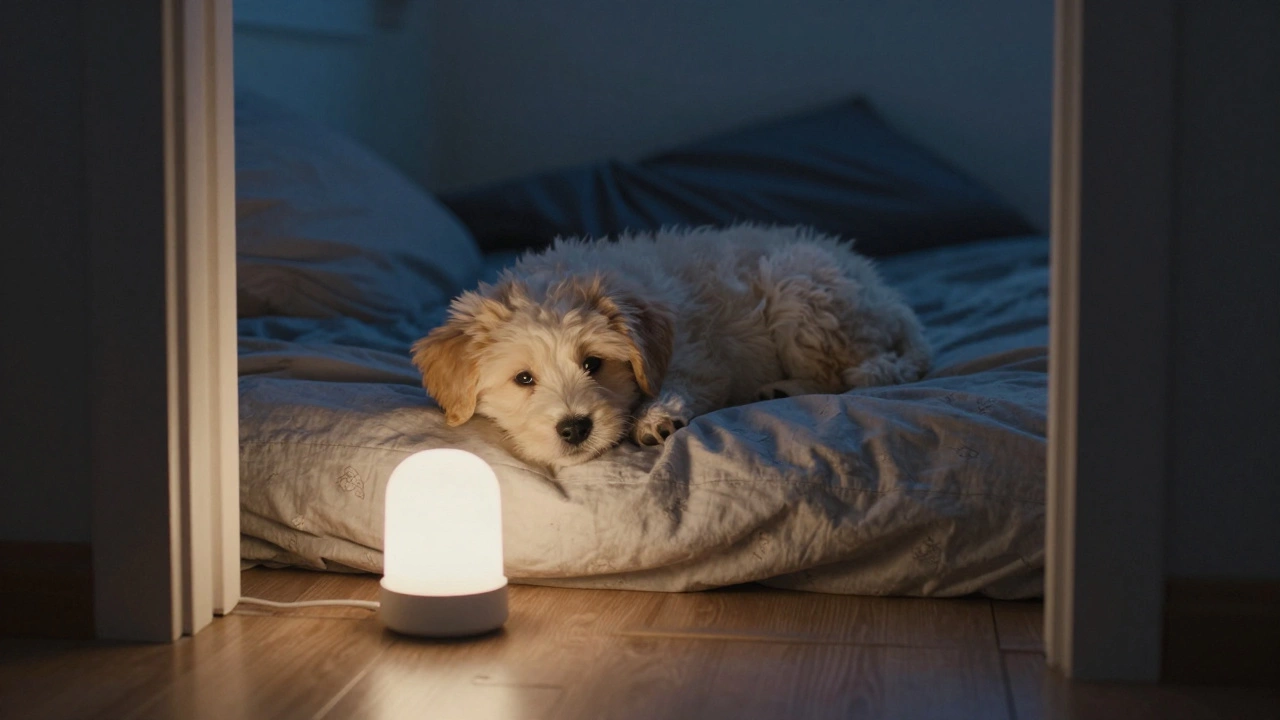
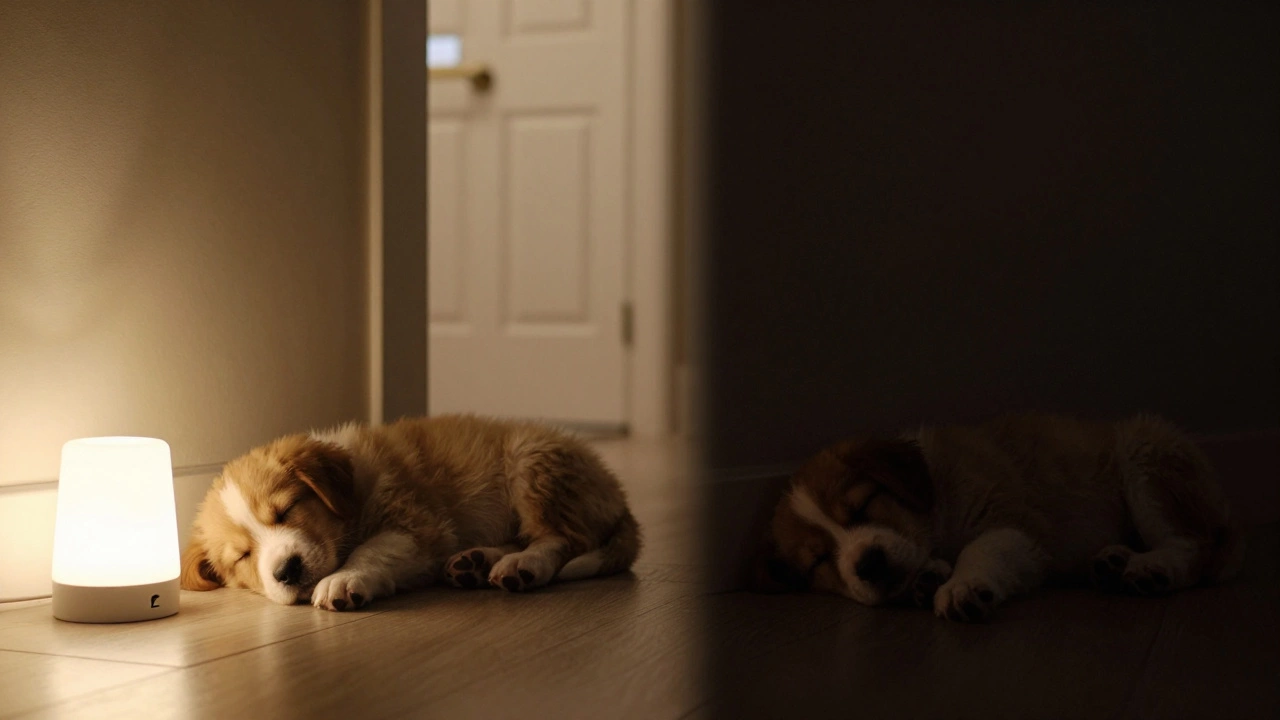
You don’t need to blast the ceiling light on all night. That disrupts their circadian rhythm and can lead to poor sleep quality. Instead, use a soft, dim nightlight. Something like a small LED plug-in lamp with a warm white glow (under 5 watts) placed near the floor, away from their bed, works best.Many owners use a nightlight designed for babies-it’s the same principle. The light should be just enough to let your puppy see the outline of their bed, water bowl, and the door. Not bright enough to wake them up, but enough to reassure them that they’re not alone in the dark.
What Happens If You Leave the Light On All Night?
Leaving a bright light on all night can confuse your puppy’s internal clock. Dogs, like humans, need melatonin to fall into deep sleep. Bright light-especially blue-toned LED or fluorescent bulbs-suppresses melatonin production. That means your puppy may sleep fitfully, wake up more often, or even seem tired during the day.One owner in Bristol told me her 4-month-old Labrador kept waking up at 3 a.m., panting and pacing. She’d left the bedroom light on thinking it would help. Once she switched to a dim nightlight, the nighttime disruptions dropped by 80% within three nights.
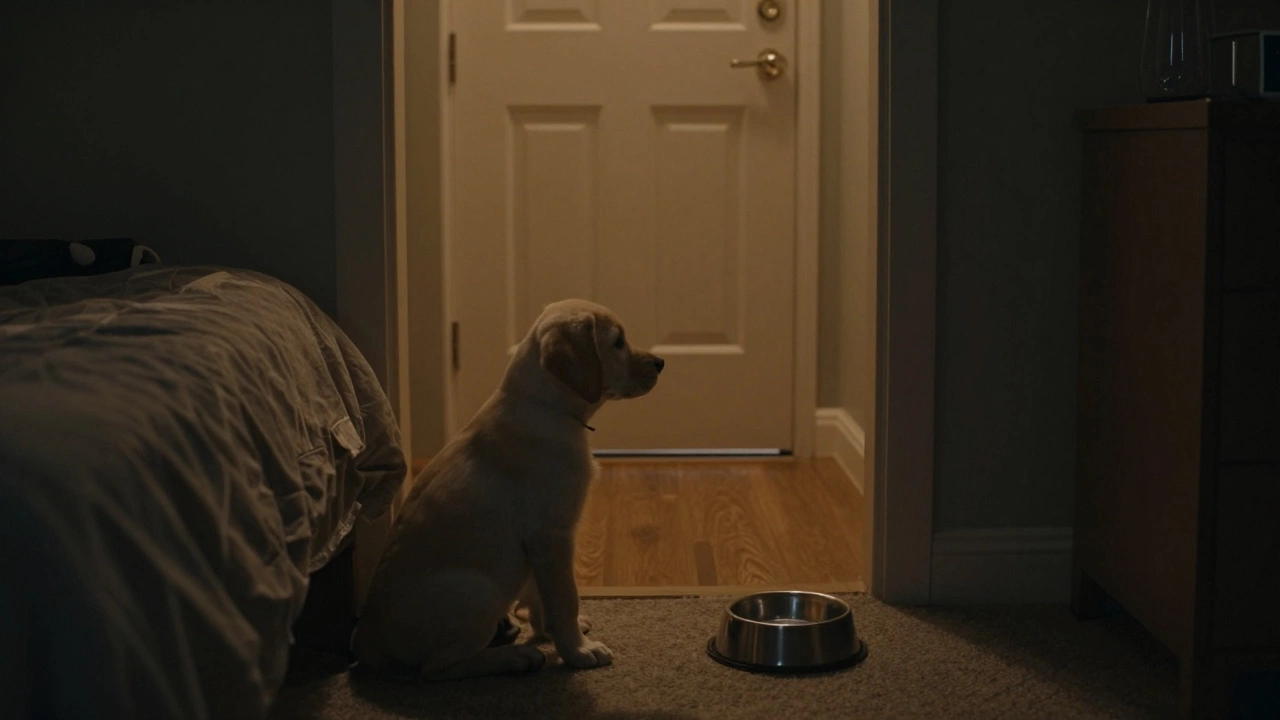
What Happens If You Turn the Light Off Completely?
Turning the light off isn’t bad-it’s just too sudden for a young puppy. If you’ve never used any light at night and then flip the switch, your puppy might panic. They’ll bark, whine, or even have accidents because they can’t find their way to the door.But here’s the good news: puppies adapt quickly. If you start with a dim light and gradually reduce it over time, they’ll learn to feel safe in the dark. By 6 months, most puppies sleep fine with no light at all. The key is transition, not abrupt change.
How to Wean Your Puppy Off Night Light
You don’t need to keep the nightlight forever. Here’s a simple, proven plan:- Start with a dim nightlight on all night during the first 2-3 weeks.
- After 3 weeks, move the light farther from the bed-say, across the room.
- At 4 months, try turning it off for 2 hours after bedtime. If your puppy stays calm, leave it off.
- By 5-6 months, most puppies will sleep through the night without any light.
Keep a flashlight nearby in case they wake up disoriented. A quick, brief shine (under 10 seconds) can help them reorient without fully waking them.
Signs Your Puppy Still Needs the Light
Even after a few months, some puppies need more time. Watch for these signs:- Whining or barking for more than 10 minutes after lights out
- Accidents near their bed (they can’t find the door)
- Pacing or circling before settling
- Shaking or hiding under furniture
If you see these, don’t rush to turn the light back on permanently. Instead, try a red or amber nightlight-these wavelengths are least disruptive to sleep and still provide enough visibility.
Other Things That Help Puppies Sleep Better
Light is just one piece. Here’s what else matters:- Bedtime routine: Same time every night. Walk, feed, quiet play, then bed.
- Comfort item: A stuffed toy with a warm water bottle wrapped in a cloth (mimics littermates).
- White noise: A fan or low-volume app playing rain sounds masks sudden noises.
- Location: Keep their bed near you, at least at first. Many puppies sleep better when they can smell you.
One owner in Bath used a piece of her old t-shirt tucked into the puppy’s bed. Within days, the whining stopped. It wasn’t the light-it was the scent.
When to Be Concerned
If your puppy is 8 months or older and still panics in the dark, it might not be about light. It could be separation anxiety, a past trauma, or even a medical issue like vision problems. If they’re trembling, drooling, or refusing to eat after dark, talk to your vet. Don’t assume it’s just a phase.Final Answer: Yes, Turn It Off-But Gradually
Yes, you should turn the light off at night. But not right away. Start with a dim nightlight. Use it for the first few weeks. Then slowly reduce it. By 6 months, most puppies will sleep just fine in total darkness.The goal isn’t to keep the light on forever. It’s to help your puppy feel safe enough to learn that darkness isn’t scary. They’ll thank you with quiet nights, better sleep, and fewer accidents.
Should I leave a nightlight on for my puppy all night?
Yes, for the first few weeks-especially if your puppy is under 4 months old. Use a dim, warm-colored nightlight placed away from their bed. It helps them feel secure without disrupting their sleep cycle. After 4-6 months, slowly phase it out.
Can a bright light hurt my puppy’s eyes?
Not directly, but it can mess with their sleep. Bright or blue-toned lights suppress melatonin, which makes it harder for puppies to fall into deep, restorative sleep. Stick to soft, warm lights under 5 watts. Avoid LED bulbs with cool white or daylight settings.
Why does my puppy cry when I turn off the light?
Your puppy isn’t being manipulative-they’re scared. In the dark, their world shrinks. They can’t see where their bed, water, or door is. This triggers anxiety, especially in young puppies still adjusting to a new home. A dim nightlight and a consistent routine will help them adjust within days.
Is it okay for my puppy to sleep in my room?
Yes, and it’s often recommended for the first few months. Your presence, scent, and breathing sounds help calm them. Once they’re sleeping through the night without whining, you can gradually move their bed to another room if you prefer.
How long does it take for a puppy to get used to sleeping in the dark?
Most puppies adjust within 2 to 6 weeks with a gradual transition. Start with a dim nightlight, then slowly move it farther away or reduce its brightness. By 6 months, nearly all puppies can sleep comfortably in total darkness if they’ve had consistent, calm nighttime routines.