
Dog Health Supplements: What Works, What Doesn't, and What to Avoid
When it comes to dog health supplements, additives given to dogs to support overall wellness, often marketed for joints, skin, or digestion. Also known as pet vitamins, they’re everywhere — from vet offices to online ads promising miracle cures. But the truth? Most healthy dogs eating balanced commercial food don’t need them at all. The real question isn’t whether supplements help — it’s which ones are safe, effective, and actually necessary for your dog’s specific needs.
Fish oil for dogs, a source of omega-3 fatty acids commonly used to reduce inflammation and improve coat health is one of the few supplements backed by real science. It can ease arthritis pain, calm itchy skin, and even support heart function — but only if given in the right amount. Too much? You risk vitamin toxicity, digestive upset, or even blood thinning. Cod liver oil for dogs, a similar product that’s richer in vitamins A and D is trickier. It sounds natural, but those vitamins build up fast. A little helps. A lot can poison your dog. Vets see cases every year where owners thought "more is better" — and ended up with a sick pet.
Then there’s the clutter: protein shakes, human multivitamins, trendy powders. These aren’t just useless — they’re dangerous. Many contain xylitol, an artificial sweetener that’s deadly to dogs. Others overload kidneys or mess with nutrient balance. Even something as simple as dog vitamins, daily nutrient boosters often sold for aging dogs or picky eaters can backfire if your dog isn’t deficient. Giving extra calcium to a growing puppy? Could cause joint problems. Adding zinc to a dog with no deficiency? Might trigger vomiting or anemia.
So what’s the real story? Supplements aren’t magic pills. They’re tools — and like any tool, they need the right job and the right user. A senior dog with stiff hips might benefit from glucosamine. A dog with dry, flaky skin might need omega-3s. But if your dog’s eating good-quality kibble, getting regular exercise, and looking healthy? Chances are, they’re already getting what they need. The biggest risk isn’t skipping supplements — it’s buying the wrong ones because of a slick ad or a well-meaning friend.
You’ll find posts here that break down exactly what’s safe, what’s risky, and what’s just hype. From why Blue Buffalo’s grain-free formulas raised red flags among vets, to whether ground chicken can replace commercial food, to why protein shakes are a bad idea — we’ve pulled together the facts from real cases, vet advice, and owner experiences. No fluff. No marketing. Just what you need to know before you open that bottle.
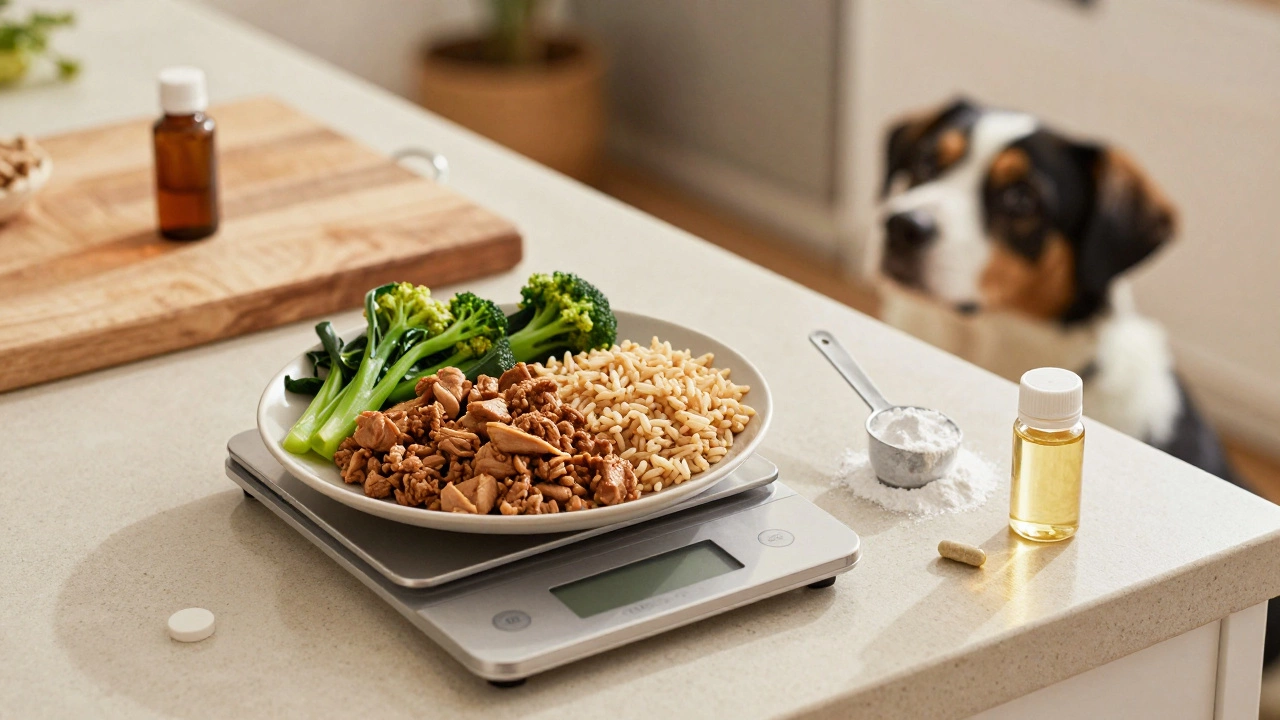
What Supplements to Add to Homemade Dog Food?
Learn which supplements are essential for homemade dog food to avoid dangerous nutrient gaps. Get clear dosing, safe options, and what to avoid for your dog's long-term health.
Popular posts