Dog Supplement Calculator
How This Works
Based on veterinary guidelines:
• Calcium: 900mg per 1,000 calories
• Fish Oil: 300mg EPA/DHA per 10lbs body weight
• Always use dog-specific supplements
Supplement Recommendations
Enter your dog's details to see recommended supplements
Feeding your dog homemade food sounds like the perfect way to give them the best-fresh ingredients, no fillers, full control. But here’s the catch: most homemade dog meals are missing key nutrients. Even if you’re using lean chicken, brown rice, and carrots, your dog could still be deficient in calcium, zinc, or omega-3s. Without the right supplements, you’re not feeding them a balanced diet-you’re risking long-term health problems like weak bones, dull coats, or even heart issues.
Why Homemade Dog Food Needs Supplements
Commercial dog food is formulated by veterinary nutritionists. Every bag is tested to meet AAFCO standards. Homemade meals? Not so much. A 2022 study from the University of California, Davis found that 95% of homemade dog food recipes shared online lacked at least one essential nutrient. Calcium was the most common missing piece-critical for bone and teeth health. Dogs need about 1.2 grams of calcium per 1,000 calories. Most meat and veggies don’t come close.
Even if you think you’re being thorough, your dog’s body needs more than just protein and carbs. They need trace minerals, fat-soluble vitamins, and fatty acids that aren’t obvious in a recipe. A chicken thigh might look healthy, but it doesn’t give your dog the magnesium for muscle function or the iodine for thyroid balance.
Essential Supplements for Homemade Dog Food
You don’t need a pharmacy full of bottles. Just five core supplements cover 90% of what homemade diets miss:
- Calcium carbonate or bone meal - This is non-negotiable. Dogs need calcium to match phosphorus levels. Use calcium carbonate powder (not human calcium pills). Add 900 mg per pound of meat and vegetables combined. Bone meal is an option too, but make sure it’s from a trusted source-some contain heavy metals.
- Dog-specific multivitamin - Not human vitamins. Human supplements can have too much vitamin D or too little zinc for dogs. Look for one labeled for dogs, with vitamin A, E, B-complex, iron, and selenium. Brands like NaturVet and VetriScience are vet-recommended.
- Omega-3 fatty acids (fish oil) - Reduces inflammation, supports brain health, and keeps skin from flaking. Use fish oil with at least 300 mg EPA and DHA per 10 lbs of body weight. Flaxseed oil doesn’t work-dogs can’t convert it efficiently.
- Taurine - Especially important for larger breeds and dogs with heart concerns. Taurine deficiency has been linked to dilated cardiomyopathy (DCM). Add 500 mg per 20 lbs of body weight daily. It’s not found in plant-based foods, so even meat-heavy diets may need extra.
- Probiotics - Homemade food lacks the fermentation and processing that commercial kibble uses to preserve gut flora. A daily probiotic helps digestion and boosts immunity. Look for strains like Lactobacillus acidophilus and Bifidobacterium animalis.
What Not to Add
Just because something’s natural doesn’t mean it’s safe. Skip these common mistakes:
- Human multivitamins - Too much vitamin D or iron can poison dogs. A single adult human vitamin can be lethal to a small dog.
- Glucosamine from human supplements - Many contain xylitol, which is deadly to dogs. Use only dog-formulated glucosamine.
- Herbs like garlic or turmeric in large amounts - Garlic can damage red blood cells. Turmeric is fine in tiny doses (1/4 tsp per 20 lbs), but not as a supplement unless paired with black pepper and fat for absorption.
- Calcium from eggshells without proper grinding - Crushed eggshells are fine, but only if ground into a fine powder. Coarse pieces can hurt the throat or pass through undigested.
How to Measure and Mix Supplements Correctly
Guessing leads to imbalances. Here’s how to get it right:
- Calculate your dog’s daily calorie needs. Use an online calculator based on weight, age, and activity level. A 50-lb active dog needs about 1,000-1,200 calories per day.
- Track what you’re feeding. Weigh meat, rice, veggies, and add them up. Don’t eyeball portions.
- Match supplements to calories, not meals. If you feed 1,100 calories, you need 990 mg calcium (900 mg per 1,000 calories). Adjust as portions change.
- Use a digital scale. A tablespoon of calcium powder can vary by 30% in weight depending on how it’s packed.
- Mix supplements into food right before serving. Some vitamins degrade in moisture or heat.
Keep a simple log: date, ingredients, amounts, supplements added. After a month, you’ll spot patterns-like your dog’s coat improving after adding fish oil, or their stools firming up with probiotics.
When to Talk to a Vet or Nutritionist
Most pet owners can manage basic supplementation safely. But if your dog has any of these, get professional help:
- Chronic illness (kidney disease, liver issues)
- Food allergies or intolerances
- Pregnant or nursing dogs
- Puppies under 6 months
- Senior dogs over 8 years with mobility or joint problems
A veterinary nutritionist can create a custom plan using software like BalanceIt or PetDiets. They’ll tell you exactly how much calcium, zinc, and copper your dog needs based on their bloodwork. It’s not cheap-$100-$200 per plan-but it’s cheaper than treating a deficiency-induced heart condition later.
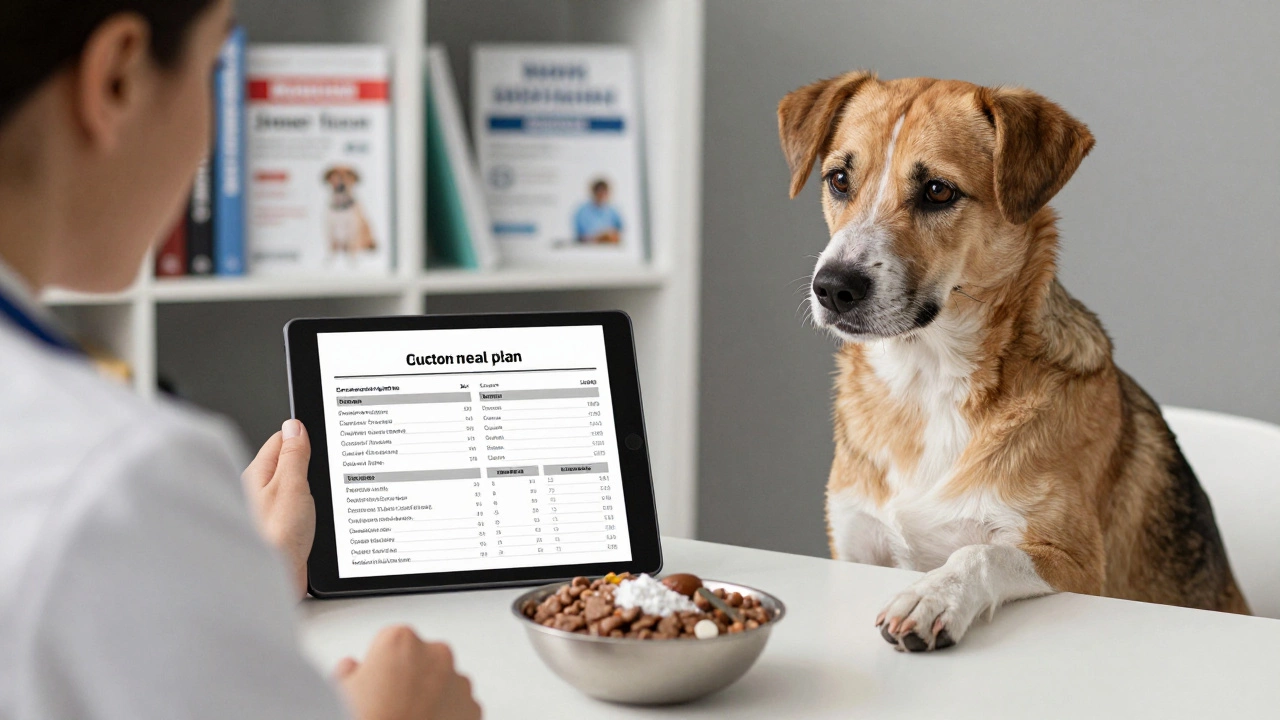
Real-World Example: A Simple Balanced Meal
Here’s what a day’s meal looks like for a 40-lb, 3-year-old mixed breed:
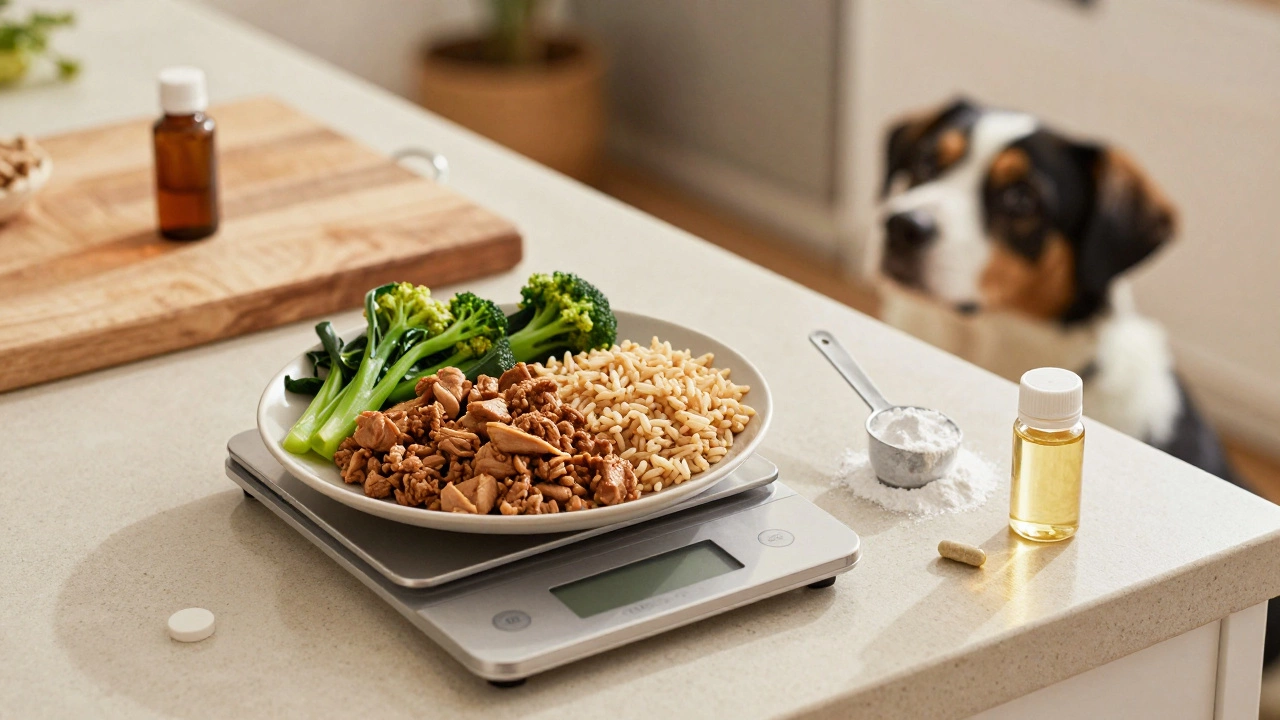
- 8 oz cooked ground turkey
- 1/2 cup cooked brown rice
- 1/4 cup steamed carrots and green beans
- 1 tsp fish oil (provides 600 mg EPA/DHA)
- 800 mg calcium carbonate powder
- 1 canine multivitamin tablet
- 1 probiotic capsule (5 billion CFU)
This meal hits the calorie target (about 550), balances calcium to phosphorus (1.2:1), and adds the key missing nutrients. No guesswork. No guesswork.
Monitoring Your Dog’s Response
Supplements aren’t magic pills. You’ll see results over weeks, not days. Watch for:
- Shinier coat within 3-4 weeks
- Firmer stools within 1-2 weeks
- More energy and better mobility after 6 weeks
- Reduced skin itching or licking
If your dog gets diarrhea, vomiting, or loses appetite after adding a new supplement, stop it immediately. It could be an intolerance or overdose. Go back to basics-just meat, rice, and calcium-and add one new supplement at a time.
Final Thoughts
Homemade dog food can be a great choice-if you do it right. The goal isn’t to be perfect. It’s to be consistent and informed. Most dogs thrive on simple, balanced meals. You don’t need exotic ingredients or expensive supplements. Just the right ones, in the right amounts.
Start with calcium, fish oil, and a dog multivitamin. Track your portions. Watch your dog’s health. Adjust slowly. And when in doubt, talk to a vet who understands nutrition-not just vaccines and surgeries.
Can I use human supplements for my dog?
No. Human supplements often contain too much of certain vitamins or minerals, like vitamin D or iron, which can be toxic to dogs. Some also include xylitol or other artificial sweeteners that are deadly. Always use supplements made specifically for dogs.
How much calcium should I add to homemade dog food?
Add 900 mg of calcium per 1,000 calories of food. For example, if your dog eats 1,100 calories per day, use about 990 mg. Use calcium carbonate powder or bone meal designed for pets. Never use human calcium tablets-they’re dosed for adult humans, not dogs.
Is fish oil better than flaxseed oil for dogs?
Yes. Dogs can’t efficiently convert ALA (the omega-3 in flaxseed) into EPA and DHA, the forms they actually need. Fish oil provides EPA and DHA directly, which reduce inflammation, support brain function, and improve skin health. Flaxseed oil won’t give your dog the same benefits.
Do puppies need different supplements than adult dogs?
Yes. Puppies need more calcium and phosphorus for growing bones, but the ratio must be precise-too much calcium can cause joint problems. They also need higher levels of DHA for brain development. Use a puppy-specific supplement or consult a veterinary nutritionist before feeding homemade food to a puppy under 6 months.
Can I make homemade dog food without supplements?
Not safely. Even the most balanced-looking homemade meals miss key nutrients like calcium, taurine, and certain vitamins. Dogs can go months without showing symptoms, but deficiencies lead to serious issues like bone deformities, heart disease, or immune failure. Supplements aren’t optional-they’re essential for long-term health.