
Homemade Dog Food Supplements: What Works, What Doesn't
When you cook for your dog, you want to make sure they’re getting everything they need. That’s where homemade dog food supplements, additives used to balance nutrition in home-cooked meals for dogs. Also known as dog nutritional additives, they fill gaps that plain chicken or rice alone can’t cover. But here’s the truth: most healthy dogs on balanced commercial food don’t need them. The real question isn’t whether supplements are good—it’s whether your dog actually needs them, and if you’re adding the right ones without causing harm.
Take fish oil, a common omega-3 supplement used to support joint and skin health in dogs. It’s in a lot of homemade diets because it helps with itchy skin and stiff joints. But too much can throw off vitamin levels and even cause diarrhea. Same with cod liver oil, a potent source of vitamins A and D that can become toxic if overused. One owner added it daily thinking it was a health boost—until their dog started vomiting and losing balance. That’s not a miracle cure; that’s a medical emergency.
Then there’s calcium. If you’re feeding raw meat or cooked bones at home, you’re probably missing calcium. Dogs need it for strong bones and proper nerve function. But adding the wrong kind—like crushed eggshells without measuring—can lead to imbalances that hurt more than help. And don’t assume human vitamins are safe. protein shakes, common in human fitness routines but dangerous for dogs, often contain xylitol, which is deadly even in tiny amounts. A spoonful meant for you could land your dog in emergency care.
The best homemade dog food supplements aren’t fancy powders or trendy gels. They’re simple, vet-approved additions: ground eggshells for calcium, measured fish oil for omega-3s, and maybe a pinch of kelp for trace minerals—if your dog isn’t already getting them from their food. The goal isn’t to turn your kitchen into a lab. It’s to make sure your dog isn’t missing the basics.
Most of the posts below come from real dog owners who’ve tried adding things to their dog’s meals—and learned the hard way. Some thought ground chicken alone was enough. Others gave their dog human supplements because "it’s natural." The results? Confusion, stress, and sometimes vet bills. What you’ll find here are the stories, the mistakes, and the fixes. No fluff. No marketing. Just what actually works for dogs eating homemade food—and what you should skip to keep them safe.
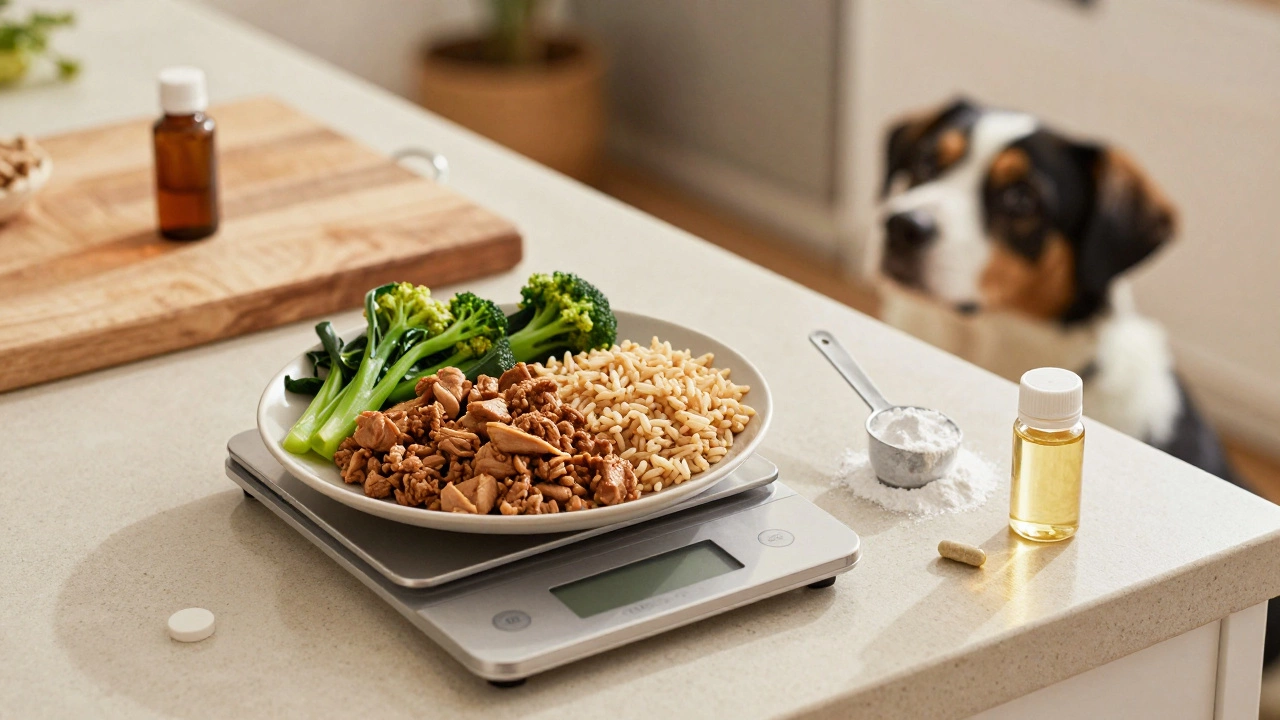
What Supplements to Add to Homemade Dog Food?
Learn which supplements are essential for homemade dog food to avoid dangerous nutrient gaps. Get clear dosing, safe options, and what to avoid for your dog's long-term health.
Popular posts