Nighttime Puppy Care: What Really Works for Sleep, Safety, and Calm
When you bring home a new puppy, nighttime puppy care, the set of practices that help a young dog sleep safely and peacefully through the night. Also known as puppy bedtime routine, it's not just about stopping whining—it's about teaching your pup they're safe, even when you're asleep. Most puppies under 12 weeks old can’t hold their bladder all night, and they’re terrified of being alone. That’s why leaving them to cry in a crate won’t teach independence—it teaches fear. The goal isn’t to make them quiet by force, but to help them feel calm enough to rest.
puppy anxiety at night, the stress a young dog feels when separated from their littermates and human family after dark. Also known as separation anxiety in puppies, it shows up as whining, pacing, or accidents—even if they were potty trained during the day. This isn’t manipulation. It’s biology. A puppy’s brain isn’t wired to handle long periods alone. That’s why the first night matters so much. If you rush the process, you risk creating habits that last into adulthood. Instead, keep the first few nights close: a crate in your bedroom, a soft blanket with a warm water bottle, and quiet background noise like a fan or low-volume TV. These aren’t crutches—they’re training tools.
puppy sleep schedule, a consistent daily rhythm that includes feeding, play, potty breaks, and quiet time before bed. Also known as puppy routine, it’s the backbone of good nighttime care. Puppies need 18 to 20 hours of sleep a day, but they don’t get it all at once. If you skip the last potty break before bed, or feed too late, or let them play until midnight, you’re setting them up to fail. A good schedule means dinner by 6 p.m., a walk at 7, quiet time at 8, lights out by 9. Consistency builds confidence. And when your puppy knows what comes next, they stop fighting it.
What you do before bed matters more than what you do after. A tired puppy is a quiet puppy—not from exhaustion, but from being mentally full. Short training sessions, gentle cuddles, and a calm environment do more than a barking collar or a bright light ever could. And if your puppy wakes up crying? Don’t rush in with treats or play. Wait a minute. Then go in quietly, take them out, and put them back. No fuss. No drama. That’s how they learn night isn’t for attention—it’s for rest.
You’ll find real stories here—from owners who tried everything from night lights to white noise machines, to those who just sat on the floor next to the crate for a week. Some puppies adjust in days. Others take weeks. There’s no magic fix. But there are proven steps. And below, you’ll see exactly what works, what doesn’t, and what the experts say about everything from crate placement to when to turn off the lights.
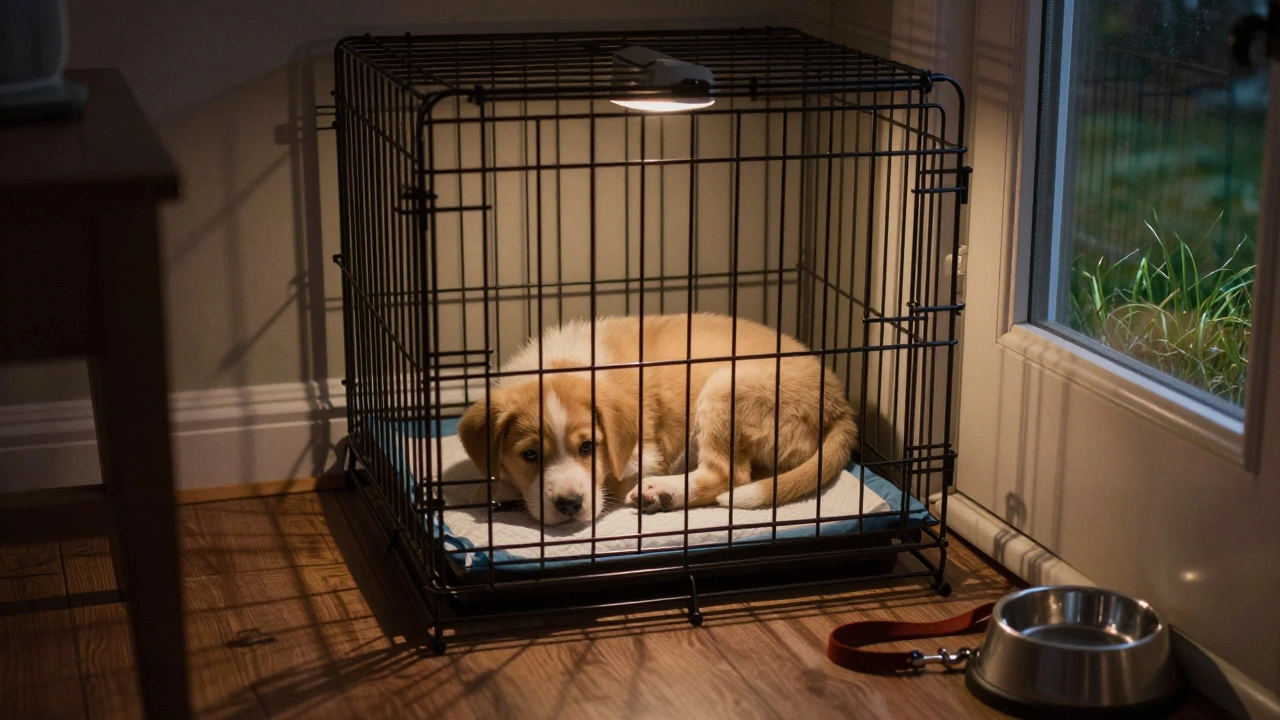
Will a Puppy Pee in a Crate at Night? Here’s What Really Happens
Most puppies can't hold their pee all night until they're 4-5 months old. Learn why accidents happen and how to train your puppy to sleep through the night without peeing in their crate.
Popular posts