Puppy Crate Training Calculator
Calculate when to set your nighttime alarm based on your puppy's age. This tool uses the 1 hour per month of age rule from the article to determine safe bladder hold times.
Your Recommended Alarm Time
Maximum bladder hold time:
Alarm should go off at:
Based on the 1 hour per month age rule from the article
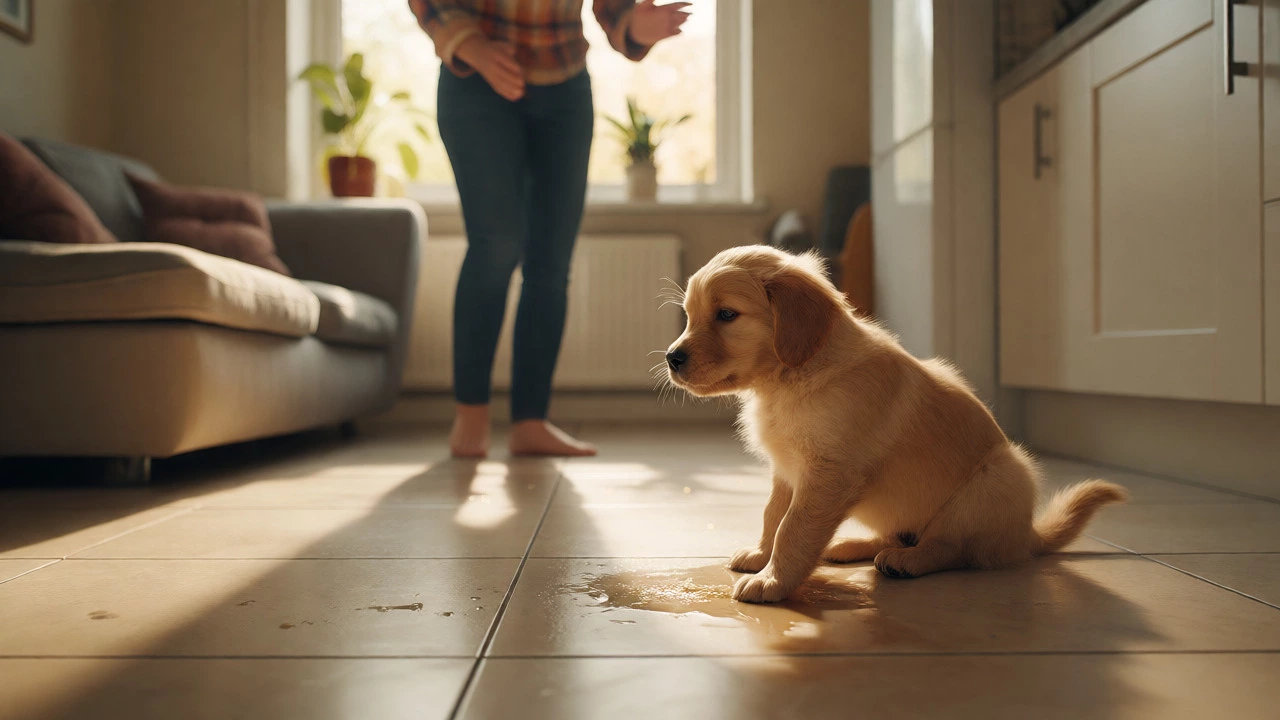
Every new puppy owner wonders the same thing: Will a puppy pee in a crate at night? The answer isn’t yes or no-it’s "it depends." Some puppies sleep through the night without a single accident. Others turn their crate into a puddle by 2 a.m. The difference isn’t luck. It’s preparation, timing, and understanding how a puppy’s body works.
Why Puppies Can’t Hold It All Night
A puppy’s bladder is tiny. Like, really tiny. A 10-week-old puppy can hold urine for about 2 hours at most. That’s why the old rule of "one hour per month of age" exists. So if your pup is 3 months old, they can hold it for about 3 hours. That’s not enough to get through a full 8-hour sleep. Most puppies under 4 months old simply don’t have the muscle control to make it through the night without a break.It’s not about being disobedient. It’s biology. Their nervous system is still developing. They don’t wake up when their bladder is full. They just go. And if they’re stuck in a crate with nowhere else to go, that’s where the accident happens.
What Happens When You Crate a Puppy at Night
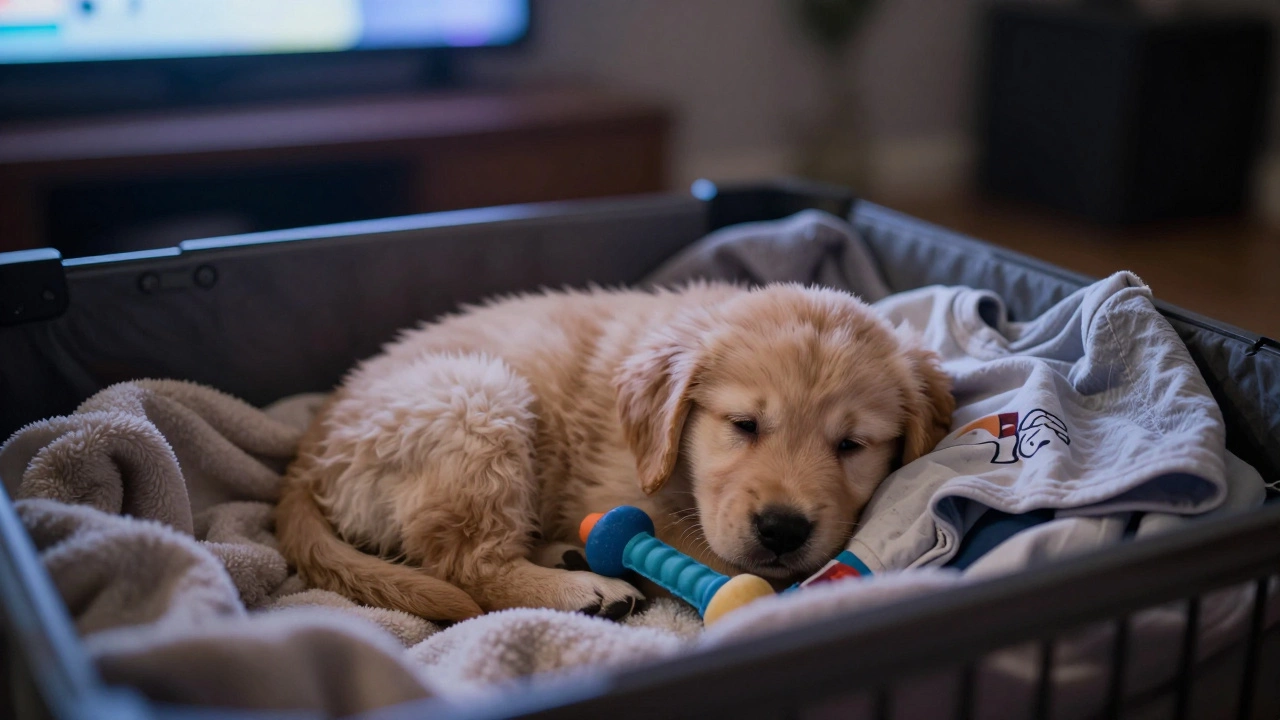
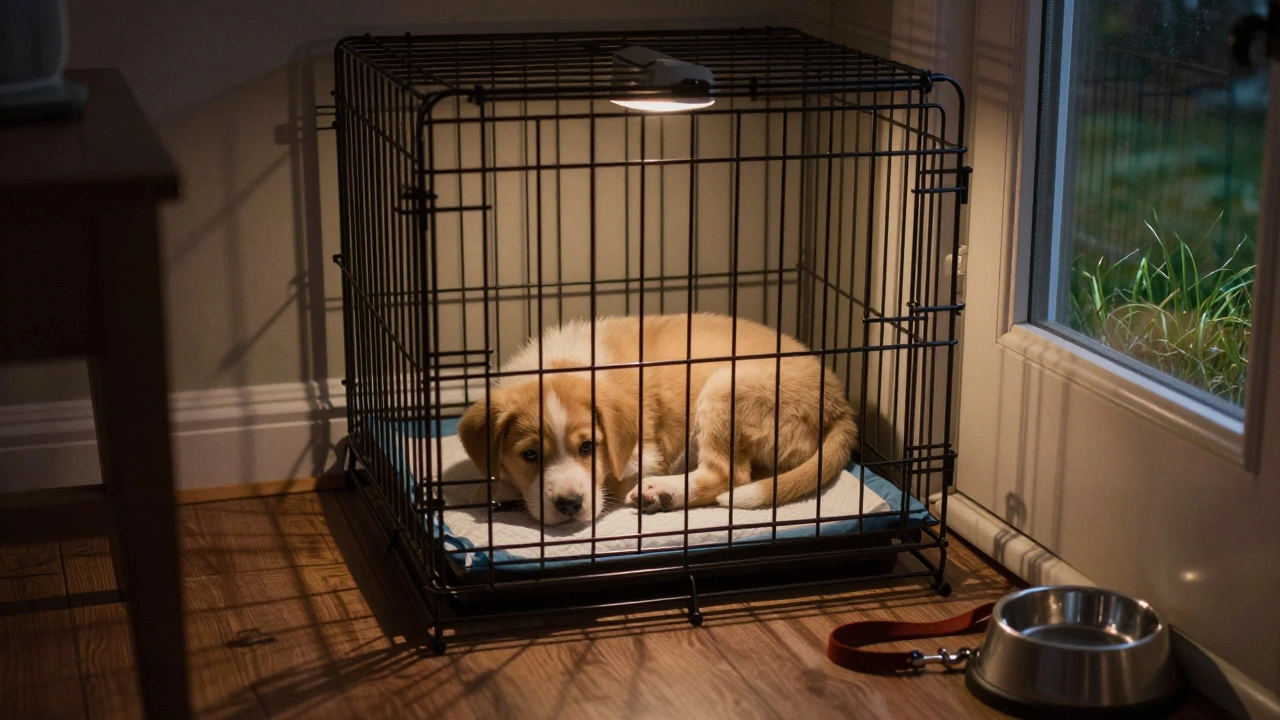
Crate training works because dogs naturally avoid soiling their sleeping space. But that instinct kicks in when they’re old enough to control their bladder. For young puppies, the instinct to avoid mess gets overridden by the physical reality: their bladder is full, and they can’t hold it.That’s why you’ll see puppies pee in their crates-not because they’re being bad, but because they’re too young to stop themselves. The crate isn’t the problem. It’s the timing. Crating a 6-week-old puppy for 7 hours straight? That’s asking for an accident. Crating a 6-month-old for 8 hours? That’s usually fine.
How to Prevent Nighttime Accidents
You can’t change how fast your puppy’s body matures. But you can work with it. Here’s how to reduce nighttime accidents:- Take them out right before bed. Don’t just let them wander. Take them outside on a leash. Let them sniff, explore, and go. Wait until they actually pee. Don’t assume they did because they sniffed the grass.
- Stop water 2 hours before bedtime. If you give water at 7 p.m., stop by 9 p.m. That gives their body time to process it. Don’t cut water entirely-just time it right.
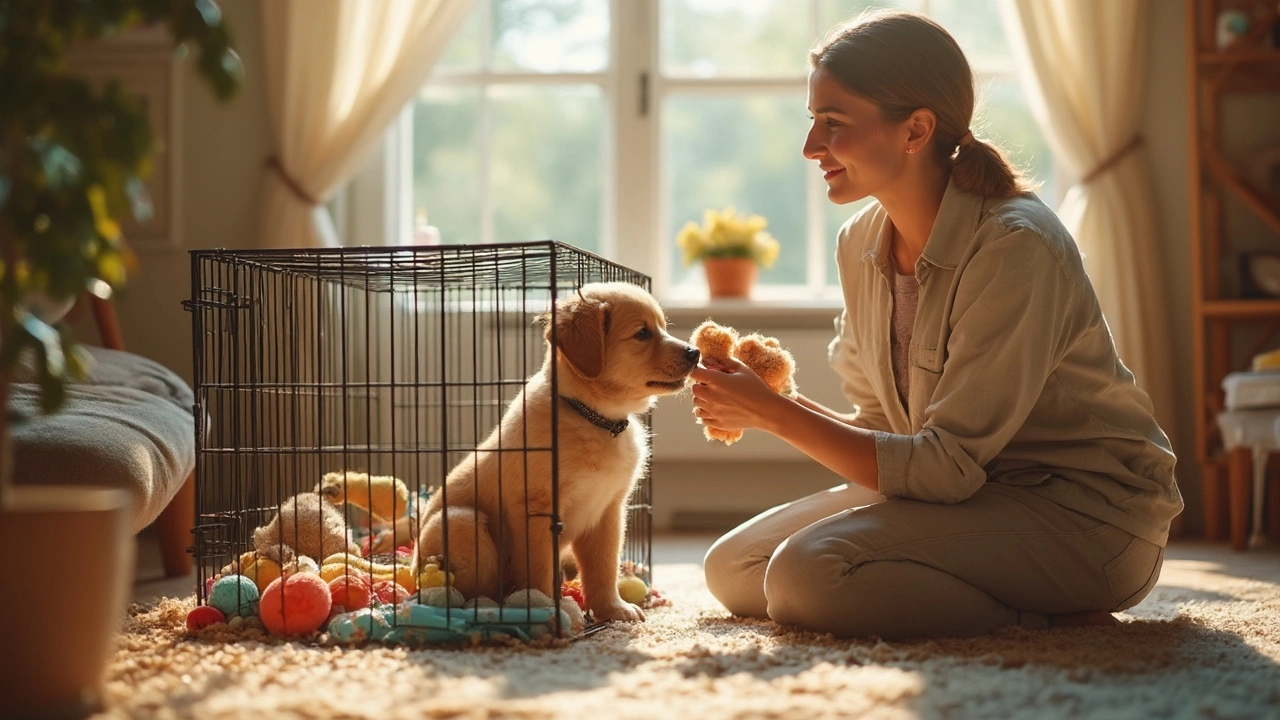
- Use a smaller crate. A crate that’s too big gives them room to pee in one corner and sleep in another. The crate should be just big enough for them to stand, turn around, and lie down. If they’re still growing, use a divider.
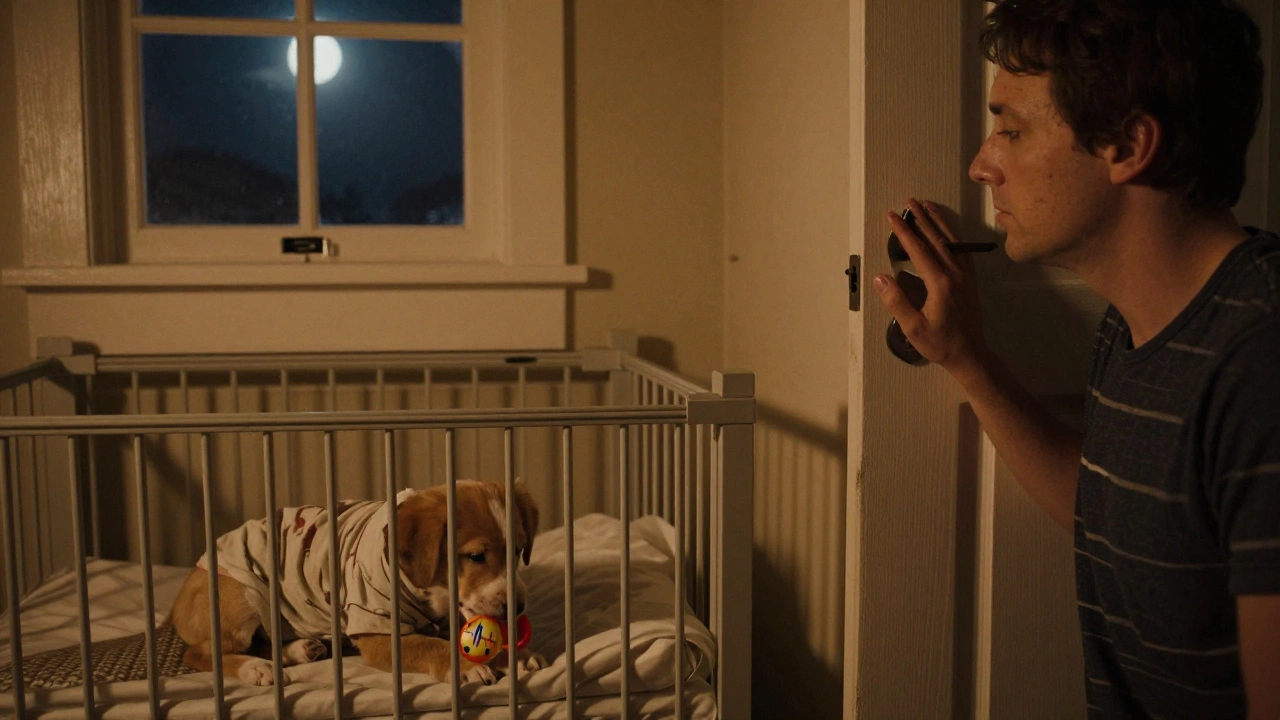
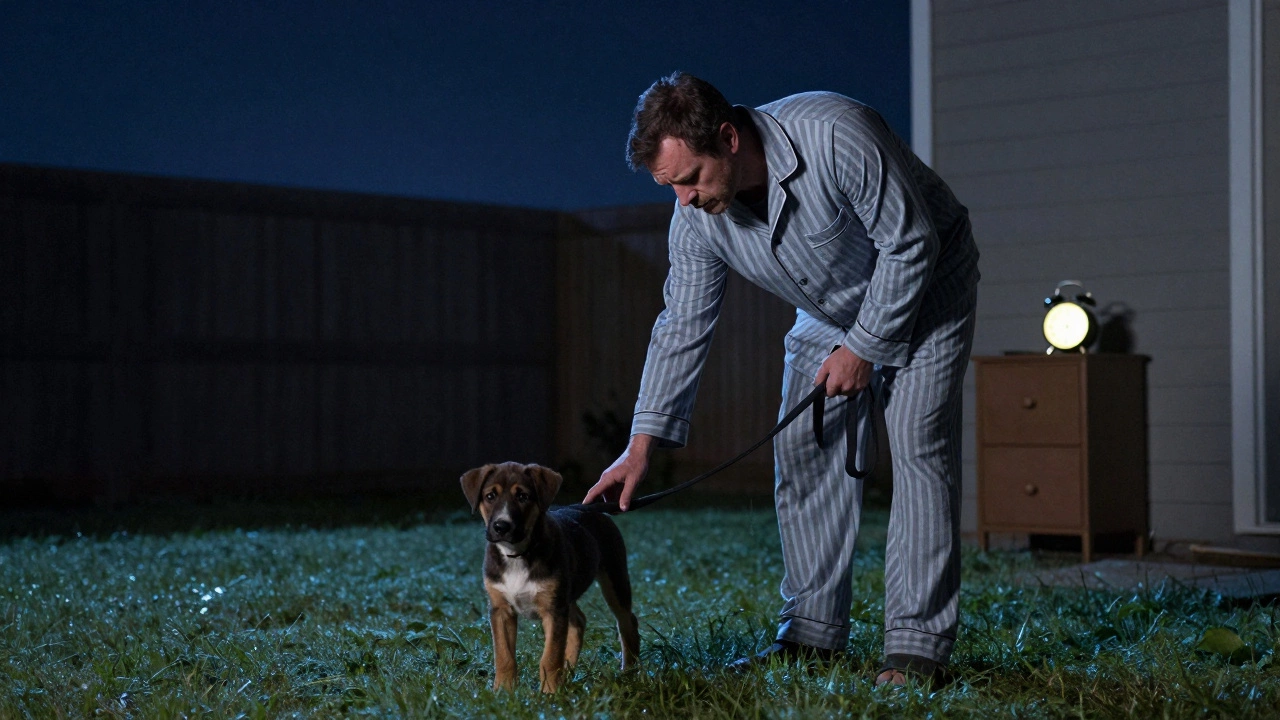
- Set an alarm for 4-5 hours after bedtime. If your puppy is 12 weeks old, set the alarm for 1 a.m. or 2 a.m. Take them out. Praise them when they go. Then put them back in the crate. You’re not training them to hold it longer-you’re helping them build the habit of going outside.
- Don’t punish accidents. Yelling or rubbing their nose in it doesn’t work. It just scares them. Clean the crate with an enzymatic cleaner. That removes the smell so they don’t think it’s a bathroom spot.
When Do Puppies Start Sleeping Through the Night?
Most puppies start sleeping through the night between 16 and 20 weeks old. That’s around 4 to 5 months. But some take longer. It depends on breed, size, and individual development.Small breeds like Chihuahuas or Yorkies often need more nighttime breaks because their bladders are even smaller. Large breeds like Labs or Golden Retrievers might hold it longer, but they still need help early on.
By 6 months, most puppies can make it 8 hours without peeing. That’s when you can stop the midnight alarms. But don’t assume it’s automatic. If your 5-month-old is still having accidents, go back to the alarm. Maybe they’re not fully ready.
What About Overnight Pads or Diapers?
Some owners try puppy pads or doggy diapers to avoid messes. But here’s the problem: if you let your puppy pee in the crate, you’re teaching them it’s okay to go there. That breaks the whole point of crate training. You want them to learn to hold it and go outside. Pads and diapers might save your carpet, but they make training harder in the long run.Only use them if your puppy has a medical issue-like a urinary tract infection-or if you’re away for more than 10 hours. Otherwise, stick to the routine. It’s slower, but it works.
Signs Your Puppy Might Have a Medical Issue
If your puppy is 6 months or older and still peeing in the crate every night, something else might be going on. Look for these red flags:- Peeing more than usual
- Straining to pee or crying when they go
- Peeing small amounts often
- Strong-smelling or cloudy urine
These could mean a urinary tract infection, bladder stones, or even a congenital issue. Take them to the vet. Don’t assume it’s just a training problem.
Real-Life Example: A 14-Week-Old Puppy in Bristol
A friend in Bristol had a 14-week-old Border Collie named Milo. He’d cry at 1 a.m., and the crate smelled like a wet dog park. She tried everything: bigger crate, less water, ignoring the crying. Nothing worked.She started setting an alarm for 1:30 a.m. Took Milo out every night, even when she was exhausted. After 10 days, he stopped crying. After 3 weeks, he didn’t need the alarm anymore. By 20 weeks, he slept through the night without a single accident.
It wasn’t magic. It was consistency.
Common Mistakes That Make Nighttime Accidents Worse
Here’s what most people do wrong:- Letting the puppy sleep in the bedroom without a crate. That removes the structure. Crates teach boundaries.
- Feeding late at night. Dinner should be at least 3 hours before bedtime.
- Assuming the puppy is "just being stubborn." It’s not. It’s a physical limit.
- Using the crate as punishment. If the crate feels like a jail, the puppy won’t feel safe.
- Not cleaning the crate properly. Leftover smell = repeat accidents.
What to Expect in the First Few Weeks
Week 1-2: Expect accidents. You’ll be waking up. That’s normal. Week 3-4: You’ll start seeing patterns. Maybe they only go once a night. That’s progress. Week 5-6: You might skip one night without an alarm. Celebrate that. Week 8+: You’re getting close. Most puppies will start holding it longer.By 4 months, you’ll be able to sleep through the night. But you have to earn it. You earn it by showing up at 1 a.m. every night for two weeks.
Final Thought: Patience Beats Perfection
There’s no shortcut. You can’t rush a puppy’s bladder development. The goal isn’t to stop accidents overnight. It’s to build a habit. Every time you take them out, you’re teaching them: "Outside is where we go." That’s the message they need to learn.It’s tiring. It’s messy. But it’s temporary. And when your 6-month-old puppy sleeps peacefully through the night without a single accident? You’ll know it was worth every 2 a.m. walk.
Can a puppy sleep in a crate all night without peeing?
Puppies under 4 months old usually can’t. Their bladders aren’t developed enough to hold urine for 8 hours. Most need at least one nighttime break until they’re 16-20 weeks old. After that, many can sleep through the night without accidents.
Should I take my puppy out in the middle of the night?
Yes, if your puppy is under 4 months old. Take them out once, about 4-5 hours after bedtime. This prevents accidents and helps them learn to associate going outside with relieving themselves. Don’t play or give water after they go-just praise and return to the crate.
Why is my puppy peeing in the crate even after training?
If your puppy is older than 6 months and still peeing in the crate, it’s likely not a training issue. It could be a medical problem like a urinary tract infection, bladder stones, or a congenital condition. Look for signs like frequent peeing, straining, or unusual-smelling urine. Visit your vet to rule out health issues.
Is it okay to use puppy pads in the crate at night?
It’s not recommended. Puppy pads teach your puppy it’s okay to pee in their sleeping area, which defeats the purpose of crate training. Use them only as a last resort-for example, if you’re away for more than 10 hours or your puppy has a medical condition.
How long can a puppy hold their pee at night?
A general rule is one hour per month of age. So a 3-month-old can hold it for about 3 hours. Most puppies can’t make it 8 hours until they’re 4-5 months old. Always factor in their age, breed, and health when setting expectations.