Dog Training Tool Selector
Answer a few questions about your dog to find the most suitable training tool replacement for a prong collar.
Recommended Tool
Important Note:
No tool works alone. Consistent positive reinforcement training is required to teach loose-leash walking. The tool manages behavior while you teach it.
Most of us have been there. You’re walking your dog, and suddenly they spot a squirrel or another dog across the street. The leash goes taut, you get yanked forward, and you wonder if you’re training the dog or letting the dog train you. For years, many owners reached for a prong collar as the quick fix. It’s effective at stopping pulling, sure, but it often comes with side effects: neck injuries, increased anxiety, and a relationship built on discomfort rather than trust.
If you’re asking "what is better than a prong collar?", you’re likely looking for something that stops the pulling without hurting your dog. Maybe your vet said no more prongs, or maybe you just hate seeing your dog flinch when the leash jerks. The good news is that modern dog training has moved past the "pain equals compliance" mindset. There are several highly effective tools that work with your dog’s anatomy and psychology, not against them.
Key Takeaways
- Martingale collars are the best direct replacement for control without pain, preventing escape while distributing pressure evenly.
- Head halters (like Gentle Leaders) offer superior steering control by guiding the head, which naturally guides the body.
- Front-clip harnesses turn a pulling dog around gently, using physics instead of force to discourage lunging.
- No tool works alone: Every alternative requires consistent positive reinforcement training to teach loose-leash walking.
Why Owners Are Moving Away From Prong Collars
The prong collar, also known as a pinch collar, mimics the way mother dogs grab their puppies by the scruff. In theory, it’s natural. In practice, it applies concentrated pressure to the sensitive trachea and cervical spine. If you jerk the leash even slightly too hard, you risk damaging the thyroid gland or causing spinal issues, especially in small breeds like Chihuahuas or Dachshunds.
Beyond physical risks, there’s the behavioral cost. Dogs associate the discomfort with whatever is happening in their environment. If your dog sees a scary stranger and then gets pinched, they might start associating strangers with pain. This can lead to reactivity getting worse, not better. You end up with a dog that pulls less because they’re afraid, not because they’ve learned how to walk nicely.
So, what do you use instead? The answer depends on your dog’s size, strength, and specific behavior issues. Let’s break down the top contenders.
The Martingale Collar: Control Without Pain
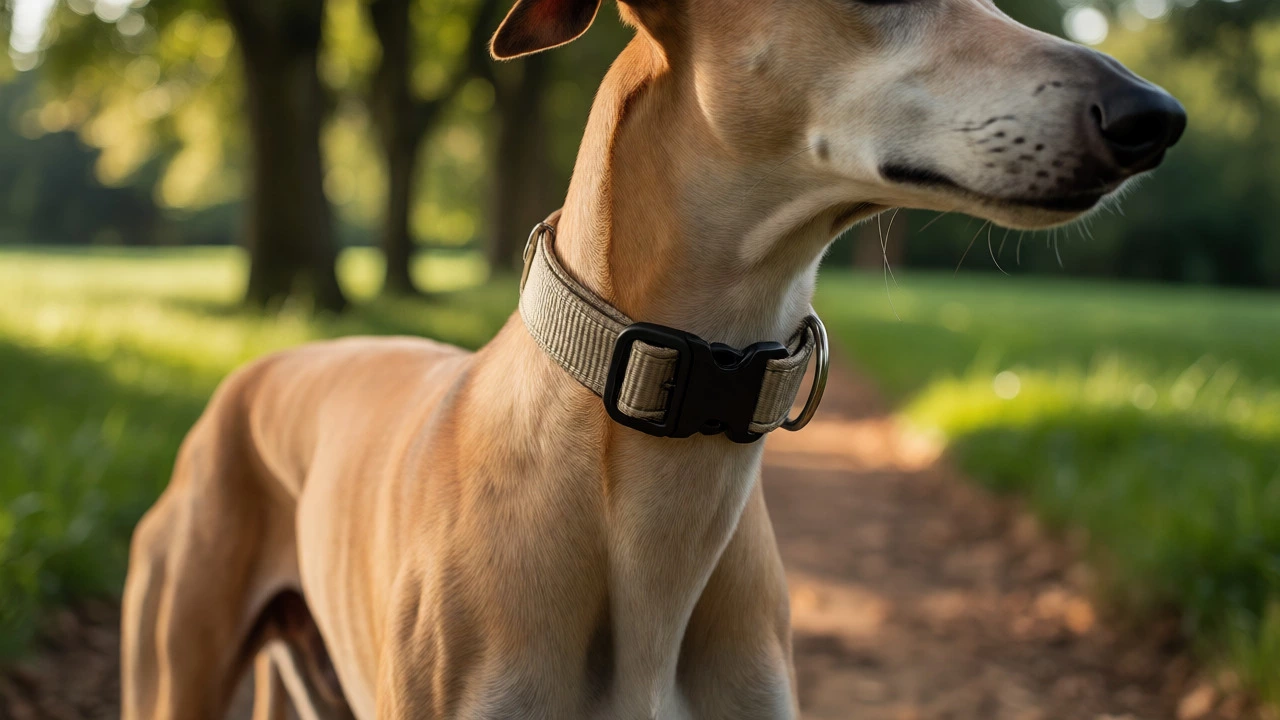
If you love the tight control of a prong collar but hate the pain, the martingale collar is your best bet. Also called a limited-slip collar, it’s made of two loops: one large loop that goes over the head, and a smaller loop with an adjustment slide. When your dog pulls, the collar tightens only to a pre-set limit-usually enough to prevent slipping out, but not enough to choke.
This design is ideal for sighthounds like Greyhounds and Whippets, who have narrow heads and wide necks and can easily slip out of standard flat collars. But it’s great for any strong puller. Unlike a prong collar, which digs into the skin with metal points, a martingale distributes pressure around the entire circumference of the neck. This reduces the risk of tracheal collapse and makes the correction feel more like a firm hand on the shoulder than a sharp pinch.
Pro Tip: Fit is critical. Measure your dog’s neck where the collar sits, then measure behind the ears. The martingale should be snug enough that it doesn’t fall off when pulled back, but loose enough that you can fit two fingers underneath when relaxed.
Head Halters: Steering the Body via the Head
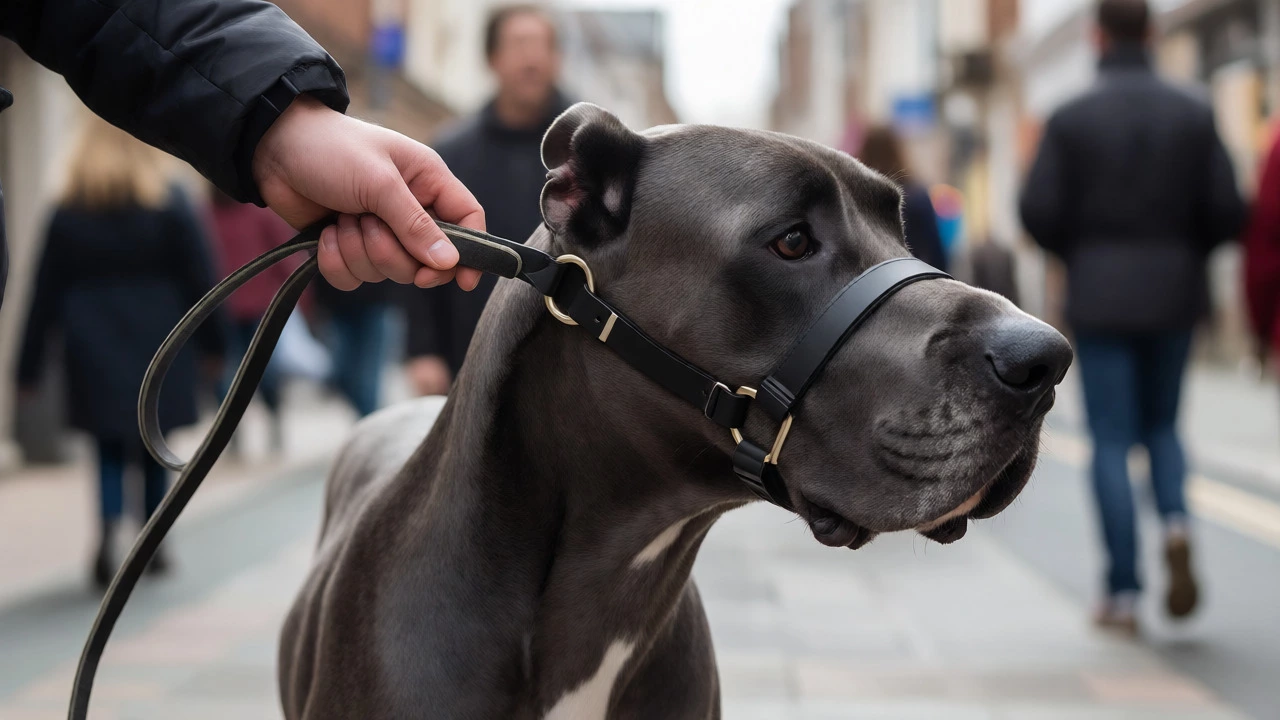
You’ve probably seen these before-they look like muzzles, but they aren’t. A head halter, such as the Gentle Leader or Halti, fits around the dog’s muzzle and behind the ears. The principle is simple: where the head goes, the body follows. If you guide a dog’s nose to the left, their whole body turns left. This gives you massive leverage, making it easy to stop a 100-pound Great Dane from charging ahead.
Head halters are particularly effective for reactive dogs. By controlling the head, you can gently redirect your dog’s gaze away from triggers before they escalate into barking or lunging. This breaks the cycle of fixation. However, many owners find them awkward to put on, and some dogs need time to adjust. Never yank the leash sharply with a head halter; this can snap the dog’s neck sideways. Instead, use gentle, steady pressure.
| Collar Type | Pressure Point | Risk of Injury | Best For |
|---|---|---|---|
| Prong Collar | Neck (points) | High (Trachea/Spine) | Strong pullers needing immediate control |
| Martingale | Neck (even distribution) | Low | Sighthounds, escape artists |
| Head Halter | Muzzle/Ears | Medium (if misused) | Reactive dogs, large breeds |
| Front-Clip Harness | Chest/Shoulders | Very Low | Puppies, mild pullers |
Front-Clip Harnesses: Using Physics Against Pulling
If your dog hates having anything on their face or neck, a front-clip harness is a fantastic option. These harnesses have a leash attachment point on the chest, between the front legs. When the dog pulls, the tension rotates their body toward you. They literally cannot move forward without turning around. This disrupts the momentum of pulling without applying any pressure to the throat.
Brands like Freedom No-Pull or Easy Walk popularized this design. They are excellent for puppies learning manners and for dogs with respiratory issues like brachycephalic breeds (Pugs, Bulldogs) who can’t tolerate neck pressure. The downside? Some dogs learn to lean into the harness and still pull, though with less effectiveness. Others might trip over the straps if fitted poorly. Always ensure the chest strap sits high, near the armpits, not low on the belly.
Positive Reinforcement Tools: The Invisible Leash
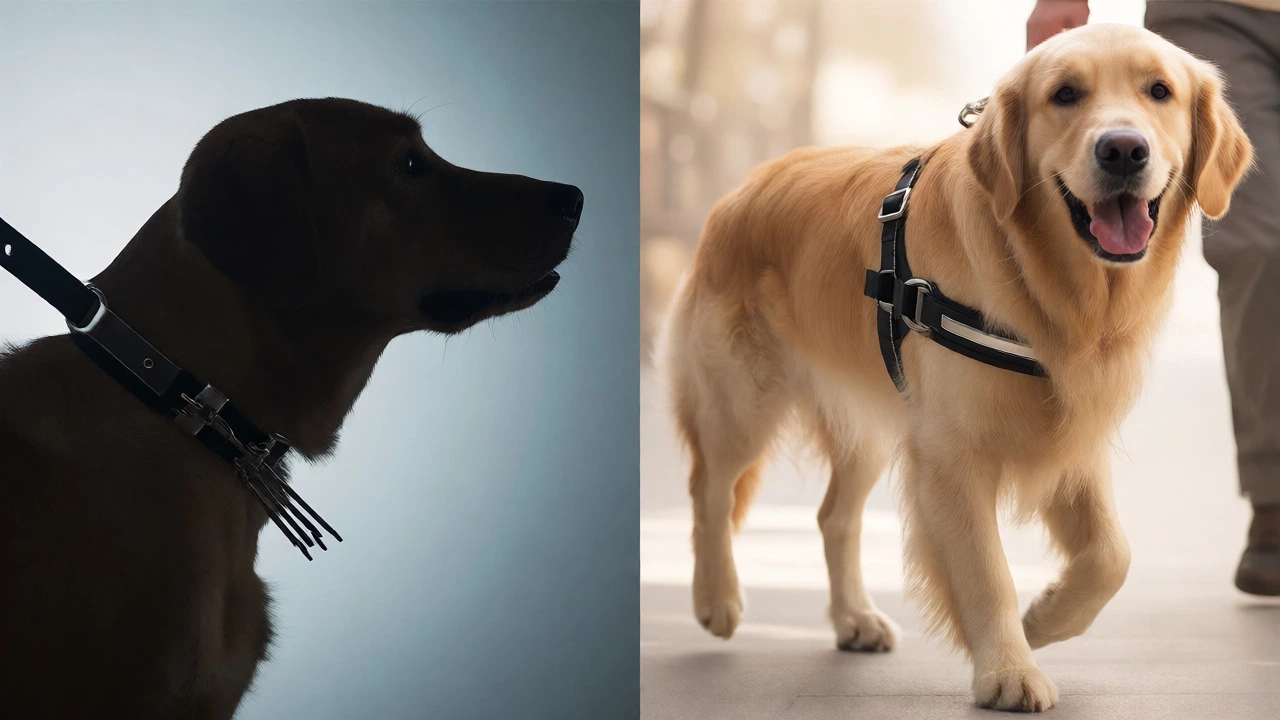
Here’s the uncomfortable truth: no collar fixes bad behavior permanently. If you take off the prong collar, does the dog still pull? Often, yes. That’s because the dog didn’t learn *how* to walk; they just learned to avoid pain.
The most sustainable "tool" is actually a technique paired with a standard flat collar or comfortable harness. Using treats, praise, and play, you reward the dog for staying near you. When they pull, you stop moving. This teaches them that pulling makes the walk boring, while staying close makes the walk fun. It takes longer than snapping on a prong collar, but the results stick.
Consider combining a front-clip harness with high-value treats. Use the harness for management during busy walks, and switch to a flat collar for training sessions in quiet areas. This hybrid approach gives you control when you need it and freedom when you don’t.
How to Choose the Right Alternative for Your Dog
Selecting the right gear isn’t about finding the "best" product universally-it’s about matching the tool to your specific situation.
- For small, fragile dogs: Avoid prong collars entirely. Use a well-fitted Y-shaped harness. Their tracheas are delicate, and even a light jerk can cause damage.
- For powerful, muscular dogs: A head halter or martingale offers the necessary leverage. A standard harness might not provide enough steering power for a Husky or Rottweiler.
- For reactive/anxious dogs: Try a head halter to manage gaze, or a front-clip harness to reduce physical stress. Pair this with desensitization training.
- For puppies: Start with a front-clip harness. It’s safe, easy to use, and discourages pulling habits before they become ingrained.
Remember, transition slowly. If your dog is used to a prong collar, don’t expect instant perfection with a new tool. Introduce the new collar or harness in short, low-distraction sessions. Reward heavily for calm behavior. If the new tool doesn’t seem to help after two weeks of consistent training, consult a certified professional dog trainer (CPDT-KA). Sometimes, the issue isn’t the gear-it’s the handler’s technique.
Frequently Asked Questions
Is a martingale collar safer than a prong collar?
Yes, generally speaking. A martingale distributes pressure evenly around the neck, whereas a prong collar concentrates force on specific points. This significantly reduces the risk of tracheal injury and spinal damage, making it a safer choice for most dogs, especially those with neck sensitivities.
Do head halters hurt dogs?
No, when used correctly, head halters do not hurt. They apply pressure to the sturdy parts of the skull and muzzle. However, if you jerk the leash violently, you can strain the neck muscles. Proper use involves gentle guidance, not sharp corrections.
Can I leave a prong collar on my dog all day?
Never leave a prong collar on an unattended dog. The metal links can catch on fences, crates, or furniture, leading to panic and severe injury. Additionally, constant wear can irritate the skin. Remove it whenever the dog is indoors or unsupervised.
Which is better for pulling: a harness or a collar?
It depends on the dog. Front-clip harnesses are often better for reducing pulling force and protecting the neck. Collars (like martingales) offer better control for steering and managing reactivity. For maximum safety, many trainers recommend starting with a front-clip harness.
Are electronic collars a good alternative to prong collars?
Electronic collars (e-collars) can be effective but require precise timing and skill. Like prong collars, they rely on aversive stimuli. If misused, they can increase anxiety. Positive reinforcement methods combined with management tools like harnesses are usually preferred for long-term behavioral change.