
Pet-Friendly State Comparison Tool
Compare Your State to Delaware
Delaware ranks as the least pet-friendly state according to 2024 studies. Find out how your state compares on key policies.
Your State vs Delaware
Your State
0 restrictions
Delaware
5 restrictions
Key Differences
- Restaurant Access - Unknown
- Beach Access - Unknown
- Park Access - Unknown
- Housing Restrictions - Unknown
- Hotel Access - Unknown
What This Means for Dog Owners
Tips for Your State
If you’ve ever tried to take your dog to a restaurant, hike a trail, or even check into a hotel with your pup, you know not all places make it easy. Some states treat dogs like second-class citizens-no parks, no beaches, no restaurants, no hotels that say yes. And while most people assume places like California or Colorado lead in pet-friendliness, the real surprise is who’s at the bottom.
Why Some States Just Don’t Get Dogs
It’s not about climate or terrain. It’s about laws, attitudes, and infrastructure. A state that bans dogs from public parks, prohibits them from entering grocery stores, or requires a 30-day quarantine for out-of-state pets isn’t just inconvenient-it’s hostile. These aren’t rare exceptions. In some states, they’re the rule.Take Delaware, for example. It has no statewide leash law, which sounds good until you realize that means local towns can make up their own rules-and most of them are strict. Wilmington bans dogs from all public beaches year-round. New Castle County requires dogs to be muzzled in public if they’ve ever shown any sign of aggression, even if it was years ago and never resulted in a bite. That’s not safety. That’s suspicion.
Then there’s New Jersey. It’s one of the few states where landlords can legally refuse to rent to anyone with a dog, no matter the size or breed. There’s no protection for service animals in rental housing unless they’re certified emotional support animals under federal law-and even then, many landlords ignore it. A 2024 survey by the American Kennel Club found that 68% of New Jersey renters with dogs were turned down because of their pet, the highest rate in the U.S.
The Laws That Make It Hard
Some states have outdated, overly broad laws that make life impossible for dog owners. In Mississippi, it’s illegal to walk a dog without a leash in any public space, even if the dog is well-behaved and under voice control. That means no off-leash parks, no dog runs, no freedom. And if you’re caught without a leash? Fines start at $200 and go up with repeat offenses.Alabama doesn’t allow dogs in state parks unless they’re in a carrier or on a leash no longer than six feet. That’s fine for a walk-but what about a hike? Most trails in Alabama’s state parks are narrow, rocky, and lined with brush. A six-foot leash means your dog can’t explore, sniff, or even stay close without getting tangled. Many owners just don’t bother.
And then there’s the food rule. In Louisiana, it’s illegal for dogs to be on restaurant patios unless they’re service animals. Even then, the staff can refuse entry if they “feel uncomfortable.” No training certification, no documentation required from the owner-just a server’s gut feeling. That’s not a law. That’s discrimination dressed up as policy.
Where Dogs Are Treated Like Property
In some states, dogs aren’t seen as companions. They’re seen as property. And property doesn’t get to go everywhere. In Oklahoma, it’s legal for a landlord to charge a $500 non-refundable pet fee for any dog, no matter how small. That’s more than the average monthly rent in some rural towns. And if your dog barks once? You can be evicted without notice.Georgia has a law that allows municipalities to ban entire breeds based on appearance-not behavior. Pit bulls, Rottweilers, and even mixed breeds that look like them can be outlawed in cities like Atlanta and Savannah. The law doesn’t require proof of aggression. Just looks. That’s why so many Georgia dog owners hide their pets indoors or drive across state lines just to take them to the vet.

The Real Cost of Living Without Dog Access
It’s not just about walks or restaurants. It’s about daily life. In states with strict pet laws, dog owners pay more for housing, spend more on travel, and lose time just to get basic needs met. One study from the University of Tennessee found that dog owners in the least pet-friendly states spend an average of 11 extra hours per month just finding places their dog can go. That’s 132 hours a year. More than five full days.And it’s not just time. It’s money. In states like Mississippi and Alabama, pet-friendly hotels are scarce. Owners often have to drive 50-100 miles out of their way just to find a place that accepts dogs. That adds $50-$100 in gas per trip. Over a year, that’s $600-$1,200 extra just to keep your dog from being locked up in a crate while you sleep.
Why Delaware Is the Least Pet-Friendly State
Delaware doesn’t have the biggest population. It doesn’t have the harshest weather. But it has the most restrictive patchwork of rules. Here’s why it tops the list:- No statewide pet-friendly housing law-every town sets its own rules, and most ban dogs.
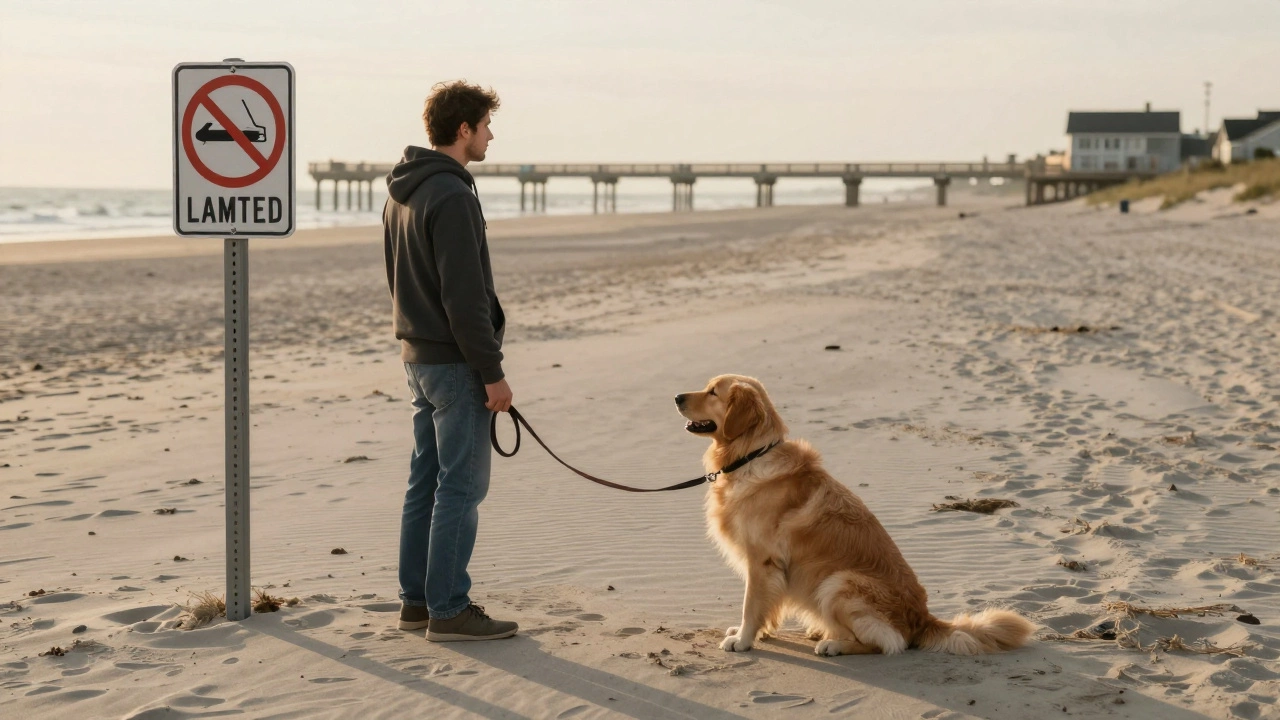
- All public beaches are dog-free year-round, even in off-season.
- Restaurants can refuse entry to dogs on patios without giving a reason.
- Only 12 out of 50 public parks allow off-leash dogs, and most of those are tiny.
- There’s no legal protection against breed-specific bans, so cities like Dover and Newark have outlawed pit bulls and Rottweilers.
Combine that with the fact that Delaware has no dedicated dog parks in its three most populous counties, and you’ve got a state where owning a dog feels like a burden, not a joy.

What You Can Do If You Live There
If you’re stuck in Delaware or a similarly unfriendly state, you’re not helpless. You can still make life better-for your dog and others.- Find private dog parks. Many are run by local clubs or nonprofits. Search for “off-leash dog areas Delaware” and you’ll find hidden gems like the Dog Run at Brandywine Park (open 6am-9pm, by reservation only).
- Join or start a pet advocacy group. Delaware’s only statewide pet rights group, “Paws for Change,” has pushed for leash law reform and got two towns to allow dogs on beaches in winter.
- Use apps like BringFido or GoPetFriendly to find pet-friendly businesses. Even if a place says “no dogs,” many will make exceptions if you ask politely and show your dog is calm.
- Travel smart. Plan trips to Maryland or Pennsylvania for weekend getaways. Both have state parks that welcome dogs and beaches where they can run free.
What’s Changing? And What’s Not
There’s a quiet shift happening. More states are starting to allow dogs in outdoor dining areas. California, New York, and Washington now have statewide rules protecting pet owners in rentals. But Delaware? Nothing. No bills pending. No petitions gaining traction. The state government hasn’t held a public hearing on pet access since 2019.Meanwhile, neighboring states are moving forward. Maryland passed a law in 2024 requiring all state parks to have at least one off-leash area. Pennsylvania now allows dogs on 95% of its hiking trails. Delaware? Still stuck in 2005.
It’s Not Just About Rules. It’s About Culture
The real problem isn’t the laws. It’s the mindset. In pet-friendly states, dogs are part of the community. In Delaware, they’re an afterthought. Grocery stores don’t have water bowls. Gas stations don’t carry dog treats. Even vet clinics are harder to find outside the main cities.That’s why the least pet-friendly state isn’t the one with the strictest laws. It’s the one that doesn’t care enough to change them.
Is Delaware really the least pet-friendly state?
Yes, based on current data from the American Kennel Club and state-level pet access surveys, Delaware ranks lowest in pet-friendly policies. It has the fewest public dog areas, the most restrictive rental laws, and no statewide protections for pet owners. States like Alabama and Mississippi are close behind, but Delaware’s patchwork of local bans makes it uniquely difficult for dog owners.
Can I take my dog to the beach in Delaware?
No. All public beaches in Delaware, including Rehoboth, Dewey, and Bethany, ban dogs year-round. There are no exceptions for leashed dogs or service animals unless they’re certified for disability assistance. Some private beach clubs allow dogs, but they charge high fees and require proof of vaccinations.
What states are better for dogs than Delaware?
States like Maryland, Pennsylvania, and New Jersey (despite its rental issues) offer far more access. Maryland now has off-leash areas in all state parks. Pennsylvania allows dogs on nearly all hiking trails. Even nearby Virginia and North Carolina have more pet-friendly restaurants and hotels. If you’re in Delaware, plan weekend trips to these states for your dog’s sake.
Are there any dog-friendly places in Delaware at all?
Yes, but they’re limited. Brandywine Park has a small off-leash dog run that requires advance booking. Some independent cafes in Wilmington and Dover allow dogs on patios if you ask nicely. There are also a few private dog parks run by local clubs. The key is to use apps like BringFido and call ahead-don’t assume anything.
Can I get fined for walking my dog without a leash in Delaware?
It depends. Delaware has no statewide leash law, but most towns do. In Wilmington, you can be fined $150-$500 for walking a dog off-leash in public. In Dover, the fine is $200. Always check local ordinances before letting your dog roam. Even if the state doesn’t require it, your town probably does.