Pet Carrier Fit Checker
Enter your carrier's external dimensions (including wheels if applicable) to see which airlines allow it in the cabin.
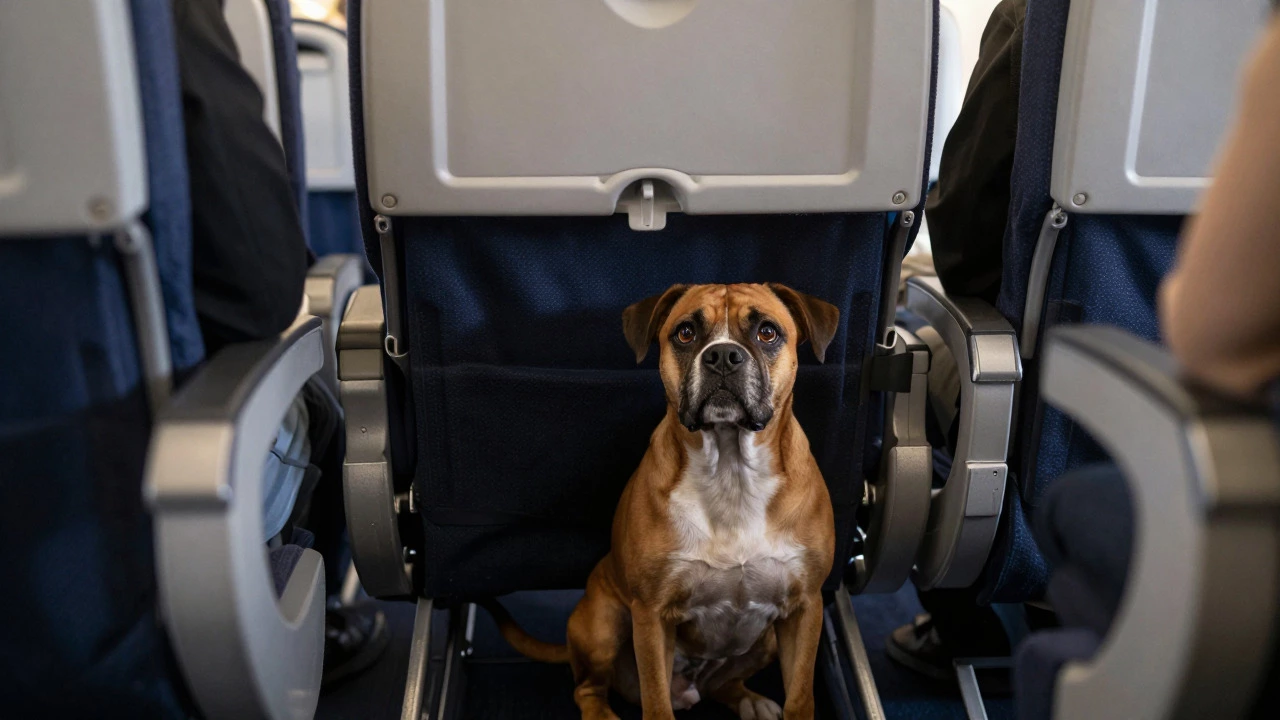
You’re staring at the empty space beneath the seat in front of you, measuring it with your eyes against your dog’s body. Your 30-pound companion is looking up at you, tail wagging, hoping for the best. But does the math actually work out? The short answer is: it depends entirely on the shape of your dog and the specific airline you fly with.
Many owners assume that if their dog weighs under 40 pounds, they are automatically cleared for the cabin. That’s a dangerous assumption. Weight limits are often red herrings; dimensions are the real gatekeepers. A stocky Bulldog weighing 28 pounds might not fit where a lanky Greyhound of the same weight slides right in. Let’s break down exactly how this works so you can pack your bags with confidence instead of anxiety.
The Golden Rule: It’s About the Crate, Not the Dog
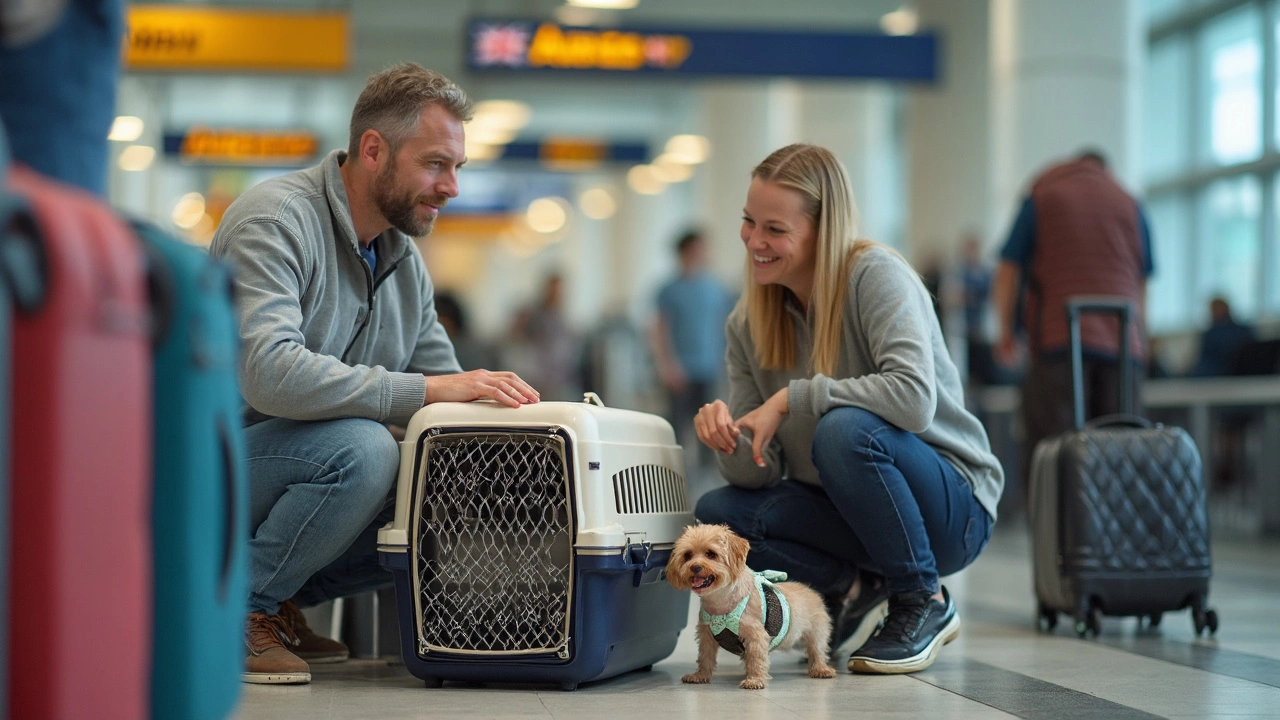
Airlines don’t measure your dog; they measure the carrier. Your pet must be able to stand up, turn around, and lie down comfortably inside the crate. If the crate fits under the seat, your dog fits. If the crate doesn’t fit, your dog goes into the cargo hold (or stays home).
In-cabin pet carriers are soft-sided or hard-sided containers designed to slide under economy class seats. Most major US carriers like Delta, United, and American Airlines have specific maximum dimensions. While these change slightly by region, a common standard is approximately 18 inches long, 11 inches wide, and 11 inches high. Note that some airlines include wheels in the height limit, while others do not. Always check the specific chart for your route.
If you have a 30-pound dog, you are likely in the "gray zone." Small breeds like Chihuahuas or Toy Poodles easily fit in small carriers. Large breeds like Great Danes need checked baggage. But mid-sized dogs? They require precision engineering from their owners.
Why Shape Matters More Than Weight
Consider two dogs that both weigh 30 pounds. Dog A is a Dachshund-long body, low to the ground. Dog B is a Boxer-compact, deep chest, sturdy legs. Both might struggle, but for different reasons.
- Length vs. Height: A long-bodied dog needs a longer carrier. If the airline limit is 18 inches long, a Dachshund might just barely fit if the carrier is elongated and narrow.
- Chest Depth: A deep-chested dog needs more vertical space. If the carrier is only 11 inches high, a Boxer might feel cramped standing up, even if he technically fits.
- Bone Structure: Some dogs have wider shoulders than hips. Ensure the widest part of your dog’s body can rotate within the circular or oval opening of the carrier.
Here is a quick heuristic: If your dog’s shoulder height is over 9 inches, finding a compliant under-seat carrier becomes significantly harder. You may need to look for brands that offer "tall" profiles rather than "standard" ones.
Comparing Major Airline Dimension Limits
There is no single federal law dictating under-seat sizes. Each airline sets its own rules. This is why booking a flight with Southwest might allow a crate that gets rejected by JetBlue. Below is a comparison of typical maximum dimensions for under-seat carriers as of recent updates. Always verify before flying, as policies can shift seasonally.
| Airline | Max Length (in) | Max Width (in) | Max Height (in) | Weight Limit (lbs) |
|---|---|---|---|---|
| Delta Air Lines | 18 | 11 | 11 | 20 (carrier + pet) |
| United Airlines | 17 | 10 | 9 | Not specified (fit required) |
| American Airlines | 19 | 13 | 9 | 20 (carrier + pet) |
| JetBlue | 17 | 12 | 8 | Not specified (fit required) |
Notice the variation in height. JetBlue allows only 8 inches of height, which is extremely tight for a 30-pound dog. American Airlines allows 19 inches of length, giving long-bodied dogs a better chance. If you are flying international routes, the rules often tighten further due to smaller seat pitch on narrow-body aircraft.
How to Measure Your Dog Correctly
Don’t guess. Grab a tape measure and follow these steps to determine if your 30-pound dog can realistically fit in a compliant carrier.
- Measure Shoulder Height: Place your dog on a flat surface. Measure from the floor to the top of the shoulders (not the head). Add 1-2 inches for comfort. This is your minimum carrier height.
- Measure Body Length: Measure from the base of the tail to the tip of the nose. Do not include the ears. Add 1 inch for movement. This is your minimum carrier length.
- Measure Chest Width: Wrap the tape around the widest part of the ribcage. Divide by pi (3.14) to estimate the diameter needed for a round carrier, or simply ensure the width accommodates the broadest point plus padding.
If your measurements exceed the airline’s max dimensions, you have three options: choose a different airline, buy a custom-fitted soft-sided carrier that compresses slightly, or accept that your dog will need to fly in the cargo hold.
Soft-Sided vs. Hard-Sided Carriers: Which Fits Better?
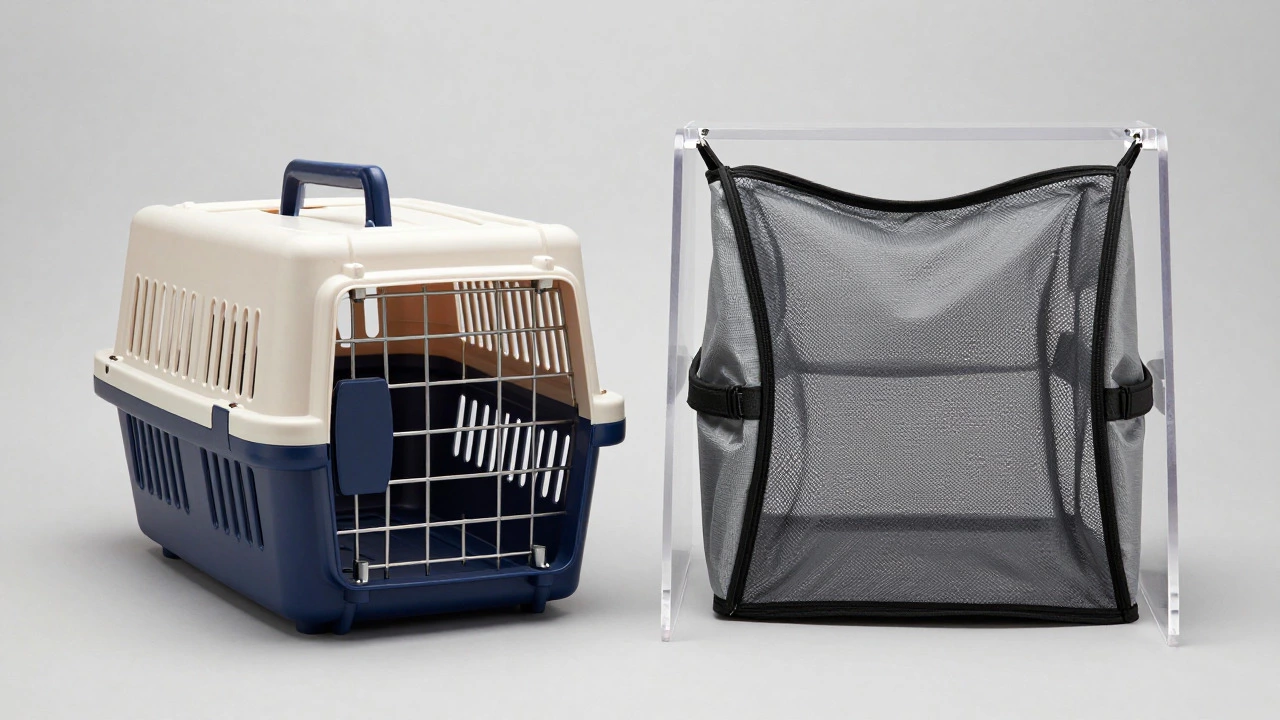
This is a critical decision for mid-sized dogs. Soft-sided carriers are fabric bags with flexible frames that can compress slightly when squeezed under a seat. They are generally easier to find in larger sizes because they aren’t rigid.
However, there are trade-offs. Soft carriers offer less protection if dropped. Hard-sided carriers, made of plastic or aluminum, provide structural integrity but are inflexible. If a hard-sided carrier measures 18.5 inches, it will not slide under a seat with an 18-inch clearance. Soft-sided carriers often advertise "maximum dimensions" that are slightly larger than the frame size, relying on the fabric to stretch or compress during the final push under the seat.
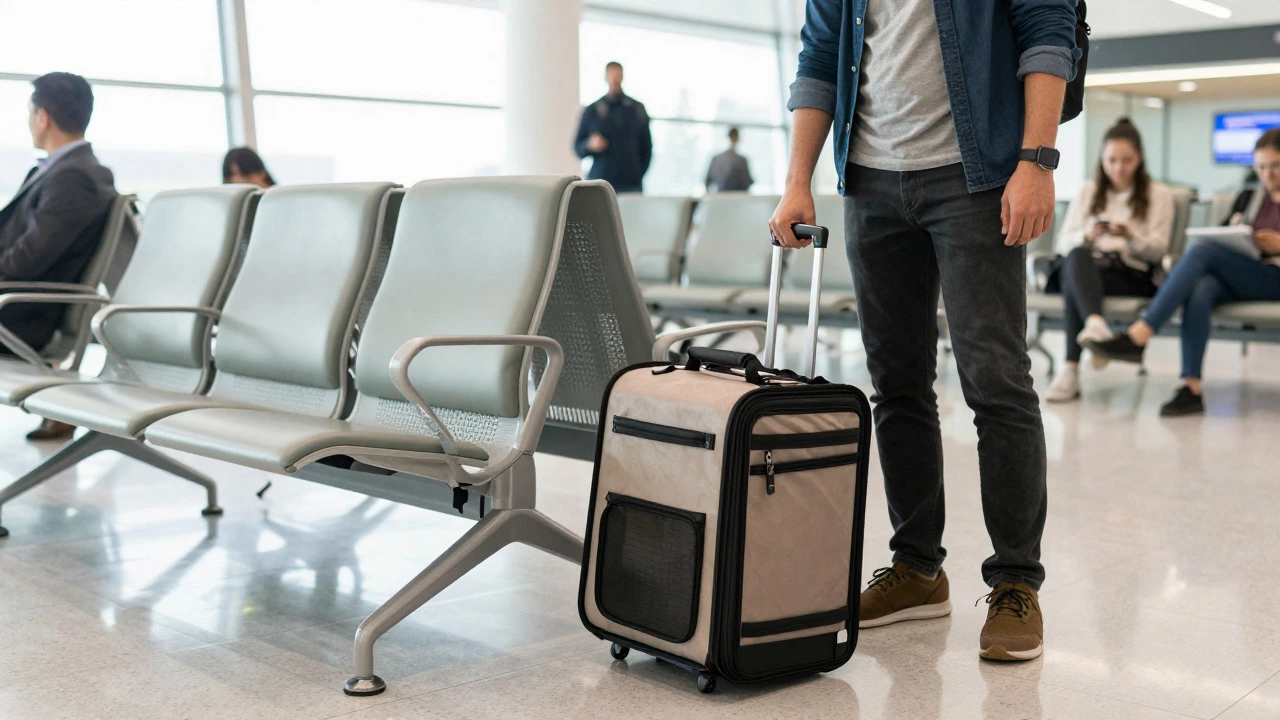
Pro tip: Before your flight, take your chosen carrier to the airport terminal. Find an empty row of seats and physically slide the carrier under one. This eliminates the surprise of a tight squeeze at boarding time. Many travelers make this mistake, leading to stressful negotiations with gate agents.
Common Pitfalls and How to Avoid Them
Even if the numbers look good, real-world issues arise. Here are the most common problems dog owners face:
- The Wheel Factor: Some airlines count the wheels of the carrier toward the height limit. Others ignore them. Check the fine print. If you have a rolling carrier, ensure the wheels don’t add 1-2 inches to the total height.
- Overpacking the Carrier: Stuffing too many toys or blankets into the carrier reduces internal space. Your dog needs room to turn around. Keep the interior minimal.
- Temperature Extremes: In-cabin pets are subject to cabin temperature, which is regulated. However, if the plane is on the tarmac in extreme heat or cold, ask the crew about climate control status. Mid-sized dogs are more susceptible to overheating in poorly ventilated crates.
- Behavioral Anxiety: A 30-pound dog is big enough to cause a scene if anxious. Practice desensitization weeks before the flight. Let your dog sleep in the carrier at home. If they panic, the stress isn’t just for them-it’s for every passenger nearby.
What If My Dog Doesn’t Fit?
If your 30-pound dog exceeds the under-seat dimensions, you have alternatives. Flying in the cargo hold is safe for most healthy dogs, provided the weather is moderate. Airlines use pressurized, climate-controlled holds. The main risk is temperature extremes during layovers or delays.
Before choosing cargo, consult your veterinarian. They can assess if your dog has brachycephalic traits (short snout) or heart conditions that make air travel risky. For many mid-sized breeds, cargo is a viable option, but it requires careful planning regarding timing and health certificates.
Another option is driving. If the distance is under 6 hours, a car trip might be less stressful for both you and your dog. You avoid the strict dimension rules, security checks, and confined spaces of an airplane cabin.
FAQ
What is the maximum weight for a dog in the cabin?
Most airlines cap the combined weight of the pet and carrier at 20 pounds. However, some carriers allow heavier pets if they fit under the seat. Always check the specific airline's policy, as weight limits are secondary to dimension limits.
Do service animals have different size restrictions?
Yes. Under current regulations, service animals must fit at the owner's feet without blocking aisles. They do not need to be in a carrier, though a harness or vest is recommended. This allows much larger dogs to fly in the cabin compared to pets.
Can I bring my dog in a backpack instead of a carrier?
Generally, no. Most airlines require a secure, enclosed carrier with ventilation on at least two sides. Backpacks often lack proper ventilation and secure zippers, posing a risk of escape. Stick to dedicated pet carriers approved by the airline.
How early should I arrive at the airport with my dog?
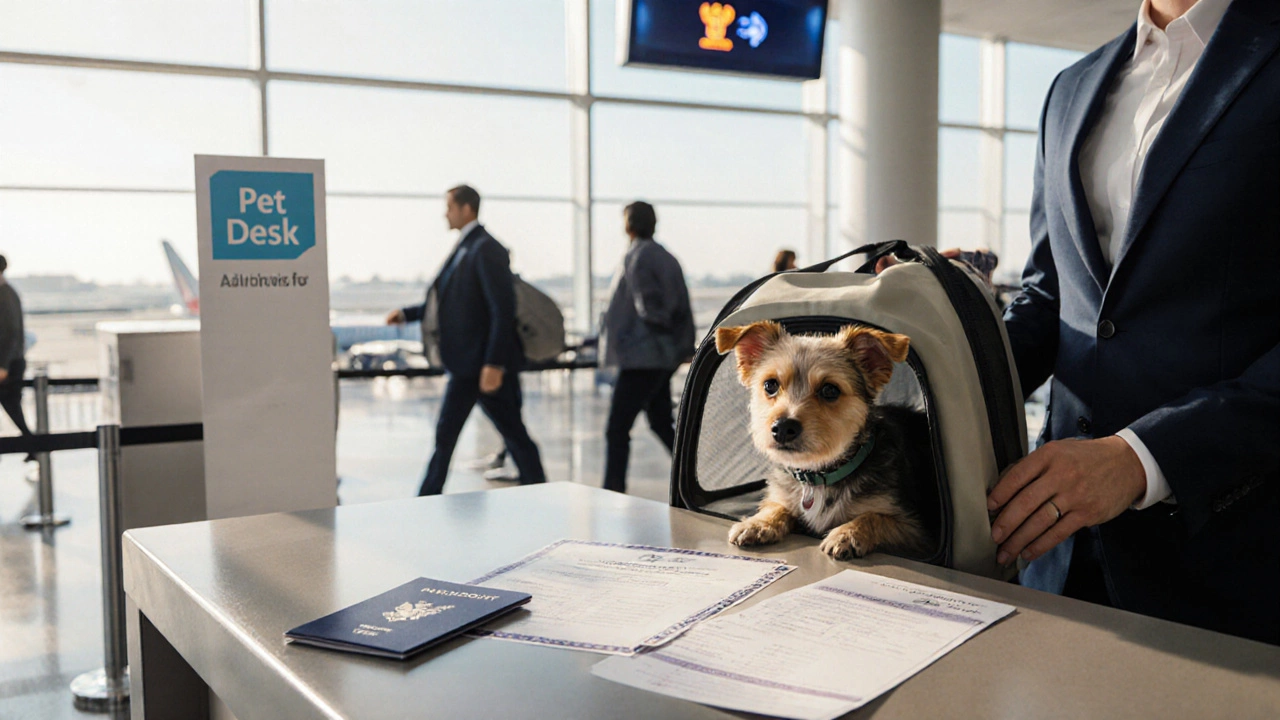
Arrive at least 2 hours before domestic flights and 3 hours before international flights. You need time to check in, potentially pay pet fees, and handle any last-minute dimension checks at the gate. Early arrival reduces stress for everyone involved.
Is it safer to fly in-cabin or in the cargo hold?
For most healthy dogs, in-cabin is safer due to consistent temperature and pressure. Cargo holds are pressurized and heated, but delays on the tarmac can expose pets to extreme temperatures. If your dog fits in the cabin, that is usually the preferred option for safety and comfort.