Canine Sleeping Habit Analyzer
Answer the questions below to understand the primary drivers behind your dog's sleeping preferences.
Analysis Results
Detailed Insights:
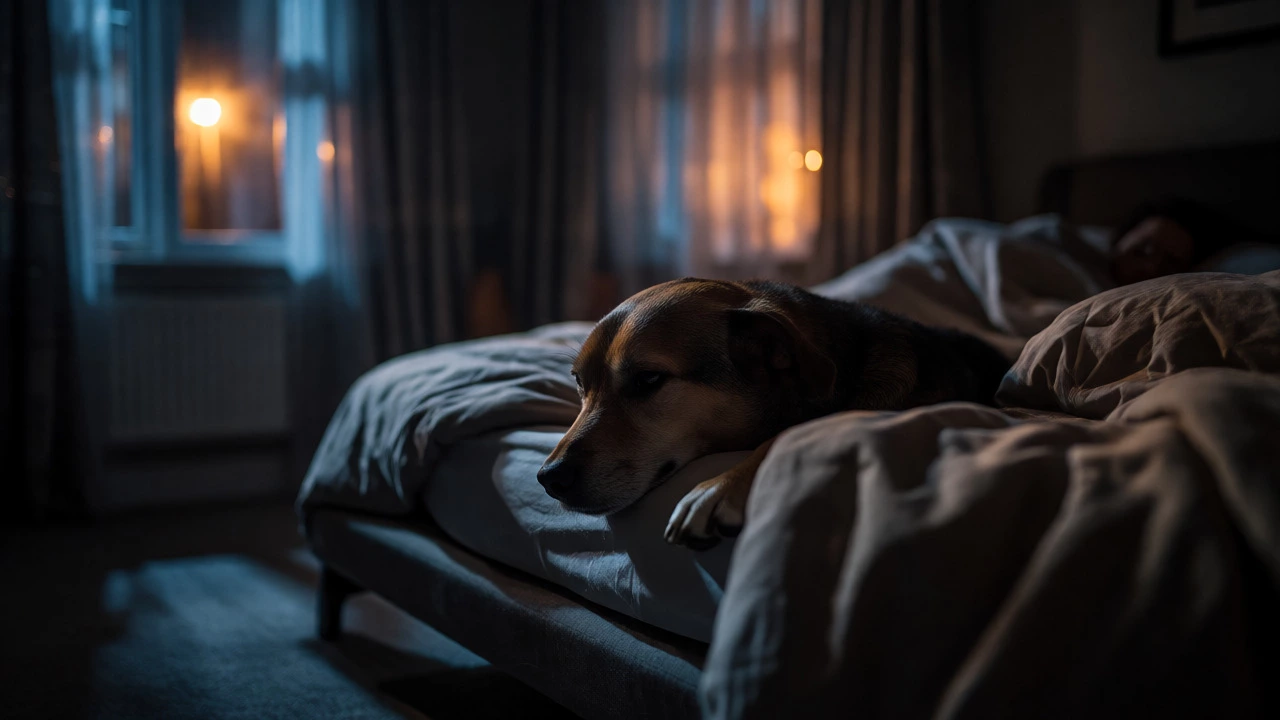
You wake up at 3 AM. There’s a warm, rhythmic breathing against your ankle or a heavy chin resting on the mattress edge. It’s not an intruder; it’s just your dog, insisting on proximity even when you’ve provided a plush orthopedic bed just two feet away. This scenario plays out in millions of households nightly, from small terriers in Bristol flats to Great Danes sprawling across living room rugs. You might wonder if they are anxious, cold, or simply stubborn. The truth is usually a mix of biology, history, and comfort.
Dog sleeping habits are deeply rooted in the evolutionary legacy of wolves and early domestication. Unlike cats, who often seek solitary high perches, dogs are obligate social animals. They do not just tolerate company; they require it for emotional regulation. When your dog chooses the floor beside your bed over their designated spot, they are acting on thousands of years of instinct that equates physical closeness with safety and survival.
The Pack Mentality and Security
To understand why your dog sleeps by your side, you have to look back to their ancestors. Wolves sleep in packs for warmth and protection. The alpha pair typically takes the center, while others surround them. In your home, you are the provider, the protector, and the leader of the "pack." By sleeping near you, your dog isn’t necessarily trying to dominate; they are reinforcing social bonds. This behavior is known as affiliative behavior. It signals trust. If your dog feels safe enough to enter deep REM sleep next to you, they view you as their primary source of security.
This need for proximity intensifies during certain life stages. Puppies separated from their littermates often seek the scent and heartbeat of their human owner to self-soothe. Older dogs, whose senses may be declining, also crave the familiar presence of their owner to navigate the darkness of night. For these dogs, the space between your bed and their own can feel like a vast, uncertain void.
Temperature Regulation and Comfort
While sentimentality plays a huge role, practicality matters too. Your bedroom is often the most comfortable room in the house. You likely have better insulation, softer flooring, and a consistent temperature controlled by heating systems. Dogs regulate body temperature differently than humans. While many breeds have thick coats, they still seek external heat sources when ambient temperatures drop. A dog lying on a bare tile floor might move to the carpeted area beside your bed because it retains more heat. Conversely, some breeds, particularly short-nosed ones like Bulldogs or Pugs, might avoid direct contact with your body due to overheating risks but still stay close to benefit from the room's warmth without the risk of suffocation under covers.
Consider the texture of the surface. Many modern dog beds are made of synthetic materials that can trap heat or feel slippery. If your dog prefers the cool side of the pillow or the edge of the mattress, they might be seeking a specific tactile sensation that their current bed doesn't offer. Sometimes, the issue isn't the location, but the equipment.
Anxiety and Separation Stress
Not all reasons are positive. In some cases, sleeping next to the bed is a coping mechanism for anxiety. Dogs suffering from separation anxiety may refuse to settle in another room because being out of sight of their owner triggers panic. They remain within arm's reach to ensure they aren't left behind. This is common in rescue dogs with unknown histories or those who have experienced trauma.
If your dog whines, paces, or refuses to lie down until they are right beside you, observe their body language. Are their ears pinned back? Is there excessive panting? These signs suggest that the proximity is driven by stress rather than affection. In these instances, forcing them into a separate room can escalate the anxiety, leading to destructive behaviors like chewing doorframes or howling.

Evaluating Your Current Setup
Before assuming it’s purely behavioral, assess the physical environment. Is your dog’s bed actually suitable for them? Many owners buy beds based on aesthetics rather than function. A large breed needs support for joints; a small breed needs enclosure. If your dog avoids their bed, it might be too hard, too soft, or placed in a drafty corner.
| Bed Type | Best For | Potential Issues | Sleeping Preference Indicator |
|---|---|---|---|
| Orthopedic Foam | Senior dogs, large breeds with arthritis | Can retain heat; expensive | Dog lies flat on side, legs extended |
| Bolster/Cave Style | Small dogs, anxious dogs, burrowers | Limited airflow; can feel cramped for big dogs | Dog curls into tight ball, head tucked |
| Elevated Cot | Hot climates, muddy paws, outdoor use | Firm surface; lacks cushioning for joints | Dog sprawls openly, belly exposed |
| Donut/Calming | Puppies, nervous dogs needing pressure | Sheds fur easily; difficult to clean | Dog presses body firmly against rim |
If your dog consistently ignores a bolster bed but sleeps next to you, they might prefer open spaces. Try switching to a flat mat. If they curl up tightly, they might want the enclosed feeling of a cave bed. Experimentation is key. You don’t need to buy five different beds; start by moving their current bed closer to your bedside table. See if the distance is the issue or the bed itself.
When to Intervene: Health and Hygiene
While sleeping nearby is generally harmless, there are times you should encourage independent sleeping. If you suffer from allergies, having dander accumulate around your pillow every night can worsen symptoms. Additionally, if your dog has parasites like fleas or mites, close contact increases transmission risks to humans, though rare.
Health-wise, sudden changes in sleeping position can signal pain. A dog that usually sleeps curled up but suddenly stretches out fully might be experiencing joint discomfort. Conversely, a dog that starts guarding the foot of the bed aggressively might be dealing with neurological issues or cognitive decline. Always rule out medical causes before attributing behavior change solely to preference.
How to Transition Your Dog (If Desired)
If you want your dog to sleep in their own bed but they keep migrating to yours, consistency is vital. Do not punish them for coming to you; this creates negative associations. Instead, reward them for staying in their spot.
- Move the bed gradually: Start with the dog bed right next to your mattress. Over weeks, inch it further away toward its final destination.
- Use scent markers: Place a worn t-shirt of yours in their bed. Your scent provides reassurance without the physical presence.
- Create a routine: Lead them to their bed, give a command like "Settle," and reward with a long-lasting chew toy only when they stay put.
- Block access: Use a baby gate at the bedroom door initially. This prevents nighttime wandering and helps them learn boundaries.
Remember, breaking the habit takes time. Expect resistance for the first few nights. If you let them on the bed once after saying no, you reinforce the idea that persistence pays off.
The Emotional Benefit of Co-Sleeping Proximity
Despite the hygiene concerns or space issues, there is a profound psychological benefit to allowing your dog to sleep near you. Studies on human-animal interaction show that co-sleeping or sleeping in proximity lowers cortisol levels in both species. You get a sense of companionship; they get security. In a world where many people live alone, a dog sleeping by the bed combats loneliness effectively. It transforms a sterile bedroom into a shared sanctuary.
Ultimately, the decision rests on what works for your household dynamics. If the snoring doesn’t keep you awake and the fur doesn’t trigger allergies, letting them stay might be the best choice for mutual well-being. Just ensure their bed remains available as an option, so they know they always have a place of their own to retreat to when needed.
Is it bad for my dog to sleep on my bed?
Generally, no. Unless you have severe allergies, asthma, or the dog has behavioral aggression issues, sharing a bed or sleeping adjacent to it is safe. It can actually improve sleep quality for owners by reducing feelings of isolation. However, maintain good hygiene practices, such as regular flea treatments and washing bedding frequently.
Why does my dog sleep facing me?
Sleeping facing you allows the dog to monitor your movements. In wild packs, members take turns watching for threats. By facing you, your dog ensures they can see your face and react quickly if you wake up or move. It is a sign of vigilance and care, indicating they consider you part of their core group worth protecting.
Should I force my dog to sleep in his own bed?
You shouldn't force him physically, as this can cause resentment. Instead, make his bed more appealing than yours. Add a heated pad, a favorite toy, or your worn clothing. Use positive reinforcement when he chooses his bed voluntarily. If he insists on being near you, compromise by placing his bed directly beside your mattress so he stays close but maintains his own space.
Does sleeping next to the bed mean my dog is dominant?
The old theory that dogs sleep on furniture to assert dominance is largely debunked by modern veterinary behaviorists. Dominance is about resource control, not spatial positioning. A dog sleeping next to you is usually seeking comfort and social connection, not trying to establish hierarchy. True dominance issues manifest through resource guarding (food/toys) or refusal to follow commands, not just sleeping arrangements.
What if my dog snores loudly next to my bed?
Loud snoring can indicate obesity, dental issues, or brachycephalic syndrome (common in flat-faced breeds). If the snoring is new or accompanied by gasping, consult a vet. To mitigate noise without banishing the dog, try elevating their head slightly with a small pillow or ensuring they are not sleeping on their back, which often exacerbates snoring.