Cat Hydration Calculator
Hydration Calculator
Dry food contains only 8-10% water. Your cat's natural prey contains 70% water. This calculator shows how much additional moisture your cat needs to avoid urinary issues and kidney stress.
Many cat owners assume dry food is the easiest, cheapest, and most convenient way to feed their cats. And for a lot of people, it is. But just because it’s easy doesn’t mean it’s enough. The real question isn’t whether cats can survive on dry food alone-it’s whether they’ll thrive on it.
What Dry Food Actually Contains
Most dry cat food is made from ground meat, grains, and fillers like corn, wheat, or soy. It’s pressed into kibble, then baked at high temperatures. The final product is usually only 8-10% water. That’s not a typo. That’s less moisture than a bag of chips.
Cats evolved as desert predators. Their natural prey-mice, birds, lizards-contains about 70% water. That means their bodies aren’t built to drink a lot of water on their own. In the wild, they get almost all their fluids from what they eat. Dry food forces them to drink more water than they naturally would, and most cats just don’t bother.
Why Hydration Matters More Than You Think
Chronic low water intake is the #1 cause of urinary tract problems in cats. Feline lower urinary tract disease (FLUTD) affects up to 1 in 12 cats. It leads to painful urination, bladder stones, and sometimes life-threatening blockages-especially in male cats.
A 2022 study from the University of California, Davis tracked 300 cats fed exclusively dry food over three years. Nearly 40% developed signs of urinary discomfort, compared to just 12% of cats on wet food diets. The difference? Water. Not ingredients. Not brands. Just water.
When cats don’t drink enough, their urine becomes concentrated. Minerals clump together. Crystals form. Stones grow. And once a cat has one episode, the risk of recurrence jumps dramatically. Dry food doesn’t cause this directly-but it removes the body’s natural defense against it.
Protein and Carbs: The Hidden Trap
Cats are obligate carnivores. That means their bodies need animal protein to survive. They can’t convert plant protein into the amino acids they need the way dogs or humans can. Taurine, arginine, methionine-these aren’t optional. Without them, cats develop heart disease, blindness, or even die.
Many dry foods replace expensive meat with cheaper carbs to cut costs. A typical dry kibble might contain 30-40% carbohydrates. That’s more than a human eating a bowl of pasta. Cats don’t need carbs. Their pancreas isn’t designed to handle them. Over time, high-carb diets contribute to obesity, insulin resistance, and diabetes.
A 2023 veterinary survey of 1,200 diabetic cats found that 83% were fed dry food as their primary diet. When switched to low-carb wet food, over 60% went into remission without insulin. That’s not a coincidence. It’s biology.
What Happens When You Feed Only Dry Food Long-Term
Let’s say you’ve fed your cat dry food since kittenhood. No wet food. No treats. Just kibble. Here’s what you might see by age 5:
- Smaller, darker urine clumps in the litter box
- Frequent trips to the litter box with little output
- Loss of appetite or picky eating
- Weight gain, even if you’re not overfeeding
- Flat, dull coat, flaky skin
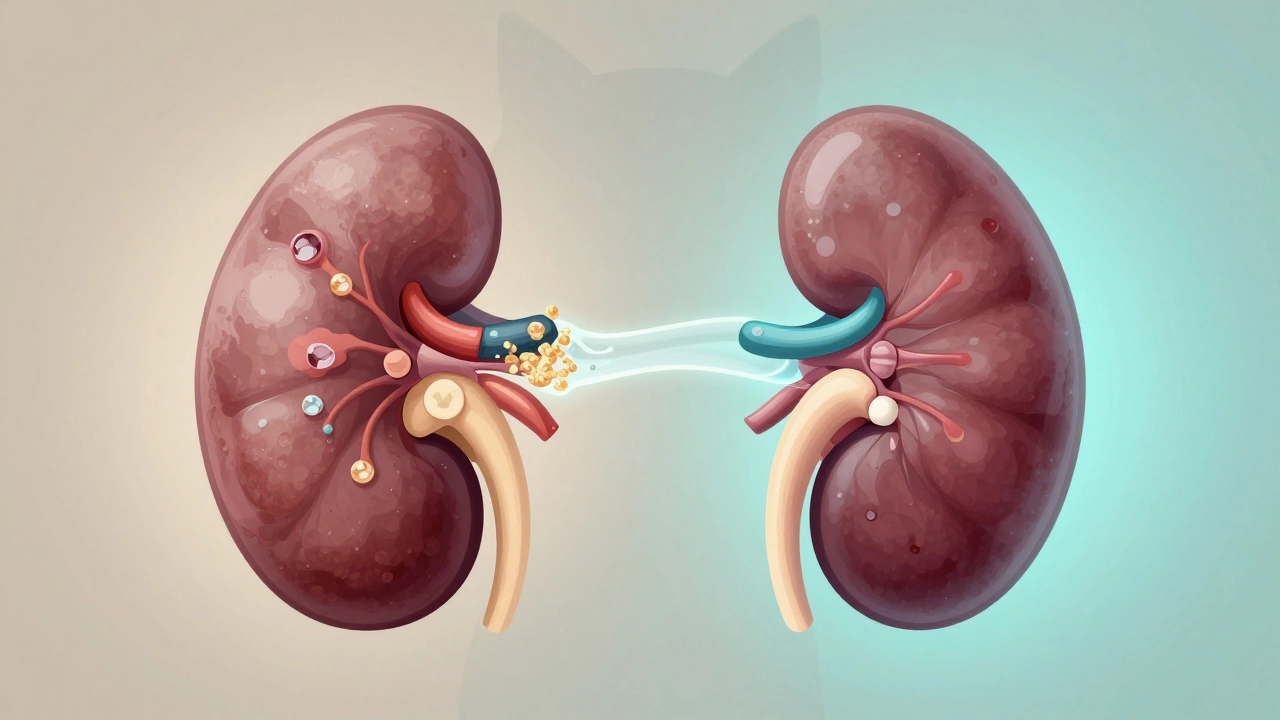
These aren’t normal aging signs. They’re red flags. Your cat’s body is quietly struggling. The kidneys are working overtime to concentrate urine. The liver is processing excess carbs. The bladder is irritated. And your cat can’t tell you it’s in pain-until it’s too late.
Can Cats Live on Dry Food Only? Yes. Should They?
Technically, yes. Cats can survive on dry food alone if it’s labeled as “complete and balanced” by AAFCO. That just means it meets minimum nutrient levels under lab conditions. It doesn’t mean it’s ideal for a living, breathing cat.
Think of it like feeding a human nothing but protein bars and powdered shakes. You might not die. But you’d likely get sick. You’d lose muscle. Your digestion would suffer. Your energy would crash. Your body would break down over time.
Cats aren’t that different.
What’s the Better Way?
You don’t need to go full raw or homemade. You don’t need to spend $100 a month on fancy wet food. You just need to add moisture.
Here’s what works for most owners:
- Feed one can of wet food daily (3 oz is enough for most cats)
- Leave dry food out for grazing if your cat likes it
- Use a cat water fountain to encourage drinking
- Check the label: choose wet food with meat as the first ingredient and under 10% carbs
Even one can of wet food a day can cut the risk of urinary problems by half. It’s not about perfection. It’s about balance.
What About Dental Health? Isn’t Dry Food Better for Teeth?
This myth won’t die. But it’s wrong. Dry kibble doesn’t clean teeth. It just crumbles. The small pieces don’t scrape plaque off the surface-they just get stuck between teeth and gums.
Real dental health comes from chewing raw bones, dental treats approved by the Veterinary Oral Health Council (VOHC), or daily tooth brushing. Kibble? It’s just another snack.
A 2021 study in the Journal of Feline Medicine and Surgery found no difference in tartar buildup between cats fed dry food and those fed wet food-when both groups had the same dental care routine.
What If Your Cat Refuses Wet Food?
You’re not alone. Many cats are picky. But it’s not impossible to switch.
Try this:
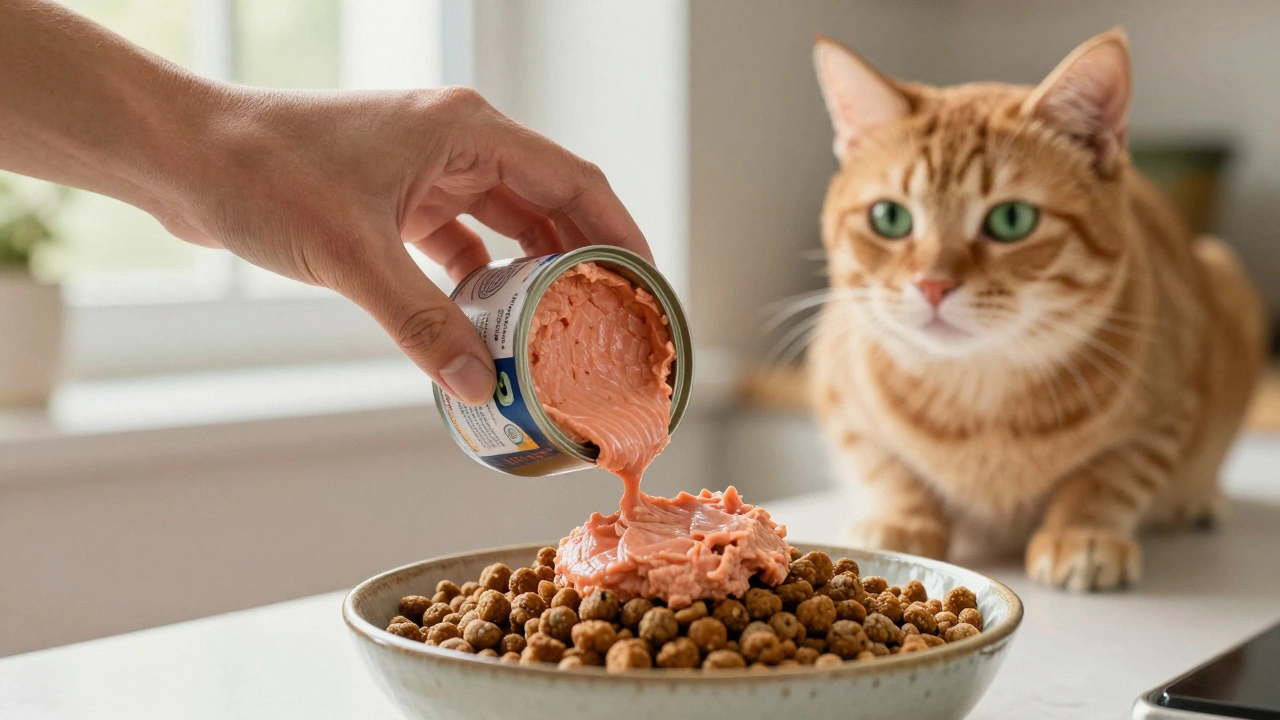
- Start by mixing a teaspoon of wet food into dry food
- Gradually increase the wet portion over 7-10 days
- Warm the wet food slightly (to body temperature) to release the smell
- Try different textures: pâté, shredded, gravy-based
- Use a different bowl-ceramic or stainless steel, not plastic
Some cats just need time. Others respond to flavor. Try tuna, chicken, or salmon. Avoid fish-heavy diets long-term-they can cause mercury buildup and thyroid issues.
Bottom Line: Dry Food Is a Tool, Not a Diet
Dry food has its place. It’s convenient. It’s affordable. It works for multi-cat households. But it should never be the only thing your cat eats.
Your cat doesn’t need to eat like a wild predator. But it does need to eat like a cat that evolved to get its water from food-not from a bowl.
One can of wet food a day. A clean water source. And a little attention to what’s on the label. That’s all it takes to give your cat a longer, healthier life.
Can cats live on dry food only?
Yes, cats can survive on dry food alone if it’s labeled as nutritionally complete by AAFCO. But they won’t thrive. Dry food lacks moisture, which increases the risk of urinary tract disease, kidney stress, and obesity. Most cats need added water from wet food or other sources to stay healthy long-term.
Is wet food better than dry food for cats?
Wet food is better for most cats because it contains 70-80% water, which helps prevent urinary issues and supports kidney health. It’s also higher in animal protein and lower in carbohydrates, matching a cat’s natural dietary needs. Dry food is convenient but shouldn’t be the only food source.
How much wet food should I feed my cat daily?
Most adult cats need one 3-ounce can of wet food per day. If your cat is overweight or less active, you might reduce it to half a can and supplement with a small amount of dry food. Always check the feeding guidelines on the label and adjust based on your cat’s weight and activity level.
Can dry food cause diabetes in cats?
Dry food doesn’t directly cause diabetes, but its high carbohydrate content is a major contributing factor. Many dry foods contain 30-40% carbs, which cats don’t need and can’t process well. Studies show that switching to low-carb wet food can reverse diabetes in over half of affected cats without insulin.
Why won’t my cat eat wet food?
Cats can be picky, especially if they’ve eaten dry food their whole lives. Try warming the wet food slightly, offering different textures (pâté, shredded), or mixing a small amount into dry food and slowly increasing the ratio. Use ceramic or stainless steel bowls and avoid plastic. Patience and consistency usually work.
Does dry food clean a cat’s teeth?
No, dry food does not clean a cat’s teeth. Kibble crumbles and doesn’t scrape plaque off the surface. Dental health comes from brushing, VOHC-approved treats, or raw bones-not kibble. Relying on dry food for dental care is a myth.