
Virginia Service Dog Rights Simulator
Scenario Title
Description goes here.
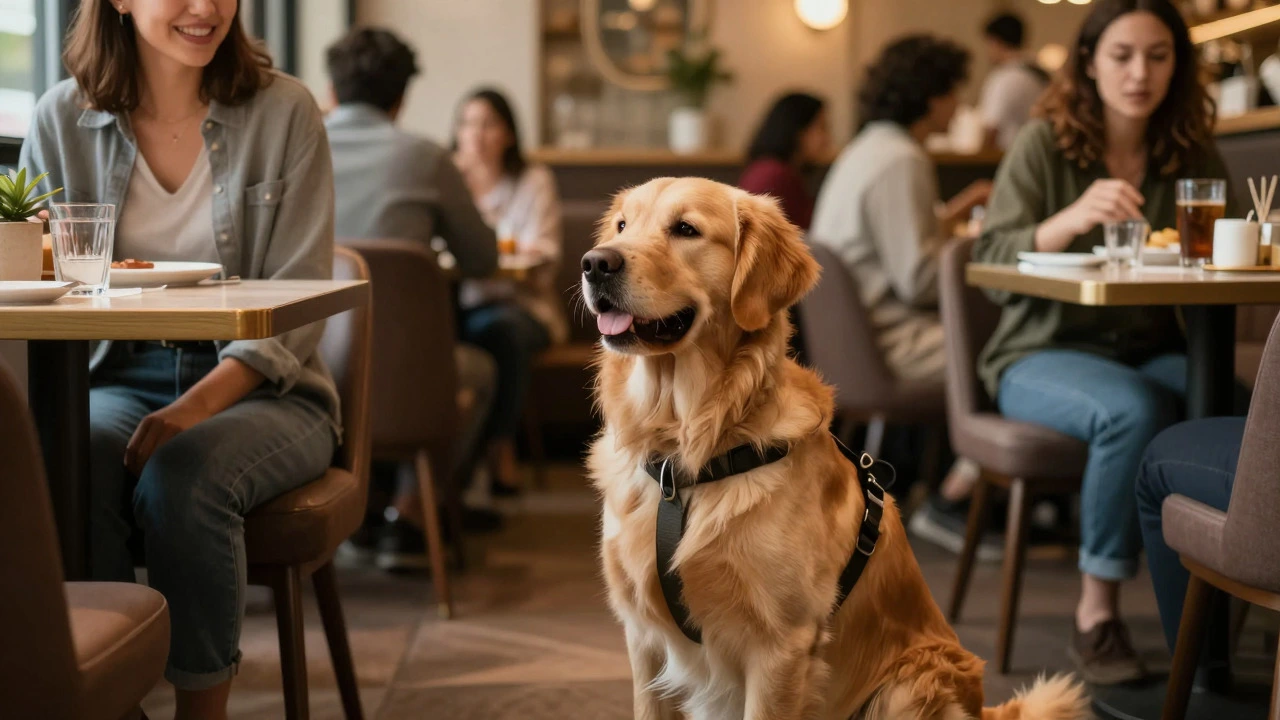
Imagine you are sitting at your favorite restaurant in Richmond. A customer walks in with a golden retriever. It looks calm, focused, and well-trained. But you aren't sure if it's a pet or a working service dog that assists a person with a disability. Do you have the right to ask for papers? Can you demand a certificate? The short answer is no. In fact, asking for proof can actually put a business owner on the wrong side of the law.
This confusion happens all the time. With the rise of emotional support animals and online certification mills, many people believe there is a national registry or official license for service dogs. There isn't. Understanding the specific rules in Virginia, which follows federal guidelines closely, is crucial for both handlers and businesses. Let’s clear up the myths so everyone knows their rights.
The Federal Baseline: What the ADA Says
To understand Virginia's rules, we first need to look at the Americans with Disabilities Act (ADA). This federal law sets the standard for public access across the United States. Under Title III of the ADA, businesses open to the public-like stores, restaurants, hotels, and hospitals-must allow service animals to accompany people with disabilities.
The key here is the definition. A service animal is defined as a dog that has been individually trained to do work or perform tasks for a person with a disability. The task must be directly related to the person's disability. For example, a dog might alert a diabetic person to low blood sugar or guide someone who is blind.
Emotional support animals, therapy animals, and comfort animals do not qualify as service animals under the ADA. They provide comfort by their presence, but they are not trained to perform specific tasks. This distinction matters because emotional support animals do not have the same public access rights. They can stay in housing protected by the Fair Housing Act, but they cannot walk into any shop just because they have a letter from a doctor.
The Two Questions Rule in Virginia
So, back to that restaurant scenario. If a dog enters your establishment in Virginia, what can you legally ask? The Department of Justice (DOJ) outlines two specific questions staff members are allowed to ask if the role of the dog is not obvious:
- Is the dog a service animal required because of a disability?
- What work or task has the dog been trained to perform?
That is it. You cannot ask about the person's disability. You cannot ask for medical records. You cannot require a demonstration of the task (unless the dog is out of control). And most importantly, you cannot ask for documentation. No certificates, no vests, no ID cards, and no registration papers hold legal weight under the ADA.
If the handler answers these two questions honestly, the dog must be allowed entry. If the dog is housebroken and under control, excluding them based on breed restrictions or fear of dogs is illegal. Many Virginia businesses post signs saying "Service Animals Allowed," but they should also train staff on these two questions to avoid discrimination lawsuits.
Virginia State Law: Adding Protection
While Virginia follows the ADA, state law adds another layer of protection. Virginia Code § 51.1-123 specifically addresses service animals. It states that individuals with disabilities shall be accompanied by their service animal in all areas where the general public is allowed.
Crucially, Virginia law makes it unlawful for any entity to require documentation for a service animal. It explicitly prohibits requiring a special identification card, training certificate, or license. Furthermore, Virginia imposes penalties on those who interfere with a person and their service animal. Harassment or interference can lead to fines.
There is also a provision regarding fraudulent misrepresentation. While handlers don't need to prove their dog is a service animal, falsely claiming a pet is a service animal to gain access is considered a misdemeanor in Virginia. This helps balance the rights of handlers with the integrity of the system, though enforcement relies on observable behavior rather than paperwork checks.
| Animal Type | Public Access (Stores/Restaurants) | Proof Required? | Housing Rights |
|---|---|---|---|
| Service Dog | Yes (ADA Protected) | No | Yes |
| Emotional Support Animal (ESA) | No (Unless Pet Policy Allows) | Letter for Housing/Air Travel* | Yes (Fair Housing Act) |
| Therapy Dog | No (Invite Only) | Certification for Facility Entry | No Special Rights |
| Pet | Depends on Business Policy | Vaccination Records | No Special Rights |
*Note: Air travel rules changed significantly in 2021. Airlines now only recognize service dogs, not ESAs, for cabin access without fees.

When Can You Exclude a Service Dog?
Even though you can't ask for proof, a business in Virginia can remove a service dog under two specific circumstances. These are the only valid reasons to deny access:
- Fundamental Alteration: If the presence of the dog fundamentally alters the nature of the goods or services. For example, a sterile operating room in a hospital might exclude animals to maintain hygiene standards, though this is rare in public areas.
- Direct Threat or Lack of Control: If the dog is out of control and the handler does not take effective action to control it. This includes barking excessively, growling, jumping on customers, or relieving itself indoors (if not housebroken).
If a dog is removed for being out of control, the business must still offer the person with a disability the chance to enjoy other services without the animal. You cannot kick the person out entirely unless their presence alone disrupts the environment, which is a high bar to meet.
The Myth of Online Certificates
You’ve probably seen websites selling "Service Dog Certificates" for $50. They send you a fancy folder, a vest, and an ID card. Here is the hard truth: these documents have zero legal standing. The ADA does not recognize any specific training program or certification agency. Whether a dog was trained by a professional organization like Guide Dogs for the Blind or trained by the owner at home, the legal rights are identical.
Beware of scams. Some sites claim that registering your dog is required by law. This is false. In Virginia, and nationwide, there is no central registry. When a business asks for one of these fake certificates, they are often trying to avoid the hassle of dealing with a dog, or they are genuinely misinformed. Handlers should be prepared to educate staff politely but firmly: "The ADA does not require documentation. My dog is trained to [task]."

Tips for Handlers and Businesses
For handlers: Keep your dog’s vaccination records up to date, even if you don’t show them. This proves responsible ownership. Train your dog thoroughly. A well-behaved dog is its own best defense against skepticism. Carry a simple card that explains the two questions rule to hand to confused staff members.
For businesses: Train your employees. Confusion leads to conflict. Post a sign that says "Service Animals Welcome" to set a positive tone. Remember, denying access to a legitimate service dog can result in a lawsuit for damages and injunctive relief. It costs far more to fight a discrimination claim than to let a quiet, trained dog sit at a table.
What About Hotels and Lodging?
In Virginia, hotels fall under the ADA as places of public accommodation. They must allow service dogs in rooms and common areas. Unlike housing, they cannot charge extra fees for cleaning or damage caused by normal wear and tear. However, if a service dog causes significant damage beyond typical use, the hotel may seek compensation, but they must prove the damage was caused by the dog and not the guest.
Hotels cannot restrict service dogs to certain floors or rooms. If a guest needs a service dog, they have the right to stay wherever they book. Again, no proof of training is required upon check-in.
Can a Virginia business ask to see a service dog's license?
No. Under the ADA and Virginia state law, businesses cannot require any form of licensing, registration, or certification for a service dog. Staff can only ask the two permitted questions about the dog's role and tasks.
Is an Emotional Support Animal considered a service dog in Virginia?
No. Emotional Support Animals (ESAs) provide comfort through presence but are not trained to perform specific disability-related tasks. ESAs do not have public access rights in stores or restaurants under the ADA, though they do have housing protections under the Fair Housing Act.
What happens if a business illegally denies a service dog entry in Virginia?
The individual can file a complaint with the U.S. Department of Justice or pursue a private lawsuit for damages. Virginia law also allows for civil penalties for interfering with a person and their service animal. Businesses risk paying for legal fees, damages, and mandatory staff retraining.
Do I need a vest for my service dog in Virginia?
No. The ADA does not require service dogs to wear vests, IDs, or special harnesses. While many handlers choose to use them for convenience and to signal the dog is working, a dog is still a service animal without one if it meets the training criteria.
Can a restaurant charge a deposit for a service dog?
No. Businesses cannot charge pets fees or deposits for service animals. Since the dog is working equipment, not a pet, charging extra would be discriminatory. Fees are only allowed if the dog causes actual damage beyond normal wear and tear.