Dog Training Tool Selector
What is your training experience level?
Novice
New to dog training or have limited experience with basic commands.
Intermediate
Comfortable with basic obedience, understand timing and consistency.
Expert
Experienced handler, possibly professional, understands canine body language well.
How does your dog behave on walks?
Mild Pulling
Occasionally pulls but responds to verbal cues and changes direction easily.
Moderate Pulling
Frequently pulls, ignores some cues, requires physical redirection to change course.
Severe Pulling
Drags handler, ignores all cues, high drive breed, safety concern when off-leash.
Reactive/Aggressive
Lunges, barks aggressively at triggers, may have history of biting or severe fear responses.
Recommended Training Approach
You’ve probably seen the clips. A dog is pulling, barking, or jumping uncontrollably. Then Cesar Millan steps in. He moves with a strange, fluid grace. He doesn’t yell. He doesn’t offer treats. He often uses a specific piece of equipment around the dog’s neck, and within seconds, the chaos stops. It looks like magic. But if you look closely at that equipment, it isn’t a standard flat nylon collar. It’s metal. It has spikes. Or maybe it’s a loop that tightens.
This visual raises a massive question for modern dog owners: Does Cesar Millan use training collars that cause pain? Is he advocating for harsh correction methods? The short answer is yes, he does use them, but his explanation for why-and how they fit into his philosophy-is far more nuanced than "pain equals obedience." To understand whether these tools are right for you, we need to strip away the TV drama and look at the mechanics of his approach.
The Equipment: Prong Collars and Slip Leads
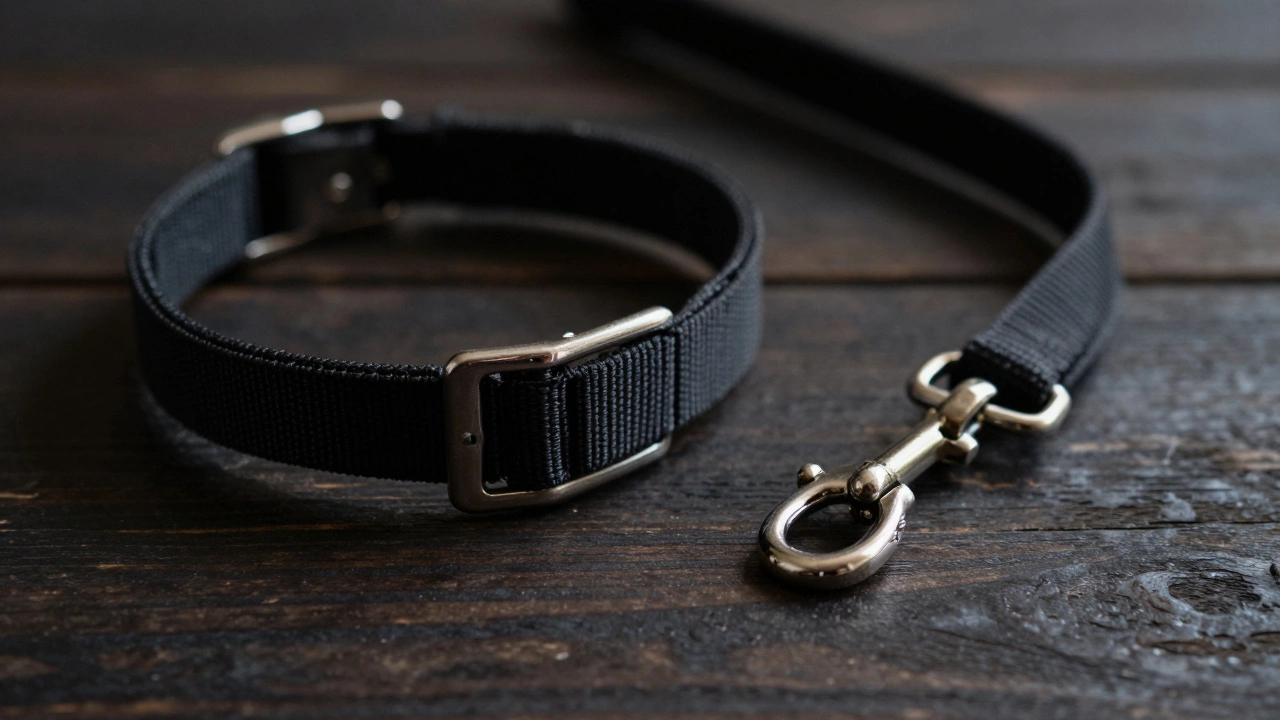
When people ask about Cesar Millan’s collars, they are usually referring to two specific items: the prong collar (also known as a pinch collar) and the slip lead (a flat nylon or leather loop).
The prong collar is the most controversial. It consists of linked metal rings with blunt metal prongs facing inward toward the dog’s neck. When tension is applied to the leash, the prongs press into the skin. Cesar has used this tool extensively throughout his career, particularly on large, powerful dogs who pull hard enough to injure themselves or their handlers.
The slip lead is simpler. It’s a continuous loop of material that slides over the dog’s head. If the dog pulls, the loop tightens around the neck. If the dog relaxes, it loosens. While less aggressive than prongs, it still functions on pressure.
It is crucial to note that Cesar rarely uses these tools in isolation. They are almost always paired with his signature body language techniques. He isn’t just yanking the collar; he is redirecting the dog’s focus, breaking their excitement cycle, and establishing a connection before applying any physical correction.
The Philosophy: Pressure vs. Pain
Here is where the debate gets heated. Critics argue that any tool causing discomfort is abusive. Supporters, including Cesar, argue that these tools mimic natural canine communication. To understand his stance, you have to understand his core concept: calm energy.
Cesar believes that most behavioral issues stem from an imbalance in the dog’s emotional state. A dog that is anxious, hyperactive, or insecure cannot learn. Therefore, the first step is not teaching a command like "sit" or "stay," but rather regulating the dog’s nervous system. This is called "exercise, discipline, and affection," in that order.
In this framework, the prong collar is not a punishment device. It is a communication tool. Cesar explains that when a dog pulls against a flat collar, the pressure is concentrated on the trachea (windpipe), which can be dangerous and painful. A prong collar distributes that pressure evenly around the circumference of the neck, similar to how a mother dog might hold her puppy by the scruff to control movement without causing injury.
He argues that the sensation is startling but not damaging if used correctly. The goal is to interrupt the dog’s focused anxiety or pulling behavior so they can refocus on the handler. Once the dog is calm, the pressure is released immediately. For Cesar, the collar is a temporary bridge to help the dog achieve that state of calmness.
How He Actually Uses Them
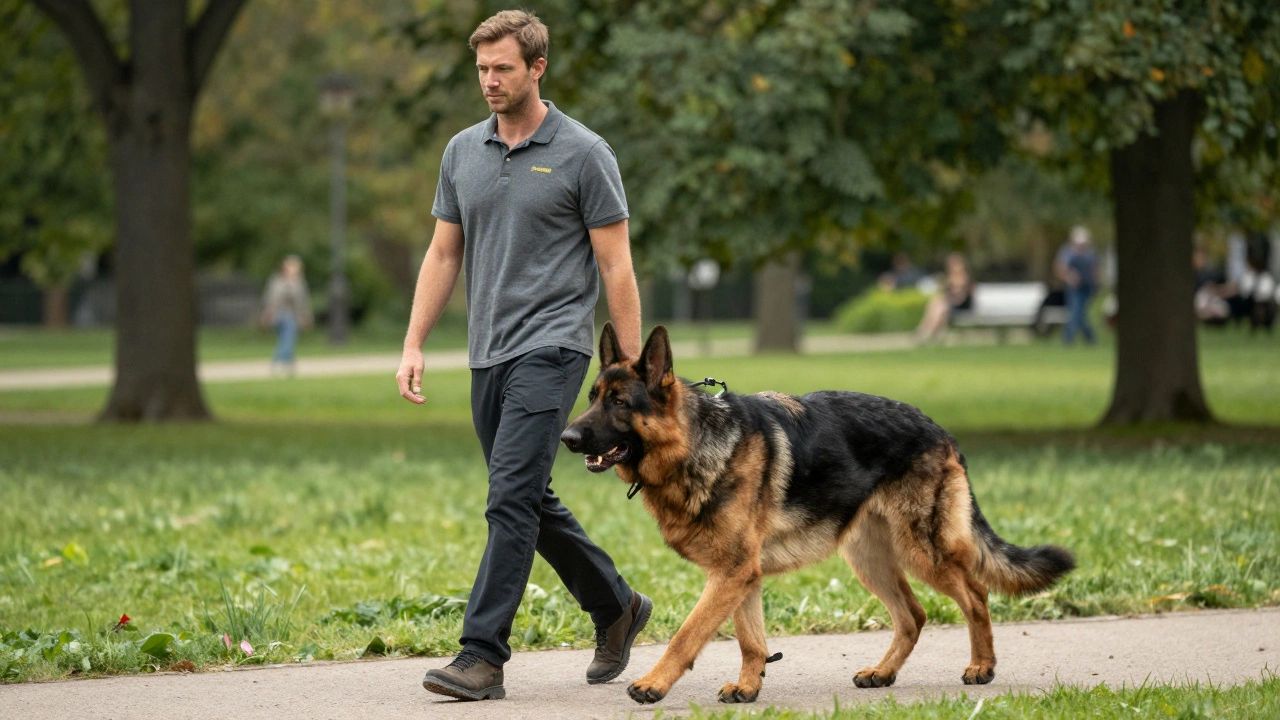
If you watch his full episodes, not just the edited highlights, you’ll notice a pattern. He doesn’t put a prong collar on a relaxed family pet sitting on the couch. He reserves these tools for high-drive working breeds, rescue dogs with severe trauma, or dogs engaged in serious pulling behaviors that pose a safety risk.
The application is precise:
- Fitting matters: The collar must sit high on the neck, just behind the ears, not low down where it can damage the thyroid or trachea.
- Tension is brief: Corrections are sharp and short. There is no sustained dragging or choking.
- Pairing with redirection: As soon as the dog responds to the pressure, Cesar redirects them into a heel position or a calm walk. The moment the behavior changes, the pressure disappears.
- Temporary use: He often states that once the dog learns to walk politely, the prong collar should be replaced with a flat collar or harness.
This method relies heavily on the handler’s timing and sensitivity. If you jerk the leash constantly, you create fear and aggression. If you wait too long to correct, the dog ignores the signal. This is why Cesar emphasizes that these tools are not for beginners. They require a level of understanding about canine body language that many average owners simply do not possess.
The Controversy: Why Experts Disagree
While Cesar has millions of fans, the professional animal behavior community is deeply divided on his methods. Many certified veterinary behaviorists and force-free trainers strongly oppose the use of aversive tools like prong collars and shock collars.
The primary concern is psychological. Even if the physical pain is minimal, the association created can be negative. A dog might learn to avoid walking on a leash because it predicts discomfort. More dangerously, some studies suggest that using aversives can suppress warning signs of aggression. A dog might stop growling (because growling causes pain) but still bite when pushed too far. This creates a "silent snapper," which is incredibly dangerous for families.
Furthermore, the concept of "natural pack leadership" that Cesar popularized in the early 2000s has been largely debunked by modern ethology. We now know that domestic dogs do not view humans as alpha wolves in a dominance hierarchy. Instead, they view us as resources and social partners. Training based on dominance can sometimes exacerbate anxiety in sensitive dogs rather than resolving it.
However, defenders point out that Cesar’s success rate is undeniable. Thousands of dogs have been rehabilitated through his program. For dogs that have failed with positive reinforcement alone-perhaps due to extreme prey drive or ingrained pulling habits-the immediate feedback of a prong collar can provide the clarity needed to break the cycle.
Alternatives to Consider
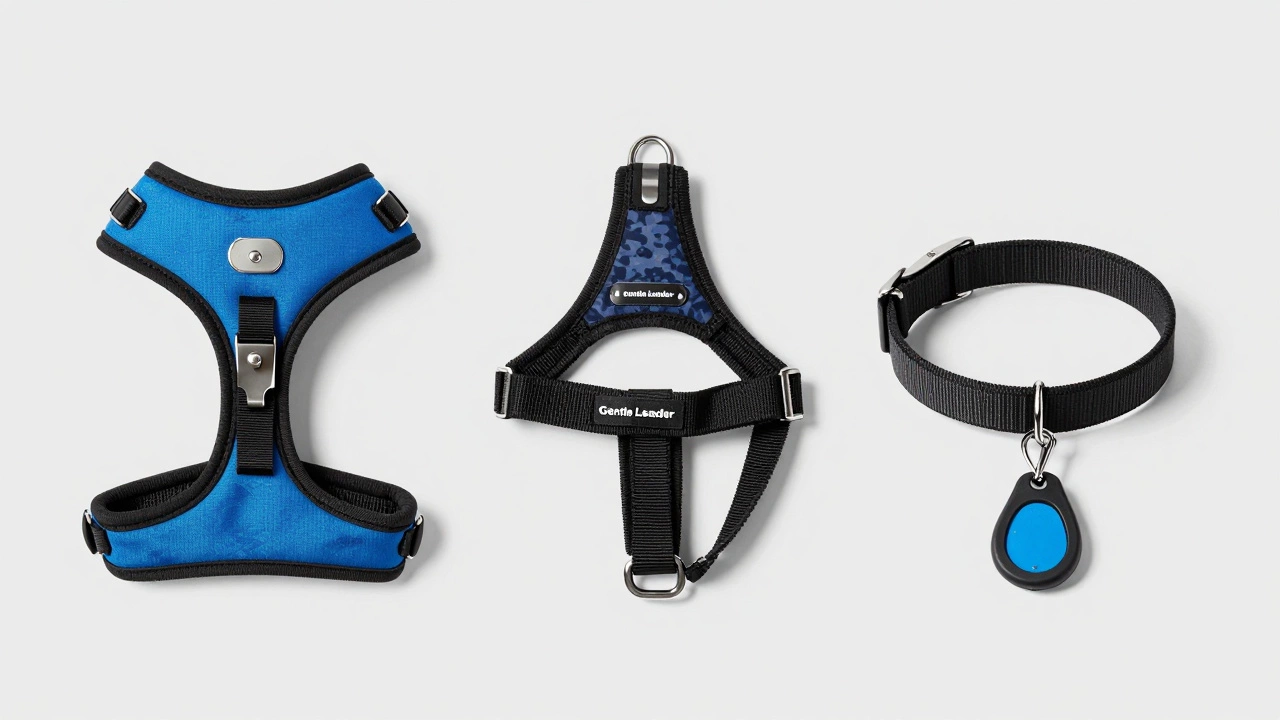
If you are struggling with a pulling dog but are uncomfortable with prong collars, there are effective alternatives that align with modern, science-based training principles. These methods focus on changing the dog’s motivation rather than suppressing the behavior through pressure.
| Tool Type | Mechanism | Best For | Risk Level |
|---|---|---|---|
| Prong Collar | Distributed pressure via metal prongs | Severe pullers, high-drive breeds | High (if misused) |
| Front-Clip Harness | Redirects momentum sideways when pulled | Average pullers, small to medium dogs | Low |
| Head Halter (Gentle Leader) | Controls the head, controlling the body | Strong pullers, reactive dogs | Medium (requires acclimation) |
| Flat Collar + Clicker | Reward-based conditioning | Motivated dogs, loose-leash walking basics | None |
A front-clip harness, for example, attaches the leash to a ring on the dog’s chest. When the dog pulls, they are gently turned toward you, making it physically difficult to continue forward. This doesn’t hurt the dog; it just makes pulling ineffective. Similarly, a head halter works on the principle that where the head goes, the body follows. It gives you significant control without constricting the airway.
These tools work best when combined with positive reinforcement. You reward the dog for walking calmly, ignoring distractions, and checking in with you. Over time, the dog learns that calm behavior leads to good things (treats, praise, continued walking), while pulling leads to nothing (stopping, loss of forward momentum).
Should You Try Cesar’s Method?
Deciding whether to use a prong collar or slip lead depends entirely on your experience level, your dog’s temperament, and your ethical comfort zone. If you are a novice trainer, I strongly advise against using aversive tools. The margin for error is slim, and mistakes can damage your relationship with your dog permanently.
If your dog is mildly pulling, start with a front-clip harness and clicker training. It takes longer, yes, but it builds trust. If you have a powerful breed like a German Shepherd or Husky that drags you across the pavement despite months of consistent positive training, you might consider consulting a professional who uses balanced methods. However, ensure that professional prioritizes safety and welfare above quick fixes.
Remember, the goal isn’t just a dog that walks nicely on a leash. The goal is a dog that feels safe, connected, and happy in your presence. Tools are just aids. The real work happens in the bond between you and your dog.
Does Cesar Millan use shock collars?
Cesar Millan has occasionally used electronic stimulation collars (shock collars) in his television shows, typically for dogs with severe aggression or those living in remote areas where recall was critical for survival. However, he emphasizes that these should only be used by professionals and never as a first resort. He generally prefers mechanical tools like prong collars because they provide tactile feedback rather than electrical pain.
Are prong collars cruel?
Whether prong collars are considered cruel is a subject of intense debate among animal welfare experts. Proponents argue that when fitted correctly and used briefly, they distribute pressure safely and communicate boundaries without causing tissue damage. Opponents argue that any tool causing discomfort is inherently aversive and can lead to fear, anxiety, or suppressed aggression. The consensus among modern veterinary behaviorists is to avoid aversive tools whenever possible.
What is the difference between a slip lead and a choke chain?
A slip lead is typically made of flat nylon or leather and forms a continuous loop. It tightens when the dog pulls but lacks the metal links of a traditional choke chain. Choke chains are made of interlocking metal rings and have a larger link that acts as a stopper. Both function similarly by tightening around the neck under tension, but slip leads are often considered slightly softer due to the material. Neither is recommended for everyday use by most modern trainers.
Can I use a prong collar on my puppy?
No, you should never use a prong collar on a puppy. Their necks are delicate, and their bones are still developing. Additionally, puppies are in a critical learning phase where building trust and positive associations is paramount. Using aversive tools on a young dog can stunt their confidence and create long-term behavioral issues. Stick to flat collars, harnesses, and positive reinforcement for puppies.
Why does Cesar Millan say treats are bad?
Cesar Millan argues that relying solely on treats can create dependency and may not address the underlying emotional imbalance of the dog. He believes that dogs want structure and calm leadership more than food rewards. While he doesn’t ban treats entirely, he views them as secondary to exercise and discipline. Modern trainers counter that treats are a powerful motivator that speeds up learning and strengthens the human-dog bond when used correctly.