Dog Groomer Tip Calculator
Enter your bill amount and select the service details to find the perfect tip amount.
Suggested Tip Range
Sweet Spot (20%)
Quick Tipping Guidelines
- Minimum: 15% ($8.25 on $55). Acceptable for quick, easy jobs.
- Standard: 20% ($11.00 on $55). The polite baseline.
- Exceptional: 25%+ ($13.75+ on $55). For mats, anxiety, or extra care.
You just picked up your dog. They smell like lavender and look sharper than you did before your last haircut. The bill comes in at $55. You hand over the card, tap "No Tip" out of habit or confusion, and then drive home wondering if you just insulted the person who spent two hours wrestling your anxious terrier onto a table. It’s a common dilemma. Tipping for pet services isn’t as straightforward as it is for a restaurant server, where the math is rigid and the social pressure is high. But here is the reality: dog grooming is physically demanding, low-margin work that relies heavily on customer appreciation to stay sustainable.
If you are asking how much to tip for a $55 job, the short answer is between $10 and $15. That puts you in the 18-25% range, which aligns with standard service industry expectations in the United States. But the long answer depends on whether your dog was a saint or a demon during the session. Let’s break down exactly when to tip, how much, and why this small gesture matters more than you think.
The Standard Rule of Thumb
Most people hesitate because they don’t know the baseline. In the US, where this question usually originates given the dollar sign, the norm for personal care services (hairdressers, barbers, groomers) is 15-20%. For a $55 bill, that translates to:
- Minimum acceptable: $8-$10 (approx. 15%). Use this if the service was basic and your dog behaved perfectly.
- Standard good service: $11-$14 (approx. 20%). This is the sweet spot for most routine cuts.
- Exceptional service: $15-$20+ (25-35%+). If the groomer dealt with severe matting, extreme anxiety, or stayed late, go higher.
Why so high? Because groomers often earn hourly wages rather than commission, unlike salon stylists who might split profits with owners. A $55 cut might only net the groomer $25-$30 after shop overhead. Your tip often goes directly into their pocket, not a company pot.
When to Tip More Than the Baseline
Not all dogs are created equal. Some sit still while you clip their nails; others require a full-body restraint and a lot of patience. If any of these factors applied to your visit, bump that tip up.
| Scenario | Impact on Effort | Suggested Tip on $55 Bill |
|---|---|---|
| Routine Cut & Bath | Low effort, quick turnaround | $10 - $12 |
| Matted Fur Removal | High effort, risk of skin injury, time-consuming | $15 - $20 |
| Anxious or Aggressive Dog | High stress, requires muzzling or extra hands | $15 - $25 |
| Puppy First Visit | Requires gentle introduction, slow pace | $12 - $15 |
| Special Requests (e.g., blueberry facial) | Add-on value, but mostly labor-intensive | Base + $2 per add-on |
Mats are the biggest hidden cost. Removing a pelt from a Golden Retriever’s behind can take an hour alone. If your dog came in looking like a shag carpet and left looking like a show dog, that $55 fee barely covers the labor. A $20 tip acknowledges the physical toll on the groomer’s back and wrists.
Who Gets the Tip?
This is where things get tricky. Is the person who bathed your dog the same one who cut it? Often, no. Large salons have assembly lines: one tech does the bath/dry, another does the cut, and a receptionist handles the check-in.
If you tip via credit card on a shared terminal, the system usually splits it evenly among staff present that day. This is fair. If you tip cash, hand it directly to the person who performed the main service. If multiple people worked on your dog, consider splitting it yourself or giving a larger total amount to ensure everyone gets something. A $5 bill for the bather and $10 for the cutter is better than one $15 bill for the cutter if the bather struggled with a wet, shaking dog.
Do You Need to Tip If the Owner Cuts the Hair?
Yes. There’s a persistent myth that you don’t tip if the business owner is doing the work. In retail, maybe. In skilled trades like plumbing or electrical work, often no. But in personal care? Yes. Even if the owner cuts your hair, they are providing a service. While some owners waive tips to keep prices competitive, many rely on them to supplement income. Check the posted policy. If there’s no mention, assume a tip is expected. If you’re unsure, ask casually: "Is tipping customary here?" Most will say yes, even if they don’t expect it.
Cash vs. Card: What’s Better?
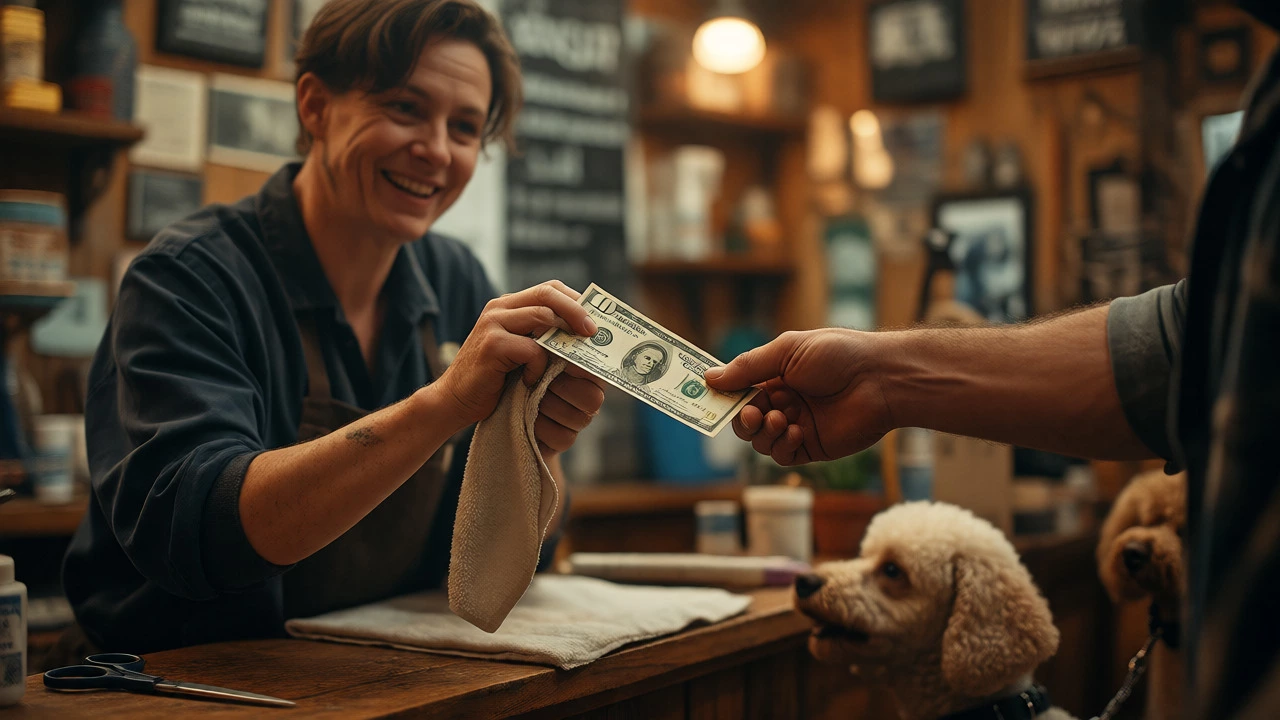
Cash is king. Why? Because credit card processing fees eat into the tip pool, and sometimes tips paid by card are distributed differently or delayed. Handing a crisp $10 bill directly to the groomer creates an immediate connection. It says, "I see you, I appreciate your skill." Plus, in smaller shops, cash tips are less likely to be subject to complex payroll deductions.
However, digital tipping is convenient. Most POS systems now allow you to adjust the tip before signing. Just be aware that pre-filled options often bias toward lower amounts (15%, 18%, 20%). Don’t just click the first option. Calculate it. On $55, 20% is $11. Round up to $12 or $15 if the service was great.
What About Holiday Bonuses?
December is prime time for grooming. Dogs get clean for Christmas photos, and groomers work double shifts. A holiday bonus is separate from regular tipping. Think of it as a thank-you gift. For a regular client with a monthly appointment, a $20-$50 cash gift or a nice bottle of wine is appropriate. For occasional clients, rounding up your December tip to $20 on a $55 bill serves as a nice seasonal gesture.

When NOT to Tip
Are there times you shouldn’t tip? Rarely. Maybe if the service was objectively terrible-your dog came home with a lopsided cut, nicks, or wasn’t fully dried. Even then, a small tip ($5) acknowledges the attempt. Withholding a tip entirely sends a message of dissatisfaction. If the groomer was rude or unsafe, skip the tip and speak to management. But for minor imperfections, remember that dog hair grows back. Patience pays off in future visits.
The Psychology of Tipping Pet Services
Tipping isn’t just about money. It’s about relationship building. Groomers remember the clients who tip well. They remember the ones who bring treats for the staff. These clients often get priority scheduling, extra attention, or early openings. In a busy market, being a "good tipper" can mean getting a Saturday morning slot instead of waiting three weeks. It’s a small investment in convenience.
Also, consider the emotional labor. Groomers deal with scared animals, angry owners, and messy accidents daily. A genuine "thank you" plus a tip validates their hard work. It turns a transaction into a partnership.
Quick Checklist for Your Next Visit
- Check the receipt: Does it include a gratuity line? If yes, fill it out.
- Assess the difficulty: Was your dog difficult? Add 5-10%.
- Consider frequency: Regulars should tip consistently; one-offs can be slightly lower.
- Cash preferred: Keep small bills in your wallet specifically for pet services.
- Ask if unsure: "Do you accept tips?" is never awkward.
So, next time you stare at that $55 total, don’t overthink it. $12 is polite. $15 is generous. $20 is memorable. Your dog walks out looking great, smelling fresh, and feeling cared for. The least you can do is ensure the person holding the scissors feels appreciated too.
Is 10% enough for a dog groomer?
10% is considered the absolute minimum and may be seen as stingy unless the service was very quick and simple. For a $55 bill, $5.50 is tight. Aim for at least 15-20% ($8-$11) to meet standard expectations.
Do I tip if I own the dog grooming franchise?
If you are the owner-operator, you set the price. However, if you hire staff, you should pay them fairly or encourage customers to tip them. Customers often tip staff even if the owner is present, especially if the staff member did the actual cutting.
Should I tip the vet technician who gave my dog a bath?
Veterinary technicians generally do not expect tips, as their role is medical. However, if a vet clinic offers grooming as a side service and a specific tech spends significant time styling your dog, a small tip ($5-$10) is a kind gesture, though not required.
What if the groomer already charges a 'service fee'?
A service fee often goes to the business for overhead, not necessarily to the groomer. Check the fine print. If the fee explicitly states it is included in the groomer's wage, you might reduce your tip slightly. If it's vague, stick to the standard 15-20% tip.
Can I give a gift instead of cash?
Yes, especially during holidays. Gift cards to local coffee shops, restaurants, or pet supply stores are popular. Cash is still preferred for its flexibility, but thoughtful gifts strengthen the client-groomer bond.