Every dog owner has stood on the sidewalk, leash in hand, wondering: should I use a harness or a collar? It seems simple-until your dog pulls like a freight train, coughs after every tug, or slips out like a ghost. The answer isn’t about tradition or looks. It’s about safety, comfort, and what actually works for your dog’s body.
Why most collars are a bad idea for walking
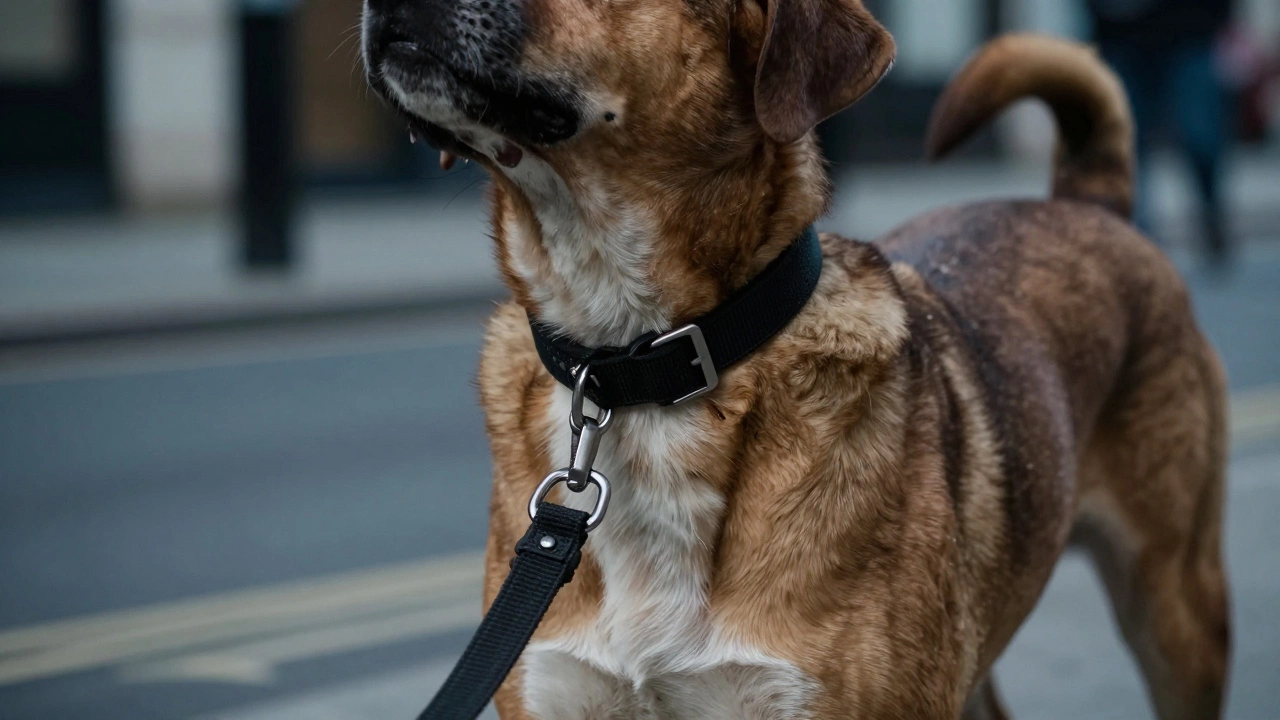
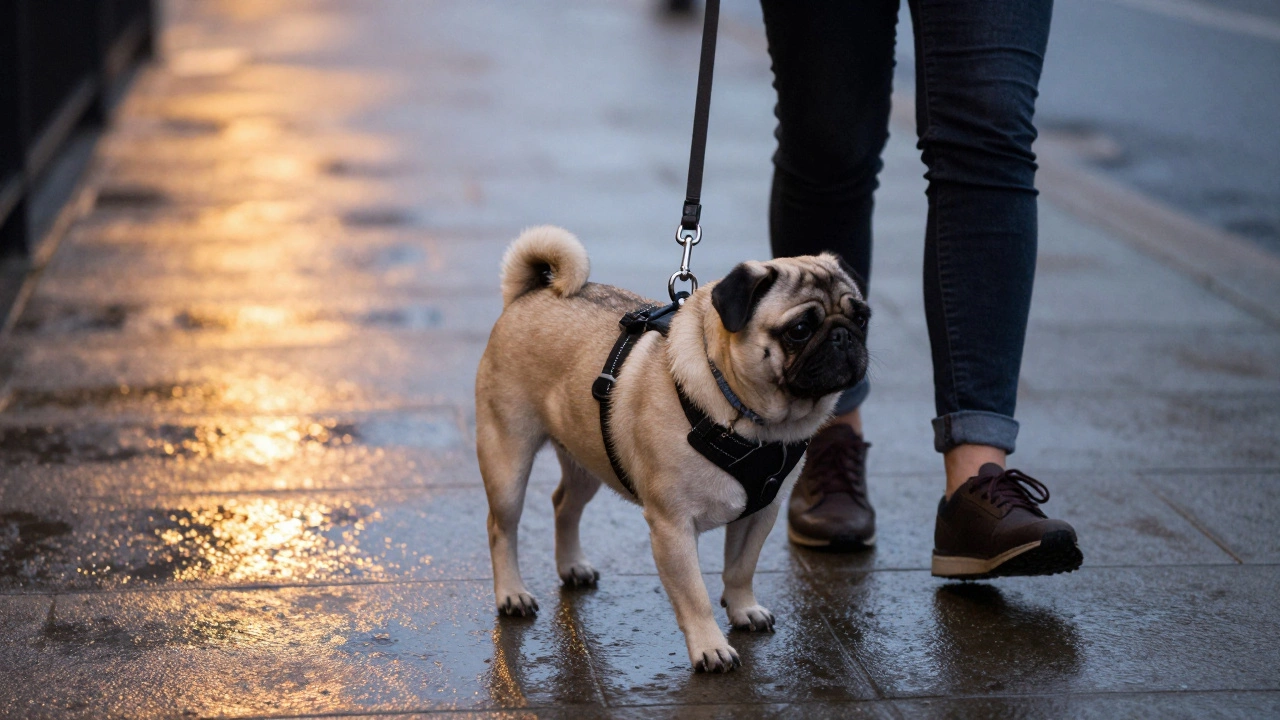
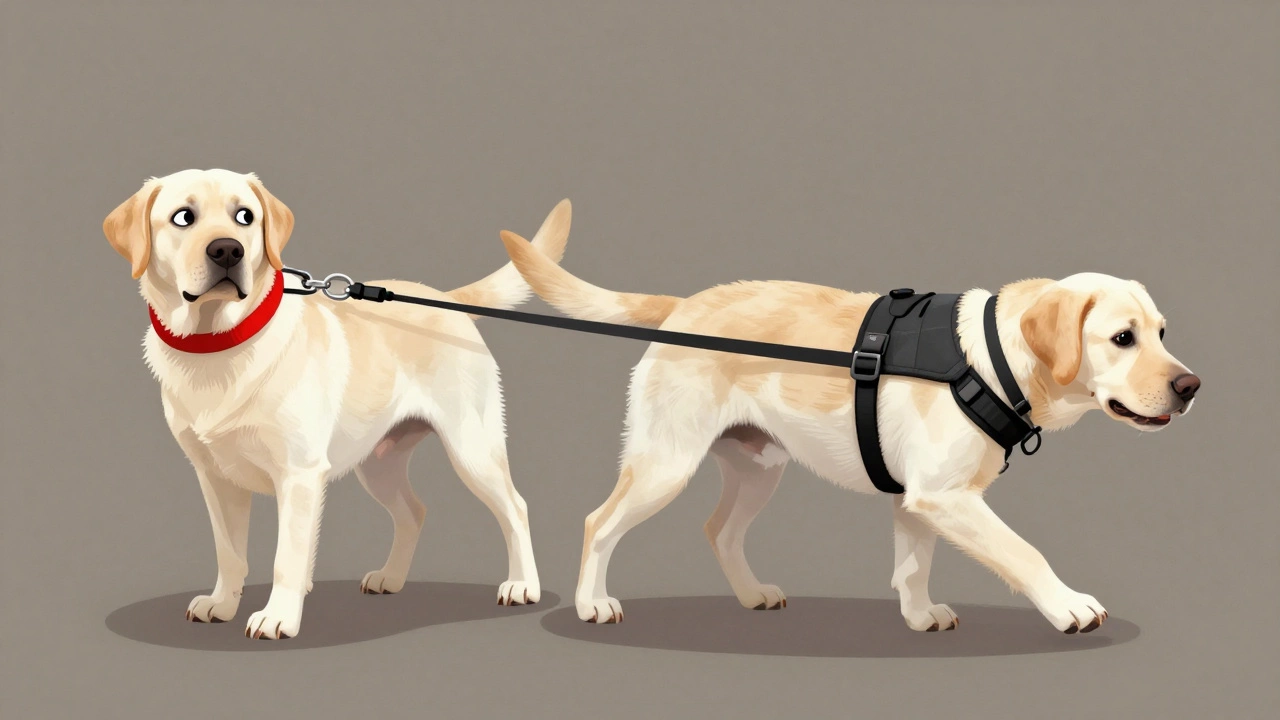
Traditional flat collars are designed for holding ID tags, not controlling movement. When a dog pulls on a leash attached to a collar, the force travels straight to the neck. That’s not just uncomfortable-it’s dangerous. The trachea, thyroid, and cervical spine sit right under that thin strip of fabric. One hard yank, and you’re risking injury.Studies from the University of Bristol’s Veterinary School show that over 60% of dogs walked with collars show signs of neck strain within six months. Signs? Coughing after walks, head tilting, reluctance to move, or even eye redness from increased pressure. Small breeds like Chihuahuas and Pugs are especially at risk. Their windpipes are narrower. Their bodies are more fragile. A collar isn’t just ineffective-it’s a liability.
How a harness changes everything
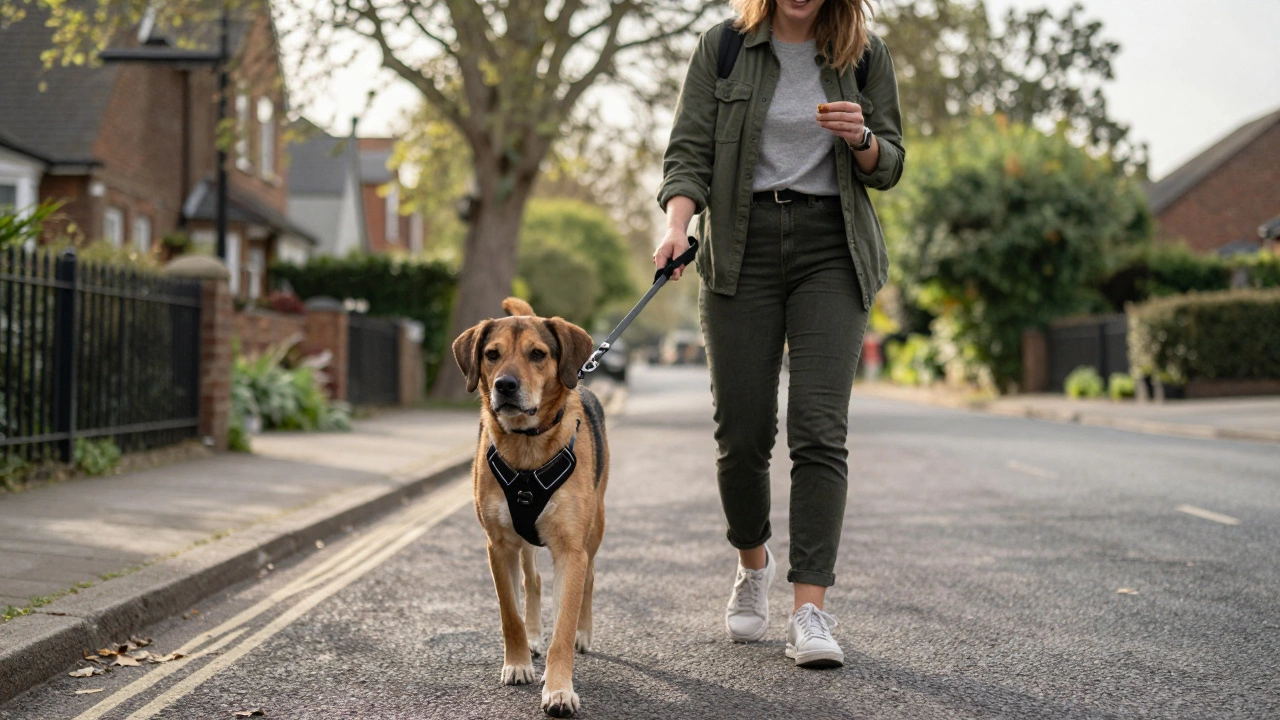
A well-fitted harness spreads pressure across the chest and shoulders, not the neck. That means no choking, no coughing, no risk of nerve damage. It also gives you better control. When your dog lunges at a squirrel, the harness redirects their momentum sideways instead of letting them yank your arm out of socket.Front-clip harnesses-where the leash attaches near the chest-are especially effective for pullers. They gently turn the dog back toward you when they try to charge ahead. It’s not punishment. It’s physics. Your dog learns that pulling doesn’t get them where they want to go. In fact, a 2023 study in the Journal of Veterinary Behavior found that dogs wearing front-clip harnesses reduced pulling by 78% in just four weeks, compared to only 12% improvement with collars.
Not all harnesses are created equal
You can’t just grab any harness off the shelf. A bad fit causes more problems than a collar. Too tight? Chafing, restricted breathing. Too loose? Your dog can still wiggle free. Look for these features:- Adjustable straps at the chest and neck-no one-size-fits-all nonsense
- Padding over the shoulders and sternum to prevent rubbing
- Two attachment points: one on the back for casual walks, one on the front for training
- Reflective stitching-because dusk walks in Bristol are common, and visibility matters
Brands like Ruffwear, Kurgo, and Petsafe have models tested for UK weather and dog shapes. Avoid harnesses with cheap plastic buckles or thin nylon straps. They break. Or worse-they dig into your dog’s skin.
When a collar might still make sense
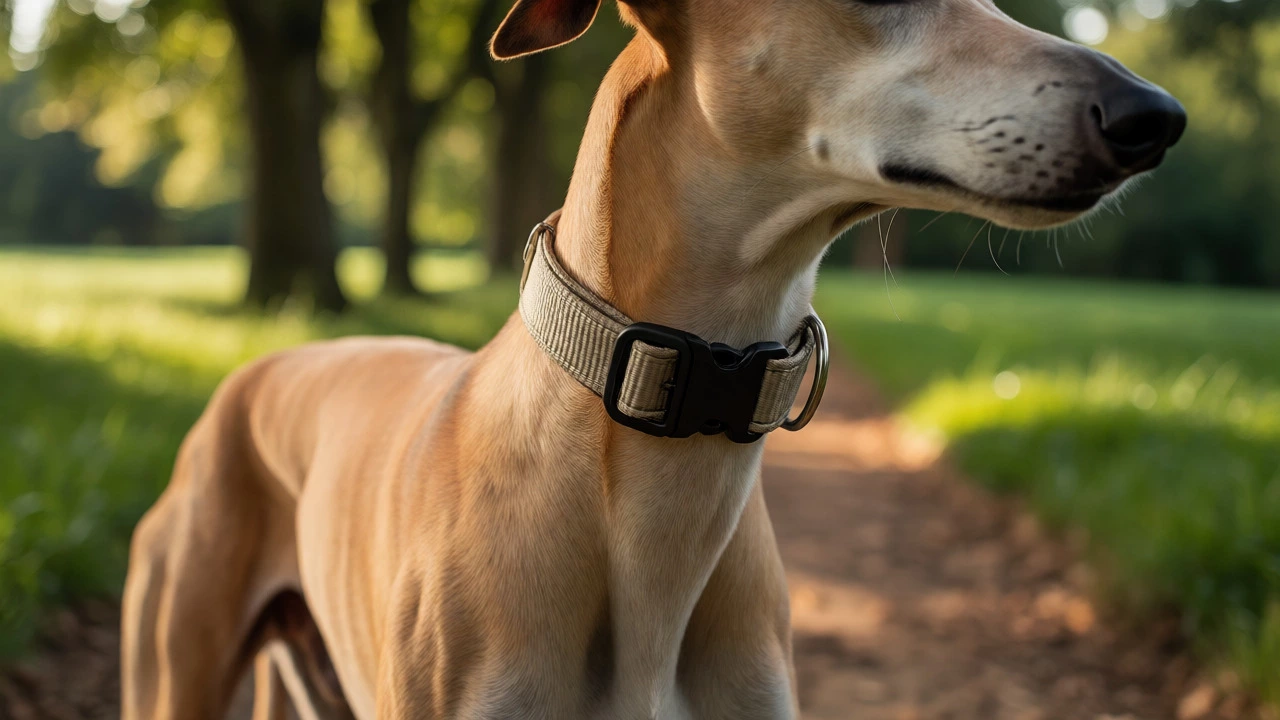
There are exceptions. If your dog is calm, walks perfectly on a loose leash, and has no history of respiratory issues, a collar can work. But even then, it should be a martingale collar-a hybrid that tightens slightly when pulled but never chokes. These are ideal for sighthounds like Greyhounds or Whippets, whose necks are wider than their heads. A regular collar would slip right off.Also, collars are still the best place for ID tags. Always keep your dog’s name and your phone number on a collar, even if you walk with a harness. That’s non-negotiable.
What about head halters?
Some owners turn to head halters-those straps that go around the muzzle. They can be useful for extreme pullers, but they’re not for every dog. Many find them confusing or frightening. Dogs can’t eat, drink, or pant normally while wearing them. They’re a tool for short-term training, not daily use. If your dog panics or tries to rub their face on the ground, ditch it. A front-clip harness is safer and more comfortable long-term.Real-life test: My Labrador, Rusty
Rusty used to pull so hard on walks, I’d get bruised ribs. We tried every collar-leather, nylon, padded. Nothing worked. He’d get excited, lunge at cyclists, and nearly drag me into the road. We switched to a front-clip harness. Within three days, he started checking in with me. By week two, he walked beside me like he was on a leash made of silk. No more sore shoulders. No more fear of walks. He started wagging his tail before we even left the house.That’s the difference. It’s not about discipline. It’s about designing the right equipment for your dog’s body.
What about puppies?
Start with a harness. Puppies have developing bones and cartilage. Their necks are especially vulnerable. A collar on a pulling puppy can cause lifelong damage. Even if your pup seems gentle now, their energy will change. A harness gives you control without risk. Plus, puppies grow fast. A harness with multiple adjustment points lasts longer than a collar that’ll be too tight in a month.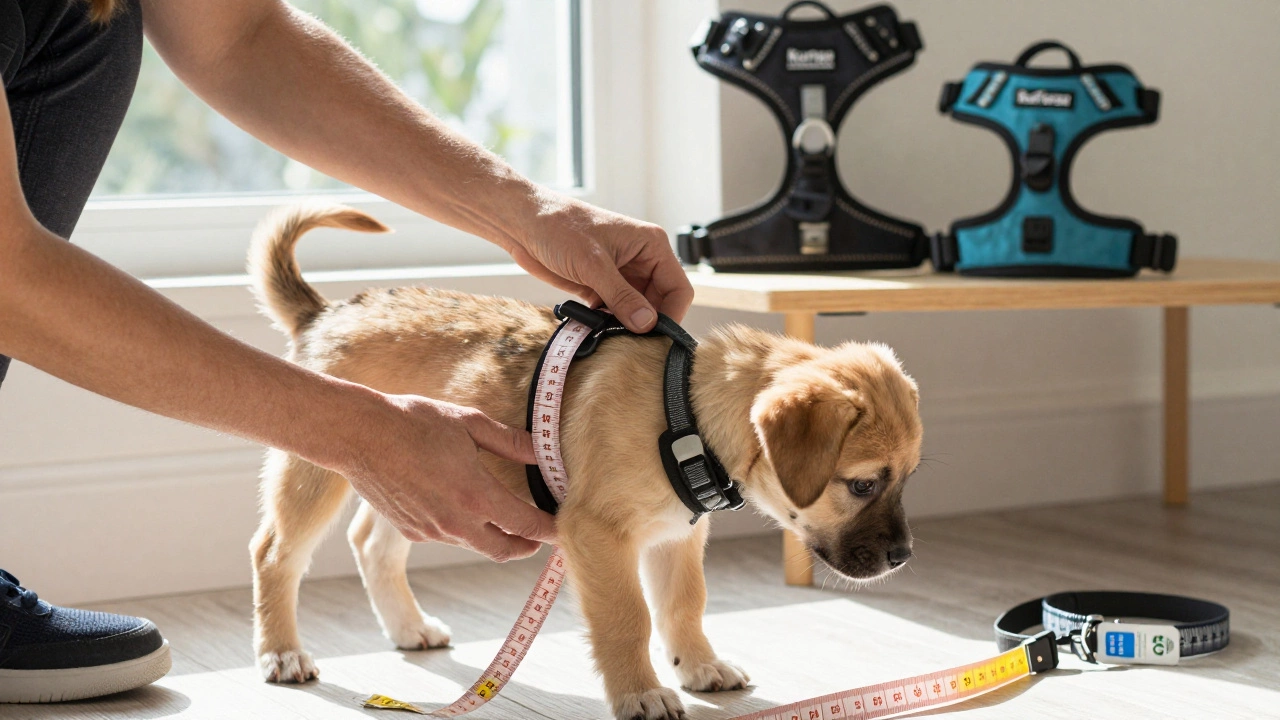
How to fit a harness properly
Getting the fit right is simple:- Slip the harness over your dog’s head and front legs.
- Adjust the straps so you can fit two fingers snugly under every strap.
- Check that the strap under the chest sits just behind the front legs, not on the belly.
- Let your dog move around. If the harness twists or rides up, it’s too loose or poorly designed.
Don’t rely on the size chart on the box. Measure your dog’s chest circumference right behind the front legs. That’s the number that matters. A 10-pound difference in chest size can mean the difference between safety and escape.
What to avoid
- Choke chains and prong collars: These are punishment tools. They’re not just cruel-they’re outdated. Many UK vets refuse to recommend them. - Decorative collars with bells, rhinestones, or heavy charms: These add weight and can snag on bushes or fences. - One-size-fits-all harnesses: If it doesn’t have multiple adjustment points, it’s not safe. - Leashes attached to the back of a harness if your dog pulls: You need the front clip to redirect motion.The bottom line
For 95% of dogs, a properly fitted harness is the better choice. It protects their body, improves behavior, and makes walks enjoyable for both of you. Collars have a place-for ID tags, and for dogs with specific medical needs under vet guidance. But for daily walks? Skip the collar. Go with the harness.It’s not about being trendy. It’s about being responsible. Your dog doesn’t care what looks cool. They care about not being choked. They care about being able to breathe. They care about coming home happy after a walk-not sore, scared, or injured.
Can a dog still pull with a harness?
Yes, but a front-clip harness makes pulling much harder and less rewarding. It redirects the dog’s movement toward you, teaching them that pulling doesn’t get them where they want to go. It’s not magic-it’s behavior science.
Is a harness better for small dogs?
Absolutely. Small dogs have delicate tracheas and are more likely to suffer neck injuries from collar pressure. A harness distributes force safely across the chest and shoulders, making it the only safe option for breeds like Yorkies, Pomeranians, and Shih Tzus.
Can I use both a collar and a harness at the same time?
Yes, and it’s smart. Use the harness for walking and the collar for ID tags. Just make sure the collar is loose enough not to interfere with the harness. Never attach the leash to both at once-that creates dangerous tension points.
What if my dog hates the harness?
Introduce it slowly. Let your dog sniff it. Reward them with treats when they wear it for a few minutes indoors. Gradually increase time. Most dogs adjust within a week. If they panic, try a different style-some prefer step-in harnesses over over-the-head designs.
How do I know if my dog’s harness is too tight?
Try sliding two fingers under each strap. If you can’t, it’s too tight. Also watch for red marks after walks, excessive scratching, or reluctance to move. A properly fitted harness should feel snug but never restrictive.