Puppy Toy Matchmaker
Not sure which toy to buy? Answer these three quick questions to get a personalized recommendation for your new puppy.
Your Personalized Toy Kit
Recommended Primary Toy:
Why this fits your puppy:
Safety & Material Notes:
Quick Stats
You just brought home a bundle of energy that chews on everything except the things you bought it. Sound familiar? Choosing the right puppy toys isn’t just about keeping your new dog entertained; it’s about saving your shoes, soothing sore gums, and teaching your pup what is actually allowed to be destroyed. With so many flashy options in pet stores, it’s easy to waste money on cute but useless gadgets. Let’s cut through the noise and look at what actually works for growing dogs.
Why Your Puppy Needs Specific Toys
Puppies aren’t just small adult dogs. Their needs are driven by biology, specifically the rapid development of their teeth and jaws. Between 3 and 6 months of age, puppies lose their baby teeth and grow permanent ones. This process hurts. They chew to relieve that pain, not just because they’re bored. If you don’t provide appropriate outlets, they will find their own-usually involving your furniture or electrical cords.
Furthermore, puppy brains are sponges. The first year of life is critical for socialization and learning boundaries. Toys serve as tools for training. A tug toy teaches impulse control. A puzzle feeder teaches problem-solving. A stuffed animal provides comfort during separation anxiety. Understanding the purpose behind each toy type helps you build a toolkit that supports both physical health and mental stability.
The Essential Toolkit: Types of Puppy Toys
Don’t buy random items. Build a rotation based on four specific categories. Each serves a distinct function in your puppy’s daily routine.
1. Teething Relief and Soothing Chews
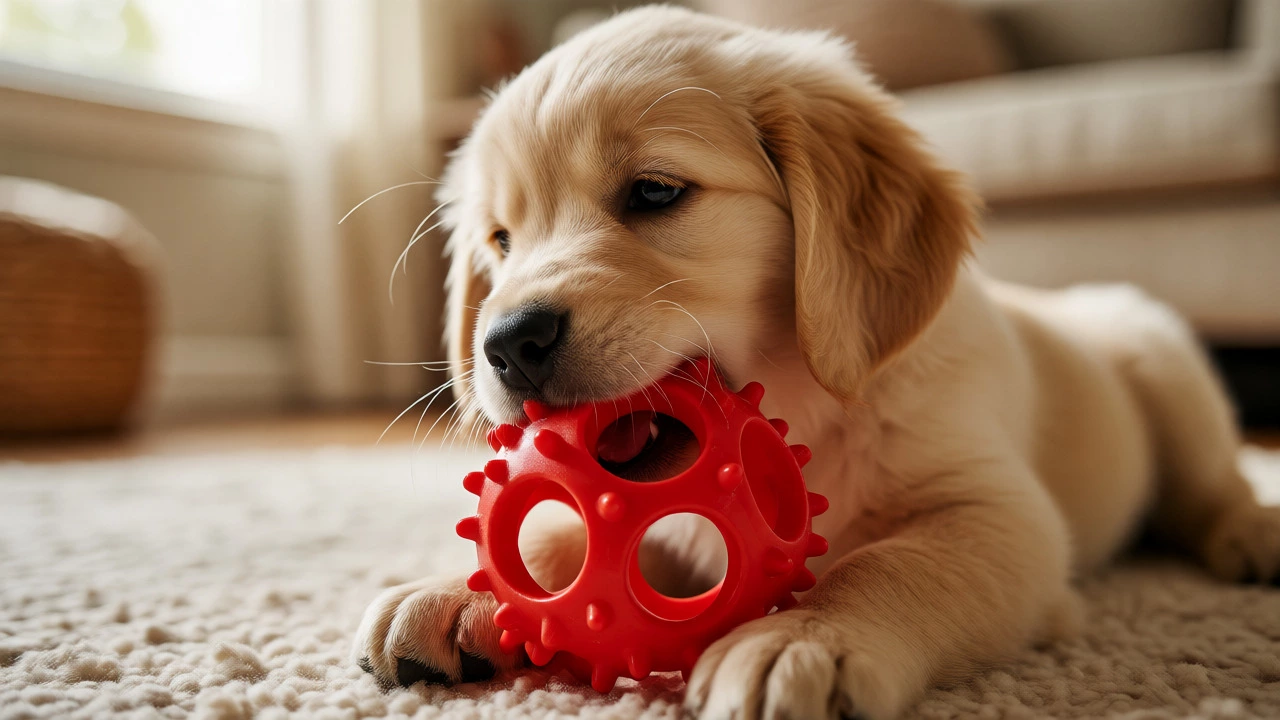
When those sharp little teeth come in, your puppy needs something soft enough to soothe but tough enough to last. Look for rubber toys with nubs or ridges. These textures massage the gums. Freezing these toys adds another layer of relief. The cold numbs the pain, similar to how an ice pack helps a human toothache.
- Kong Classic is a hollow rubber toy designed to be filled with treats and frozen. Its unpredictable bounce keeps puppies engaged while providing long-lasting chewing sessions.
- Nylabone DuraChew offers a harder texture for puppies who prefer gnawing rather than sucking or licking.
2. Interactive Puzzle Feeders
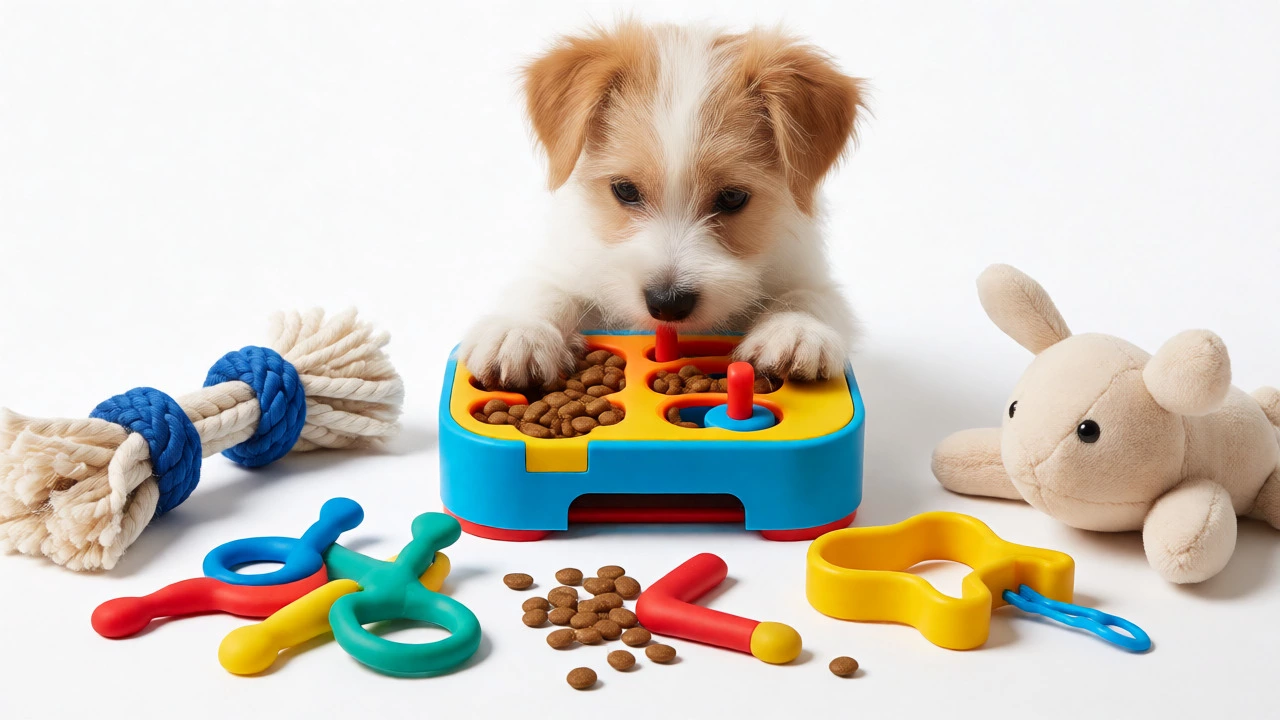
Feeding your puppy from a bowl takes two minutes. Feeding them from a puzzle takes twenty. This shift reduces boredom-induced destruction. When a puppy has to work for food, they burn mental energy. A tired brain is a calm dog. Start with simple puzzles where kibble falls out easily. If it’s too hard, they’ll get frustrated and quit. If it’s too easy, they won’t care. Find the sweet spot.
3. Tug and Fetch Items
Tug-of-war is one of the best ways to bond with your puppy. It teaches them rules: “Drop it” means let go immediately. Use rope toys made of natural fibers like cotton or hemp. Avoid thin ropes that can fray and cause intestinal blockages if swallowed. For fetch, choose balls that are larger than your puppy’s mouth opening. Tennis balls are popular, but their fuzzy exterior can wear down teeth over time. Rubber balls are safer and more durable.
4. Plush Comfort Companions
Not every toy needs to be indestructible. Sometimes, a puppy just wants something to cuddle, especially when sleeping alone for the first few nights. Choose plush toys without plastic eyes or buttons, which can be choking hazards. Reinforce seams if necessary, but accept that some plushies are disposable. Treat them as comfort objects, not heavy-duty chewers.
| Material Type | Best For | Durability Rating | Safety Risk |
|---|---|---|---|
| Natural Rubber | Teething, stuffing with food | High | Low (if non-toxic) |
| Nylon | Aggressive chewers, jaw strength | Very High | Medium (can fracture teeth if too hard) |
| Rope/Cotton | Tugging, dental cleaning | Medium | Medium (fraying leads to ingestion) |
| Plush/Fabric | Comfort, gentle play | Low | High (choking hazard if parts detach) |
Safety First: What to Avoid
Puppy mouths are exploratory tools. They taste everything. That means safety standards matter more now than they ever will. Here are three red flags to watch for:
- Small Parts: Anything smaller than your puppy’s mouth can become a choking hazard. Check for loose eyes, squeakers, or bells. If you can pull it off easily, your puppy can too.
- Toxic Materials: Cheap vinyl toys often contain phthalates or lead-based dyes. Stick to brands that explicitly state their products are BPA-free and non-toxic. If it smells strongly of chemicals out of the package, wash it thoroughly before giving it to your dog.
- Size Mismatch: A ball that fits perfectly in an adult Labrador’s mouth might be a deadly projectile for a Chihuahua puppy. Always size up. A slightly large toy is safer than a slightly small one.
How to Introduce New Toys Without Overwhelming Your Puppy
Buying ten toys and dumping them in a pile creates chaos, not fun. Puppies need structure. Try this method:
- The Rotation Strategy: Keep only 2-3 toys out at any given time. Put the rest away in a closet. Every week, swap them out. Novelty resets interest. A toy that was ignored yesterday becomes exciting again after a week in hiding.
- Supervised Play Only: Never leave a new toy with your puppy unsupervised for the first few times. Watch how they interact with it. Do they shred it? Swallow pieces? Ignore it? This observation period prevents accidents.
- Positive Association: Rub a little peanut butter (xylitol-free) inside a new puzzle toy. This creates an immediate positive link between the object and a reward.
Budget-Friendly Alternatives to Store-Bought Toys
You don’t need to spend a fortune to keep your puppy happy. Some of the best toys are already in your kitchen.
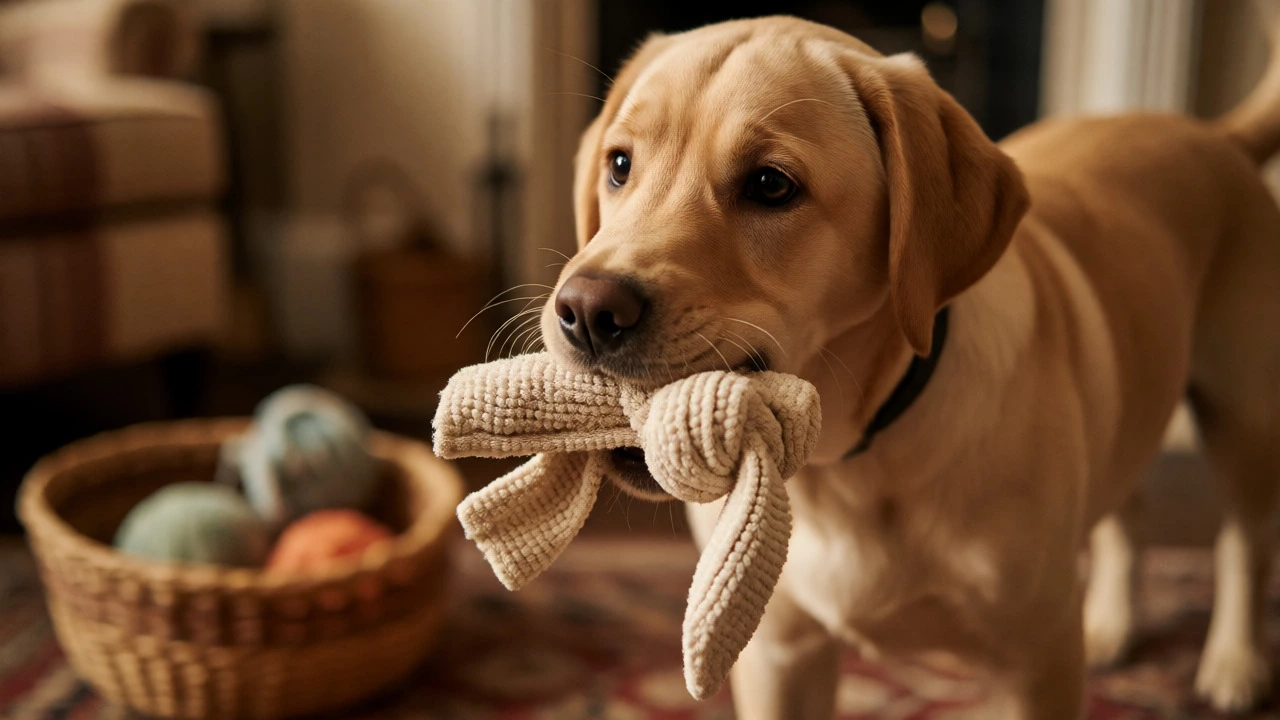
A standard metal spoon can be a great teaser for cats and small dogs. An old washcloth tied into a knot makes an excellent tug toy that doubles as a dental cleaner. Cardboard boxes offer endless hours of shredding fun for curious pups. Just monitor them closely to ensure they aren’t eating the cardboard glue or tape.
Signs Your Puppy Has Outgrown Their Current Toys
Puppies grow fast. A toy that fit a 8-week-old Beagle might be dangerous for a 6-month-old one. Watch for these signs:
- The toy is becoming difficult for your puppy to pick up or carry.
- They are swallowing pieces of the toy regularly.
- The toy shows significant wear, such as deep grooves or splitting rubber.
- Your puppy seems bored and ignores toys they previously loved.
If you see these signs, upgrade immediately. Moving from puppy-specific toys to adult-durable versions is a rite of passage. Don’t feel guilty about replacing worn-out items. Safety always outweighs sentimentality.
Frequently Asked Questions
Can I give my puppy tennis balls?
Yes, but with caution. Standard tennis balls are fine for fetch, but their abrasive felt covering can wear down enamel over time. Also, ensure the ball is larger than your puppy’s throat to prevent choking. Many owners switch to rubber balls for daily play to protect teeth.
How many toys does a new puppy actually need?
You don’t need dozens. Three to five well-chosen toys are sufficient. Focus on variety: one for chewing, one for tugging, and one for comfort. Rotate them weekly to maintain interest. Too many toys can overwhelm a young dog and reduce the value of each item.
Are rawhide chews safe for puppies?
Rawhide is controversial. While many puppies enjoy them, they can cause digestive upset or blockages if large pieces are swallowed. For very young puppies, softer alternatives like frozen wet washcloths or rubber Kongs are safer. Always supervise rawhide use and discard it once it becomes small enough to swallow whole.
What if my puppy destroys every toy instantly?
Some breeds, like Pit Bulls or Labradors, have powerful jaws that destroy standard toys quickly. In this case, look for toys labeled "indestructible" or made from thick nylon or ballistic rubber. You may also need to increase exercise levels, as destructive chewing is often a sign of pent-up energy rather than just teething pain.
Is it okay to share toys between multiple pets?
It depends on the toy and the animals' relationship. Shared tug toys can encourage bonding, but shared food puzzles might trigger resource guarding. If sharing causes tension, provide individual toys for each pet. Regularly clean shared toys to prevent the spread of bacteria or parasites.