Puppy Potty Schedule Generator
Potty training is one of the most stressful hurdles for new dog owners. You bring home a cute, wiggly 8-week-old puppy, and within hours, there is urine on your carpet. It feels like a disaster before you have even unpacked the bags. But here is the truth: yes, you can start potty training an 8-week-old puppy immediately. However, you need to adjust your expectations. At this age, they are not fully "trained" in the sense that they will hold it all day. They are learning the habit.
The key difference between an 8-week-old puppy and an older dog is biological. An 8-week-old puppy has very little bladder control. The general rule of thumb is that puppies can hold their bladder for about one hour per month of age, plus one. So, an 8-week-old (roughly 2 months) might only hold it for three hours maximum, and often less during play or sleep. Understanding this biology is the first step to stopping the frustration.
Understanding Your Puppy's Bladder Limits
Before you buy any puppy training aids, you need to understand what is physically possible for your new companion. Many people fail because they expect too much too soon. If you leave an 8-week-old puppy alone for four hours, they will almost certainly have an accident. This is not disobedience; it is physiology.
At eight weeks, your puppy’s sphincter muscles are still developing. They do not have the strength to "hold it" when they are excited, scared, or deeply asleep. This means accidents happen at night, during intense play sessions with puppy toys, or right after eating. Recognizing these triggers helps you plan your schedule rather than punishing the puppy for something they cannot control.
| Puppy Age | Max Hold Time (Approx.) | Typical Bathroom Frequency |
|---|---|---|
| 8 Weeks | 1-3 Hours | Every 30-60 mins while awake |
| 12 Weeks | 3-4 Hours | Every 2-3 hours |
| 16 Weeks | 4-5 Hours | Every 3-4 hours |
| 6 Months+ | 6+ Hours | Every 4-6 hours |
This table shows why consistency is non-negotiable. If you work a standard 9-to-5 job, leaving an 8-week-old puppy alone all day without a midday break or a pet sitter is a recipe for failure. You either need to adjust your work schedule, hire help, or use a crate combined with a designated indoor area if you live in an apartment where immediate outdoor access isn't possible.
The Core Strategy: Routine and Supervision
The most effective way to potty train an 8-week-old puppy is through strict routine and constant supervision. There are no shortcuts here. You cannot just hope they learn. You have to teach them where to go and reward them when they do.
Start by taking your puppy out to the same spot every time. Use a specific command, like "go potty," every time they eliminate. When they finish, praise them enthusiastically and give a high-value treat immediately. This creates a strong mental link: "Go outside -> Do business -> Get tasty reward." Over time, the command itself will trigger the behavior.
Supervision is critical. If your puppy is not in their crate or directly watched by you, they are likely to sniff around the rug and decide it looks like a good bathroom. Keep them on a leash inside the house so you can gently guide them to the door if you see them circling or sniffering intensely. Interrupting the behavior calmly and taking them outside prevents the accident from happening in the first place.
- Morning: Take them out immediately upon waking.
- After Eating: Wait 10-20 minutes after meals, then go out.
- After Play: Put down the toy, take them out.
- Before Bed: Final trip to the bathroom before settling in.
Crate Training: Your Best Friend
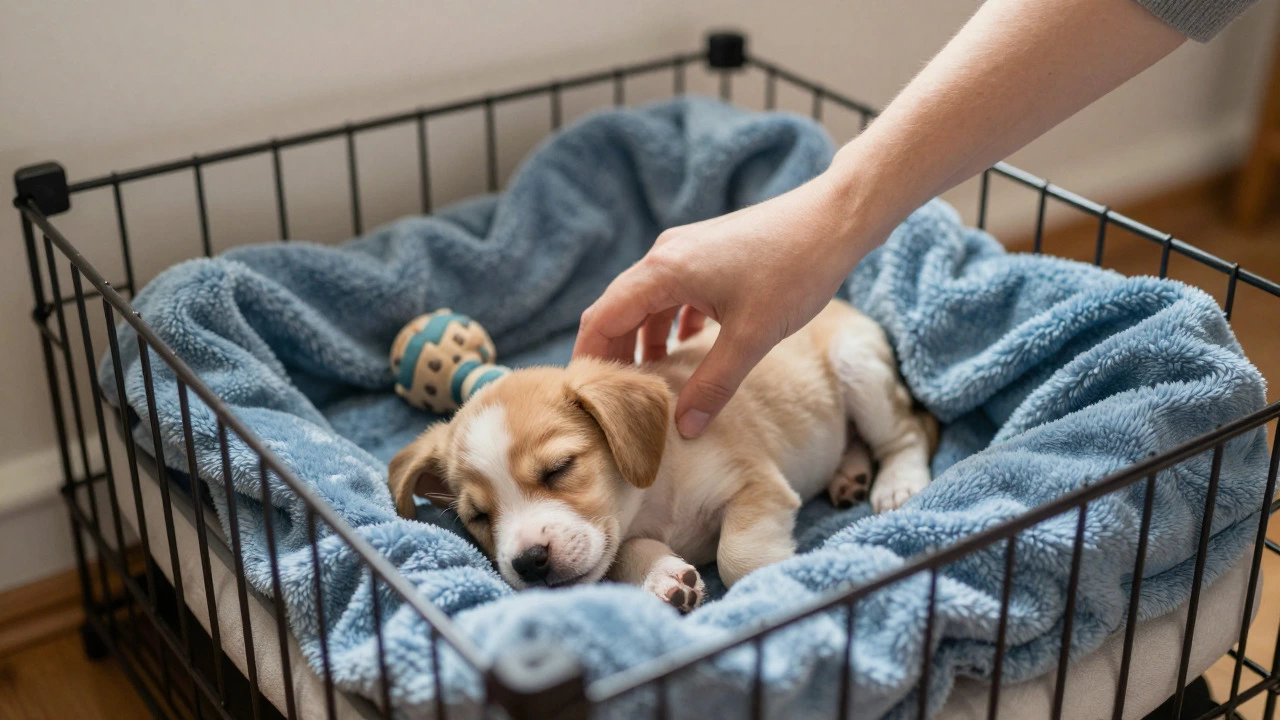
Crate training is not about confinement; it is about leveraging your puppy's natural instinct to keep their sleeping area clean. Dogs do not like to soil where they sleep. If the crate is the right size-big enough to stand and turn around, but not big enough to pee in one corner and sleep in another-it becomes a powerful tool for bladder control.
When you cannot watch your puppy closely, put them in the crate. For an 8-week-old, this might mean crating them for short periods, such as 30 to 60 minutes. Never use the crate as punishment. It should be a cozy, safe den with a soft bed and a chew toy. When you let them out of the crate, take them directly to their potty spot. Most puppies will need to go immediately after being released from confinement.
If you are away from home, consider using a pen or exercise area with a small crate in one corner and a puppy pad or artificial grass patch in the other. This setup allows them to move around slightly while still encouraging them to use the designated bathroom area. However, direct outdoor elimination is always preferred for long-term success.
Handling Accidents Without Drama
Accidents will happen. Even with perfect timing, your puppy will miss the mark. How you react matters more than the accident itself. If you catch your puppy in the act, make a sharp noise like "Oops!" or clap your hands once to interrupt them. Then, quickly pick them up and take them outside. If they finish outside, praise them.
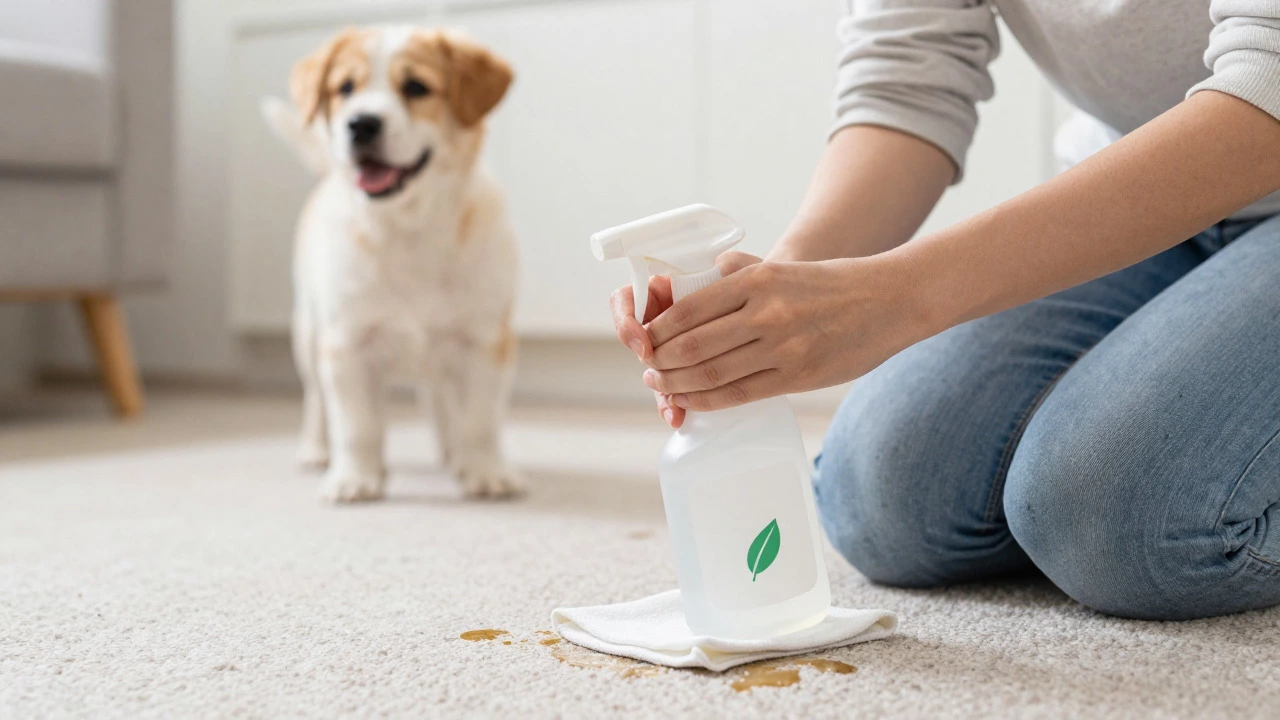
If you find an accident after it has happened, do not rub their nose in it. Do not yell. Puppies do not connect punishment with actions that happened ten minutes ago. To them, you are just being scary. Instead, clean the area thoroughly with an enzymatic cleaner. Regular household cleaners often leave behind scent markers that only dogs can smell, inviting them to pee in the exact same spot again.
Enzymatic cleaners break down the proteins in urine and feces, removing the odor completely. This is crucial for breaking the cycle of repeat accidents. Invest in a good quality cleaner early on; it saves money on ruined carpets and reduces stress for both you and the puppy.
Indoor Options: Pads vs. Artificial Grass
Some owners choose to use puppy pads or artificial grass indoors, especially if they live in apartments or have limited mobility. While these can be helpful tools, they come with risks. Puppies can get confused between pads and rugs if the textures are similar. Some puppies also develop a habit of chewing the pads, which can lead to digestive issues.
If you use pads, place them in a consistent location, ideally near the door you use for outdoor trips. As the puppy grows, gradually move the pad closer to the door until it is outside the door, eventually transitioning to full outdoor elimination. Artificial grass patches are a better alternative to paper pads because they mimic the texture of real grass, making the transition outdoors smoother later on.
However, be aware that some dogs become stubbornly attached to indoor elimination. If your goal is a dog that goes exclusively outside, limit indoor options and focus heavily on outdoor rewards. The sooner they associate the outdoors with relief, the easier the process becomes.
The Role of Diet and Hydration
What your puppy eats and drinks affects their bathroom frequency. High-quality puppy food with digestible ingredients produces less waste and fewer urgent urges. Avoid feeding large meals late in the evening. Instead, offer smaller, frequent meals throughout the day, with the last meal at least two hours before bedtime. This gives their digestive system time to process the food before they settle in for the night.
Water is essential, but managing intake can help reduce nighttime accidents. Remove the water bowl about two hours before bedtime. Ensure they have plenty of water during the day, but restrict it slightly in the evening. This simple adjustment can significantly improve their ability to sleep through the night without needing to pee.
Patience and Consistency Are Key
Potty training an 8-week-old puppy is a marathon, not a sprint. It can take anywhere from four to six months for a puppy to be fully reliable. There will be setbacks. Illness, changes in routine, or teething can cause regressions. Stay calm and consistent. Punishment sets back progress; positive reinforcement builds trust and habits.
Keep a log of when your puppy eats, drinks, plays, and eliminates. Patterns will emerge. You might notice they always need to go 15 minutes after breakfast or 30 minutes after a vigorous play session with their favorite squeaky toy. Using this data, you can anticipate their needs and take them out before they have an accident. Anticipation is the secret weapon of successful potty training.
How many times a day should I take an 8-week-old puppy out?
You should take an 8-week-old puppy out every 30 to 60 minutes while they are awake. This includes after waking up, after eating, after playing, and before bed. Expect to take them out 8-10 times a day initially.
Is it okay to use puppy pads for an 8-week-old?
Yes, puppy pads can be used, especially for apartment dwellers. However, they can sometimes confuse puppies who may mistake rugs for pads. If using pads, keep them in a consistent spot and plan to transition to outdoor elimination as the puppy matures.
Why does my puppy pee when they get excited?
Submissive urination or excitement peeing is common in young puppies due to immature bladder control. Greet your puppy calmly, avoid direct eye contact initially, and take them outside immediately after greetings to reinforce proper bathroom habits.
Should I punish my puppy for having an accident?
No. Punishing a puppy after the fact does not work and can damage your bond. Interrupt accidents calmly if caught in the act, take them outside, and clean the indoor area thoroughly with enzymatic cleaner to remove odors.
How long does it take to fully potty train a puppy?
Most puppies are fully housebroken between 4 to 6 months of age. However, complete reliability, including holding it for longer periods, may not occur until they are 6 to 12 months old, depending on breed and individual development.