

Puppy Rule of 3 Companion
The 3-3-3 Framework Overview
Days 1-3: Survival Mode
Hiding, refusing food, sleeping. Keep calm. No big outings.
Weeks 1-3: Getting Comfortable
Learning routine, testing boundaries. House-training inconsistencies are normal.
Months 1-3: Feeling at Home
Real bonding happens. Trust established. Push training confidently.
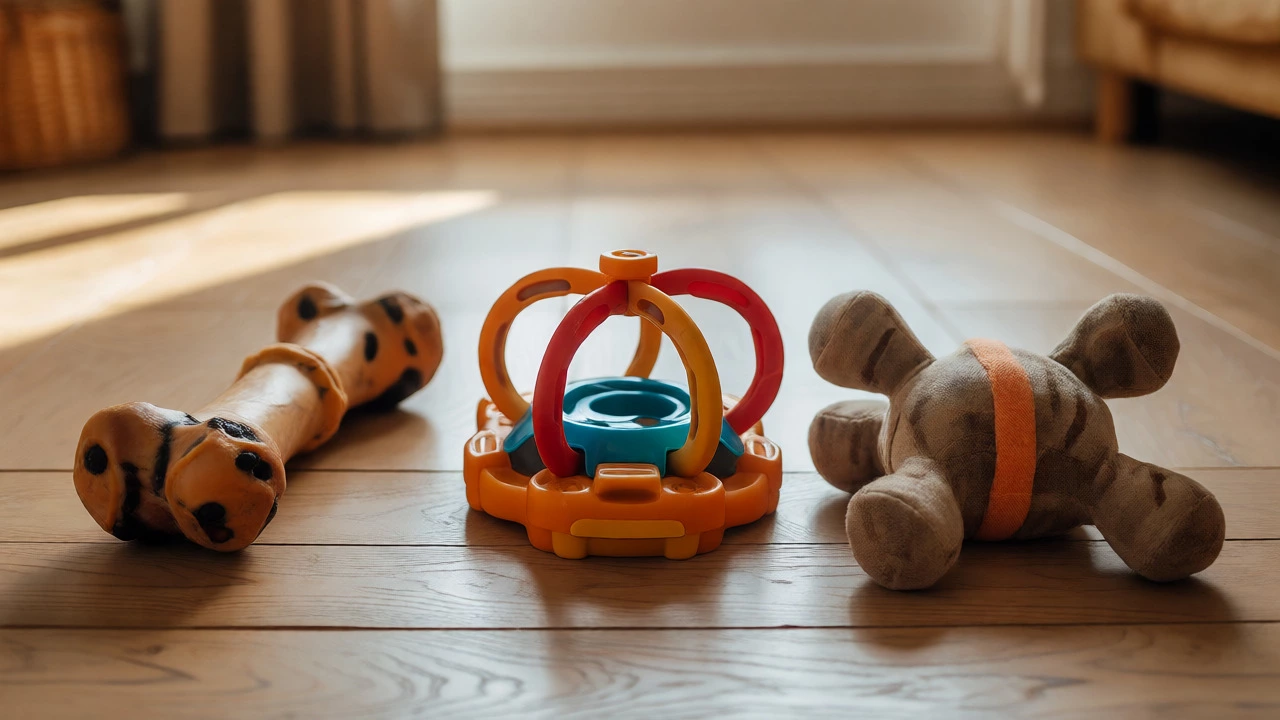
Chew Toy
Soothes teething pain. Best material: Natural Rubber or Nylon.
Interactive/Puzzle
Mental stimulation. Best material: Durable Plastic/Fabric.
Comfort/Plush
Security & cuddling. Best material: Reinforced Fabric.
Click cards to mark as currently available. Click "Rotate" to simulate swapping with stored toys.
Test Your Knowledge
Loading question...
You just brought home a bundle of fluff, chaos, and sharp little teeth. Your floor is now a minefield of chewed-up slippers, and you’re wondering if you made a mistake buying that expensive orthopedic bed. You aren’t alone. Most new owners feel overwhelmed by the sheer volume of advice thrown at them online. Should you buy ten toys? One toy? What about food bowls? Leashes?
Here’s the secret most breeders won’t tell you because it sounds too simple to be true: The Rule of 3 is not just a marketing gimmick; it’s a survival strategy for your sanity and your puppy’s development. It applies to everything from how many toys they need to how long it takes them to settle in. If you ignore it, you risk creating an anxious, destructive dog. If you follow it, you build a confident companion. Let’s break down exactly what this rule means for your new arrival.
What Exactly Is the Rule of 3?
When people ask about the "Rule of 3," they are usually conflating two different but related concepts in dog behavior. The first is the 3-3-3 Rule, which describes the timeline of a rescue or new puppy settling into a new home. The second is the practical "Rule of Three" regarding resources-specifically toys, bowls, and safe spaces.
Let’s tackle the timeline first, because it dictates your expectations. When a puppy enters your life, their brain is flooded with new smells, sounds, and routines. They don’t instantly trust you. The 3-3-3 framework breaks this down:
- First 3 Days (Survival Mode): Your puppy is likely hiding, refusing to eat, or sleeping excessively. They are overwhelmed. Do not take them on big outings. Keep interactions calm and predictable.
- First 3 Weeks (Getting Comfortable): The puppy starts learning your routine. They might start showing personality, but they still test boundaries. This is when house-training inconsistencies happen. It’s normal.
- First 3 Months (Feeling at Home): Now the real bonding happens. The puppy understands who you are and trusts that you will provide safety and food. This is when you can really push training.
Understanding this timeline stops you from panicking when your pup ignores you in week one. But the other side of the Rule of 3 is physical. It’s about limiting choices to reduce decision fatigue for both you and the dog.
The Toy Strategy: Why Less Is More
If you look at your living room right now, you probably have a mountain of plastic squeakers. Here is the hard truth: Dogs do not benefit from having fifteen identical rubber bones. In fact, too many toys can lead to "toy apathy." If a toy is always available, it has no value. To a puppy, a toy left on the floor for three days is as exciting as a rock.
The practical application of the Rule of 3 for toys suggests you should only have three types of toys accessible at any given time. Rotate them weekly. This keeps novelty high. But what are these three categories?
| Toy Type | Purpose | Best Material | Risk Factor |
|---|---|---|---|
| Chew Toy | Soothes teething pain, satisfies chewing instinct | Natural Rubber or Nylon | Low (if size-appropriate) |
| Interactive/Puzzle | Mental stimulation, reduces boredom barking | Durable Plastic or Fabric | Medium (choking hazard if small parts) |
| Comfort/Plush | Security, cuddling, gentle play | Reinforced Fabric | High (easy to destroy and ingest stuffing) |
Why these three? Each serves a distinct biological or psychological need. A chew toy manages jaw pressure during teething (which peaks between 4 and 6 months). An interactive toy tires out the brain, which is often more effective than tiring out the body. A comfort toy provides security when you leave the room. By rotating these three, you cover all bases without cluttering the environment.
Bowls and Water Stations: The Hydration Triangle
Food and water are non-negotiable, but placement matters. The Rule of 3 applies here too: keep three things separate. Food bowl, water bowl, and resting area should not be in the same square foot.
In the wild, dogs avoid eating near their water source because contamination risks illness. While modern kibble isn’t as risky, keeping these zones separate encourages better habits. Furthermore, you should ideally have two water sources if your puppy spends time in different rooms, plus a portable one for walks. That’s three hydration points ensuring they never go thirsty.
A common mistake I see in Bristol homes is placing the water bowl next to the crate. This leads to accidents inside the crate because the puppy knocks the bowl over while trying to drink. Move the water to a designated "kitchen zone" away from the sleeping den. It forces the puppy to get up, move, and then return to rest, reinforcing bladder control.
Safe Spaces: Creating the Den Instinct
Your puppy needs three levels of safety. If you skip one, anxiety spikes.
- The Crate: This is the primary den. It must be large enough to stand and turn around, but small enough that they don’t use one corner as a toilet. Covering three sides of the crate with a blanket mimics a cave, triggering a calming response.
- The Playpen: When you can’t watch them directly, they need a confined area larger than a crate but smaller than a room. This prevents them from chewing electrical cords or getting stuck under furniture. Think of it as a "safe room."
- The Human Zone: This is your bed or sofa. Yes, let them off-leash in specific supervised areas where they learn to relax near you. Without this third tier, the dog becomes overly dependent on confinement and struggles with freedom later in life.
Notice the pattern? Structure reduces stress. A puppy with clear boundaries sleeps better. A puppy that sleeps better learns faster. It’s a direct causal link.
Training Sessions: The Three-Minute Rule
Attention spans in puppies are shorter than goldfish. If you try to train for thirty minutes, you’re actually training for frustration. The Rule of 3 applies to duration here: keep sessions to three minutes, three times a day.
Three minutes is long enough to teach one command (like "sit") but short enough that the puppy ends the session wanting more. Ending on a high note reinforces the behavior. If you push past this point, the puppy gets bored, starts nipping, and associates training with annoyance rather than reward.
Also, limit commands per session to three. Don’t mix "sit," "stay," "come," and "down" in one go. Focus on one skill until they master it in low-distraction environments. Then add distraction. This incremental approach builds confidence. Rushing it creates confusion.
Health Checks: The Daily Triad
New owners often forget basic health monitoring until something goes wrong. Make checking three things part of your daily routine. This catches issues before they become vet emergencies.
- Eyes and Ears: Look for discharge or redness. Ear infections are rampant in floppy-eared breeds like Spaniels. Check daily.
- Gums: Press gently on the gum line. It should turn white and pink again within two seconds. If it stays white, check for anemia or shock. If it’s pale, call the vet.
- Stool: Consistency tells you about diet tolerance. Sudden changes mean you changed food too fast or ate something weird. Track this for the first three weeks closely.
Doing this takes thirty seconds. It saves thousands in emergency vet bills later. It also helps you spot subtle changes in energy levels that might indicate illness before the puppy acts sick.

Common Pitfalls to Avoid
Even with the best intentions, owners slip up. Here are the top mistakes related to the Rule of 3.
Over-toying: Buying every cute toy at the pet store. Stick to the rotation method. If a toy is destroyed, replace it immediately. Swallowing foam or rubber chunks causes intestinal blockages requiring surgery.
Under-socializing in Week 1: Thinking the "3-day survival mode" means zero exposure. It doesn’t. Carry the puppy outside to sit on the grass. Let them hear cars. Just don’t force interaction with strange dogs yet. Passive exposure counts.
Inconsistent Rules: If "off" means off today, it must mean off tomorrow. If you allow jumping on the couch when guests come over but forbid it otherwise, the puppy gets confused. Consistency is key to the 3-month trust building phase.
Practical Application: Your First Month Checklist
To make this actionable, here is a simplified plan based on the Rule of 3 principles.
| Timeframe | Focus Area | Action Item |
|---|---|---|
| Days 1-3 | Decompression | Limit visitors. Establish feeding schedule. Introduce crate as safe space. |
| Weeks 1-3 | Routine Building | Start potty training. Begin name recognition games. Rotate 3 core toys. |
| Month 1 | Socialization & Training | Vet visit for vaccinations. Short car rides. Basic obedience cues (Sit, Name). |
Stick to this structure, and you’ll find the chaos settles much faster than expected. Remember, patience is a resource. Spend it wisely.
Frequently Asked Questions
Does the Rule of 3 apply to adult dogs too?
Yes, absolutely. Adult dogs, especially rescues, experience the same decompression phases. The 3-3-3 timeline is even more critical for adults coming from shelters, as they may carry trauma. The toy and resource rules also help prevent resource guarding in adult dogs.
How many toys should I buy initially?
Buy six total, but only display three. One chew, one puzzle, one soft. Store the other three in a closet. Swap them every Sunday. This keeps the toys feeling new and exciting without cluttering your home.
My puppy isn't eating after 3 days. Is this normal?
It can be normal due to stress, but monitor closely. If they haven't eaten anything in 24 hours, or show signs of lethargy, contact your vet. Some puppies hold out for a day or two, but prolonged fasting requires medical attention.
Can I break the rule of 3 for training?
You can adjust slightly, but don't exceed 5 minutes per session. Puppies tire quickly. Longer sessions usually result in diminishing returns and increased frustration for both parties. Quality beats quantity every time.
What if my puppy destroys all three toys?
This indicates high energy or anxiety. Increase exercise duration before offering toys. Also, ensure the toys are durable enough for their jaw strength. Sometimes switching to harder nylon chews instead of rubber helps prevent destruction.