
Cat Daily Calorie Calculator
Your cat needs approximately:
--
Calories per day
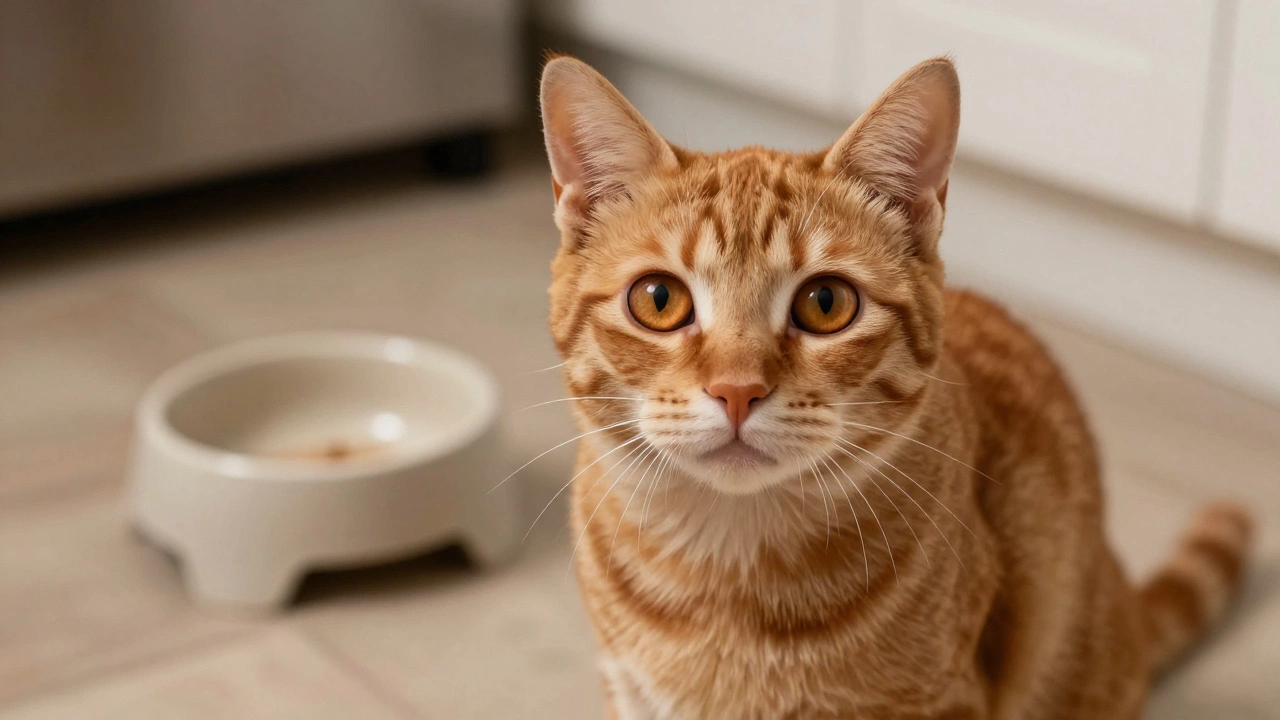
Have you ever watched your cat stare at you with wide, pleading eyes, let out a demanding meow, and then immediately turn around to groom their paw as if they never asked for anything in the first place? You feed them. Their bowl is full. Yet, five minutes later, they are back at your feet, acting like they haven’t eaten since the dawn of time.
If this sounds familiar, you are not alone. Almost every cat owner has wondered if their pet is secretly starving or just manipulating them. The truth is, your cat isn't actually hungry in the biological sense. This behavior is a complex mix of evolutionary instincts, learned manipulation, and sometimes, underlying health issues. Understanding why cats act like they are starving can help you stop the endless begging cycle and ensure your cat is truly healthy.
The Evolutionary Instinct: Survival Mode
To understand why your indoor house cat behaves like a wild predator on the brink of starvation, you have to look at their ancestry. Domestic cats (Felis catus is a small domesticated carnivorous mammal that evolved from wild ancestors who were solitary hunters) descended from desert-dwelling species. In the wild, a meal was never guaranteed. One day you might catch a mouse; the next three days, you might catch nothing.
This unpredictability wired their brains for "feast or famine" survival strategies. Even though your cat lives in a climate-controlled home with a full food bowl, their biology hasn't caught up. When they eat, their instinct tells them to maximize calorie intake because the next meal is uncertain. This is why you might see a cat gorge themselves after a short fast, only to go back to sleep. They aren't gluttons; they are following an ancient genetic script designed to keep them alive during droughts and prey shortages.
Furthermore, cats are obligate carnivores. Unlike dogs or humans, who can survive on a varied diet including plants, cats require protein and fat specifically from animal sources. Their metabolism is tuned to burn through these nutrients quickly. If their diet lacks sufficient high-quality protein, they may feel physically unsatisfied even after eating a large volume of low-quality kibble. This is known as "protein leverage," where the body continues to seek out protein until its specific needs are met, regardless of total calories consumed.
Learned Behavior: The Art of Manipulation
While evolution plays a role, psychology plays a bigger one. Cats are incredibly intelligent observers. If you have ever given in to a desperate meow by adding extra treats to their bowl, you have inadvertently trained them. This is classic operant conditioning.
Here is how the cycle works:
- The Trigger: Your cat feels bored, wants attention, or simply wants more food.
- The Action: They emit a specific, loud, and persistent vocalization (the "food scream").
- The Reward: You open the cupboard and provide the treat.
To you, it looks like they were starving. To the cat, it looks like a successful strategy. Studies on feline communication show that cats develop a specific type of meow-often called the "imperative meow"-that mimics the frequency of a human baby's cry. This sound triggers a caretaking response in humans. Once a cat learns that this sound results in food, they will use it repeatedly, even when they are completely satiated.
This behavior often peaks around feeding times. If you feed your cat at 7:00 AM, they will likely start performing at 6:45 AM. They are anticipating the reward, not reacting to hunger pangs. Over time, the anticipation becomes the drive. The act of begging becomes a routine activity, similar to how a dog waits by the door for a walk.

Diet Quality and Satiety Signals
Not all cat food is created equal, and what you put in that bowl matters significantly for how long your cat stays full. Many commercial dry foods are high in carbohydrates and low in moisture and protein. While convenient, these foods digest quickly and fail to trigger the same satiety hormones as wet food or raw diets.
Cats lack the taste receptors for sweetness and have a limited ability to process plant-based fillers commonly found in cheaper kibbles. When a cat eats a bowl of high-carb dry food, their blood sugar spikes and then crashes rapidly. This crash can mimic the feeling of hunger, prompting them to seek more food shortly after eating. Switching to a high-protein, moisture-rich diet often reduces begging behavior because the food provides sustained energy and physical fullness.
| Diet Type | Protein Content | Digestion Speed | Impact on Begging |
|---|---|---|---|
| Low-End Dry Kibble | Low (20-25%) | Fast | High (frequent hunger signals) |
| Premium Wet Food | High (10-12% as fed, higher dry matter) | Moderate | Low (better satiety) |
| Raw/BARF Diet | Very High | Slow | Very Low (natural grazing patterns) |
Additionally, the texture of the food matters. Some cats prefer to "hunt" for their food rather than eat from a static bowl. Using puzzle feeders or scatter feeding can extend mealtime from two minutes to twenty, providing mental stimulation and slowing down consumption. This helps regulate their insulin levels and keeps them occupied, reducing the urge to beg for entertainment.
Medical Red Flags: When It’s Not Just Behavior
Before assuming your cat is just being manipulative, you must rule out medical causes. A sudden increase in appetite, known as polyphagia, can be a symptom of several serious conditions. If your cat is acting like they are starving but losing weight, or if they are drinking excessive amounts of water, it is time to see a veterinarian.
Common medical reasons for constant hunger include:
- Hyperthyroidism: Common in older cats, this condition speeds up metabolism, causing rapid weight loss despite increased eating.
- Diabetes Mellitus: When the body cannot process glucose properly, cells starve for energy, triggering intense hunger signals.
- Intestinal Parasites: Worms can steal nutrients from the food your cat eats, leaving them malnourished and hungry.
- Inflammatory Bowel Disease (IBD): This prevents proper nutrient absorption, leading to a state of chronic internal starvation.
If your cat has always been a beggar, it is likely behavioral. But if the behavior is new, aggressive, or accompanied by changes in litter box habits or coat quality, do not ignore it. Early detection of metabolic diseases can save your cat's life.

How to Stop the Begging Cycle
So, how do you break the habit? Consistency is key. You need to retrain your cat to understand that meowing does not equal food. Here is a practical plan to reset their expectations.
- Establish Fixed Feeding Times: Instead of free-feeding (leaving food out all day), switch to scheduled meals. Two to three meals a day is standard. Feed at the exact same time every day. This helps regulate their internal clock.
- Ignore the Performance: When your cat screams for food outside of meal times, do not look at them, do not speak to them, and do not touch them. Any attention, even negative attention like saying "no," can reinforce the behavior. Wait until they are quiet before acknowledging them.
- Use Automatic Feeders: An automatic feeder removes the human element. Your cat learns that food comes from the machine, not from harassing you. This breaks the association between your presence and food availability.
- Provide Enrichment: Boredom often masquerades as hunger. Ensure your cat has vertical space (cat trees), scratching posts, and interactive toys. A tired cat is a content cat.
- Check Portion Sizes: Calculate the correct daily caloric intake based on your cat's weight, age, and activity level. Use a measuring cup, not a guess. Overfeeding can lead to obesity, which brings its own set of health problems.
It may take a few weeks of strict consistency to see a change. There will be an "extinction burst" where the behavior gets worse before it gets better. Stick to the plan, and your cat will eventually learn that patience pays off.
Understanding Feline Communication
Cats communicate differently than dogs. They are subtle creatures. Tail position, ear orientation, and pupil dilation tell you more about their state of mind than their voice. A cat rubbing against your legs while purring is seeking affection, not necessarily dinner. Learning to distinguish between a "hungry" meow and an "attention-seeking" meow takes practice.
Often, cats beg for food because it is the easiest way to get interaction. If you are sitting on the couch reading, and your cat jumps up and meows, they might just want to sit with you. By giving them food, you are rewarding the wrong request. Try offering playtime or petting instead. If they settle down, you have identified the true motivation.
Remember, your cat is not trying to annoy you. They are doing what works. By changing the rewards, you change the behavior. With patience, high-quality nutrition, and consistent boundaries, you can enjoy a peaceful relationship with your feline companion without feeling like you are running a 24-hour diner.
Is it normal for cats to eat multiple small meals?
Yes, in the wild, cats hunt many small prey throughout the day. However, constant begging for food is different from natural grazing. If your cat is eating small amounts frequently but still begging aggressively, it is likely behavioral or related to diet quality rather than natural instinct.
Can I leave my cat's food out all day?
Free-feeding is convenient but can lead to obesity and makes it hard to monitor appetite changes. Scheduled meals are generally recommended to control portion sizes and establish routines. If you must free-feed, use measured portions divided into multiple locations to simulate hunting.
Why does my cat cry for food right after eating?
This is usually learned behavior. Your cat has associated crying with getting treats or extra food. It can also indicate boredom or a desire for attention. Ignoring the crying and maintaining a strict feeding schedule helps break this habit.
What are the signs of hyperthyroidism in cats?
Signs include increased appetite, weight loss, hyperactivity, vomiting, diarrhea, and increased thirst and urination. If you notice these symptoms, consult a veterinarian immediately for blood tests.
How much should I feed my cat per day?
The amount depends on your cat's weight, age, and activity level. Generally, an average adult indoor cat needs about 20-30 calories per pound of body weight daily. Check the label on your cat food for specific feeding guidelines and adjust based on your vet's advice.