
Training Method Effectiveness Calculator
Scenario: You are trying to get your dog's attention or correct behavior. Select the conditions below that apply to your situation.
Effectiveness Analysis
Positive Reinforcement
Treats, Clicker, Praise
Voice Commands
Shouting "Come!"
E-Collar / Remote
Vibe or Static Correction
Walk into any serious obedience trial or high-drive sport dog competition, and you will likely see a small device clipped to the collar. It looks like a pager from the nineties. For years, this image sparked heated arguments in living rooms across the UK. You have heard the horror stories about shock collars causing fear. You have also seen videos of dogs that seem perfectly happy wearing them. So, why do so many professional dog trainers still use e-collars? Is it cruelty, convenience, or something else entirely?
The answer isn't black and white. Professional trainers don't reach for these devices because they want to hurt their dogs. They use them because, in specific contexts, traditional methods fail. Understanding this requires looking past the stigma and examining the mechanics of communication between human and canine.
What Actually Is an E-Collar?
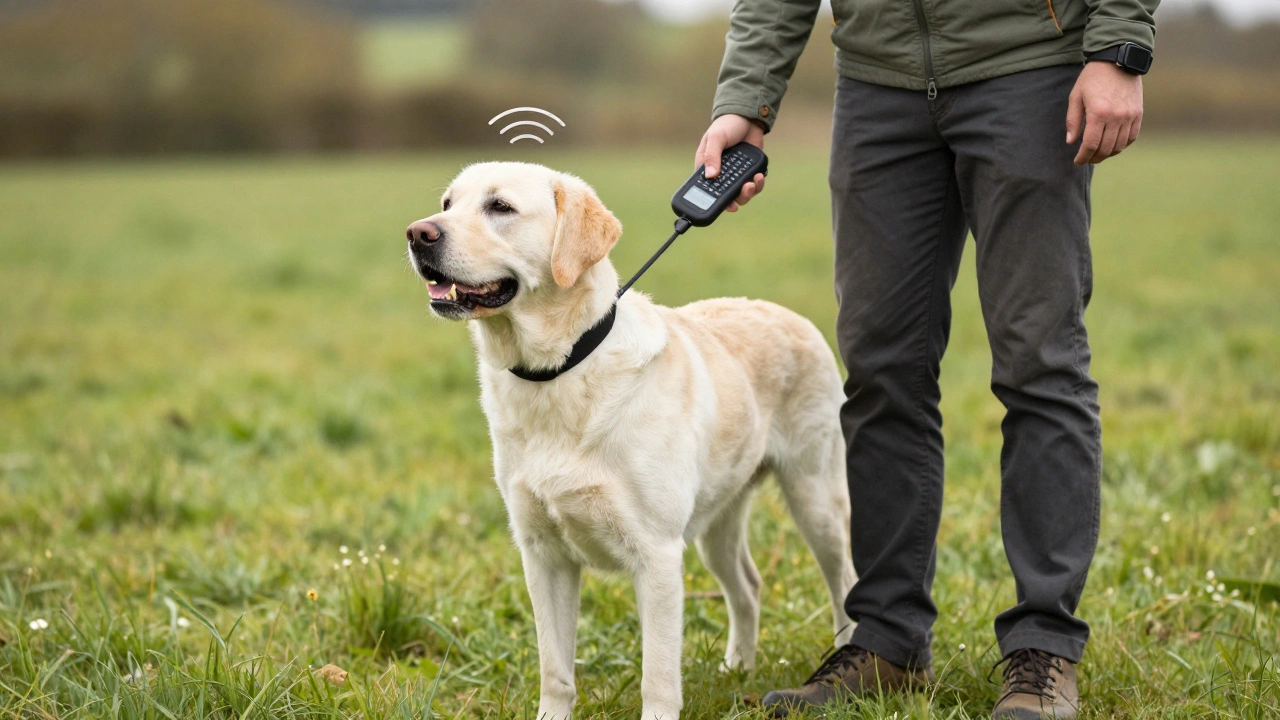
Most people picture a painful electric shock when they hear "e-collar." That is the outdated model. Modern units, like those from brands such as Dogtra or SportDOG, offer multiple modes. The lowest setting often feels like a gentle buzz or a tickle on the skin. Higher settings can deliver a static correction, which mimics the sensation of a flea biting or a sharp pinch.
The key distinction lies in the intent. A trainer uses the device not to punish, but to interrupt behavior or gain attention when verbal cues are ineffective due to distance or distraction. Think of it less like a whip and more like a very firm tap on the shoulder from across a crowded room.
The Problem of Distance and Distraction
Dogs live in a world driven by scent and impulse. If your dog is twenty meters away, chasing a squirrel, shouting "come" rarely works. Your voice carries, but it lacks urgency compared to the thrill of the chase. This is where the concept of "proofing" comes in. Proofing means ensuring a command works everywhere, not just in the quiet kitchen.
In urban environments like Bristol, distractions are constant. Traffic noise, other dogs, and food smells compete for your dog's attention. Traditional recall training relies on treats and praise. But what if the reward isn't available? What if the dog is off-leash in a field and sees a deer? At that moment, a treat pouch is useless. An e-collar provides a consistent signal that cuts through the noise. It tells the dog, "Look at me now," allowing the trainer to redirect focus back to the handler.
Safety in High-Risk Scenarios
For working dogs, the stakes are higher. Police K9 units, search-and-rescue teams, and livestock guardians operate in dangerous environments. A hesitation can mean injury or death. In these fields, reliability is non-negotiable.
- Police and Military: Dogs must respond instantly to commands amidst gunfire and chaos. E-collars provide immediate feedback that ensures compliance.
- Livestock Protection: Livestock Guardian Dogs (LGDs) like Great Pyrenees roam large areas. They need reminders to stay within boundaries without physical tethers.
- Hunting Retrievers: Field trials require precise directional control over long distances. A subtle vibration can tell a Labrador to turn left or right without breaking stride.
In these scenarios, the e-collar is a safety tool. It prevents dogs from running into traffic, approaching aggressive animals, or ingesting toxic substances. The ability to correct behavior remotely saves lives.
Professional Standards vs. Amateur Misuse
This is the crux of the controversy. Most negative experiences with e-collars come from amateur owners who buy cheap devices online and misuse them. They might leave the collar on all day, set the stimulation too high, or use it out of frustration rather than as part of a structured plan. This creates fear, anxiety, and aggression.
Professional trainers follow strict protocols. They start at the lowest possible setting-often just a beep or vibration. They pair the stimulus with a desired behavior and a reward. Over time, the dog learns that the buzz means "pay attention," not "I am in trouble." This process is called classical conditioning. The goal is always to fade out the electronic cue and replace it with verbal or hand signals.
Certified organizations, such as the Association of Pet Dog Trainers (APDT), have mixed views. Some members advocate for force-free methods exclusively, while others acknowledge that e-collars, when used ethically, are effective tools. The difference lies in education. A professional understands canine body language, timing, and threshold management. An amateur does not.
Alternatives and Their Limitations
If e-collars are controversial, why not just use alternatives? Positive reinforcement training using treats, clickers, and toys is widely recommended and highly effective for many behaviors. However, it has limitations.
| Method | Best For | Limitations | Distance Range |
|---|---|---|---|
| Positive Reinforcement | Basic obedience, puppies, fearful dogs | Requires high-value rewards; less effective in high-distraction environments | Short (visual range) |
| Voice Commands | Close-range communication | Ineffective against strong drives (prey drive, fear) | Medium (hearing range) |
| E-Collar (Static/Vibe) | Recall proofing, boundary training, high-drive sports | Risk of misuse; requires skilled handler; potential for fear if timed poorly | Long (up to 1-2 miles) |
| Head Halters/Harnesses | Leash walking, pulling issues | Physical contact required; no remote capability | Zero (physical tether) |
For example, if a dog has a high prey drive, no amount of chicken treats will stop it from chasing a rabbit once the chase sequence begins. The adrenaline overrides the desire for food. In this case, a brief, low-level static correction can break the trance, allowing the trainer to redirect the dog. Without that interruption, the dog may bolt into danger.
Legal and Ethical Considerations in the UK
The landscape for e-collars is changing. As of recent years, several countries, including parts of Europe, have banned the sale or use of shock collars. In the UK, there is ongoing debate about legislation. While not currently banned nationwide, public perception is shifting strongly against aversive tools.
Many reputable trainers now prefer vibration-only collars or citronella spray collars as safer alternatives. These provide sensory feedback without the risk of pain. However, even vibration can be startling if introduced incorrectly. The ethical question remains: does the benefit outweigh the potential risk? For professionals, the answer depends on the individual dog and situation. For the average pet owner, most experts agree that the risks usually outweigh the benefits.
How to Spot a Responsible Trainer
If you are considering hiring a trainer who uses e-collars, ask questions. Look for transparency. A responsible trainer will:
- Explain exactly how and when they will use the device.
- Show you the settings before starting.
- Prioritize positive reinforcement first.
- Use the e-collar only as a last resort for specific issues.
- Be willing to demonstrate the effect on themselves or a dummy.
Avoid trainers who refuse to discuss their methods, hide the remote, or claim that "pain is necessary" for learning. True expertise lies in clarity, compassion, and consistency.
Conclusion: Tool or Crutch?
E-collars remain in the toolkit of many professional dog trainers because they solve a specific problem: communication at a distance under high pressure. They are not a magic wand, nor are they inherently evil. Like any powerful tool, their impact depends entirely on the hands that wield them. For the average dog owner, investing in patience, positive reinforcement, and professional guidance is far safer and more rewarding. But for those working with high-drive dogs in demanding roles, the e-collar offers a level of precision that few other methods can match.
Are e-collars illegal in the UK?
As of 2026, e-collars are not banned nationwide in the UK, though some local authorities and retailers have imposed restrictions. Legislation is actively debated, so check current laws in your specific region.
Do e-collars cause pain?
Modern e-collars offer multiple modes. Vibration and tone modes do not cause pain. Static correction modes can cause discomfort ranging from a mild tingle to a sharp sting, depending on the setting. Properly trained handlers use the lowest effective level to minimize discomfort.
Can I use an e-collar on my puppy?
Most professionals advise against using e-collars on puppies under six months old. Puppies are still developing physically and emotionally. Positive reinforcement is more effective and safer for young dogs.
What is the difference between a shock collar and an e-collar?
The terms are often used interchangeably, but technically, an e-collar (electronic collar) includes various stimuli types like vibration, sound, and light. "Shock collar" specifically refers to devices that deliver static electricity. Many modern e-collars rarely use static correction.
Will an e-collar make my dog aggressive?
Misuse of e-collars can lead to fear-based aggression. If a dog associates the stimulus with pain or confusion rather than clear communication, it may react defensively. Proper training pairs the stimulus with positive outcomes to prevent this.