Puppy Night Sleep Estimator
Realistic Expectations
Average Sleep Block:
Estimated Potty Breaks:
*Based on general veterinary guidelines. Individual puppies vary.
Suggested Nighttime Routine
💡 Pro Tip
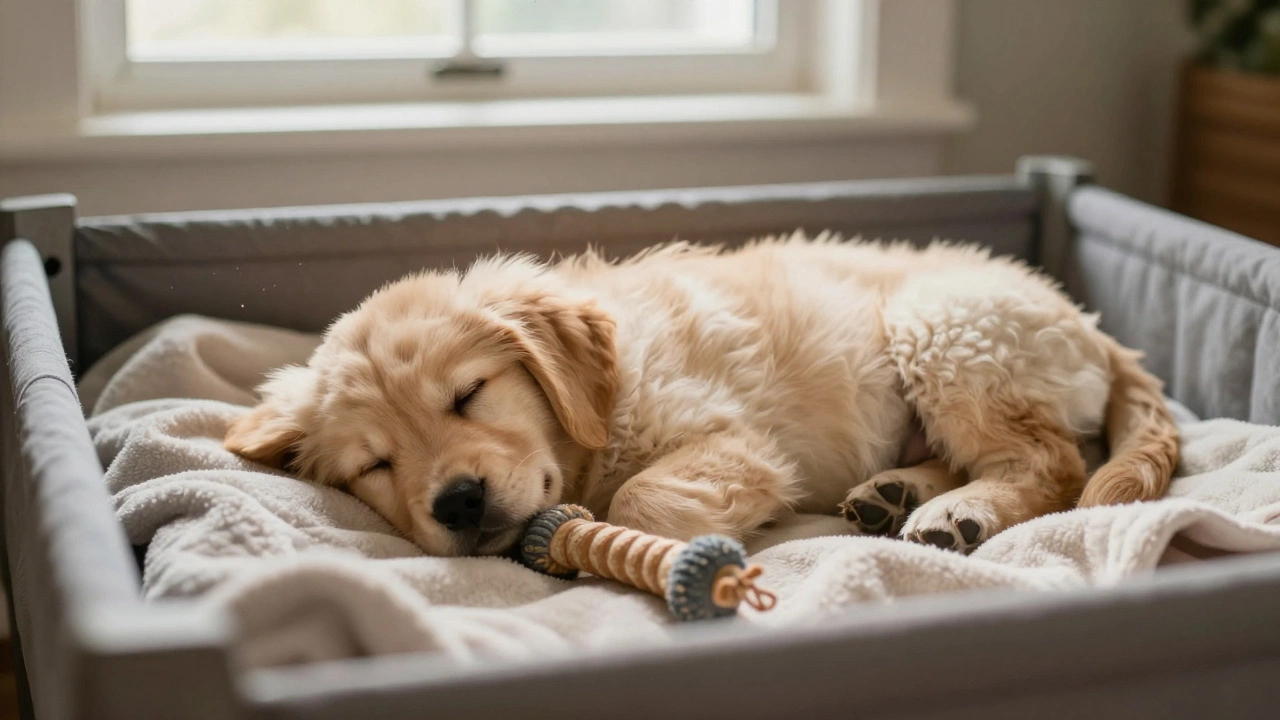
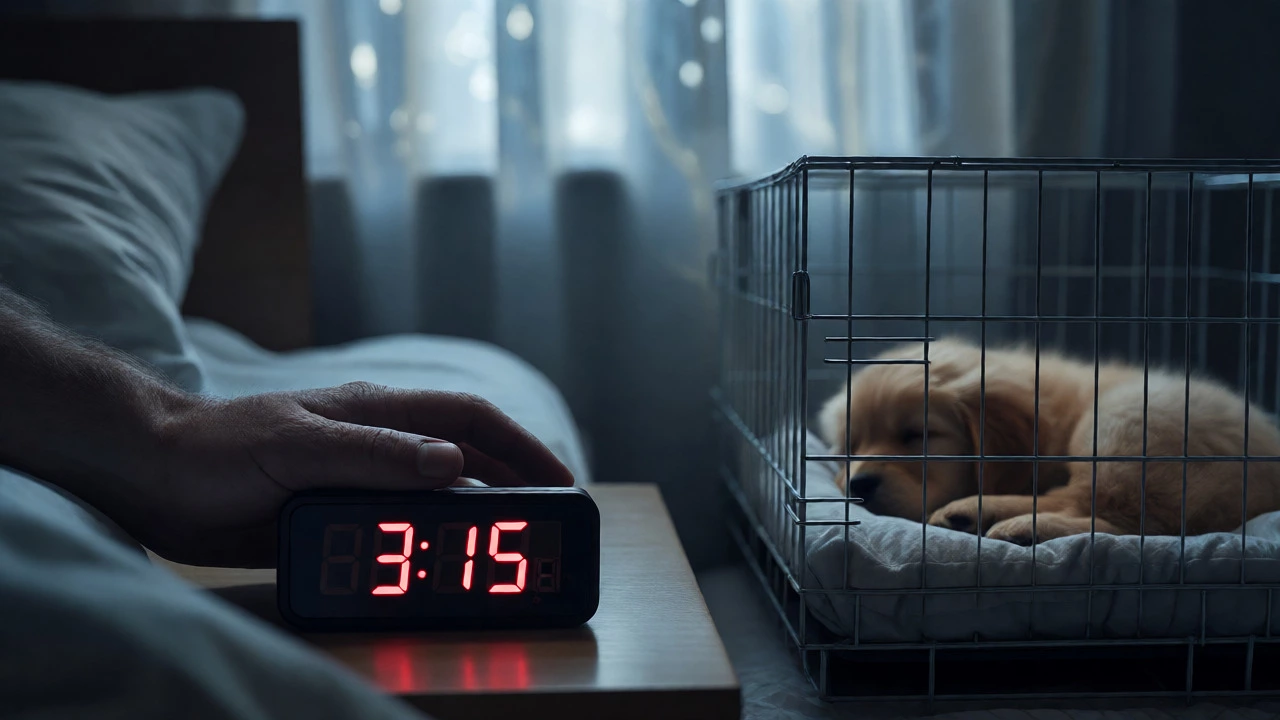
You just brought home your fluffy new best friend. It’s adorable, it smells like milk and potential, and you are absolutely exhausted before the first week is even over. You’re lying in bed at 3 AM, staring at the ceiling, wondering if this little creature has a biological clock that runs on chaos rather than circadian rhythms. The big question keeping you awake: can an 8 week old puppy sleep through the night? The short, honest answer is no. But don’t panic. This isn’t a failure of your parenting skills; it’s a matter of biology.
At eight weeks, a puppy is essentially a toddler with fur. Their bladder control is still developing, their emotional security is tied to proximity, and their energy cycles are erratic. While some lucky breeds might stretch out for four or five hours, most will need a midnight trip outside. Understanding why they wake up-and how to manage those nights-is the key to reclaiming your own sleep sooner rather than later.
The Biological Reality of an 8-Week-Old Bladder
To understand why your puppy wakes up, you have to look inside them. At eight weeks, a puppy’s bladder is tiny. A general rule of thumb used by veterinarians and experienced breeders is that a puppy can hold their bladder for one hour per month of age. So, an eight-week-old (two months) puppy can physically hold it for about two hours while awake. However, during sleep, this capacity drops significantly because their bodies are processing food and water intake from the day.
Bladder Control is not fully developed until around 16 to 20 weeks of age. Before this milestone, waking up to pee is a physiological necessity, not a behavioral choice. If you try to force an 8-week-old puppy to go six or seven hours without a break, you risk accidents and stress. Their kidneys are working hard to filter out waste, especially if they’ve had dinner and a drink of water in the evening.
Think of it this way: would you expect a human infant to sleep through the night without feeding? Probably not. For puppies, the combination of hunger, thirst, and bladder pressure creates a perfect storm for nighttime awakenings. Accepting this reality helps you approach the situation with patience rather than frustration.
Crate Training: Your Secret Weapon for Nighttime Sleep
If you haven’t started crate training, now is the time. Dogs are den animals by nature. In the wild, they avoid soiling their sleeping area. A properly sized crate taps into this instinct. If the crate is too big, the puppy might pee in one corner and sleep in the other, defeating the purpose. If it’s the right size-just enough room to stand up, turn around, and lie down-they will likely hold it longer simply because they don’t want to wet their bed.
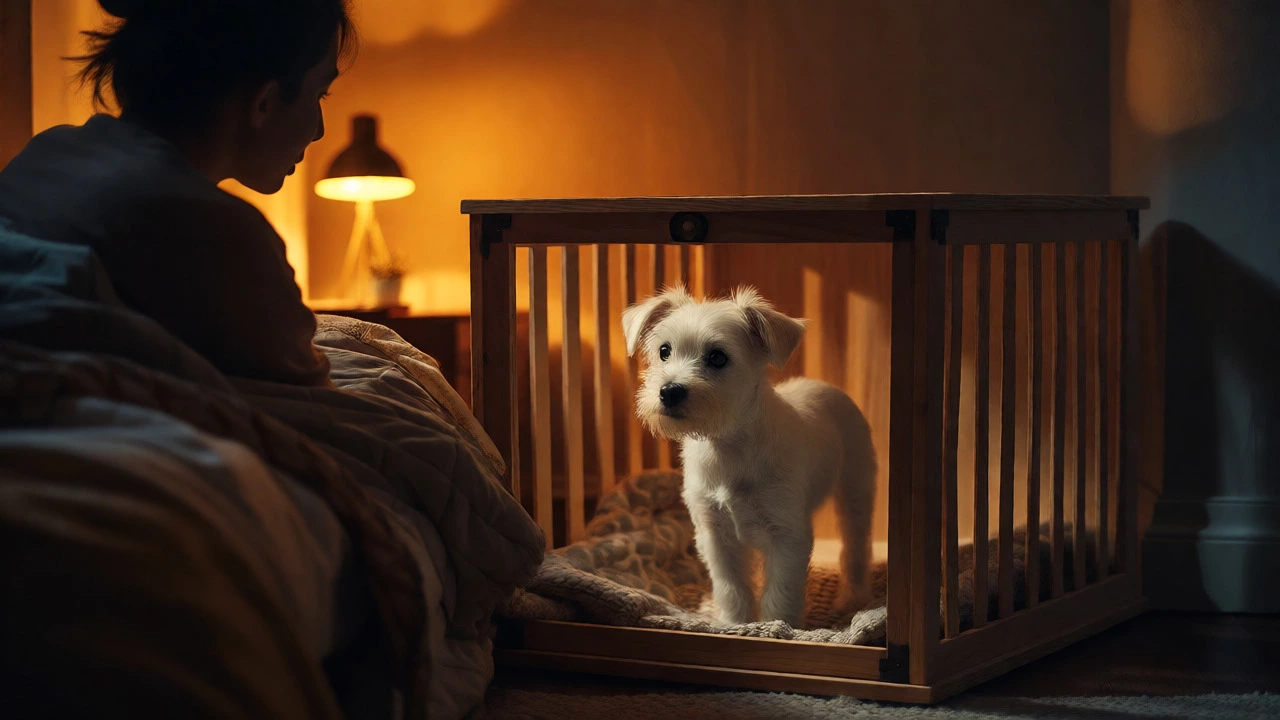
Placing the crate in your bedroom is crucial for an 8-week-old puppy. They are separated from their mother and littermates for the first time. The silence and darkness of a separate room can be terrifying. Hearing your breathing or seeing your silhouette provides comfort and reduces crying. Crying often leads to more urination due to stress, creating a vicious cycle. By keeping them close, you lower their anxiety, which in turn helps them settle back to sleep faster after a potty break.
Managing Food and Water Intake
What happens during the day dictates what happens at night. Many owners make the mistake of leaving water bowls full all day and night. While hydration is vital, free-feeding water late in the evening guarantees a midnight accident. Try removing the water bowl two to three hours before bedtime. Offer a final drink then, take them out for a thorough potty break, and put them to bed.
Feeding schedules matter just as much. Puppies digest food quickly. If you feed them a large meal at 8 PM, they will likely need to eliminate between 10 PM and midnight. Aim to finish their last meal by 5 PM or 6 PM. This gives their digestive system time to process the food before they enter their longest sleep block. Consistency here trains their internal clock to anticipate when digestion peaks.
The Midnight Routine: What to Do When They Wake Up
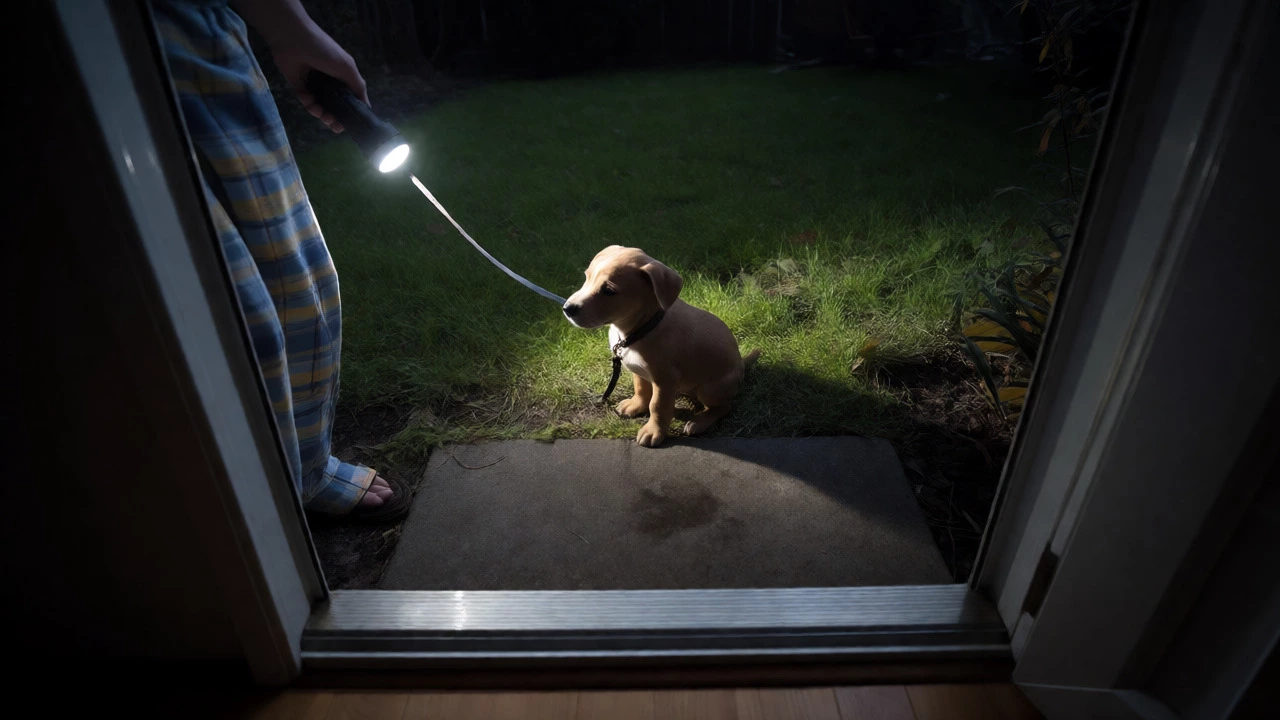
So, it’s 2 AM. Your puppy whines. What do you do? First, stay calm. Excitement or frustration can wake them up fully, making it harder to get them back to sleep. Grab a leash and head straight outside. Do not play. Do not talk much. Keep the lights dim or off. Use a boring, monotone voice if you must speak. This signals to the puppy that this is a business trip, not a social event.
Once they have finished eliminating, give immediate praise but keep it low-key. Then, take them directly back to the crate. Do not let them wander around the house exploring. If you allow exploration, they will associate being awake at night with fun, and they’ll start waking up earlier and earlier hoping for adventure. The goal is to make nighttime boring and daytime exciting.
| Puppy Age | Avg. Sleep Duration (Night) | Potty Breaks Needed | Primary Challenge |
|---|---|---|---|
| 8 Weeks | 2-4 Hours | 1-2 Times | Small bladder, separation anxiety |
| 12 Weeks | 4-5 Hours | 1 Time | Teething discomfort, energy spikes |
| 16 Weeks | 5-6 Hours | 0-1 Time | Testing boundaries, independence |
| 20+ Weeks | 7-8 Hours | Rarely | Maintenance of routine |
Addressing Separation Anxiety and Whining
Sometimes, a puppy wakes up not because they need to pee, but because they are lonely. Eight weeks is a tender age. They were recently part of a warm, noisy pile of siblings. Silence can feel dangerous to them. If your puppy cries persistently and doesn’t seem interested in going outside once you open the crate door, it’s likely anxiety.
In these cases, ignoring the cry completely can sometimes escalate the panic. Instead, offer reassurance without rewarding the behavior with play. Place your hand through the crate bars, speak softly, and wait. Some owners find that covering the crate partially with a blanket creates a darker, more den-like atmosphere that soothes the puppy. Others use a ticking clock wrapped in a towel to mimic a heartbeat. Experiment to see what calms your specific dog.
Tips to Extend Sleep Blocks Gradually
You won’t jump from two-hour sleeps to eight-hour sleeps overnight. It’s a gradual progression. As your puppy grows, their bladder capacity increases. By 12 weeks, many puppies can handle four to five hours. To help this transition, ensure they get plenty of physical and mental exercise during the day. A tired puppy is a sleeping puppy. But remember, mental stimulation tires them out faster than just running. Puzzle toys, scent games, and basic obedience training burn significant energy.
Also, watch for signs of overtiredness. Paradoxically, an overtired puppy becomes hyperactive and resistant to sleep. If you notice frantic zoomies in the evening, it might mean you missed their sleep window earlier in the day. Establishing a strict nap schedule during daylight hours helps regulate their nighttime rest. Just like human toddlers, puppies thrive on routine. Predictability lowers stress, and lower stress leads to deeper, longer sleep.
When to Consult Your Vet
While frequent waking is normal, certain signs warrant a check-up. If your puppy is drinking excessive amounts of water, losing weight despite eating well, or having diarrhea, consult your veterinarian. These could be signs of parasites, diabetes, or other health issues that interfere with sleep and bladder control. Additionally, if your puppy seems in pain when moving or settling down, they might have growing pains or an injury that makes staying still difficult.
Remember, every puppy is different. Breeds like Basenjis or Shiba Inus might mature slightly differently than Golden Retrievers. Don’t compare your progress to Instagram stories where everyone else’s puppy seems to be sleeping through the night from day one. Often, those photos are taken at 4 AM after a successful break, not necessarily indicating a full night’s rest. Focus on your puppy’s individual trend line. Are the intervals between breaks getting longer? That’s success.
How long should I wait before taking my 8-week-old puppy out at night?
Generally, you should plan to take them out every 2 to 3 hours during the night. Set an alarm if necessary. Waiting too long often results in accidents inside the crate, which sets back potty training. Once they are consistently dry for 4 hours, you can slowly extend the interval.
Should I leave water in the crate at night?
For an 8-week-old puppy, it is usually best to remove water 2-3 hours before bedtime to reduce the likelihood of needing to pee immediately. Ensure they are well-hydrated during the day. If the weather is very hot or they are on medication, consult your vet about leaving a small amount of water available.
My puppy cries when I leave the room. Should I pick him up?
If he is crying due to anxiety, picking him up might reinforce the idea that crying gets attention. Instead, try placing the crate next to your bed so he feels secure. Speak calmly to reassure him without opening the crate. If he settles, great. If he needs to pee, take him out quietly. Avoid playing or cuddling excessively during these night interactions.
Does breed size affect how long a puppy sleeps at night?
Yes, generally smaller breeds have smaller bladders and may need more frequent breaks initially compared to larger breeds of the same age. However, temperament also plays a huge role. High-energy breeds might resist sleep more than laid-back breeds regardless of size. Monitor your specific dog’s habits rather than relying solely on breed averages.
Is it okay to wake my puppy up to pee?
Yes, especially in the early stages. Proactively waking your puppy for a scheduled potty break prevents accidents and reinforces good habits. Over time, as their bladder strengthens, they will begin to wake themselves up naturally when they need to go. Waking them gently avoids the stress of waking up to a wet crate.