
Dog TV Reaction Checker
Instructions: Select the option that best describes your dog's current behavior while the TV is on.
You’re curled up on the couch, ready to binge-watch your favorite series. Your dog trots over, sniffs your knee, and then flops down right next to you. You glance at the screen-bright colors, fast cuts, loud explosions-and wonder: is my dog actually enjoying this show, or are they just tolerating it because I’m there?
The short answer is complicated. Most dogs don’t “watch” TV in the way humans do. They don’t follow the plot of a drama or laugh at a sitcom. However, that doesn’t mean the television has no impact on them. In fact, for many dogs, the TV can be a source of significant stress, confusion, or even excitement. Understanding how your dog perceives the screen helps you create a better environment for their rest, especially when it comes to choosing the right dog bed setup for relaxation.
How Dogs See the Television Screen
To understand if your dog likes the TV, you first have to look through their eyes. Human vision is built for detail and color. We see a spectrum of reds, greens, and blues, and we process motion quickly enough to enjoy high-definition video at 60 frames per second (fps).
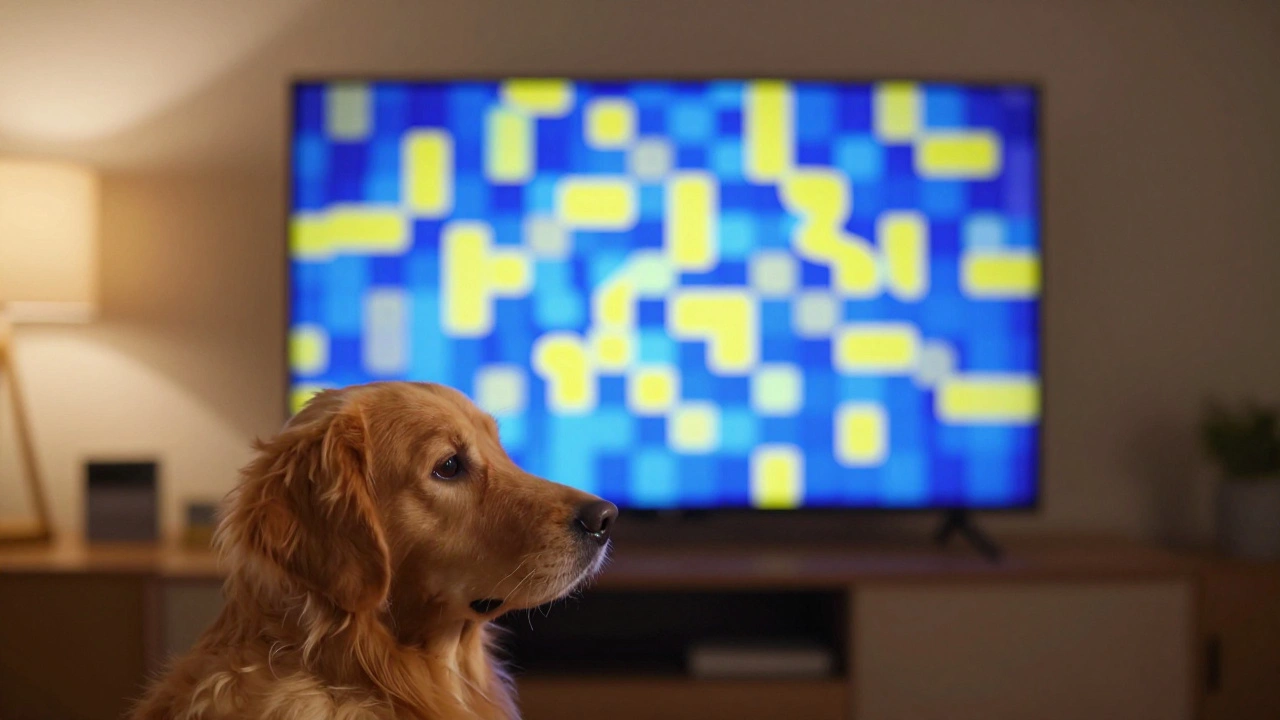
Dogs see the world differently. They are dichromatic, meaning they primarily see shades of blue and yellow. The vibrant reds and oranges that make a sunset or a sports jersey pop on your screen likely look like dull grays or muddy browns to them. But the bigger issue isn't color-it’s flicker.
A dog’s visual system processes motion much faster than a human’s. While a human eye blends images together smoothly at around 60 fps, a dog needs closer to 70-80 fps to perceive smooth motion. Older CRT televisions often ran at lower refresh rates, which meant dogs saw a strobing, flickering mess rather than a coherent image. Even with modern LED and OLED screens, which typically run at 120Hz or higher, the perception varies by breed. A Border Collie, bred for chasing fast-moving sheep, might still perceive slight jitters in the footage that a Golden Retriever misses entirely.
This visual disconnect means that what looks like a beautiful landscape documentary to you might look like a confusing, vibrating wall of light to your dog. If your dog squints, turns away, or seems distracted during bright scenes, they aren’t being rude; their brain is struggling to decode the visual data.
The Sound Factor: Why Barking Happens
If vision is confusing, sound is where the real reaction happens. Dogs have hearing that is significantly more sensitive than ours. They can detect frequencies up to 65,000 Hz, whereas humans top out around 20,000 Hz. This superpower makes them excellent hunters but terrible candidates for casual movie nights involving car chases or thunderstorms.
When a dog barks at the TV, they usually aren’t trying to join the conversation. They are reacting to instinctual triggers:
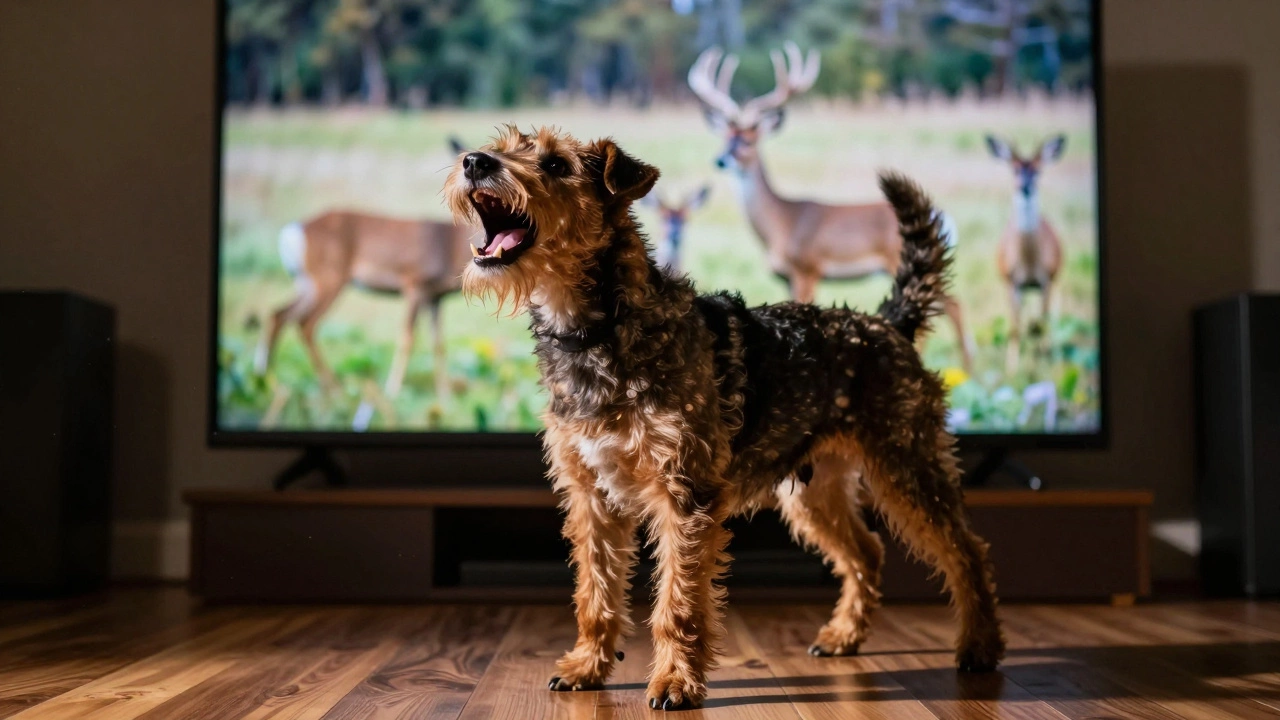
- Predatory Drift: Sudden movements of animals on screen-deer running, birds flying-can trigger a chase instinct. The dog sees prey, hears the rustling, and reacts physically.
- Territorial Defense: Loud bangs, sirens, or aggressive barking from other dogs on TV can signal an intruder. Your dog may bark back to warn the "threat" to stay away from their territory.
- Sensitivity to High Pitch: Certain sound effects, like glass breaking or cartoonish squeaks, can be physically painful or irritating to a dog’s ears, causing them to whine or cover their head.
If your dog consistently barks at specific shows, it’s a clear sign they do not like the TV. They are stressed or overstimulated. Ignoring this behavior doesn’t help; it leaves them in a state of alertness when they should be resting.
Does TV Help with Separation Anxiety?
Many owners leave the TV on when they leave for work, hoping the background noise will soothe their lonely pet. Does it work? Sometimes, but it’s a double-edged sword.
Background noise can mask outside sounds that trigger anxiety, like doorbells, neighbors arguing, or traffic. In this sense, a muted talk show or a nature documentary provides a consistent auditory blanket. However, the sudden spike of a commercial or an action scene can startle a dog who was finally beginning to relax. This "startle response" keeps their cortisol levels elevated, preventing true rest.
Research into canine separation anxiety suggests that predictable, low-stimulation environments are best. A white noise machine or a fan often works better than a TV because the sound is constant and lacks sharp spikes. If you must use the TV, choose programs with minimal dialogue and no sudden loud noises. Classical music channels or dedicated "dog TV" streams (which feature slow-moving visuals and calm sounds) are designed specifically to lower heart rates in pets.
Creating the Perfect Resting Spot Away from the Screen
If your dog is sensitive to the TV, or if you simply want to ensure they get quality sleep while you watch, the placement of their sleeping area matters. This is where investing in a proper orthopedic dog bed with memory foam support and noise-dampening materials becomes crucial.
A good dog bed acts as a buffer against environmental stressors. Here is how to optimize your living space for both your viewing pleasure and your dog’s comfort:
- Distance is Key: Place the dog bed in a spot where the TV is not directly facing them. If the screen is behind them or to the side, the visual flicker is less intrusive. Ideally, create a "den" area in a corner opposite the entertainment center.
- Elevated Platforms: For dogs who like to survey their room, an elevated cot-style bed allows them to see the room without being directly in the line of sight of the screen. It gives them control over their visual field.
- Sound Dampening: Choose beds with thick, plush covers. Materials like faux fur or heavy cotton absorb some of the ambient sound, making the immediate vicinity of the bed quieter than the rest of the room.
- Familiar Scents: Include a blanket with your scent or their own familiar smell in the bed. This olfactory comfort signals safety, helping them ignore the visual chaos of the TV.
Think of the dog bed as a sanctuary. Just as you might close your bedroom door to escape the noise of the living room, your dog needs a designated zone where the sensory input is minimized. A high-quality bed provides physical comfort, but its strategic placement provides psychological relief.
Signs Your Dog Loves vs. Hates the TV
Every dog is different. Some breeds, like Greyhounds, are naturally laid-back and may nap peacefully through a horror movie. Others, like Terriers, are wired to react to every movement. Pay attention to these body language cues to determine your dog’s preference:
| Behavior | Likes/Neutral | Dislikes/Stressed |
|---|---|---|
| Eye Contact | Gazes calmly at screen, then looks away | Stares intensely, pupils dilated, unable to look away |
| Vocalization | Silent or occasional soft sigh | Barking, whining, growling at the screen |
| Body Posture | Relaxed muscles, lying down, tail still | Pacing, standing rigid, tail tucked or wagging stiffly |
| Interaction | Ignores screen, focuses on owner | Trying to touch the screen, jumping up |
If you notice signs of stress, don’t force the issue. Turn off the TV or move your dog to a different room. Over time, you can try desensitization training by playing very low-volume clips and rewarding calm behavior, but never punish them for reacting. Their instincts are strong, and frustration won’t help.

Best Types of Content for Dogs
If your dog seems curious about the TV, you can curate content that appeals to their senses without overwhelming them. Avoid reality TV, news broadcasts, and action movies. Instead, consider:
- Nature Documentaries: Slow-paced footage of forests, oceans, or meadows. The colors are natural (blues and greens), and the sounds are ambient wind or water.
- Classical Music Channels: Visuals are often static or slowly changing slideshows. The audio is structured and predictable, lacking jarring spikes.
- Dedicated Pet Channels: Services like PupTV or CatTV offer streams designed with veterinary behaviorists. These include segments for socializing (seeing other friendly dogs), calming (slow visuals), and destruction (watching things get broken, which oddly satisfies some dogs’ curiosity).
Even with these options, monitor your dog’s reaction. If they lie down and settle, great. If they remain tense, turn it off. The goal is enrichment, not stimulation overload.
Final Thoughts on Screen Time and Comfort
So, do dogs like it when the TV is on? Most don’t care about the content, and many find the sensory experience annoying or stressful. However, the presence of the TV shouldn’t dictate your dog’s well-being. By understanding their visual and auditory limitations, you can manage the environment effectively.
The most important factor isn’t the volume knob; it’s the comfort of your dog’s resting place. Ensure they have a sturdy, supportive dog bed located in a quiet corner of the room. This allows them to disengage from the screen and recharge. When you provide a safe, comfortable haven, your dog learns that the TV is just background noise-not a threat, not a toy, and certainly not something they need to engage with. You get your entertainment, and they get their peace. Everyone wins.
Why does my dog bark at the TV?
Dogs bark at the TV due to predatory instincts triggered by moving animals, territorial responses to loud noises or other dogs, or sensitivity to high-pitched sounds. It is a reaction to stimuli that their brain interprets as real threats or prey.
Can watching TV cause anxiety in dogs?
Yes, especially if the content includes sudden loud noises, fast movements, or flashing lights. This can keep a dog in a state of heightened alertness, increasing cortisol levels and preventing relaxation. Signs include pacing, panting, and inability to settle.
Is it okay to leave the TV on for my dog when I'm gone?
It can help mask outside noises, but it’s not always the best solution. White noise machines or fans are often better because they provide consistent sound without startling spikes. If using the TV, choose calm, low-volume content like nature documentaries.
Do dogs see TV screens clearly?
Not exactly. Dogs see fewer colors (mostly blues and yellows) and require higher frame rates to see smooth motion. Older TVs appeared flickery to them, while modern HD/4K TVs are smoother but may still appear disjointed depending on the breed's visual processing speed.
Where should I put my dog's bed if the TV is on?
Place the bed in a corner opposite the TV or in a separate room if possible. An elevated bed or one with thick, sound-absorbing materials can help block visual and auditory distractions, creating a safer, calmer resting zone.