
Dog TV Stress Checker
Assess Your Situation

Ready to Check
Answer the questions to see if the TV is helping or hurting your dog's relaxation.
It happens to almost every dog owner at some point. You leave the house for work or a quick errand, but you worry about your pup being alone in a quiet house. So, you grab the remote and turn on the television. Maybe it’s the news, maybe it’s a nature documentary, or perhaps just background noise from a sitcom. As you walk out the door, you hope that the flickering screen will keep them company. But here is the burning question: does your dog actually enjoy watching TV, or are they just confused by the glowing box?
The short answer is complicated. Dogs don't watch TV the way humans do. Their visual system works differently, their hearing is more acute, and their relationship with 'entertainment' is rooted in instinct rather than narrative understanding. Understanding this helps you decide if leaving the TV on is a helpful distraction or just wasted energy. More importantly, it helps you figure out how to truly comfort your dog when you're gone.
How Dogs See the World
To understand why dogs react the way they do to screens, we first need to look at their eyes. Human vision is tuned for high resolution and color differentiation. We see a world of vibrant reds, greens, and blues with sharp details. Dogs, however, have vision optimized for motion detection and low-light conditions.
Dogs are dichromatic, meaning they primarily see shades of blue and yellow. Reds and greens often appear as muddy browns or grays to them. This isn't a defect; it's an evolutionary adaptation for hunting prey in dim light. When you watch a modern HD TV, your brain processes millions of pixels per second to create a smooth image. A dog's brain processes images much faster than ours, but older televisions operated at lower refresh rates (typically 60Hz). To a dog, an old CRT or early LCD TV might look like a series of flashing still images, which can be disorienting or even annoying.
Modern 4K TVs with higher refresh rates (120Hz or more) are much easier for dogs to perceive as continuous motion. If your dog seems interested in a new smart TV but ignored the old tube set, it’s likely because the newer technology finally matches their visual processing speed. They can now distinguish movement on the screen rather than seeing a strobe light effect.
What Do Dogs Actually Watch?
If you've ever noticed your dog staring intently at the screen, you might wonder what they are looking at. They aren't following the plot of a drama series. Instead, they are reacting to specific stimuli that trigger their instincts.
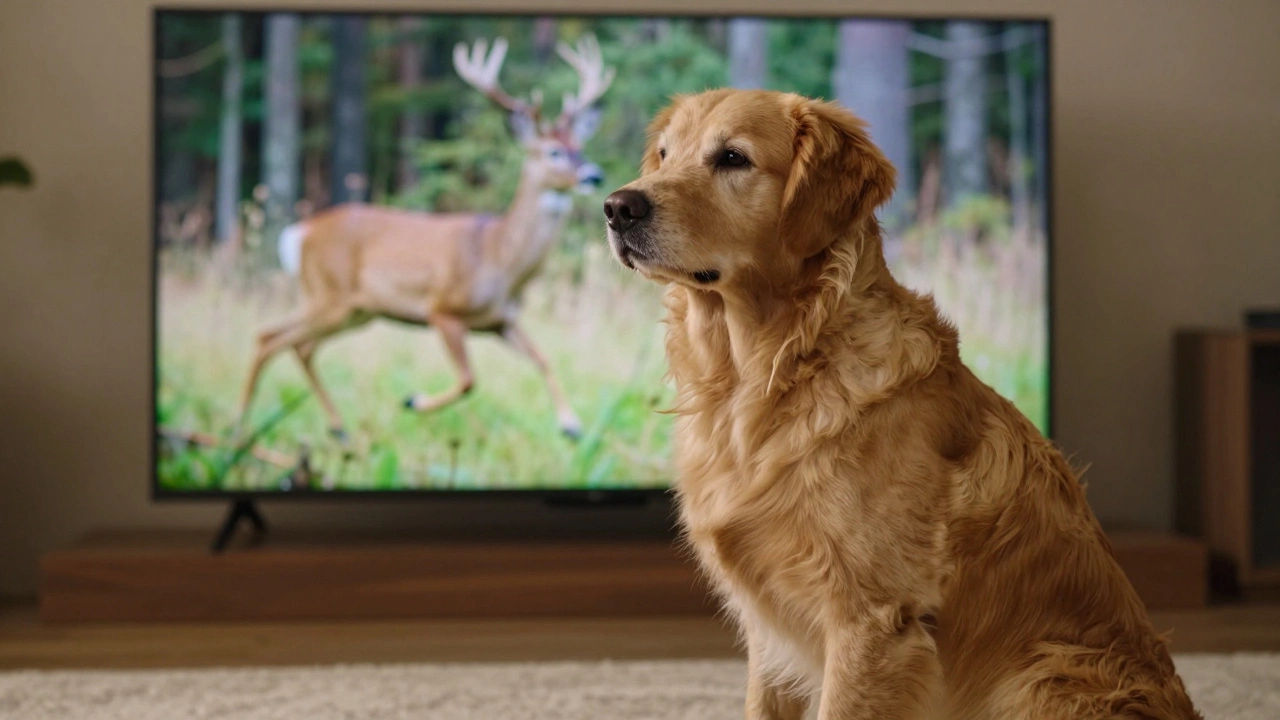
- Movement: Fast-moving objects catch their eye. A running deer in a nature documentary or a car speeding down a street in a movie will hold their attention longer than a talking head interview.
- Sounds: Dogs hear frequencies far beyond human range. High-pitched barks, whines, or even the subtle rustle of leaves on a TV show can make them perk up, tilt their heads, or bark back.
- Familiar Sights: Some dogs recognize other animals on screen. If a cat walks across the screen, a dog might growl. If another dog appears, they might wag their tail or try to interact with the glass.
This reaction is purely instinctual. They don't know it's a recording. To them, the image and sound are real enough to trigger a response, but not real enough to act upon physically. This confusion can sometimes lead to frustration, especially if the dog tries to engage and gets no feedback from the 'animal' on the screen.
The Myth of Background Noise
Many owners leave the TV on thinking it provides companionship. The logic is simple: silence equals loneliness, so noise equals company. While this sounds reasonable, the reality is more nuanced. For some dogs, the steady hum of voices and music can mask outside noises that might cause anxiety, such as thunderstorms, fireworks, or construction work. In these cases, the TV acts as white noise, providing a comforting auditory blanket.
However, for other dogs, the TV is overstimulating. Rapid scene changes, loud commercials, and unpredictable sounds can increase cortisol levels rather than lower them. If your dog paces, pants excessively, or refuses to settle down while the TV is on, the screen is likely causing stress, not relief. Pay close attention to their body language. A relaxed dog lying down with soft eyes is enjoying the ambiance. A dog standing rigidly, ears pinned back, or constantly checking the room is stressed.
Better Alternatives to the Television
If your goal is to keep your dog entertained and calm while you are away, there are more effective tools than a standard television. The market has evolved significantly, recognizing that dogs need specific types of stimulation.
Pet-specific channels are video content designed specifically for canine vision and hearing. Services like YouTube offer "Cat TV" or "Dog TV" streams. These videos use colors dogs can see (blues and yellows), include calming music tuned to reduce heart rate, and feature slow-moving animals that mimic natural environments. Studies have suggested that exposure to certain sounds and visuals can lower stress markers in dogs. While not every dog will sit and watch these, many find them soothing compared to the chaotic nature of human entertainment.
Another excellent option is interactive enrichment. Puzzle toys, treat-dispensing balls, and snuffle mats engage a dog's nose and brain. Sniffing is naturally calming for dogs; it releases dopamine and serotonin. Leaving a frozen Kong toy or a long-lasting chew bone can occupy a dog for hours, providing both mental stimulation and physical satisfaction. This is far more effective than passive screen time because it allows the dog to actively participate in their own entertainment.
The Role of Comfort: Choosing the Right Bed
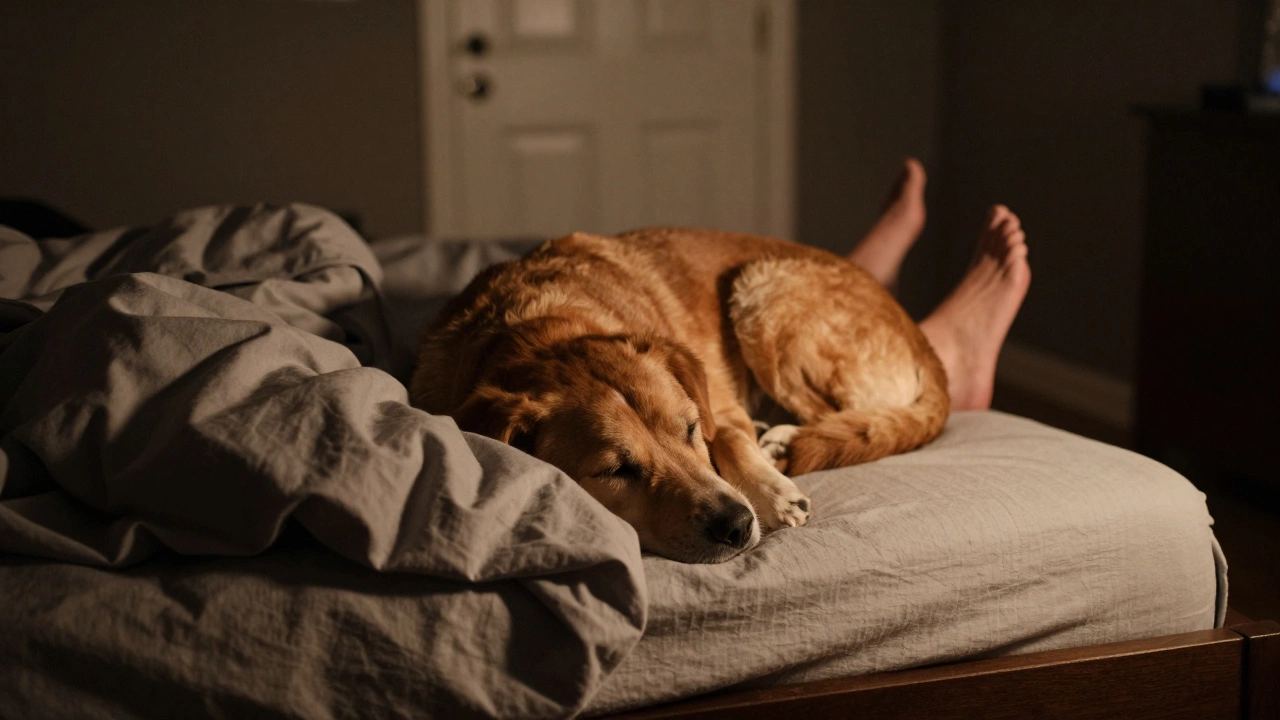
When you leave your dog alone, their environment plays a huge role in their emotional state. Even if the TV is off, a comfortable resting place can make the difference between a anxious dog and a relaxed one. This is where the right dog bed becomes essential.
A good dog bed offers security. Think of it as a den. In the wild, dogs seek enclosed, safe spaces to rest. Orthopedic beds with raised edges provide support for aging joints and a sense of containment. Memory foam beds conform to the body, reducing pressure points and promoting deeper sleep. If your dog is prone to separation anxiety, a cave-style bed or a bolster bed can mimic the feeling of being surrounded, which lowers stress levels.
| Bed Type | Best For | Anxiety Benefit |
|---|---|---|
| Orthopedic Foam | Senior dogs, large breeds | Physical comfort reduces restlessness |
| Bolster/Cushion | Dogs who like to lean | Provides a barrier and sense of security |
| Cave/Tunnel | Nervous dogs, puppies | Mimics a den, blocks visual stimuli |
| Calming Donut | Small to medium dogs | Raised edges allow head resting, self-soothing |
Investing in a high-quality bed is not just about luxury; it's about creating a sanctuary. When your dog associates their bed with safety and relaxation, they are more likely to settle down quickly when left alone. Combine this with a piece of clothing that smells like you, and you create a powerful anchor of comfort that no TV show can replicate.

Signs Your Dog Is Stressed by the TV
Not all dogs react negatively to televisions, but it's crucial to monitor your pet's behavior. Here are clear signs that the TV is doing more harm than good:
- Pacing or Restlessness: If your dog cannot find a comfortable spot to lie down and keeps moving around the room, the environment is too stimulating.
- Vocalization: Barking, whining, or howling at the screen indicates frustration or fear.
- Destructive Behavior: Chewing furniture or scratching doors near the TV suggests high anxiety levels.
- Refusal to Eat: If you leave food out and your dog ignores it while the TV is on, they may be too stressed to eat.
If you notice these behaviors, try turning the TV off. Observe if your dog calms down. If they do, the screen was likely a source of stress. In such cases, switch to softer alternatives like classical music or nature sounds played at a low volume.
Creating a Calm Environment
The goal of leaving anything on-TV, radio, or fan-is to create a consistent, predictable environment. Dogs thrive on routine and predictability. Sudden loud noises or erratic movements break this predictability. If you must use audio-visual aids, choose content that is slow-paced and low-volume. Nature scenes with gentle water sounds or bird songs are often better received than action movies or talk shows.
Additionally, consider the lighting. Bright, flickering lights can be harsh on a dog's sensitive eyes. Dimming the room lights or using soft lamps can make the space feel more inviting and less like a confusing spectacle. The combination of a comfortable bed, familiar scents, and mild, consistent background noise creates the ideal setup for a happy, independent dog.
Is it bad to leave the TV on for my dog all day?
It depends on your dog's temperament. For some, the background noise masks scary outside sounds and provides comfort. For others, the constant motion and changing volumes can be overstimulating and stressful. Monitor your dog's behavior; if they seem relaxed, it's fine. If they pace or bark, turn it off.
Do dogs understand what is happening on TV?
No, dogs do not understand narratives or plots. They react to individual elements like movement, shapes, and sounds. They might recognize a dog or a cat on screen and react instinctively, but they don't comprehend the story or context of the program.
What type of TV content is best for dogs?
Content with slow-moving animals, nature scenes, and calming music is best. Channels specifically designed for pets, such as Dog TV on YouTube, use colors and sounds that appeal to canine senses. Avoid fast-paced action, loud commercials, and programs with sudden loud noises.
Can watching TV help with separation anxiety?
For mild cases, background noise from a TV or radio can help mask silence and reduce feelings of isolation. However, for severe separation anxiety, TV is rarely enough. Professional training, pheromone diffusers, and proper exercise are usually required to manage serious anxiety issues.
Why does my dog bark at the TV?
Dogs bark at the TV because they perceive the images and sounds as real threats or intruders. Since they cannot interact with the 'animals' on the screen, they may become frustrated. It is an instinctual response to protect their territory or communicate with what they believe is another animal.