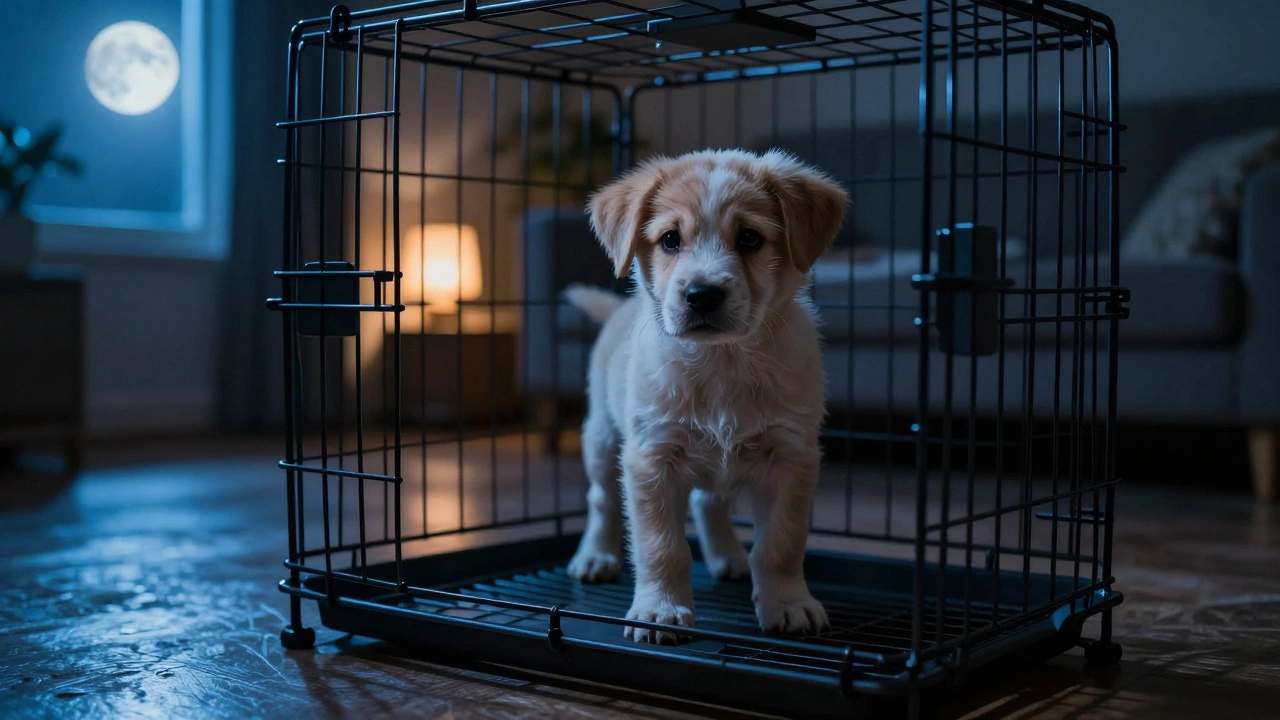
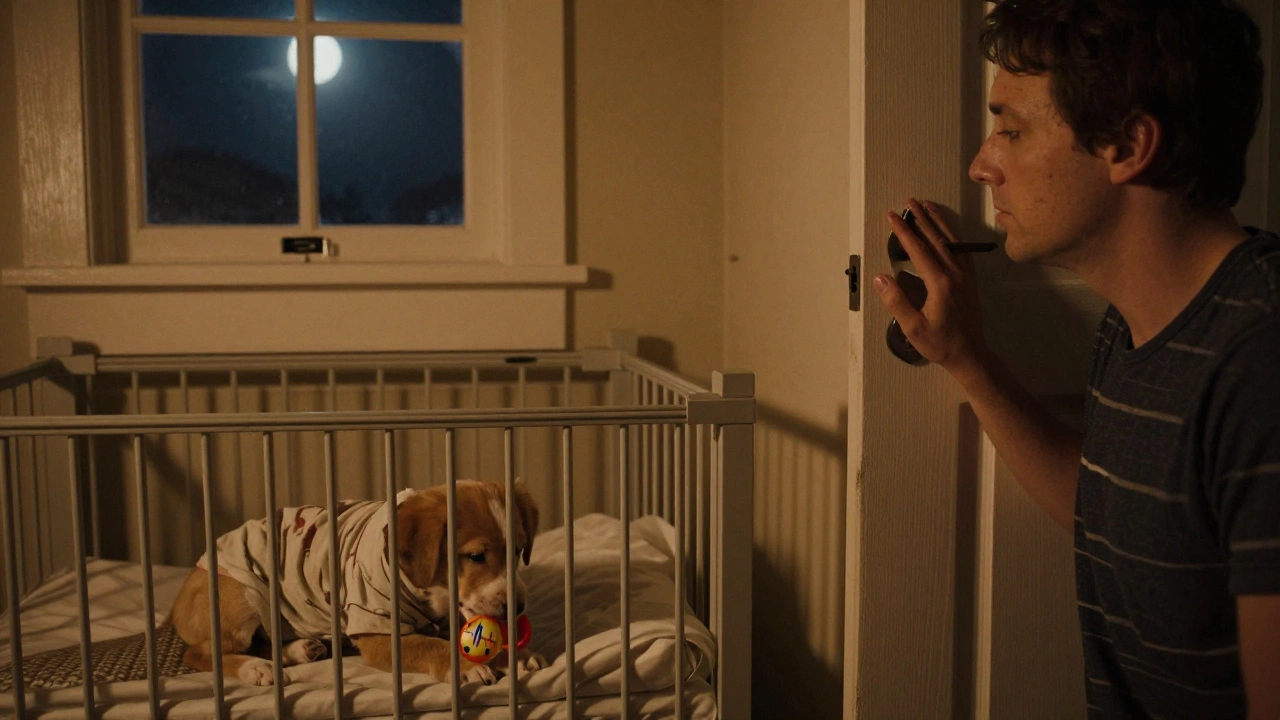
Every new puppy owner hears it: the high-pitched whine, the frantic scratching, the occasional howl that cuts through the quiet of the night. You lie there, heart aching, wondering if you should rush in or let them cry it out. The internet is full of conflicting advice-some say ignore it to teach independence, others say it’s cruel. So what’s the real answer? Is it okay to ignore your puppy crying at night? The truth isn’t black and white. It depends on why they’re crying, how old they are, and what you’re trying to teach them.
Why Puppies Cry at Night
Puppies don’t cry just to annoy you. Their cries are communication. Think of it like a baby screaming in the crib-it’s not manipulation, it’s a survival signal. Here are the most common reasons your puppy is crying after bedtime:- Bladder or bowels: A 10-week-old puppy can’t hold it for more than 3-4 hours. If they’re crying right after being put to bed, they likely need to go out.
- Separation anxiety: Puppies are social animals. Being alone in a crate or room after being with their littermates all day is terrifying.
- Discomfort: Too cold, too hot, rough bedding, or a tight crate can make them restless.
- Fear: New sounds-wind, appliances, distant traffic-can scare them. A puppy’s hearing is sharper than yours.
- Habit: If you’ve responded every time before, they’ve learned crying gets attention.
Missing one of these? You’re guessing. And guessing wrong can make things worse.
What Happens When You Ignore a Crying Puppy
The idea behind "ignoring" is simple: if you don’t respond, they’ll learn crying doesn’t work. It sounds logical, but it’s not that easy. For young puppies, especially under 12 weeks, ignoring can backfire hard.Research from the University of Bristol’s Companion Animal Behaviour Lab (2024) found that puppies under 10 weeks who were left to cry for more than 30 minutes without any human interaction showed elevated cortisol levels-meaning they were in chronic stress. This isn’t just about sleep. Chronic stress in early puppyhood can lead to long-term anxiety, fearfulness, and even digestive issues.
Ignoring a puppy who’s crying because they need to go to the bathroom? That’s not training. That’s neglect. They’ll eventually learn to hold it, but they’ll also learn that their needs don’t matter. That’s not independence-that’s learned helplessness.
On the other hand, if your 6-month-old puppy has been crate-trained and suddenly starts crying at 3 a.m. just because they’re bored? Then yes, ignoring is the right move. But you need to know the difference.
How to Tell If They Need Help or Just Want Attention
You can’t always tell by sound alone. A whine from a puppy who needs to pee sounds different from a whine from one who’s bored. Here’s how to decode it:- Timing: If they cry right after being put down, especially after a meal or water, they likely need to go out.
- Duration: A short whine? Maybe testing. A 10-minute continuous cry? Probably panic.
- Body language: If you peek (without talking or touching), are they pacing? Panting? Shaking? That’s fear. If they’re just tapping the crate with a paw? Maybe just checking if you’re awake.
- History: Did they cry last night? The night before? If it’s new, something changed. Did you switch crates? Move rooms? Change food? That’s a clue.
Pro tip: Keep a simple log for 3 nights. Write down the time they cry, how long it lasts, and what you did. Patterns emerge fast.
What to Do Instead of Just Ignoring
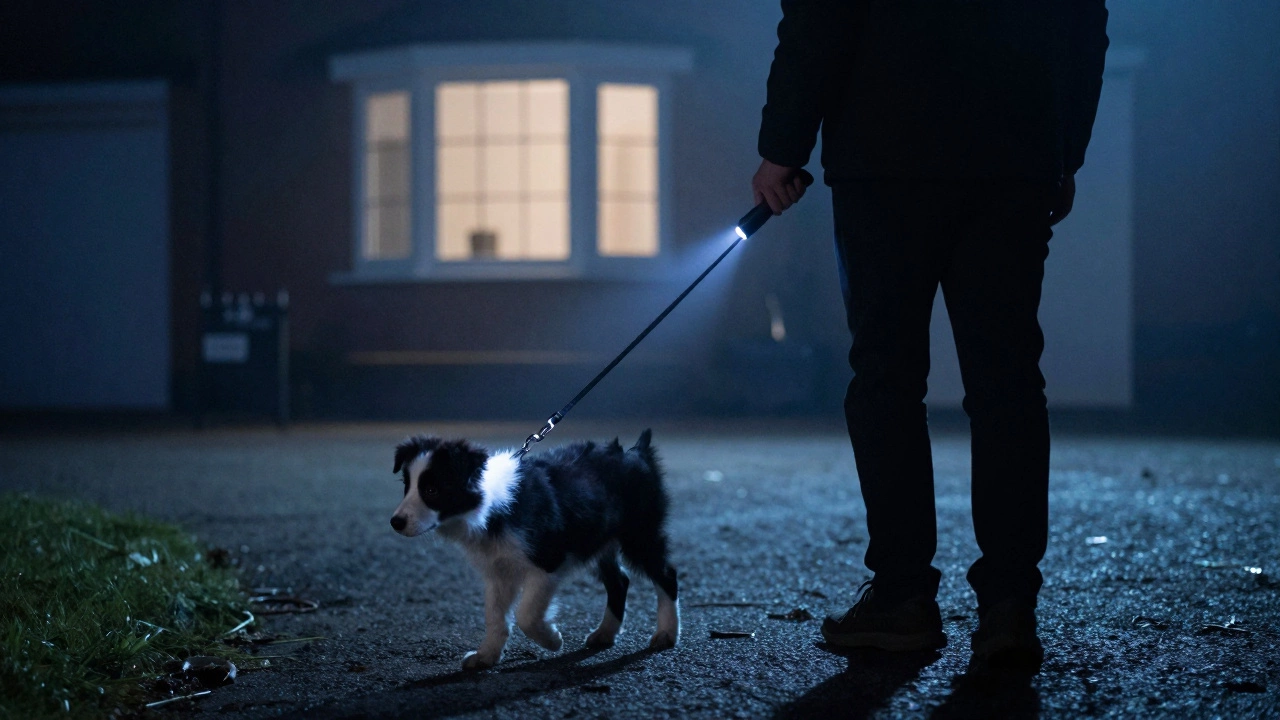
You don’t have to choose between ignoring and coddling. There’s a middle ground. Here’s what actually works:- For puppies under 12 weeks: Take them out every 3-4 hours. Use a quiet, calm voice. No play, no eye contact, no petting. Just lead them outside, let them do their business, then put them straight back. This teaches them that nighttime = bathroom time, not playtime.
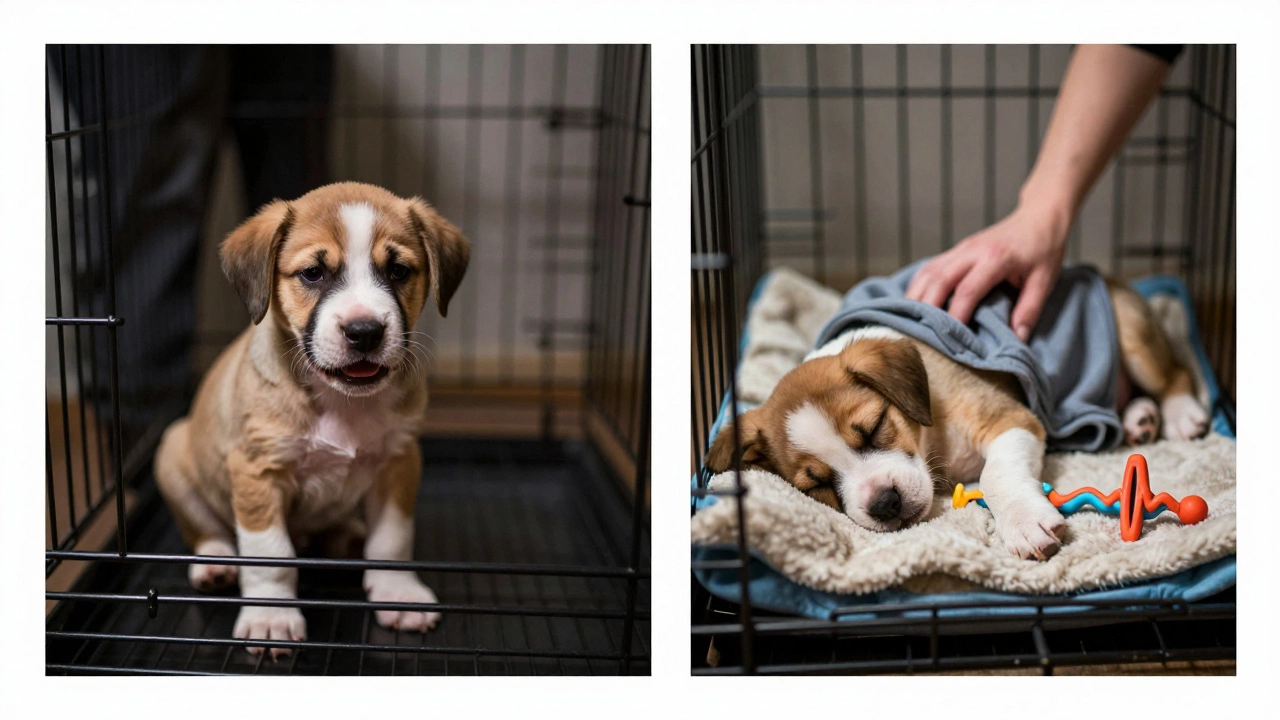
- Use the right crate size: Too big? They’ll use one corner as a bathroom. Too small? They’ll feel trapped. The rule: they should be able to stand, turn, and lie down comfortably. Not more.
- Make the crate cozy: A soft blanket, a fake heartbeat toy (like the PetSafe Snuggle Puppy), or a worn t-shirt with your scent helps. Don’t add toys they can chew into dangerous pieces.
- Establish a bedtime routine: Walk, potty, quiet play, then bed. No food or water 90 minutes before sleep. Consistency is the key.
- Use white noise: A fan, humidifier, or low-volume music helps mask scary sounds. Puppies hear everything-even your fridge turning on.
- Don’t rush to them: Wait 5-10 minutes. If they’re still crying, check calmly. If they need to go out, do it silently. If not, leave. Repeat.
One owner in Bristol, Sarah M., shared her story: "My 9-week-old Border Collie cried every night for 3 weeks. I tried ignoring. He got worse. Then I started taking him out every 3 hours, no talking, no cuddles. By week 4, he slept through the night. It wasn’t magic-it was routine."
When Ignoring Is the Right Choice
There are times when ignoring is the smartest move:- Your puppy is 6 months or older and has been crate-trained for weeks.
- The crying started after you gave in to their demands last night.
- You’ve ruled out medical issues (pain, illness) and environmental triggers.
In these cases, the crying is likely attention-seeking. You’ve taught them crying = rewards. Now you need to break the habit.
Here’s how:
- Wait 15-20 minutes before checking.
- If they stop crying, do nothing. Don’t praise, don’t look.
- If they start again, wait another 20 minutes.
- Repeat. It might take 3-5 nights. But consistency works.
Don’t check at the same time every night. That teaches them when you’ll come. Random timing breaks the pattern.
Red Flags: When Crying Means Something’s Wrong
Not all crying is behavioral. Sometimes, it’s medical. Watch for these signs:- Crying that lasts over an hour with no pause
- Whining while trembling or hunched over
- Refusing to eat or drink the next day
- Whining that only happens at night
- History of trauma or rescue background
If you see any of these, call your vet. A puppy with a urinary tract infection, intestinal blockage, or even a broken tooth won’t cry because they’re "testing you." They’re in pain.
What to Avoid
Avoid these common mistakes:- Letting them sleep in your bed: It’s tempting, but it creates a dependency. You’ll be stuck with a dog who won’t sleep anywhere else.
- Yelling or scolding: It increases fear. They don’t understand punishment-they just feel unsafe.
- Using shock collars or spray bottles: These don’t teach. They traumatize.
- Changing routines daily: Puppies thrive on predictability. If you’re inconsistent, they’ll never learn.
Final Thoughts
Ignoring your puppy’s crying at night isn’t a one-size-fits-all solution. For a 7-week-old pup, it’s dangerous. For a 7-month-old who’s been trained, it’s necessary. The goal isn’t to be cruel or to be a pushover. It’s to teach them that night is for rest-and that you’ll be there when they truly need you.Most puppies settle within 1-3 weeks with consistent, calm responses. The key? Don’t react emotionally. React intentionally. And remember: you’re not just training a puppy. You’re building trust.
Should I let my puppy cry it out at night?
It depends on age and reason. Puppies under 12 weeks should not be left to cry alone-they can’t control their bladders and need reassurance. For older, crate-trained puppies, ignoring attention-seeking cries can help them learn to sleep through the night. Always rule out medical issues first.
How long should I let my puppy cry before checking?
For puppies under 12 weeks, check every 3-4 hours if they cry right after bedtime-this is likely a bathroom need. For older puppies, wait 10-15 minutes. If they’re still crying, check calmly. If they’re fine, leave. Don’t respond every time, or they’ll learn crying gets results.
Can ignoring my puppy cause long-term anxiety?
Yes, if done incorrectly. Puppies under 10 weeks who are left to cry for long periods without comfort show signs of chronic stress, according to the University of Bristol’s 2024 study. This can lead to anxiety, fearfulness, and even health problems later. Always respond to genuine needs-hunger, fear, or bathroom trips.
What should I put in my puppy’s crate at night?
A soft blanket, a fake heartbeat toy (like the PetSafe Snuggle Puppy), or a worn t-shirt with your scent. Avoid toys that can be chewed into small pieces. Never add food or water-this can lead to accidents. Keep it calm, safe, and familiar.
My puppy cries every night-when will they stop?
Most puppies stop crying through the night within 1 to 3 weeks with consistent routines. Younger ones take longer. The key is not to reinforce crying with attention, but to respond calmly to real needs. Stick to a bedtime routine, avoid last-minute water, and keep the environment quiet and predictable.