Puppy Nighttime Sleep Aid Assessor
Assess Your Puppy's Needs
Recommendation
StatusAction Plan:
Fill out the form to see if leaving the TV on is right for your puppy.
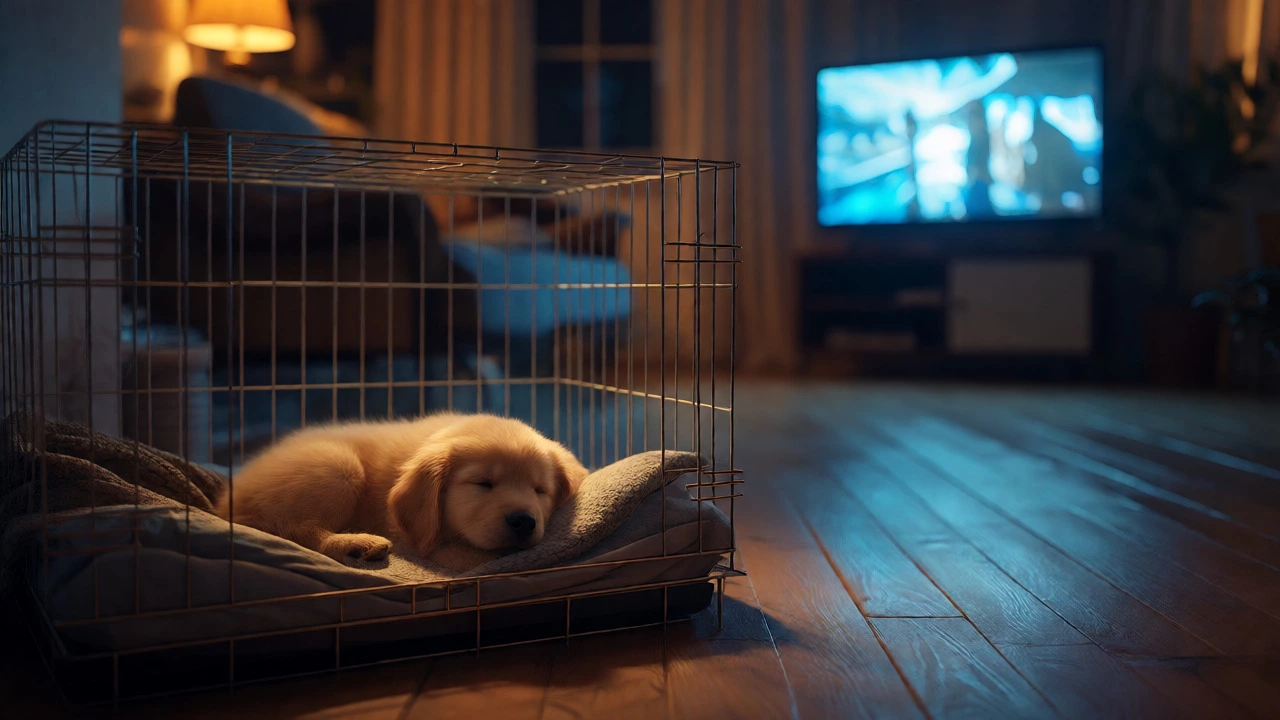
You’ve just brought home your new bundle of joy. The house is quiet, the lights are off, and you’re lying in bed wondering if that soft glow from the living room is actually helping or just wasting electricity. It’s a common dilemma: should I leave the TV on at night for my puppy? You’re not alone in this worry. Many new owners feel guilty turning off the only source of sound their pup has known since leaving its littermates.
The short answer? It depends entirely on your specific puppy. For some, it’s a lifeline against loneliness; for others, it’s a distraction that ruins their ability to self-soothe. There is no one-size-fits-all rule here, but there are clear signs to look for and practical steps to take. Let’s break down exactly when the blue light helps, when it hurts, and how to set up a sleeping environment that works for both you and your dog.
Why Puppies Struggle with Silence
To understand why the TV might help, you first need to understand what your puppy is experiencing. In the wild, dogs are pack animals. They don’t sleep in isolation. From birth until they leave their mother around eight weeks old, a puppy sleeps surrounded by siblings and mom. There is constant movement, breathing sounds, heartbeats, and warmth.
When you bring a puppy home, you remove all of that. Suddenly, they are alone in a crate or a pen in a silent house. This silence can be deafening and terrifying for a young animal. They haven’t yet learned that being alone doesn’t mean being abandoned. This is where background noise comes in. It mimics the ambient hum of a busy household or the distant sounds of other dogs, providing a sense of presence without requiring interaction.
The Case for Leaving the TV On
For many puppies, especially those who whine excessively or panic when left alone, the TV serves as a form of auditory comfort. Think of it like a nightlight for humans, but for ears. The consistent, low-level noise masks sudden sounds outside-like a car door slamming or a neighbor walking by-that might otherwise trigger a bark or a whimper.
Here is why it works:
- Masks Startle Sounds: Sudden noises can wake a light-sleeping puppy. White noise or TV chatter smooths out these spikes in volume.
- Simulates Presence: Voices and movement on screen suggest someone is awake and active nearby, which can reduce feelings of isolation.
- Provides Routine: If the TV always turns on before bed, it becomes part of the bedtime ritual, signaling that it’s time to settle down.
However, there is a catch. If you leave the TV on every single night, your puppy may become dependent on it. They might lose the ability to fall asleep in total silence, which can be problematic if you travel, stay in hotels, or have power outages. Dependency isn’t inherently bad, but it limits flexibility.
When the TV Becomes a Problem
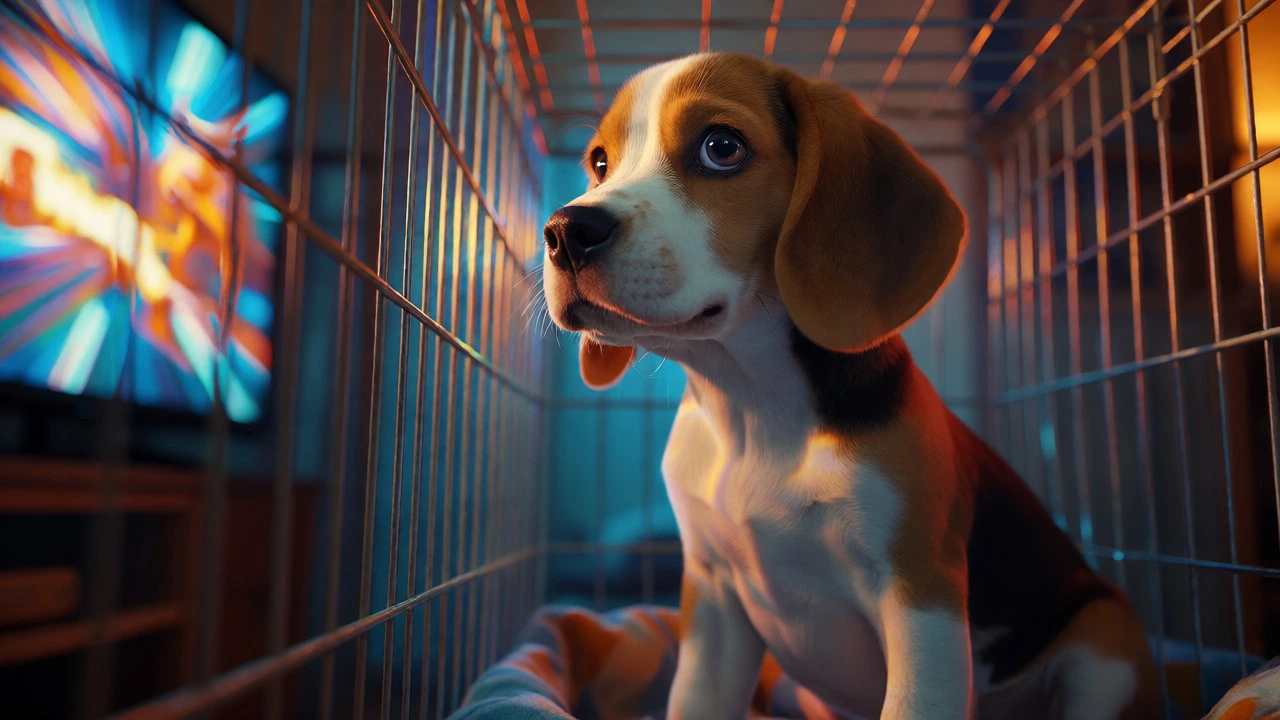
Not all puppies benefit from the TV. Some dogs are naturally sensitive to visual stimuli. If your puppy stares at the screen, barks at moving images, or seems unable to relax because they are waiting for the next scene change, the TV is overstimulating them rather than calming them.
Watch for these red flags:
- Hypervigilance: Your puppy’s ears perk up constantly, tracking movement on the screen.
- Barking or Whining at Images: They react to specific shows or commercials rather than settling into sleep.
- Inability to Settle: They pace around the crate or room instead of lying down.
If you notice these behaviors, turn the TV off. Your puppy needs to learn that stillness is safe. In these cases, a radio playing talk radio (no music) or a dedicated white noise machine is often better because it lacks the visual component that triggers prey drive or curiosity.
Alternatives to the TV: What Works Better?
While the TV is convenient, it’s rarely the most effective tool for promoting deep sleep. The goal is to create an environment that encourages rest, not entertainment. Here are three alternatives that often outperform the television.
| Option | Pros | Cons | Best For |
|---|---|---|---|
| Television | Easy to use; provides voices and visuals. | Visual overstimulation; inconsistent volume; expensive energy cost. | Dogs who need human voice simulation but aren't visually reactive. |
| Radio (Talk) | No visual distractions; consistent tone; free. | Ads can be loud; sudden topic changes. | Puppies easily distracted by moving images. |
| White Noise Machine | Consistent frequency; blocks external sounds; portable. | Requires purchase; no human element. | Light sleepers sensitive to sudden noises. |
| Calming Music | Scientifically proven to lower heart rate in some dogs. | Must be specifically composed for dogs (e.g., classical or reggae). | Anxious dogs needing physiological relaxation. |
Research published in Applied Animal Behaviour Science suggests that while dogs respond to various types of music, classical music tends to have a calming effect, reducing barking and increasing resting time. Conversely, heavy metal can increase agitation. If you choose audio, stick to slow tempos and avoid lyrics if possible, as complex language can sometimes be stimulating rather than soothing.
How to Test If Your Puppy Needs Background Noise
You don’t have to guess. Run a simple experiment over three nights to determine your puppy’s preference. Keep a log on your phone.
- Night 1: Total Silence. Turn everything off. Note how long it takes your puppy to settle. Did they cry? How long did the crying last? Did they wake up frequently?
- Night 2: TV On (Low Volume). Put on a calm show or news channel. Keep the volume low enough that you can barely hear it from your bedroom. Observe the same metrics.
- Night 3: White Noise or Radio. Use a fan, a white noise app, or a talk radio station. Compare this to the previous two nights.
Look for patterns. If the puppy slept through the night on Night 1 but woke up three times on Night 2, the TV was likely too stimulating. If they cried for an hour on Night 1 but settled quickly on Night 3, they need auditory masking. This data-driven approach removes the guilt and gives you a concrete answer based on your individual dog’s biology.
Setting Up the Perfect Puppy Bedroom
Whether you choose TV, radio, or silence, the physical setup matters more than the noise level. A puppy’s sleep environment should address their basic needs: security, temperature, and bladder control.
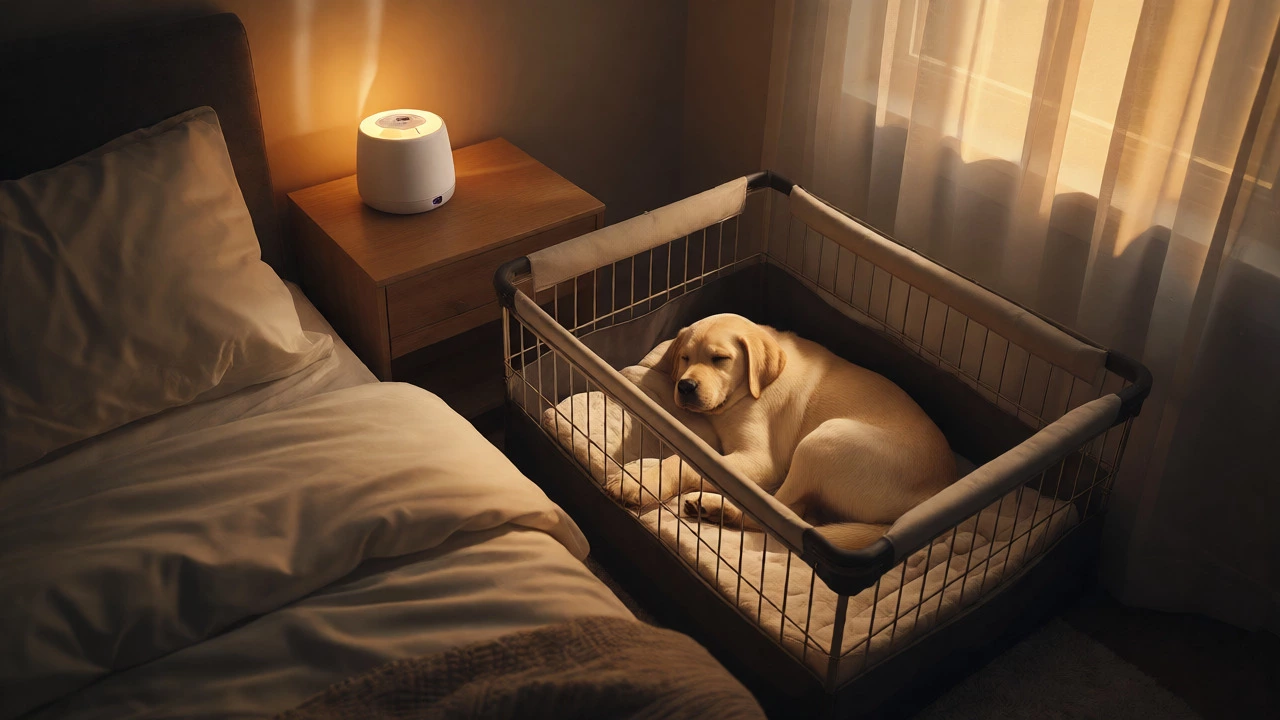
Location Matters: Most experts recommend keeping the puppy crate in your bedroom for the first few weeks. Hearing your breathing and smelling you provides far more reassurance than any TV show. Once they are fully house-trained and confident, you can move them to a quieter area like a laundry room or hallway.
Temperature Control: Puppies cannot regulate their body temperature as well as adults. If the house gets cold at night, a heated pad (microwavable type, not electric plug-in, to prevent chewing hazards) can provide the warmth of a littermate. Warmth promotes sleep hormones.
Comfort Items: Include an item that smells like you, such as an old t-shirt. Also, ensure the crate is sized correctly-big enough to stand and turn around, but small enough that they won’t eliminate in one corner and sleep in the other. If it’s too big, use a divider panel.
Transitioning Away from the TV
If you decide to use the TV initially, plan for the eventual fade-out. You don’t want your adult dog demanding the TV be on at 2 AM forever. Start weaning them off after two to four weeks, once they are reliably sleeping through the night.
Gradually lower the volume each week. Then, switch from TV to radio for a week. Then, try a white noise machine. Finally, attempt one night of complete silence. Do this during weekends so you can handle any setbacks without disrupting work schedules. If they regress, go back a step. Patience is key. The goal is independence, not permanent crutches.
Frequently Asked Questions
Is it bad to leave the TV on for a puppy all night?
It is generally safe, but not always beneficial. The main risks are overstimulation from flashing images and creating a dependency on noise to sleep. If your puppy ignores the TV and sleeps peacefully, it’s fine. If they watch it intently, it’s hindering their rest. Always keep the volume low to protect their sensitive hearing.
What kind of TV shows should I play for my dog?
Avoid action movies, sports games, or cartoons with high-pitched sounds and rapid cuts. These can excite or startle dogs. Instead, choose nature documentaries, slow-paced dramas, or news channels with steady anchors speaking in calm tones. Some services even offer "DogTV," a channel specifically designed with canine vision and hearing in mind.
My puppy cries when I turn the TV off. What do I do?
This indicates your puppy has associated the noise with safety. Don’t turn it back on immediately, as this reinforces the crying. Wait for a brief pause in the crying, then reward them with a treat or praise. Over several nights, gradually reduce the duration the TV is on before turning it off completely. Ensure they have a comfortable, secure crate to retreat to.
Does white noise work better than TV for puppies?
Often, yes. White noise is consistent and lacks the unpredictable visual and audio spikes of TV programs. It effectively masks environmental sounds like traffic or neighbors without engaging the dog’s brain. For anxious puppies, a consistent fan sound or dedicated white noise machine is usually less overstimulating than a television.
How loud should the TV be for a puppy?
Keep it very low. Dogs have hearing ranges much wider than humans, particularly in higher frequencies. A volume that feels quiet to you might be uncomfortably loud for them. Aim for a level where you can barely hear it from across the room. If you see your puppy flinching or looking toward the speaker, it’s too loud.