Puppy Bedtime & Schedule Planner
Enter your desired wake-up time and your puppy's age in weeks to generate an optimized evening wind-down routine.
You bring home your fluffy bundle of joy, and within forty-eight hours, you are running on three hours of sleep. You’re wondering if you’re doing it wrong because the puppy is crying at 2 AM, or worse, chewing your socks at midnight. The truth is, there is no single "magic hour" that works for every dog. But there is a biological sweet spot. For an 8-week-old puppy, the ideal bedtime usually falls between 7:00 PM and 9:00 PM. This window aligns with their natural circadian rhythms and gives you enough time to manage their last potty break without staying up until dawn.
Why so early? Because puppies are not miniature adult dogs. They are growing machines. Their bodies need massive amounts of energy repair, which happens during deep sleep. If you keep them up past 10 PM, you aren’t giving them more quality time; you’re just over-tiring them. An overtired puppy is like a toddler who missed nap time-hyperactive, nippy, and impossible to settle. Let’s look at how to build a routine that actually lets you sleep.
The Biology Behind the Bedtime
Puppies spend about 18 to 20 hours a day sleeping. That sounds great until you realize they wake up every two to four hours to pee, eat, or demand attention. At eight weeks, a puppy’s bladder control is roughly one hour per month of age. So, an eight-week-old pup can hold it for about two hours while awake. During sleep, this extends slightly, but not much. If you put them to bed at 11 PM, they will likely need a bathroom break around 1 AM. If you put them to bed at 8 PM, that break might happen closer to 4 AM, right before your alarm goes off.
This isn’t just about convenience. It’s about house training success. When you establish a consistent bedtime, you create a predictable cycle. The puppy learns that night means quiet and rest, not play. Consistency reduces anxiety. Dogs thrive on routine. If tonight bedtime is 7 PM and tomorrow it’s 10 PM, your puppy gets confused. Confused puppies cry. Crying puppies wake the whole house.
Building the Pre-Bed Routine
You cannot just flip a switch and expect a hyperactive puppy to crash. You need a wind-down period. Think of it as a decompression zone. Start this process about an hour before lights out.
- The Last Meal: Feed dinner by 6:00 PM. Food takes time to digest. If you feed them at 8 PM, they will need to go out at 10 PM, delaying sleep further.
- The Water Cut-off: Pick up the water bowl around 7:30 PM. Hydration is crucial during the day, but limiting intake in the final hour helps reduce overnight accidents. Make sure they have had plenty to drink earlier in the evening.
- The Final Potty Break: Take them outside immediately after the water is picked up. Use a specific command like "go potty." Wait patiently. Even if they don’t go, take them back inside to the crate area.
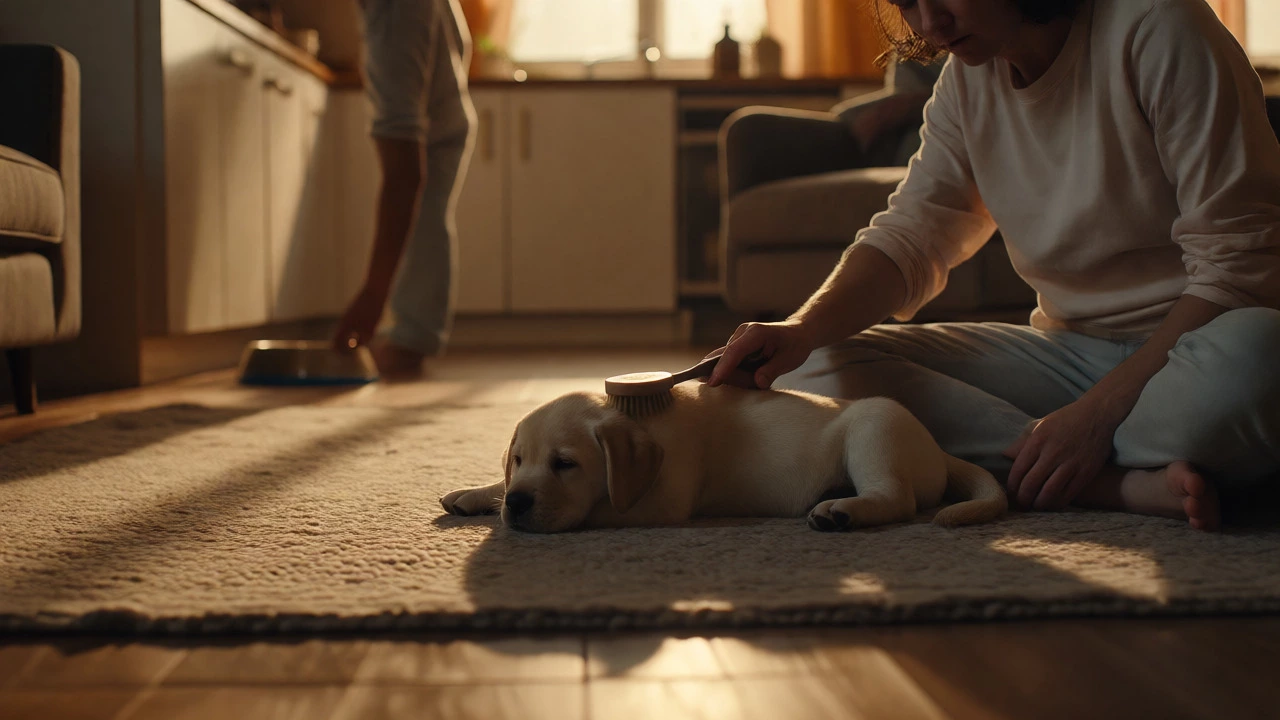
- Calm Interaction Only: No tug-of-war. No chasing games. Sit on the floor and let them sniff you. Gentle brushing can be very soothing and signals that the day is ending.
This sequence tells the puppy’s brain that the high-energy part of the day is over. It lowers cortisol levels and prepares their body for rest.
Choosing the Right Sleeping Spot
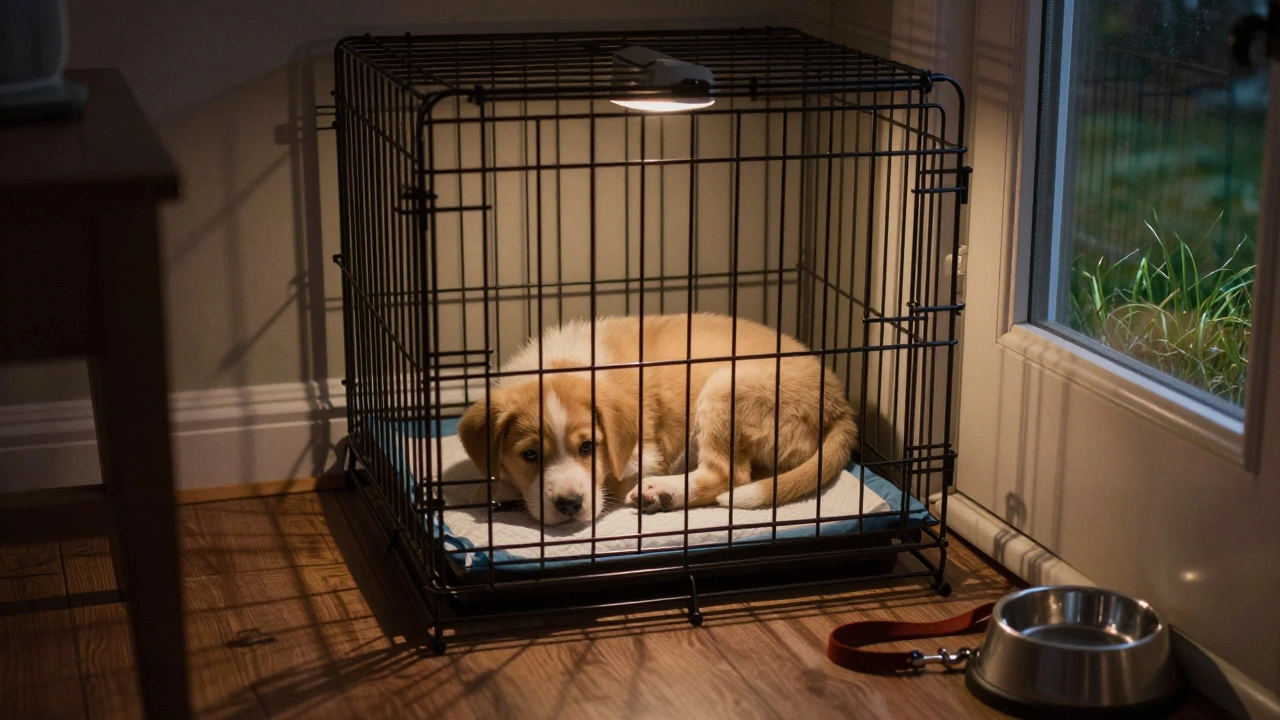
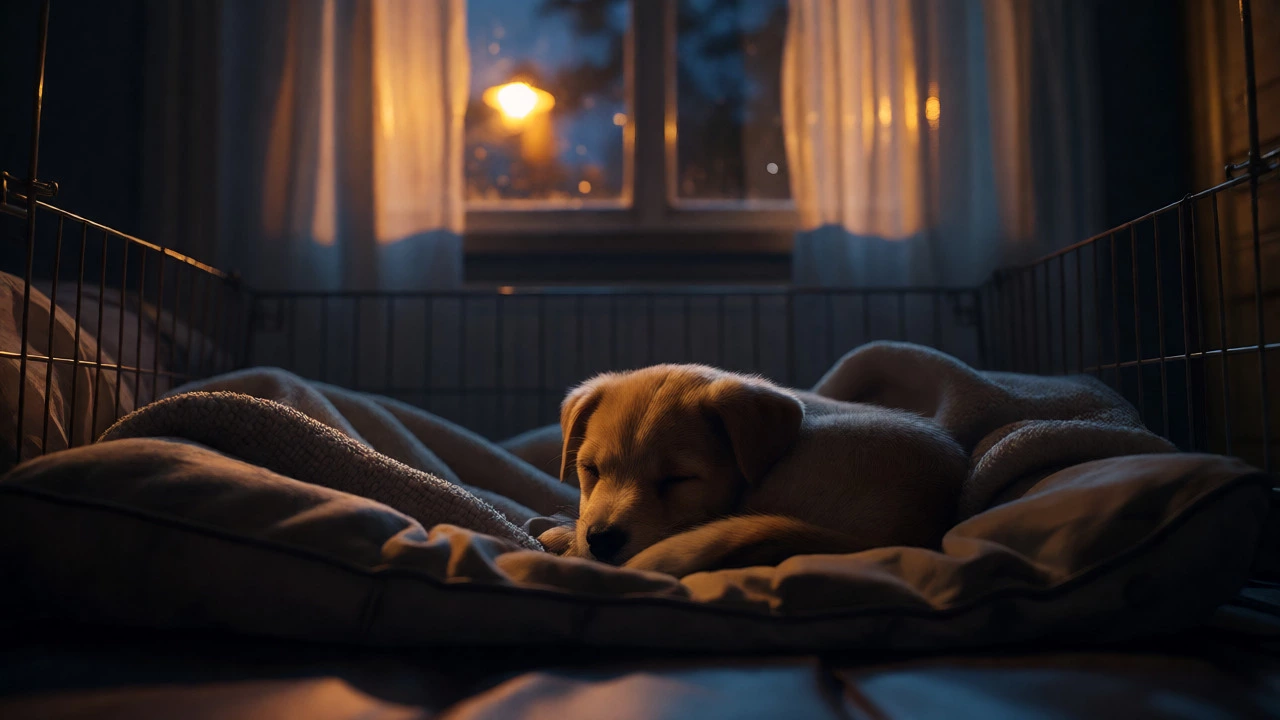
Where your puppy sleeps dictates how well they sleep. Most experts recommend crate training for the first few months. A crate is a den-like space that taps into a dog’s instinct to seek shelter in small, enclosed areas. It prevents accidents in the house and keeps them safe from chewing electrical cords at 3 AM.
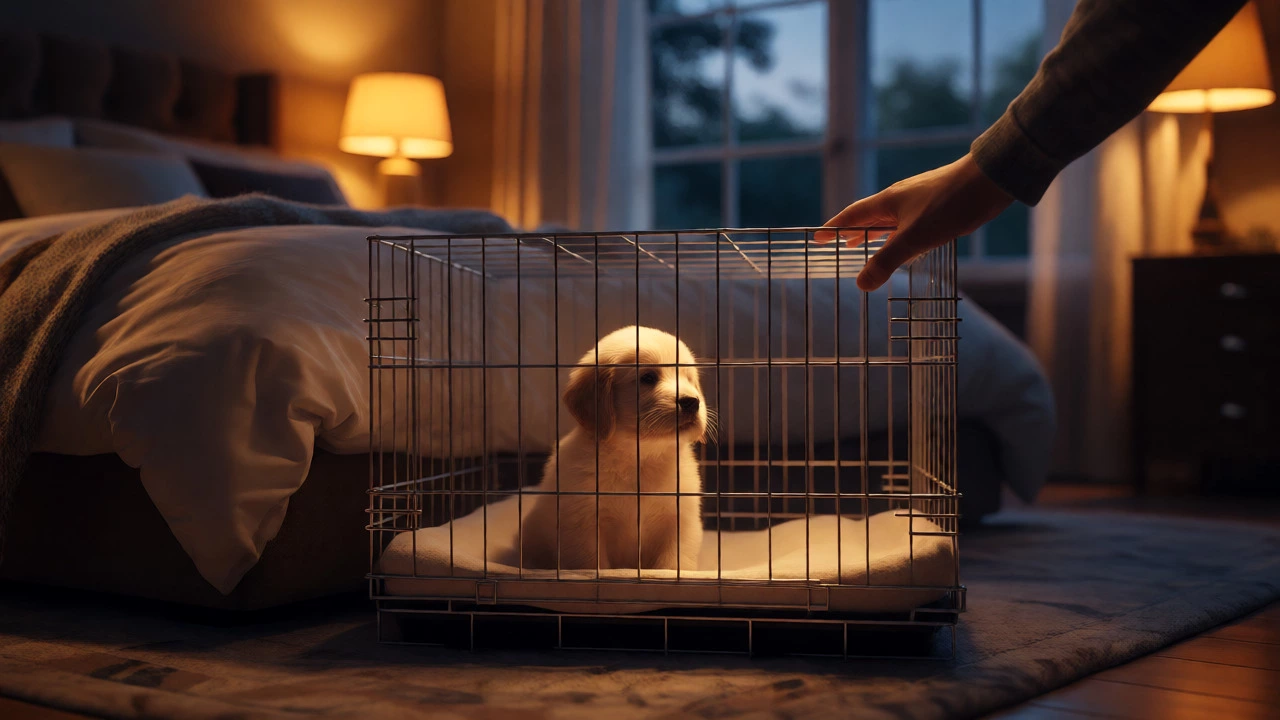
If you choose a crate, place it in your bedroom. At eight weeks, isolation is scary. Hearing your breathing and smelling you provides comfort. If you prefer free-roaming, use a gated area (an "exercise pen") in your room. Ensure the space is puppy-proofed. Remove shoes, cables, and anything chewable. If they can reach your laundry basket, they will treat it as a toy box.
| Option | Pros | Cons | Best For |
|---|---|---|---|
| Crate in Bedroom | Fastest house training; safety; bonding | Requires setup; may whine initially | Most owners seeking structure |
| Exercise Pen in Bedroom | More space; easier access for potty breaks | Less containment; higher risk of messes | Larger breeds or anxious pups |
| Dog Bed in Corner | Cozy; feels less restrictive | Risk of wandering; harder to contain accidents | Very calm, older puppies |
Handling Night-Time Whining
Here is where most people fail. Your puppy starts whining. You rush over, pick them up, and rock them. Congratulations, you have just taught them that whining equals human attention. Now they will whine all night.
First, rule out physical needs. Is the crate too cold? Do they need to pee? If you suspect a potty emergency, take them out calmly. Keep the lights low. Do not talk to them. Do not play. Put them straight back in bed. If they are dry and comfortable, ignore the whining. It often lasts only 10-15 minutes. If you respond every time, you reinforce the behavior. If you ignore it consistently, they learn that night is for sleeping.
One exception: if the crying turns into panicked barking, check on them briefly. They might be stuck or scared. But keep it boring. No cuddles.
Troubleshooting Common Sleep Issues
Sometimes, despite your best efforts, things go wrong. Here are quick fixes for common scenarios.
The Puppy Wakes Up Too Early: If your pup is up at 5 AM demanding breakfast, do not feed them immediately. Feeding reinforces the idea that waking up early brings food. Instead, wait until your desired wake-up time (e.g., 7 AM). If they are desperate, offer a tiny amount of kibble, but keep the interaction minimal. Over time, they will adjust to your schedule.
The Puppy Refuses to Enter the Crate: Make the crate positive. Toss treats inside throughout the day. Never force them in. Leave the door open when you are home so they can enter voluntarily. Place a worn t-shirt of yours inside for scent comfort.
Frequent Accidents at Night: If accidents are happening even with a strict schedule, check the timing. Did you give extra water? Did you delay the final potty break? Also, ensure the crate is not too big. If the crate is large enough for them to pee in one corner and sleep in another, they will pee in the corner. Use a divider panel to make the space just big enough to stand and turn around.
Daytime Naps Matter Too
A good bedtime fails if the daytime schedule is chaotic. Puppies need structured naps. If they stay up all day playing, they become overtired and fight sleep at night. Aim for a play session followed by a mandatory nap every two hours. Enforce these naps in the crate or pen. Yes, even if they are asleep on the rug. Move them to their designated sleep spot. This builds the association: sleep happens in the crate/pen, not just wherever they collapse.
By managing their daytime energy, you ensure they are physically tired but mentally calm by evening. This makes the 7-9 PM bedtime transition smooth rather than a battle.
Should I wake my puppy up at night to pee?
Yes, especially in the first few weeks. Set an alarm for 2-3 hours after bedtime. Take them out quietly, let them pee, and return them to bed. As they grow older, you can gradually extend this interval. By 12-16 weeks, many puppies can sleep through the night without a scheduled break.
Is it okay to let my puppy sleep in my bed?
For an 8-week-old, it is generally better to start in a crate next to your bed. Co-sleeping can lead to separation anxiety and makes house training harder because they may sneak off to pee. Once they are fully house-trained (usually around 4-6 months), you can decide if bed-sharing fits your lifestyle.
What if my puppy cries all night?
Check for basic needs first: hunger, thirst, or the need to eliminate. If those are met, they are likely protesting confinement. Ignore the whining unless it escalates to panic. Consistency is key. If you give in once, they will try again every night. White noise or a ticking clock can also help soothe them.
How long does it take to establish a bedtime routine?
Expect 1-2 weeks of adjustment. The first few nights are the hardest. Stick to the same times for feeding, potty breaks, and lights-out. Puppies are adaptable, but they need repetition to understand the pattern. Don’t change the schedule mid-week.
Can I use a toy to help my puppy sleep?
Yes, but choose carefully. Avoid noisy toys. Soft plush toys or durable rubber chew toys are good. Some owners use heartbeat simulators or warm packs wrapped in towels to mimic littermates. Ensure any toy is safe for unsupervised chewing to prevent choking hazards.